WHO’S BLOGGING WHOM?
May 4, 2011 § 2 Comments
Over there on the right of the page is a list of links headed “LAWYER BLOGS.” These links will take you to blogs published by Mississippi lawyers on topics of interest to Mississippi practitioners. My intent is to provide links that you can check frequently for useful, entertaining information. Blogs that are not updated regularly are deleted until they resume regular posting.
Several of these blogs I read every day. Some I check occasionally to catch up. Some are aimed at laypeople, and are clearly marketing efforts. They might give you an idea or two about your own marketing.
All of these blogs are lawyers using the internet to inform, entertain, increase client base, or promote ideas about the law. I encourage you to check them out yourself and use them as a resource.
- Elder Law Blog. Ronald C. Morton of Clinton posts on matters of interest in the filed of elder law. For you lawyers who handle conservatorships, guardianships, trusts and wills, there is some material here that may just help you in a given case.
- Hattiesburg Divorce Lawyer. Tim Evans of Hattiesburg has a blog that targets clients and lay people who are seeking info about divorce and related issues. It’s a clever marketing tool, and you will find the information useful from an attorney’s standpoint.
- Mississippi Accident Lawyer Blog. Paul Snow of Jackson uses his blog primarily for marketing, but he also offers informative posts about personal injury litigation.
- Mississippi Criminal Defense Lawyer Blog. This is the blog of Curt Crowley of Jackson, who takes criminal defense issues and posts about them in terms that laypersons can understand.
- Mississippi Lawyer Blog. The Coxwell law firm of Jackson posts about legal matters for a general audience.
- MS Litigation Review & Commentary. A blog I read every day. Philip Thomas of Jackson focuses like a laser beam on Mississippi litigation, verdicts, appellate decisions, and issues affecting Mississippi practitioners. Highly recommended.
- Mullin’ Over. Winky Glover of Meridian’s blog on tax issues. Alas, not updated frequently enough.
- NMissCommentor. Another highly recommended blog that I read every day. Tom Freeland of Oxford posts on a wide variety of topics including Mississipi, regional and national legal issues, the blues, food and restaurants, books, politics, current events, etc., etc. He was a superior source of information on the Scruggs scandal, and continues to cover its developments.
- randywallace. A new blog by Randy Wallace of Clinton. He posts on a variety of topics, and it will be interesting to see how his blog develops.
- Thus Blogged Anderson. Ah, yes. The blog of the enigmatic, eccentric and quasi-anonymous “Anderson,” who styles himself as “Another proud member of the irony-based community.” His posts on almost every subject imaginable are notable for their sometimes caustic wit, insight and sharp intelligence. Another blog I read nearly every day.
Do yourself a favor and pick a handful of these links to add to your favorites or bookmarks list on your browser.
NEW REGISTRATION REQUIREMENTS FOR SEX OFFENDERS
May 3, 2011 § 1 Comment
Knowing whether a person is a sex offender is an important fact in custody and visitation determinations. The restrictions imposed by statute on sex offenders and their impact on child custody and visitation are subjects of another post to come. This post addresses the reporting requirements.
Effective July 1, 2011, MCA 45-33-21 is amended to greatly expand the reporting requirements in several important respects. Here are the highlights:
- The offenses included are expanded to embrace several new categories of offenses, including ” … condoning by the parent, legal guardian or caretaker of continuing sexual abuse of a child.”
- Non-residents who are employed or attending school in Mississippi must register.
- The list of jurisdictions in which the offender was convicted is expanded to include the District of Columbia and most, if not all, U.S. territories and possessions.
- The offender must register not only with the Department of Public Safety (DPS), but also with the sheriff of each county where the registrant resides, works, and attends school.
- Volunteer work, unpaid internships and transient and day-labor work must be reported.
- The duty to report changes in name and status is clarified, and the use of false information is added as an additional ground for a finding of non-compliance with the reporting requirement.
- Offenders are required to report all temporary residence locations, telephone numbers, passport and immigration information, and all professional licenses.
- Registrants must report within three days any change in vehicle information and internet identifiers.
There are more requirements. DPS is ordered to forward the registraion info to schools and public housing agencies in the affected areas, as well as law enforcement and other entities.
I suggest you read the law. It can be critical information in a child custody case. I have a post coming up soon on how the status of sex offender affects many important aspects of custody and visitation.
DISCOVERY AND THE UCCR
May 2, 2011 § Leave a comment
The MRCP sets out the rules that establish discovery in our courts.
Just as important as the MRCP are the Uniform Chancery Court Rules (UCCR), where some critical discovery provisions reside. UCCR 1.10 provides:
A. All discovery must be completed within ninety days from service of an answer by the applicable defendant. Additional discovery time may be allowed with leave of court upon written motion setting forth good cause for the extension. Absent special circumstances the court will not allow testimony at trial of an expert witness who was not designated as an expert witness to all attorneys of record at least sixty days before trial.
B. When responding to discovery requests, interrogatories, requests for production, and requests for admission, the responding party shall, as part of the responses, set forth immediately preceding the response the question or request to which such response is given. Responses shall not be deemed to have been served without compliance to this subdivision.
C. No motion to compel shall be heard unless the moving party shall incorporate in the motion a certificate that movant has conferred in good faith with the opposing attorney in an effort to resolve the dispute and has been unable to do so. Motions to compel shall quote verbatim each contested request, the specific objection to the request, the grounds for the objection and the reasons supporting the motion.
I have enforced that 90-day deadline whenever asked to do it. It’s there, and it’s enforceable. It’s also there to expedite litigation, which is almost always a good thing for the litigants.
As for the 60-day requirement for disclosure of experts, I posted about it here.
I’ve noticed some younger lawyers in our district not complying with 1.10(B). To save yourself some trouble, get counsel opposite to email the discovery requests to you so that you don’t have to retype them.
Week before last I had a motion to compel presented that did not repeat the discovery request or response. Let me assure you that it is always counterproductive to put the judge to unnecessary inconvenience and trouble, particularly when you have not complied with the clear requirement of the rules.
WRATHFUL WINDS, JUDGES, DOUBLE DECKER AND RUM PUNCH
May 1, 2011 § 2 Comments
The death and devastation that fell on our state and neighboring Alabama last Wednesday is sobering and sad. Four killed in our own Clarke County. Another three in Kemper to the north. A woman who works with Lisa lost four members of her family in the storms, including her husband and mother. And Smithville. The images take your breath away. A friend from Tupelo carried a truckload of supplies down there early Thursday morning before Homeland Security cordoned it off, and he said that the photographs are inadequate to capture the scope and severity of the damage. He saw bodies scattered in the wreckage and the survivors wandering in shock.
The reports of people responding with help bring a lump to your throat. Families in the surrounding communities are taking the homeless families in until they can make other arrangements. A man in Columbus who caters barbecues hitched up his cookers, rounded up some friends and lots of food, and set up in Smithville to cook free for anyone there who needed it. Yesterday on the Square in Oxford in the midst of Double Decker people were taking up money for the people in the devastated areas. There were thousands of people there, so I hope they reaped a bountiful harvest.
While so much of Mississippi was being walloped last week by the deadly tornadoes, the judges were in Jackson for the spring conference. Most of us spent a lot of time on cell phones checking on things back home. Chancellor Jim Davidson of Columbus learned that his home in Oxford had five trees on it and roof and water damage. All of our families made it through okay, though.
As always, I picked up a lot of helpful information at the judges’ meeting, and I will be passing much of it on to you here.
On Friday, Lisa and I met up at Oxford for the Double Decker Festival, which is without a doubt one of the best street festivals in the state. At DD Sarurday morning we ran into folks from Meridian and old friends the Gambrells of Oxford and the Tutors of Pontotoc. Robert Gambrell, a bankruptcy lawyer, told me the roof was ripped off his office in the storm that hit Oxford, and many files and some equipment were damaged.
The weather for DD was a gorgeous counterpoint to the turmoil of the days before. It was clear, sunny and cool, and a gentle breeze kept things comfortable. After wandering the more than 100 vendor booths admiring paintings, pottery, handicrafts, jewelry and whatnots, and enjoying the music and aroma of delicious food wafting across the area, we ambled over to Tom Freeland’s office to meet and visit with him. He treated me to a delicious rum punch made with fresh-squeezed limes and a generous dose of rum. Now that’s hospitality. I think next year I may bring a couple of lawn chairs and trespass on the front lawn of Tom’s office just off the Square on West Jackson so we can make a longer day of it. Lisa’s back does not enjoy the few hours of walking and standing that DD entails.
From there we had lunch at Two Stick (owned by friends of my daughter) and headed back to our Oxford retreat tired but happy.
Next week we’re going to give some money to that nurse who lost four family members. I encourage all of you to give whatever you can to the Red Cross or your church, or whomever you know will put it to good use to help the Mississippians who are hurting right now. No gift is too small for that purpose. And let’s remember them in our prayers.
DICTA
April 29, 2011 § Leave a comment
- Southern Africa: Birthplace of human language?
- Tom Freeland posts from the NYT about playing politics with federal judicial nominations.
- “This is a wonderful country, where anybody can sue for anything, even when the allegations are over 70 years old.” So did the Yankees steal their logo?
- Biodegradable burial — UK style. And for the US, too.
- So what if you’re not a musician. You can still compose your own blues song at this web site, complete with lyrics.
SURREBUTTAL SURVIVES
April 28, 2011 § Leave a comment
Not long ago an attorney asked to be allowed surrebuttal. I refused the request and quipped that surrebuttal had been deep-sixed by the MRCP.
I was wrong. About the MRCP, anyway.
Actually, the MRCP does not even mention surrebuttal. I do remember a discussion about surrebuttal in the various seminars we had around 1982-3 in preparation for the effective date of the “new” rules. The common wisdom in those sessions was that the old practice in chancery for liberal surrebuttal was going away. In the ancient, pre-rules days it was common practice to get trampled by an older lawyer who was invariably afforded one or even more “surrebuttals” that he used skillfully to repair whatever damage you had done or points you had scored in your examination of a witness.
After the new rules went into effect, that practice thankfully died out in our district, and every other one where I set foot, and since then one rarely hears requests for surrebuttal — as on that day in my court not long ago.
The matter is covered by UCCR 3.02, which provides in part:
The examination of witnesses shall be limited to the direct examination, the cross-examination, and the redirect examination concerning matters brought out on cross-examination. Counsel for either party may be permitted, on request, to inquire about new matters pertinent to the issues which may have been inadvertently omitted. Opposing counsel may also inquire concerning the same matter.
There you have it. It’s what we used to call surrebuttal.
Nowadays it arises mainly in situations where the court allows evidence in over the objection that the question is “outside the scope of rebuttal.” In McGaughy v. State, 742 So2d 1091, 1094 (Miss. 1999), the court said, “Where there is doubt as to whether the evidence is properly case-in-chief or rebuttal evidence, the trial court should resolve the doubt in favor of reception in rebuttal if: (1) its reception will not consume so much additional time as to give an undue weight in practical probative force to the evidence so received in rebuttal, and (2) the opposite party would be substantially as well prepared to meet it by surrebuttal as if the testimony had been offered in chief, and (3) the opposite party upon request therefor is given the opportunity to reply by surrebuttal.”
It is error to permit the introduction of case-in-chief evidence in rebuttal where the evidence clearly should have been offered in the case in chief. Hosford v. State, 525 So.2d 789, 791-92 (Miss. 1988). But where it is not clear, introduction is within the discretion of the trial judge and will be reversed only if the decision is found to be arbitrary and capricious. Smith at 1095.
After the court has allowed in the testimony, you may request further questioning under UCCR 3.02.
To preserve the point for appeal, you need to object timely when your opponent offers evidence in rebuttal that should have been offered in the case in chief. If the court overrules the objection, ask immediately for surrebuttal or explain to the court why you will be unable to meet the evidence and how it will prejudice your client.
In the case in my court, I did not see that surrebuttal was necessary or desirable to meet anything offered in rebuttal, but it’s an interesting point that arises rarely in chancery court.
CASTING LEGAL PEARLS BEFORE SWINE
April 27, 2011 § Leave a comment
I came across a gem of an opinion rendered by Chancellor Shannon Clark in those pre-MRCP days when the concept of equitable distribution was unknown in Mississippi divorce law, and chancellors rendered opinions unencumbered by all of the factors that weigh down our opinions nowadays.
Judge Clark had a wry sense of humor, and had a way of provoking a laugh in the court room even in the most serious proceedings. This is his opinion in the case of Taylor v. Taylor:
IN THE CHANCERY COURT OF WAYNE COUNTY, MISSISSIPPI
JOHNNIE PEARL TAYLOR, COMPLAINANT
VS.
CLARENCE TAYLOR, DEFENDANT
Cause No. 14, 672
OPINION OF THE COURT
This case comes on for hearing as the last case on the last day of a rather trying term of court. The parties were married on April 4, 1979, at a time when the defendant was incarcerated in the local Bastille. It is obvious that all marriages are not made in Heaven, and certainly not this one. The testimony is that bliss never reigned supreme in this Palace of Love.
The marriage being of a short duration, the only accumulated assets were ten (10) pigs, three (3) grown hogs, and one three months old hog. Later seven (7) more pigs were born during the marriage of the parties.
The parties separated on or about September 16, 1979, leaving care, custody and control of the pigs with the Complainant. The Defendant made no effort to help with the pigs. No support was paid for the pigs by the Defendant. The Complainant provided care for the pigs both before and after the separation. She was a fit and proper person to have their care, custody and control. It was necessary for the Complainant on occasions to seek charity from neighbors to care for the pigs. Urgent and necessitous circumstances having arisen, the pigs, alas, were sold at a private sale for $175.00 without the taking of bids. an emergency having resulted from the pigs’ run-down condition from lack of financial support, no bids were necessary at this point in time. The Complainant had contacted numerous people, including the High Sheriff of Wayne County, in an effort to locate the Defendant, but to no avail. No order relating to the care, custody and control, or for the support of the pigs was obtained. The defendant requested neither custody nor reasonable visitation rights. The pigs being of tender age, it would have been inappropriate to separate them from their mother. No sow support having been paid by the Defendant, he cannot now complain of the Complainant’s sale of the pigs to provide for the pigs’ welfare and support. Having failed in his duty to support, he cannot now be heard to complain of the results of his failure to bring home the bacon.
A divorce is hereby granted to the Complainant on the grounds of habitual cruel and inhuman treatment. It is, likewise, the order of this Court that the Complainant is entitled to attorney’s fees in the amount of $200. All other relief sought by either party is denied.
The Defendant, having lost his swine as a result of this ill-fated marriage, can consider himself lucky that he did not have a donkey.
Court is now adjourned until court in course.
FILED November 29, 1979.
Thanks to attorney Henry Palmer.
DEALING WITH DISCOVERY GAMESMANSHIP
April 26, 2011 § 8 Comments
One of the most frustrating aspects of litigation is the gamesmanship that many lawyers employ in discovery. If you’ve practiced even a short time, you are acquainted with the repertoire: Late or no answers; failure to supplement; supplementation on the eve of trial; all-encompassing objections; evasive answers; and on and on.
Philip Thomas blogged about the COA’s decision last week upholding a circuit court decision dismissing the City of Jackson’s pleadings for a discovery violation, and followed up with a post highlighting how inconsistent the appellate courts have been in discovery violation cases.
What is the best strategy to cope?
In my experience, most attorneys are too accommodating when it comes to discovery. You don’t want to press too hard because “what goes around, comes around.” You call the other attorney who promises the answers “in a few days,” and that stretches into a few weeks and months. You hate to file a motion because you don’t want to be disagreeable. The common thread is that these approaches are absolutely ineffective.
If you’re going to get the information you need, you’re going to have to be proactive and make a record. Here’s what I suggest:
-
Set a hearing to address all those objections. Make the judge rule on each and every one of them. Rulings by the judge on the timing and sequence of discovery are discretionary, but her rulings on those objections will be matters of law second-guessable by the appellate courts. If the judge overrules the objections, you may reap a bonanza of information, and you have disabled your opponent from using them against you at trial. Remember: if you don’t make a record, you can’t complain about it on appeal.
-
If you’re going to agree to extend discovery deadlines, get a court order. Insist on an agreed order documenting the new deadline and any other terms you and counsel opposite agree on. You can’t enforce an order you haven’t got, and the record does not reflect a handshake deal. Make your record.
-
Send a good faith letter. UCCR 1.10(c) requires a certificate that you have made a good faith effort to resolve any discovery conflict with opposing counsel before you can be heard on a motion to compel. Mention in your letter that if you are unable to reach an agreement you will have no choice but to file a motion.
-
File that motion. Go ahead and do it. File your motion to compel. You are making your record. You can reach an agreement to give more time, or whatever, but don’t wimp out of a hearing unless you get what you need. Some lawyers consider this approach “ungentlemanly.” But your duty to your client comes ahead of being properly gentlemanly. I always considered it more ungentlemanly to play discovery games than to fight them. This does not mean, by the way, that you should be an aggressive a**h**e. It does mean that you need to be assertive and firm, standing your ground for the best interest of your client.
In my years of practicing, I often ran across chancellors who found discovery disputes distasteful. They made you feel as if you were wasting their time. My strategy in dealing with them was to treat it like business and make a record. You’re there to represent your client, not to impress the judge.
Don’t be afraid to be proactive in discovery. It can make or break your case.
INTERNAL AFFAIRS
April 25, 2011 § Leave a comment
In a post aptly entitled Intestinal Fortitude, the blog Mocking Words enlightens us about two recent cases in which various surprising items were discovered in cavity searches of a woman in Scranton, PA and a man in Sarasota, FL.
As the term “cavity” implies, the searches involved rather intimate internal regions of the body accessible only by means that you probably prefer not to think about in detail.
The Scranton woman had concealed 51 packages of heroin, some 30-odd drug baggies, 8-1/2 prescription pills and fifty-two dollars and twenty two cents in her “cavity.”

*Ouch*
In the case of the Sarasota man, the routine cavity search on his booking into jail turned up: 17 oxycodone pills; one cigarette; six matches; a flint (!); an empty hypodermic syringe with an eraser stuck on the needle; one lip balm container; one condom; a drug store recipt; and a coupon. I don’t know about you, but I don’t care to think about how that stuff got into that — uh — cavity. I also don’t care to think about whether some unsuspecting bona fide purchaser for value without notice was going to smoke that cigarette or use that lip balm <shudder>. And how much would you have to be paid to have the job of the store clerk to take that coupon?
Human ingenuity is an amazing thing, isn’t it? If those two geniuses had devoted as much time and effort toward world peace as they did to hiding stuff in their nether regions, the world might be a better place. Or maybe not.
DICTA
April 22, 2011 § 1 Comment
- It’s not very good poetry, but this sonnet does reflect a particular point of view of the insurance defense lawyer.
- Who’s bugging you? Here’s a piece on how to tell if your car, home or phone is bugged.
- BP says that the spill is stopped and everything is hunky-dory in the gulf. So we can relax, right? Not so fast, my friend. This article from the Scientific American paints a not-so-rosy picture.
- What makes a judge popular among lawyers? Philip Thomas says it’s effort.
- James K. Vardaman is notorious as one of the most rabid racists ever to inhabit the office of governor in Mississippi, and later the office of U.S. Senator. Referred to by his followers as “The Great White Chief,” he was known for quotes such as, “If it is necessary every Negro in the state will be lynched; it will be done to maintain white supremacy.” Less well-known is his populism, which you can read about online at Vardaman’s Weekly, an archive of his 1919-1923 publication of the same name. Reading these probably won’t change your opinion of the man, but they do offer a glimpse into the politics of the era.
- It was the original proof of the theorem that size isn’t everything, but today it’s six inches longer, a little over three inches wider and half an inch lower than its predecessor, and the flower vase has given way to a more masculine persona. The latest incarnation of VW’s New 2012 Beetle looks mighty familiar.
- Words are inadequate to describe this jaw-droppingly beautiful video, time lapse photography by Terje Sørgjerd on El Teide, Spain’s highest peak located in the Canary Islands.
- Interactive 3-D solar system and night sky.
- What do Max Bodenheim, Sterling Plumpp, Bobby DeLaughter, and Oprah Winfrey all have in common? You can find out here.
“V” is for …

VW
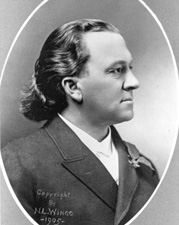
Vardaman
 The Better Chancery Practice Blog