JUDGE RUSSELL REPLACES JUDGE KING ON THE COA
May 25, 2011 § 3 Comments
Governor Barbour appointed Circuit Judge Ermea “E.J.” Russell of Hinds County, effective May 23, 2011, to fill the unexpired term on the COA formerly held by Judge Leslie King, who was earlier elevated to the Mississippi Supreme Court.
Judge Russell, who was Hinds County’s first black, female Circuit Judge, is the COA’s first black, female judge. She has been a member of the judiciary since her appointment by Governor Fordice in 1998.
The State Judiciary website press release on her swearing in is here.
The appointment continues the trend of excluding chancery judges from the appellate courts.
RENEWING A JUDGMENT UPDATED
May 24, 2011 § 4 Comments
I posted here about the then-new procedure for renewing a judgment that went into effect in 2010. That provision clarified some old statutory provisions that allowed for renewal of a judgment, but did not specify a procedure.
Effective July 1, 2011, MCA § 15-1-43 is amended to apply only to judgments or decrees that have not yet expired. The attorney applying to renew the judgment must certify that the judgment has not expired when making the application to renew the existing judgment.
FREEDOM SUMMER IN MERIDIAN
May 23, 2011 § 17 Comments
This year marks the 50th anniversary of the Freedom Riders’ attempts at integration of transportation and amenities across the south. The arrival of the Freedom Riders in May, 1961 was met with mob violence and police brutality, but it did not end segregation in Mississippi. The Freedom Riders did, however, pique public awareness across the nation of the inequalities in the south and the need to address them.
In 1962, representatives of four civil rights organizations — SNCC (Student Non-violent Coordinating Committee), CORE (Congress of Racial Equality), NAACP and SCLC (Southern Christian Leadership Conference) — met at Clarksdale and formed a new organization designed to coordinate their efforts and resources in Mississippi. They called the organization COFO (Congress of Federated Organizations).
The primary concern was to register black voters in Mississippi. At the time, Mississippi at less than 7% had the lowest percentage of black voter registration in the nation. Blacks seeking to register to vote were subjected to poll taxes, examinations that they had to pass to become enfranchised, and, when that was not enough, violence and even death.
It was decided that COFO would spearhead a massive, concentrated voter registration and desegregation effort in Mississippi in the summer of 1964. Volunteers were enlisted from across the country, primarily from the northeast and midwest, many of whom were college students willing to devote a summer to the cause. The effort came to be known as “Freedom Summer.”
In January, 1964, Michael Schwerner came to Mississippi and opened a COFO office in Meridian at 2505 1/2 Fifth Street. Schwerner was a member of CORE, and was a native of New York. He and his wife, Rita, lived in a Meridian apartment, and engaged in various community organizing activities. The COFO office was the headquarters of the Freedom Summer operation in Lauderdale County.
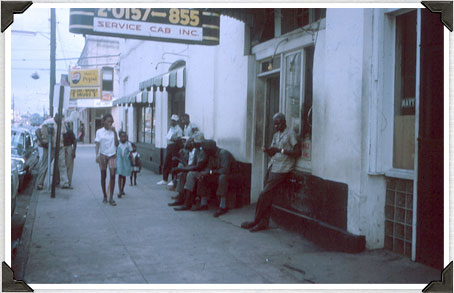
COFO HQ in Meridian
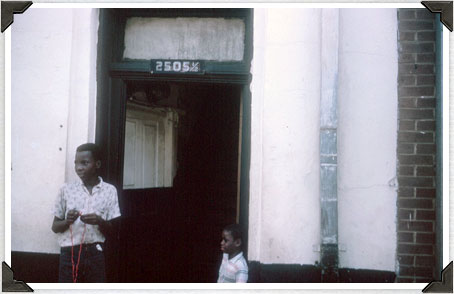
2505-1/2 Fifth Street
The headquarters occupied the second floor of the Fielder & Brooks Drug Store, an established and respected black business.
The Schwerners opened a COFO-sponsored community center where black children could gather and play games, socialize and access a lending library.

Reading Room
COFO in Meridian also operated one of the several dozen Freedom Schools that were opened across Mississippi that summer. The Freedom Schools taught citizenship, black history, constitutional rights, political processes, and basic academics. More than 3,500 students attended the Freedom Schools. Meridian’s Freedom School was at the old black Baptist Seminary.
Here is the text of a 1964 COFO memo describing the Meridian operation:
Meridian is a city of 50,000, the second largest in the state. It is the seat of Lauderdale county. It is in the eastern part of the state, near the Alabama border, and has a history of moderation on the racial issue. At the present time, the only Republican in the State Legislature is from Meridian. Registration is as easy as anywhere in the state, and there is an informal (and inactive) “biracial committee”, which, if it qualifies, is the only one in the state.
Voter registration work in Meridian began in the summer of 1963 (for COFO staff people, that is), and by autumn, when Aaron Henry ran in the Freedom Vote for Governor campaign, there was a permanent staff of two people in the city. In January, 1964, Mike and Rita Schwerner, a married couple from New York City, started a community center. In Meridian’s mild political climate, the community center there has functioned more smoothly than either of the two community centers which COFO has organized in tougher areas. The center has recreation programs for children and teenagers, a sewing class and citizenship classes. It also has a library of slightly over 10,000 volumes, and ambitious plans for expansion if more staff were available. The COFO staff in Meridian uses Meridian as a base for working six other adjoining counties.
The Freedom School planned for Meridian will have a fairly large facility, in contrast to most places in the state. The Baptist Seminary is a large, 3-story building with classroom capacity for 100 students and sleeping accommodations for staff up to about 20. Besides this, there is a ballpark available for recreation. The school has running water, blackboards and a telephone. The center has a movie projector and screen which it probably would lend. The library lends books to anyone for two-week periods. The question of rent has not been decided for the school. Even if there is no rent, however, we can count on a budget of around $1300, for food for students, utilities, telephone and supplies.
One of the COFO volunteers was Mark Levy, who came to Meridian with his wife, Betty, from Queens College in New York. He chronicled his sojourn in Meridian with his camera, and his impressive collection of photographs is in the Queens College archives, where you can view it online.
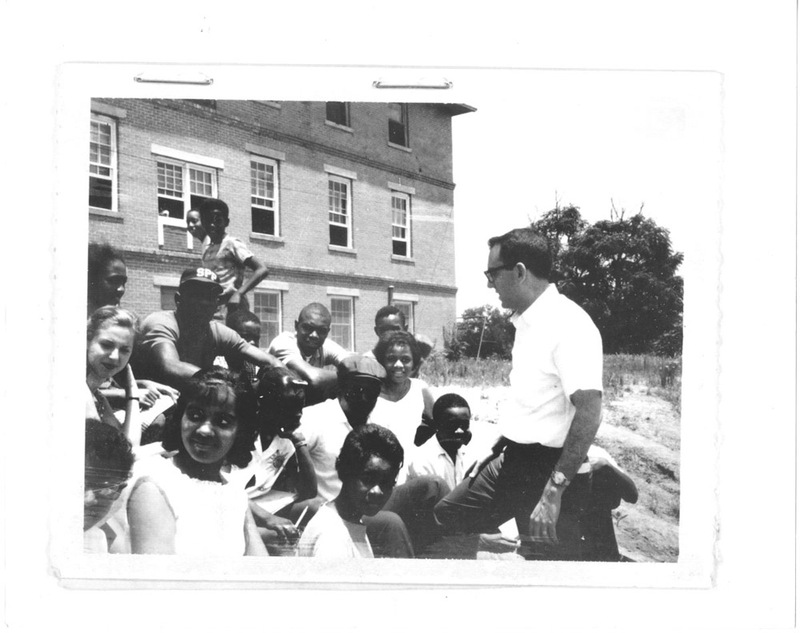
Mark and Betty Levy with students at the Freedom School
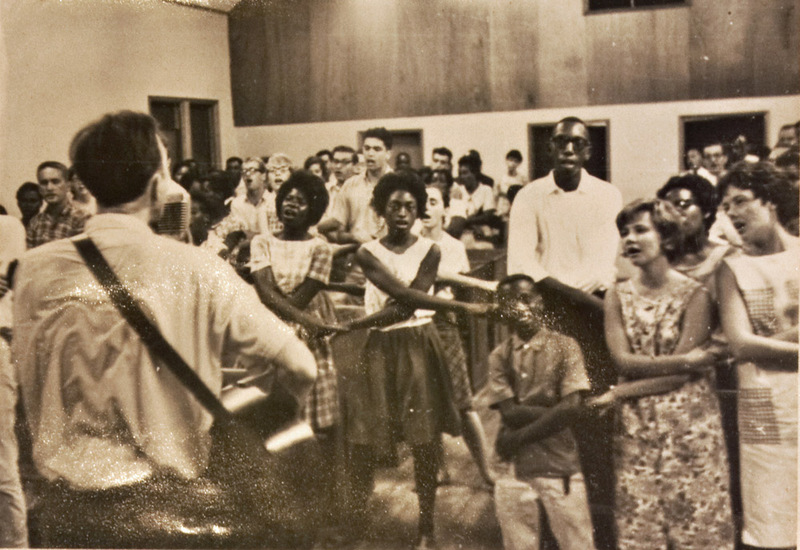
A remarkable fact documented by Levy is that the famed folk/protest singer Pete Seeger visited Meridian and played at the old Mt. Olive Baptist Church during Freedom Summer.

Seeger plays for the COFO workers
He performed for the COFO volunteers. The next photo shows COFO workers and others joining hands to sing along with Seeger. The young woman at the right with the flowered dress is COFO volunteer Patti Miller of Iowa, who pinpoints the date of Seeger’s performance as August 4, 1964.
Shortly after he arrived, Schwerner was joined by an eager young Meridianite volunteer named James Chaney. As the summer drew near, other volunteers began to arrive from other places, among them Andrew Goodman of New York.
Despite its moderate reputation on racial issues, there was a dark underside to Meridian and the surrounding area. The Klan was active, with members in law enforcement and in influential positions. The Klan had its eye on COFO, and on Schwerner in particular. They gave him the derisive nickname “Goatee,” for his beatnik-style beard, and spread rumors that he was having an affair with a black woman.

Michael "Goatee" Schwerner
Mississippi’s political leadership provoked the citizenry with accusations that the COFO workers were communists who had trained in Cuba. FBI Director J. Edgar Hoover made the statement that “We will not wet-nurse troublemakers,” insinuating that anyone who took matters into their own hands would not be bothered by the feds.
On June 21, 1964, Schwerner, Goodman and Chaney had returned from a training session in Oxford, Ohio, to learn that the Mt. Zion Methodist Church in Neshoba County had been burned by the Klan and some of its members beaten in retribution for allowing a Freedom School to operate there. The three travelled from Meridian to Neshoba and met with the leaders of the church. As they made their way back to Meridian, the three were stopped by a Neshoba County Deputy Sheriff and taken into custody on the pretext of a speeding charge. After they were released from jail in Philadelphia, they were stopped again on Highway 19 South by the Sheriff, who allowed a group of Klansmen to take them to Rock Cut Road, between House and Bethsaida, where all three were murdered by gunfire. An historical marker is set on the junction of Highway 19 and the road where they were killed.
When the trio did not return to Meridian as scheduled, their disappearance was reported and a manhunt ensued. Hundreds of naval personnel participated. President Johnson ordered Hoover to mobilize the FBI, and the agency began investigating, increasing the number of agents in the state from 15 to more than 150. Posters went up.
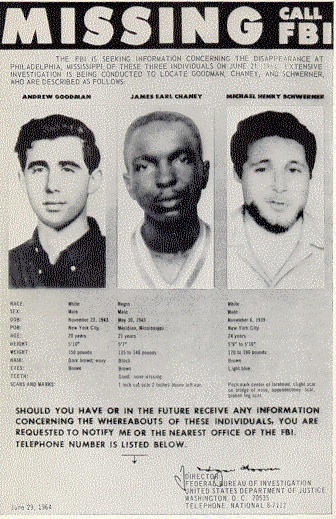
The Mississippi Sovereignty Commission investigated and its reports took the prevailing view that the disappearance was a publicity stunt designed to stir up public opinion. Governor Paul B. Johnson quipped that “Those boys are in Cuba.”
Before long, the searches turned up the CORE station wagon that the men had driven from Meridian. It had been taken to the Pearl River swamps north of Philadelphia east of Stallo off of Highway 21, where it was burned.

The discovery of the car did not quell the public belief that the disappearance had been staged, but the denial, speculation and ridicule abruptly ended when the three bodies were discovered by the FBI in a dam being built not far from the Neshoba County fairgrounds. It was conclusive proof of the atrocity.

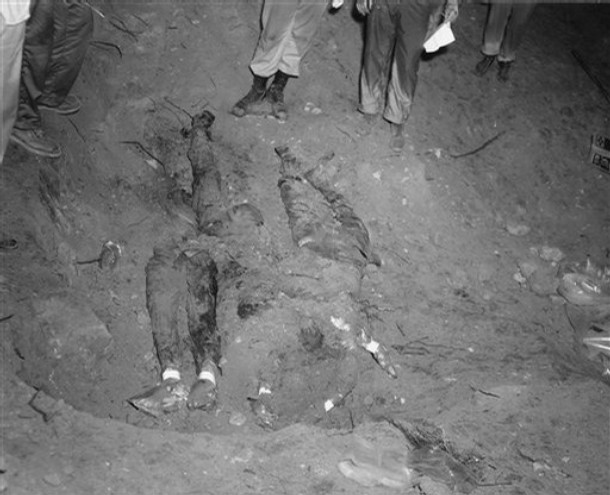
The FBI autopsy revealed that all three young men had died of gunshot wounds. The families were not convinced, however, and they demanded and got a second autopsy which revealed that Schwerner and Goodman had indeed been shot and killed. Chaney, though, had been brutally beaten before being fatally shot. The doctor who performed the autopsy said that he had never seen such extensive, catastrophic injuries, including smashed bones and damaged internal organs, not even in car or plane wreck victims.
Patti Miller remembers that that the bodies were found on August 4, 1964. She remembers that date because it was Seeger himself who announced it that night to the COFO workers during his appearance at Mt Olive.
Nineteen men, many of whom were from Meridian, were arrested and charged with the killings, but state charges were soon dropped. The federal government prosecuted them for violation of Schwerner’s, Goodman’s and Chaney’s civil rights, and seven were sentenced to varying terms up to ten years. It took until 2005 for one of the defendants, Edgar Ray Killen, to be brought to justice in a Mississippi court. He was convicted of manslaughter in Neshoba County Circuit Court.
Long before the legal proceedings, though, the families had to bury the dead as a prologue to getting on with their shattered lives. Schwerner and Goodman were taken back to their homes far away in New York.
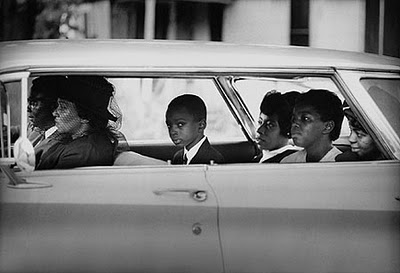
James Chaney's family on the day of the funeral
Chaney’s funeral was held in Meridian. Mourners included his collegues, the COFO workers. The funeral services took place at four different churches, culminating at First Union Baptist Church on 36th Avenue.
As for Freedom Summer, the results were mixed. Some voter registration was accomplished in the face of resistance. People were beaten and killed. Churches were burned. Violence across Mississippi escalated. By any of those measures, it was at least a borderline failure. But the deaths of Schwerner, Goodman and Chaney galvanized public opinion. The 1,000 or so COFO workers returned home from Mississippi with eyewitness testimony about the severity of the situation, many of them with scars to corroborate their stories. The nation realized that the full weight of the law and the federal government would be needed to end the systemic injustice that fostered violence and hatred and shielded murderers. The political pressure became irresistable, and the 1964 Civil Rights Act passed Congress and was promptly signed into law by President Johnson.
Freedom Summer was not the end of apartheid in Mississippi, but it did help deal it a mortal blow.
___________________________________
Thanks to Dr. Bill Scaggs for the info about Pete Seeger, Mark Levy and the Freedom School.
Patti Miller, the COFO volunteer mentioned above, has a Keeping History Alive site where I found several Freedom School photos.
“QUOTE UNQUOTE”
May 20, 2011 § Leave a comment

- The Dalai Lama and Bishop Desmond Tutu

“If money had been the way to save the world, Christ himself would have been rich.” — Phyllis Bottome
“Privilege, almost by definition, requires that someone pay the price for its enjoyment.” — Paula Ross
“It is very wrong for people to feel deeply sad when they lose some money, yet when they waste precious moments of their lives, they do not feel the slightest feeling of repentance.” — Dalai Lama
BYE-BYE, BASTARDY; HELLO PARENTAGE
May 19, 2011 § Leave a comment
It’s official. The 19th-century term “bastardy” that appeared in our paternity laws is banished from the statutes, effective March 14, 2011, by edict of the legislature. Bastardy bows out.
The archaic term will be replaced with the concept of parentage, which is an improvement over the concept of paternity. All future printings of the code will reflect the change.
In the recent COA case Miller v. Mills, decided May 3, 2011, Judge Maxwell used the term parentage in the context of a paternity action that had been filed in Louisiana, the judgment from which was sought to be enrolled and enforced in Mississippi: “Therefore, Ryan’s filing of a petition to establish parentage, custody, and visitation initiated a ‘child custody proceeding.’” ¶ 9. The opinion replaces the term paternity with parentage except where a specific statutory provision is mentioned. The signal is that the new term is parentage, and that bastardy, paternity and filiation are fading away.
If the statutory language is segueing into the 21st century, wouldn’t it be a good idea for your pleadings to do likewise? “Complaint to Establish Parentage.” Has a nice ring to it, doesn’t it?
UNDERAGE DRINKING AND CUSTODY
May 18, 2011 § 2 Comments
We are all familiar with the scenario: Modification case pending and one of the facts supporting the charge of material change/adverse effect/best interest is the fact that mom allowed junior and his friends to have beer at a senior graduation party she allowed to take place at her home. Dad, who wants the modification, is incensed. Mom minimizes it, insisting that no one got drunk, no one was allowed to operate a vehicle after drinking, and besides, these are all young men and women who are about to go off to college, and what’s the big deal?
The Mississippi Legislature passed a bill, effective July 1, 2011, that amends MCA § 67-3-70, to prohibit adults from allowing a party to take place at a private residence or private premises if a minor at the party obtains any alcoholic beverage or beer and the adult knows or reasonably should have known that the minor has done so. The offense is a misdemeanor punishable by a fine of $1,000 or not more than 90 days incarceration.
The public policy of the state, then, appears to weigh against mom’s position.
I don’t find a case where the issue was squarely before the appellate courts. I have seen cases at the trial level where the issue is raised among others with respect to custody. In the case of Self v. Lewis, decided by the COA on May 17, 2011, there is this language at ¶ 40: “Providing alcohol to a minor is a crime, and the “[c]ommission of crimes by a custodial parent . . . is properly the concern of a chancellor.” Sullivan v. Stringer, 736 So. 2d 514, 516 (¶14) (Miss. App. 1999). In Self, the custodial father had a relationship with an 18-year-old woman to whom he served alcohol. Sullivan involved the crime of cohabitation.
THE US CONSTITUTION AT LONG LAST ARRIVES FOR THE LEGAL PROFESSION IN MISSISSIPPI
May 17, 2011 § 3 Comments
Every lawyer sworn in on and after July 1, 2011, will have to swear to support not only the Constitution of the State of Mississippi, but also the Constitution of the United States. Which means that only 193 years and 7 months after Mississippi was admitted to statehood, the lawyers thereof will now be getting around to swearing (or affirming) to support the national constitution.
Here is the oath prescribed in MCA § 73-3-35 as it is pre-July 1:
“I do solemnly swear (or affirm) that I will demean myself, as an attorney and counselor of this court, according to the best of my learning and ability, and with all good fidelity as well to the court as to the client; that I will use no falsehood nor delay any person’s cause for lucre or malice, and that I will support the Constitution of the State of Mississippi so long as I continue a citizen thereof. So help me God.”
The code shows the first appearance of the oath among our statues in the 1848 Hutchinson’s Code. It’s impossible to tell from the currnt code whether the US Constitution ever appeared in the oath, or whether it was deleted. Legislative history is not included in the judges’ Westlaw subscription — at least mine — so I can’t follow that up.
I am not aware of any requirement that the pre-July 1 lawyers will have to take a new vow vis a vis the US Constitution. So does this set up the likelihood of warring factions among attorneys with loyalties divided between competing sources of organic law? Are we to conclude that all pre-July 1 lawyers are exempt from supporting the US Constitution? No, that would be erroneous, my dear friends. MCA § 73-7-37 lists among the seven statutory duties of attorneys the duty “To support the Constitution and laws of this state and of the United States,” thus allaying fears of a bar civil war.
In 1945, the president of the Mississippi State Bar, Bidwell Adam, said with respect to the US Constitution, “It is my firm belief and honest conviction that no progress can be made in the direction of undermining this great Constitution … so long as the lawyers of this state and Republic continue to contribute their time, talents, energy, training and experience as its defenders. Without the lawyers of this state and country, our Constitution would be lost to humanity and decadence would follow.” Even 66 years ago, the need for lawyers to support the US Constitution was apparent, at least to the bar association.
But why was that particular requirement omitted from the oath and yet enshrined in statute?
The judicial oath of office set out in Article 6, § 159 of the Mississippi Constitution does include both the state and the US Constitution:
“I, ____________, solemnly swear (or affirm) that I will administer justice without respect to persons, and do equal right to the poor and to the rich, and that I will faithfully and impartially discharge and perform all duties incumbent upon me as ____________ according to the best of my ability and understanding, agreeably as to the Constitution of the United States and the Constitution and laws of the State of Mississippi. So help me God.”
I am sure there is some history behind all of this. If anybody knows why the US Constitution was left out of the attorney’s oath, I wish you would enlighten us.
THE IMPACT OF SEX OFFENDER STATUS ON CHILD CUSTODY AND VISITATION
May 16, 2011 § 3 Comments
As the roll of registered sex offenders increases, it seems to be a more frequent phenomenon that one or more persons with sex offender status are involved in chancery court proceedings. Some of the scenarios I have seen include:
- Mom with custody marries a registered sex offender, triggering a modification battle.
- Dad is convicted of a sexual offense requiring registration not involving the children of the marriage, and wants visitation.
- Grandparents have had custody per a Youth Court order and have filed for permamnent custody in chancery, and a parent is a sex offender.
I posted here about the changing registration requirements that will go into effect this summer.
Sex offender status has been found by the appellate courts to have a significant bearing on custody proceedings. In the case of Burrus v. Burrus, 962 So.2d 618 (Miss. App. 2006), the COA affirmed modification where the mother had cohabited with and then married a man who had been convicted for four counts of indecency with a 14-year-old child. The children at issue in the modification case were teenagers. There were other facts that supported the modification. In a case appealed from my court, the COA had no trouble agreeing that the mother’s remarriage to a registered sex offender who had been convicted of statutory rape of a 15-year-old was a material change that had an adverse effect on the parties’ five-year-old daughter, so that the best interest of the child should be examined. That case was remanded on other grounds. A.T.K.v. R.M.K.W., rendered November 24, 2009.
Where the parent has been guilty of sexual abuse of one or more of the children of the marriage, that conduct is a basis for termination of parental rights under MCA § 93-15-103(3)(c), or (f), or (g), or 93-15-103(5).
The restrictions imposed on a sex offender by statute may also seriously impact other decisions affecting the parent-child relationship. In a case where the father, for instance, has been guilty of a sexual offense requiring registration that does not involve any of the children of the marriage, his or her contact with the children will be affacted by at least these restrictions:
- The sex offender is subject to the requirements and restrictions of MCA § 45-33-1, et seq. As a registered sex offender, he or she must remain registered with the Mississippi Department of Public Safety until relieved of that obligation by court order, and the registration requirement will follow the offender to other states. Anyone can access the database to discover a person’s sex offender status, so it is reasonable to conclude that the children will be made aware of that information by their schoolmates or others. Moreover, child advocacy groups even post photos of the offenders on billboards where the children and all of their friends, schoolmates and members of the community may see. The notoriety is almost certain to have some effect on the child’s relationship with the parent.
- MCA § 45-33-32, provides that if the sex offender volunteers for an organization in which volunteers have direct, unsupervised contact with minors, he or she is required to disclose the conviction to that organization in writing, and the organization is required to notify other volunteers of the disclosure before accepting his or her service. If the offender is accepted by the organization, the organization must notify the parents or guardians of any minors involved in the organization of the criminal sex offense. The statute does not limit the requirement to organizations in which the offender would have direct, unsupervised contact with minors, but rather applies to organizations in which any volunteers have such contact. Thus, the offender may not evade the requirement by limiting his volunteer duties to those that do not involve direct, unsupervised contact with children. Some organizations to which the requirement pertains would include, but not be limited to, Girl Scouts, Brownies, Campfire Girls, Boy and Cub Scouts, RA’s, sports teams, sports league administration, sports league concessions and activities, gymnastics, dance, church activities of all kinds (not merely those directly involving children, since other volunteers are involved with children), school activities of all kinds, and civic organizations engaged in activities within the statute. In other words, if the sex offender intends to be involved in any of the child’s organized extra-curricular activities, such as coaching sports teams, or cooking out for the youth group at church, or selling concessions for the church or school carnival, all parents and guardians of all children involved will need to be put on notice. The repercussions for the child are not hard to imagine, and would not likely be in the child’s best interest.
- The sex offender’s activities in and around public or private pre-schools, elementary schools and secondary schools are greatly restricted. MCA § 45-33-26 prohibits the sex offender from: (a) Being present in any school building, on school property, and on any school transportation when persons under the age of 18 years are present; (b) Standing or sitting idly, whether in or outside of a vehicle, within 500 yards of a school or school property, or remaining in or around school property, when persons under the age of 18 years are present.
- MCA § 45-33-26 (2)(a), does allow a registered sex offender who is a parent or guardian of a child to come onto school property where that child is enrolled for purposes of dealing with that child’s teachers, administrators and records, provided that the sex offender complies with certain notice requirements and remains under direct supervision of a school official. The statute makes no exception for a person claiming to be in loco parentis, or for the spouse of a parent or guardian, or even for another relative who is a sex offender.
- A registered sex offender may go onto the property of a school to vote if that is his or her polling place for the specific purpose of voting.
- A sex offender is prohibited by MCA § 45-33-25 (4)(a), from establishing a residence within 1,500 feet ” … of the real property comprising a public or nonpublic elementary or secondary school or a child care facility.”
- Under MCA § 45-33-59, if the sex offender is employed, or contracts with a person to provide personal services, in a position that will bring him into “close regular contact” with children, he or she must notify the employer or person with whom he contracts.
Experts in custody proceedings have opined about the dangers of recidivism applicable to various sexual offenses. In the statutory rape case I had, an expert testified that the danger of a repeat offense was low for that particular crime. The Mississippi Legislature, however, has made an affirmative finding in MCA § 45-33-21, which states, “The Legislature finds that the danger of recidivism posed by criminal sex offenders and the protection of the public from these offenders is of paramount concern and interest to the government.” The statement is not dispositive of the issue in and of itself, but it does provide a starting point.
It is well to bear in mind the basic law of custody and custody modification when considering how to deal with the involvement of a sex offender in a custody action.
The polestar consideration in child custody cases is the best interest and welfare of the child. Albright v. Albright, 437 So.2d 1003, 1005 (Miss. 1983). A change in custody is a jolting, traumatic experience. Ballard v. Ballard, 434 So.2d 1357, 1360 (Miss. 1983). Children should not be bounced from one household to another like a volleyball. Tucker v. Tucker, 453 So.2d 1294, 1298 (Miss. 1984). The best interests of a child require that the child have some degree of stability in his or her life. Tucker, at 1297. Only parental conduct that poses a clear danger to the child’s mental or emotional health can justify a custody change. Morrow v. Morrow, 591 So.2d 829, 833 (Miss. 1991).
Chancellors are also charged with considering the totality of circumstances. In Tucker, at 1297, the Mississippi Supreme Court held that, “Before custody should be changed, the chancellor should find that the overall circumstances in which a child lives have materially changed and are likely to remain materially changed for the foreseeable future and, of course that such change adversely impacts upon the child.” If, after examining the totality of circumstances, a material change in circumstances is found to have occurred, the chancellor must separately and affirmatively determine that this change is one that adversely affects the minor child. In re E.C.P., 918 So.2d 809, 823 (Miss. App. 2005).
There is a three-prong test for modification: a substantial change in circumstances of the custodial parent since the original custody decree; the substantial change’s adverse impact on the welfare of the child; and the necessity of custody modification for the best interest of the child. Sanford v. Arinder, 800 So.2d 1267, 1272 (Miss. App. 2001). The test for modification is like a three-legged stool; if one leg is removed or missing, the stool falls. If one prongs of the test is removed or missing, the case falls.
In Riley v. Doerner, 677 So.2d 740, 744 (Miss. 1996), the court stated, ” … we further hold that when the environment provided by the custodial parent is found to be adverse to the child’s best interest, and that the circumstances of the non-custodial parent have changed that he or she is able to provide an environment more suitable than that of the custodial parent, the chancellor may modify custody accordingly.” The court in Riley added:
“We further hold that where a child living in a custodial environment clearly adverse to the child’s best interest, somehow appears to remain unscarred by his or her surroundings, the chancellor is not precluded from removing the child for placement in a healthier environment. * * * A child’s resilience and ability to cope with difficult circumstances should not serve to shackle the child to an unhealthy home, especially when a healthier one beckons.”
Riley does not mandate that dangerous or illegal behavior be present in order to modify custody, and a chancellor is not required to wait until a child’s safety is in question before removing him or her from an obviously detrimental environment. Duke v. Duke,956 So.2d 244, 251 (Miss. App. 2006).
A LITTLE TASTE OF YOCONA RIVER INN
May 15, 2011 § Leave a comment
From outside, the Yocona River Inn in rural Lafayette County looked like nothing more than the ramshackle country service station and grocery that it had once been. Inside, though, there was no mistaking that this modest exterior housed one of Mississippi’s truly great and memorable dining experiences.

Yocona River Inn
Chef Paige Osborne worked her magic in an impressive array of dishes. The grilled salmon was always superb, as was the catfish. But the pièce de résistance was unquestionably the beef tenderloin filet with Yocona sauce. If you never had it, imagine the tenderest, perfectly-cooked full-flavored beef that literally melts in your mouth, topped with a sweet, buttery, pungent sauce that perfectly complements the rich beef taste. Forgive me for not elaborating more on the menu, but the steaks were so almighty good that I seldom ventured deeper.
As if the food were not enough, the convivial atmosphere in the dining rooms was always just the right complement to the superlative cuisine. The aromas from the kitchen wafted over all, piquing your appetite almost unbearably. Diners brought their own bottles, and any that had not already been consumed outdoors awaiting a table was downed with the exquisite food. It was a homey, relaxed, fun atmosphere where you often ran into folks you knew.
Alas, in 2009, the Yocona River Inn burned to the ground, and although there was an attempt to revive it, including a Yocona in Exile restaurant in Abbeville, north of Oxford, undercapitalized in a shaky economy, the valiant effort failed. In December, 2010, Ms. Osborne recognized the inevitable and closed her doors for good. The Yocona River Inn was no more.
Or so it seemed.
This weekend Lisa and I popped into LB’s Meat Market in Oxford to check out the steaks, and discovered the fabled Yocona Sauce for sale. It is outrageously expensive (if you do the math it comes out to about 90 cents per serving), but I sprung for it anyway. After all, it’s as close as one can get to the Yocona experience since the restaurant went extinct on us.

The ingredients are modest: Burgundy, molasses, balsamic vinegar, Lea & Perrin worcestershire sauce, black pepper and kosher salt.
You heat the sauce concentrate, whisk in some butter (I know what you’re thinking, but if you’re going to eat a big ole steak, why are you worrying about your arteries in the first place?), and let stand at room temperature.

Voila!
Then you spoon some over your steak and enjoy the phenomenal flavor.

If you shut your eyes for a moment as you savor the delicious flavor, you just might be able to imagine an enjoyable evening with friends at the Yocona River Inn.
Oh, about LB’s … a real meat market that sells some local meat. A rarity in these mega-market days. And they sell Hoover Sauce, too.
DICTA
May 13, 2011 § Leave a comment
- The Web’s First Japanese Pizza Page is guaranteed to whet your appetite with the likes of shrimp, squid, tuna and mayonnaise pizza, or the squid ink pizza, which uses squid ink in lieu of tomato sauce. Yum!
- And while we’re on epicurian subjects, this article introduces us to the wonders of fermented fish sauce, a cooking staple in southeast Asia.
- “Take my opinions with a grain assault.” That’s the first line of the fascinating Holiness Snake Handlers Official Web Site, complete with photos and even videos of this mainly Appalachian religious phenomenon. [NOTE: I fixed this link, which was incorrectly sending you to the wrong site]. If you’d like a deeper look at this sect, Dennis Covington’s 1995 book, Salvation on Sand Mountain, is an engrossing journey inside snake-handling congregations, where the faithful handle deadly poisonous snakes and drink strycchnine and other poisons in a display of their faith.
- Professor Saul Cornell of Fordham University and Scholar in Residence at Yale Law School has written an interesting piece entitled “New Originalism: A Constitutional Scam,” that is worth a read no matter what your position on this issue of Constitutional interpretation.
- It takes you 46 minutes each work day to work off your income tax burden, and two hours total each day to pay the whole tax bite. 2011’s Tax Bite in the Eight-Hour Day is here.
- An article in the New Yorker explores legal issues in the killing of Osama bin Laden.
- And good news for Scrabble geeks (like me): The official Scrabble dictionary has approved two new Q words that don’t require a U.


