A MODEST PROPOSAL FOR A FUTURE FREEDOM SUMMER
June 8, 2011 § 13 Comments
I posted here about the events of 1964 Freedom Summer in Meridian. Mark Levy of New York, director of Meridian’s Freedom School that summer, sent a reply that I posted here.
Mississippi’s history, and by extension that of Meridian, is intertwined inextricably with issues arising out of relations between the races. The major historical forces that shaped much of the modern south, including the culture of slavery, the Civil War, Reconstruction, Populism and the Revolt of the Rednecks, Vardaman and Bilbo, sharecropping and peonage, the great emigration north, Jim Crow, the Klan and lynching, the Civil Rights Movement, the southern strategy, all had race at their root. It is essential that Mississippians of all races know and understand how these forces evolved and continue to influence us if we hope to know and understand how we can grow beyond them and explore how best to make room for each other in our common life. The only way to do this is to do it purposefully, with reflection and care, preserving the history so that we will not be doomed to relive its mistakes.
As Mark pointed out in his response, and Richelle Putnam in her comment, the voices of the civil rights era are aging. Already many of the most significant figures of the Civil Rights Movement have passed. Who will carry their story and its understanding forward to the leaders of the future?
The year 2014 will be the fiftieth anniversary of Freedom Summer. Meridian was at the epicenter of the Civil Rights Movement in those blastfurnace-hot months. What better opportunity than the fiftieth anniversary will we have to focus reflection and thoughtful attention on the epochal events of the summer of 1964 as a catalyst for further discourse?
Taking some of Mark Levy’s thoughts as a springboard, I came up with the following modest proposal for an observance of that silver anniversary. It’s merely a starting point for discussion, and I am sure that there’s much more that can be done. I propose that between now and the summer of 2014, we do the following:
- Acquire the Fielder & Brooks building on Fifth Street as the site of a Civil Rights in Meridian interpretive center and museum. Part of the building could be devoted to the history of black entrepreneurship in Meridian, and specifically in the Fifth Street area. It could include a re-creation of the old Fielder & Brooks pharmacy. Upstairs, the COFO Headquarters and Community Center would be re-created, with displays of materials and memorabilia devoted to Freedom Summer and the COFO workers. Other displays would tell the story of Meridian’s civil rights leaders and accomplishments. If that building proves to be unavailable, the project could go forward at another site, but a location in the Fifth St. area would serve beneficially as an anchor in an area where so many buildings have been lost.
- Establish a trail of sites with importance to civil rights in Meridian and make a map available in the interpretive center.
- Plan an observance of Freedom Summer in 2014, and invite all of the surviving Meridian COFO and other workers who devoted that summer to change. The event would include reminiscences, lectures, social events, and even worship and singing. If enough money were available, a noted speaker could keynote and draw attention to the event. Use the event to promote racial reconciliation and promote discussions about how to establish common ground. Enlist the schools and colleges to focus course work on these issues in the months leading up to that summer.
- Establish an organization to gather, preserve, display and promote the materials, artifacts, oral histories and other memorabilia of the Civil Rights Movement in Meridian. Perhaps one day Meridian could become the site of a Civil Rights Archive.
These are ideas that have been percolating in my head since I read Mark’s response. I am sure there are many other worthwhile approaches to this, but we have the advantage of time to work toward the goal. If you have other ideas to share, please feel free to comment. I will definitely be in touch with those of you who have expressed an interest, as well as others.
This is definitely something I am willing to work to attain. Will you work with me?

Fielder & Brooks Bldg. looking west across 25th Ave. with 5th St. on the right

View across 25th Ave. from in front of the E.F. Young Hotel

From across 5th St. looking southeast. The door on the far right is 2505 1/2
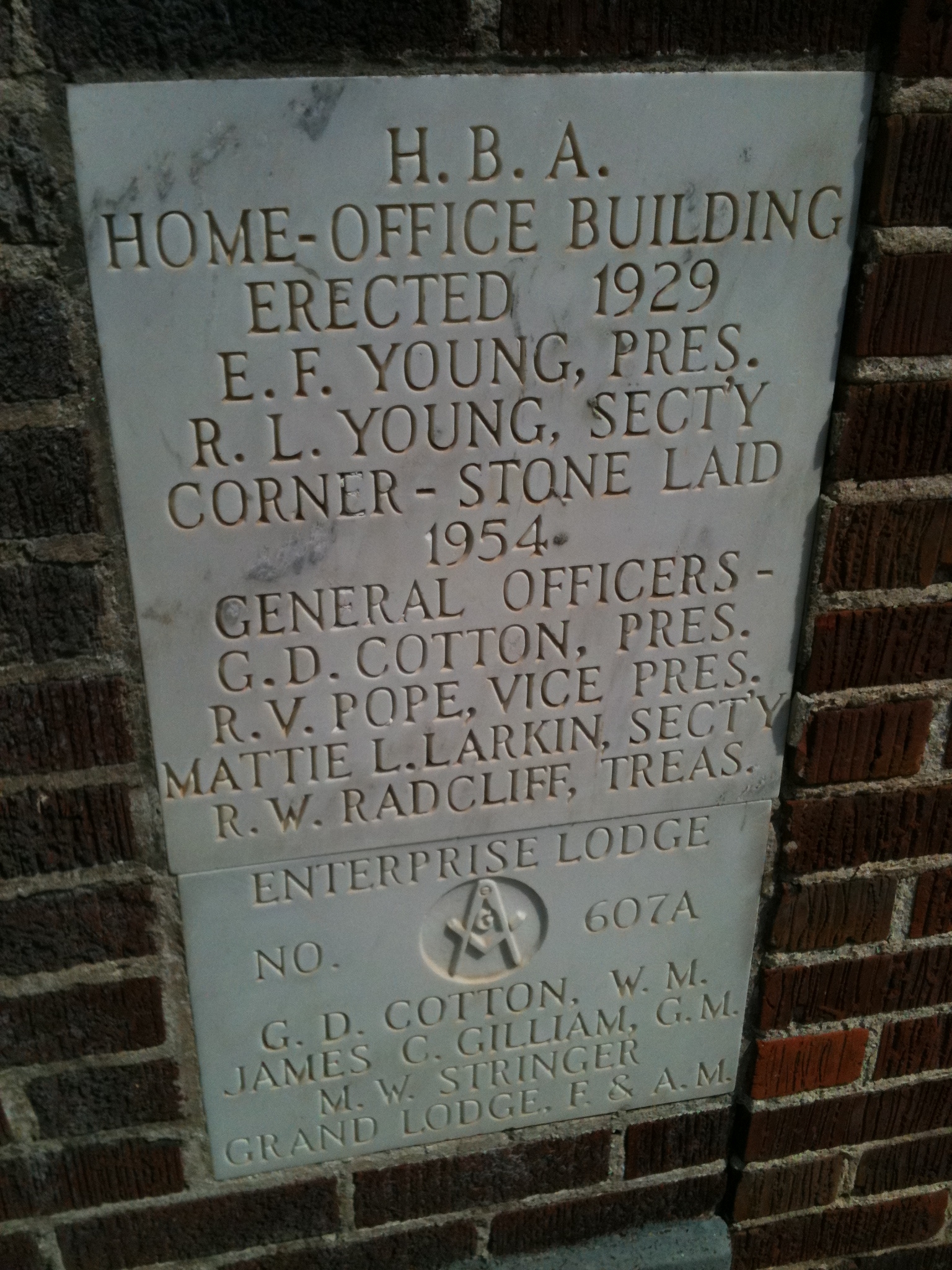
Holbrook Benevolent Association monument on 5th St., typical of sites for an historical trail
SOME RANDOM THOUGHTS ON VISITATION
June 7, 2011 § Leave a comment
- The visitation awarded to the non-custodial parent should be such as will foster a positive and harmonious relationship between parent and child. Wood v. Wood, 579 So.2d 1271, 1273 (Miss. 1991).
- The chancellor has broad discretion in fashioning visitation, keeping in mind the best interest of the child, the rights of the non-custodial parent, and the need to maintain a healthy, loving relationship between the non-custodial parent and the child. Harrington v. Harrington, 648 So.2d 543, 545 (Miss. 1994).
- The chancellor should specify the terms for visitation. Lauro v. Lauro, 924 So.2d 584, 591 (Miss. 2006). The visitation rights should be defined and fixed so as to avoid chaos. Brown v. Gillespie, 465 So.2d 1046, 1049 (Miss. 1985).
- Overnight visitation is the rule, not the exception. Cox v. Moulds, 490 So.2d 866, 870 (Miss. 1986). The non-custodial parent is presumptively entitled during reasonable times to overnight visitation with the child. Harrington at 545.
- The chancellor may place restrictions on visitation in circumstances where there is “an appreciable danger of hazard cognizble in our law.” Newsom v. Newsom, 557 So.2d 511, 517 (Miss. 1990). Any restriction must be shown to be necessary to avoid harm to the child. Dunn v. Dunn, 609 So.2d 1277, 1286 (Miss. 1992); Harrington, at 545; and Howell v. Turnage (Miss. App. 2011), at ¶ 16. A post discussing Howell v. Turnage is here.
- In order to modify visitation, all that needs to be shown is that the prior order for visitation is not working, and that modification is in the best interest of the children. Suess v. Suess, 718 So.2d 1126, 1130 (Miss. App. 1998).
IN LOCO PARENTIS TAKES ANOTHER HIT
June 6, 2011 § Leave a comment
In the COA case of Wells v. Smith, decided May 31, 2011, the appellate court was again confronted with a painful reality that chancellors are seeing more and more frequently: the situation where a child is raised by the grandparents because one or both of the natural parents has chosen to be absent from the child’s life, and the natural parent awakens one day to assert his or her parental rights.
In this most recent case, Tara Wells had given birth to a son, Jason, out of wedlock in 2003. Robert Johnson was Jason’s natural father. Tara and Jason lived with her mother, Sarah Smith, and her husband, William, for a time after the birth while she attended college. Tara’s college education spanned three years, and her time spent with Jason tapered off the longer she was in school. In April, 2006, Tara and Robert were married, and they moved to Washington, DC, where Robert was stationed with the military. Tara took Jason with her to live in DC, but returned him to live with the Smiths a short time later. After three months of marriage, Tara and Robert separated. Tara stayed in the DC area and Jason split time between there and Mississippi until November, 2006, when he returned to Mississippi for good.
In May, 2007, Tara signed over medical guardianship of Jason to the Smiths. Tara’s contact with Jason grew less and less. She allowed Jason to live with the Smiths, never asking to take him to live with her. In the meantime, Robert Johnson had been incarcerated in Virginia. In June, 2008, the Smiths filed pleadings in Mississippi seeking permanent custody of Jason. On October 1, 2008, they filed a petition for adoption and termination of Tara’s and Robert’s parental rights.
In December, 2008, Tara began living with another man, Neil Baker, and they were engaged in March, 2009, despite the fact that Tara was still married to Robert Johnson. Tara and Neil moved to Arizona. She was financially dependent on Neil, and he had never met Jason.
Also in December, 2008, Robert Johnson joined in the Smiths’ pleading for custody and consented to their being granted custody; he also consented to and joined in the petition for adoption.
In April, 2009, the court appointed a GAL. The GAL report recommended that the child stay with the Smiths. The GAL report, as well as the weight of proof at trial, established that the Smiths were the only mother and father Jason had ever known, and that their home was the only home he had ever had.
The chancellor relied on the doctrine of in loco parentis, in part on the GAL’s recommendation, to overcome the natural parent presumption and to find, applying the Albright factors, that Jason’s best interest would best be served by staying with the Smiths rather than his mother.
On appeal, the court analogized the case to the recent supreme court decision in Vaughn v. Davis, 36 So.3d 1261 (Miss. 2010), in which the court reversed and remanded for the chancellor to determine whether the father had relinquished the natural-parent presumption for reasons other than forfeiture by agreeing to a temporary custody order. The supreme court did not want to extend Grant v. Martin, 757 So.2d 264, 266 (Miss. 2000), which held that a parent’s agreement to a guardianship or custody judgment in a third party does create a forfeiture of the natural-parent presumption, to temporary orders, and wanted the chancellor to evaluate the proof to determine whether there was some other basis upon which to proceed.
The Vaughn decision pointed out the case of In re Leverock, 23 So.3d 424 (Miss. 2009), in which the natural father was found to have deserted his child by avoiding his moral and legal duties and parental obligations for in excess of two years.
The COA said in Wells:
“Although Vaughn was a case where the chancery court improperly found relinquishment of the natural-parent presumption due to the signing of a temporary custody order, it is analogous to this case. Here, the chancellor improperly relied on the doctrine of in loco parentis to find that the natural-parent presumption had been relinquished. We have been able to find no precedent for using that doctrine to overcome the natural-parent presumption. However, given the similarity of the facts in this case to Leverock and Vaughn, this case should be remanded to the chancery court to determine whether Tara deserted Jason, thus relinquishing her right to the natural-parent presumption. On remand, the chancery court should consider Jason’s circumstances at the time of remand.” [Emphasis added]
As in Davis, then, the Wells court directed the chancellor to find a basis other than the one he originally asserted as a basis to accomplish the best interest of the child. In Wells, the rejected basis was in loco parentis. I would guess that the definition of desertion to be applied by the trial judge will be MCA § 93-15-103(3).
The bottom line is that if you’re still barking up the in loco parentis tree, you are barking up the wrong tree. It simply won’t form the basis to overcome the presumption in favor of the natural parent. You’ll have to find another way to go in these very difficult, gut-wrenching cases.
DICTA
June 3, 2011 § Leave a comment


- Okay, all you art lovers. Which is the Rothko and which is the aerial photo of a tulip farm?
- Tina Fey offers a prayer for her daughter.
- Is the law school industry a bubble, and is it about to *POP*?
- Opera is a popular web browser in Europe. Oprah is, of course, Oprah. Give email accounts to folks who can’t spell, and you wind up with email intended for Oprah being sent to Opera. You can read some of them and the responses here.
- If you love to hoard stuff and would like to make some money off of it, Amazon has a deal for you. You can ship them (they pay the freight) your electronics, dvd’s, textbooks or video games, and they will send you a gift card you can use to purchase more stuff from Amazon. Only catch is that they only buy stuff they have listed as “eligible.” Check it out here.
- When you think of Walt Whitman, do you think about the poet or the Reconstruction Era bureaucrat? You win the stuffed rabbit if you answered “both.” Seems he worked in the US Atty General’s office in DC from 1863-1873 as a scribe or copyist, and generated memos recommending policy during the post-war period — 3,000 of them. You can read and hear about it at the National Archives site.
NO WAY TO BREAK A DOG OF SUCKING EGGS
June 2, 2011 § Leave a comment
Oh, for the lost, effulgent epoch of mellifluous legal prose when only the most grandiloquent curlicues and glittering flourishes of the language graced the solomonic decrees of our learned justices.
Take this for example: “It is a fact of common knowledge that when a dog has once acquired the habit of egg-sucking there is no available way by which he may be broken of it, and that there is no calculable limit to his appetite in the indulgence of the habitual propensity.” How could this elemental principle underlying so much of our law be more succinctly and eloquently stated?
Thus Blogged Anderson offers his favorite from the 1900 MSSC decison in ICRR v. Johnson, which includes the memorable phrase: ” … the icecold law, from which no friction will excite sparks … “
And Tom Freeland, on NMisscommentor weighs in with his favorites, where you can find the cite to the egg-sucking-dog reference above, and the surprising identity of its author, as well as the case that includes the incisive and insightful quote: “It is not always conducive to domestic peace for a husband to contradict the statements of his wife … “
My bet is that the comments will produce at least a few more such gems. You should check them out.
CREDITING “UNPAID” CHILD SUPPORT
June 1, 2011 § 2 Comments
Lawyers and the courts are often called upon to clean up the mess made by the parties when they make a handshake deal to modify a judgment. Here’s a fairly common setting …
The custodial mom and son aren’t getting along. The child is a rebellious teenager who is not interested in school. He has fallen in with the wrong crowd and appears headed for trouble. Non-custodial dad agrees for the child to come live with him to finish out the school year and get him straightened out. Junior lives with dad for 10 months, does better in school, gets his head right, and returns to live with mom. During the 10 months Junior was with his father, dad did not pay the $300 a month child support ordered by the court in the divorce judgment. As soon as Junior returns home, mom files a contempt action against dad, wanting her $3,000 in child support arrearage, plus interest and attorney’s fees.
Mom claims that the law of Mississippi is that the court can not enforce a modification by the parties, and that if dad had wanted to be relieved of child support he should have gotten a court order.
Dad points to the fact that he supported the child 100% during the 10 months Junior was with him, and the money would be an unjust enrichment for mom.
Who’s right?
In the case of Varner v. Varner, 588 So.2d 428, 434 (Miss. 1991), the parties had three children with a “global” child support obligation of $600. One of the children came to live with the father for a number of years. The court said:
The law remains firm that court-ordered child support payments vest in the child as they accrue and may not thereafter be modified or forgiven, only paid. But this does not mean that equity may not at times suggest ex post facto approval of extra-judicial adjustments in the manner and form in which payments have been made.
The court went on to find that the father had, indeed, made the child support payments ordered by the court for Junior’s benefit. He just did not make the payments to the mom. The court cited the case of Alexander v. Alexander, 494 So.2d 365, 368 (Miss. 1986), quoting it as follows:
If we affirm the chamcellor’s back award of child support to Mrs. Alexander, we will create a situation of unjust enrichment in Mrs. Alexander. This is true because nduring the entire period of time for which Mrs. Alexander claimed support Mr. Alexander had the child in his custody, was supporting the child, and furthermore, was paying the child the $200 a month child support called for by the decree.
Under these circumstances Mrs. Alexander would have no claim to the back child support except to accept it as a conduit to pass directly to the child or back to Mrs. Alexander for the use and benefit of the child. We consider this a vain and foolish act. In our opinion, when the custodial parent received full child support during the time she had custody of the child, did not complain when the child moved in with the other parent, and accepted this arrangement for 20 months with the child support being paid directly to the child, the parent paying the child support is entitled to full credit for all child support paid to the child. He is also entitled to [credit for] any additional support which he has evinced by satisfactory proof to the trial court.
The court went on to say that the father may receive credit for having paid child support where the child lived with him for a time and he paid the support directly to, or for the benefit of, the child. The effect of Varner is that the paying parent is granted a pro rata credit for child support. In Varner (at page 434), that meant that the father received a $200 a month credit against his “global” child support obligation of $600 a month for three children; in other words, since 1/3 of the children lived with him for a time, he is entitled to a pro rata reduction of 1/3.
The decision also includes the familiar admonishment that parties who modify a court judgment without court approval do so at their peril, and they encouraged parties to obtain a judgment incorporating their agreement before embarking on it.
A similar issue arose in Dorr v. Dorr, 797 So. 2d 1008, 1012-1015 (Miss. App. 2001), in which Houston Dorr was ordered to pay child support to his former wife, Susanne Dorr. In return, Houston was given the right to claim the child as a dependent for tax purposes. Houston failed to make consistent child-support payments from 1985 to 1994. In 1988, Houston and Susanne made an extra-judicial agreement whereby Houston relinquished his right to claim the child as a dependent for tax purposes. Susanne claimed the tax exemption from 1988 through 1994 and received a $4,300 tax benefit from doing so. Then, in 1998, Susanne filed suit against Houston for the back child support. The COA found that, although the chancellor had no authority to enforce the extra-judicial agreement, the chancellor erred by not giving Houston credit for giving up his right to the exemption. The court held:
In our view, this financial benefit to [Susanne] for the child’s benefit, though not directly derived from [Houston]’s own income, in equity ought to be considered as a credit towards [Houston]’s recurring child support obligations accruing during the same period, much in the same manner that such indirect payments as social security payments to dependent children derived through the efforts of the obligee have been allowed as credit toward child support. See , e.g., Bradley v. Holmes, 561 So. 2d 1034, 1035 (Miss. 1990).
Dorr was followed in the COA case of Potts v. Windham, decided March 1, 2011, at ¶ 8. The trial court had denied credit to the father for the amount of the mother’s income tax refund because his income was such that he would not have paid any income taxes had he filed, whether or not he claimed the child as a dependent. In reversing, the COA noted that the mother had realized a $4,300 credit by claiming the child, and that the benefit to her, not to the father, was the relevant yardstick to determine whether there would be unjust enrichment.
In the Bolton v. Bolton, decided May 24, 2011, by the COA, at ¶ 47, the following language appears:
Courts award child-support to the custodial parent for the benefit and protection of the child. Smith v. Smith, 20 So. 3d 670, 674 (¶13) (Miss. 2009). “Such benefits belong to the child, and the custodial parent has a fiduciary duty to hold them for the use of the child.” Id. “The law remains firm that court-ordered child-support payments vest in the child as they accrue and may not thereafter be modified or forgiven, only paid.” Id. “But this does not mean that equity may not at times suggest ex post facto approval of extra judicial adjustments in the manner and form in which support payments have been made.” Id. “The noncustodial parent may be entitled to credit for any additional support which he/she has evinced by satisfactory proof to the trial court.” Id.
In Bolton, the parties had resumed cohabitation after the divorce for a time, and the father was given credit for around $10,000 in payments that he was able to prove he had made for the benefit of the child during the time that the parties lived together. The credit reduced his arrearage in child support from around $14,000 to around $4,000.
To sum it up, your client may just be entitled to some credit for payments made for the benefit of the child in lieu of child support. The result appears to rely on a situation where there is either an actual live-in situation or an actual intended exchange of value in place of child support. Don’t expect your client, though, to get credit for birthday presents, new shoes, school supplies, or toys purchased in the ordinary course of being a non-custodial parent.
NEW GUIDELINES FOR GENETIC TESTING TO DISESTABLISH PARENTAGE
May 31, 2011 § 1 Comment
Ever since the supreme court’s ruling in Williams v. Williams, 843 So.2d 720 (Miss. 2003), that a man under a support order who is proven by DNA testing not to be the father of the child can not be required to continue to support the child, the procedure to be followed has been anything but clear. Up to now, it has been up to each chancellor or county judge to find a way.
Effective July 1, 2011, the law on this point is clarified and specified. The legislature has created a new MCA § 93-9-10, and amended 93-9-9, 93-9-28, 93-9-21, and 93-11-71, to spell out a uniform, orderly process. Here are the highlights:
- If parentage was established through a court order, and the father had been offered genetic testing and declined, he will not be granted the relief of disestablishment of parentage.
- If parentage was established by the father signing the birth certificate, he will have one year within which to request genetic testing. After that, he can not contest parentage except on a showing of fraud, duress or material mistake of fact. Current law allows only 60 days to contest parentage.
- If parentage was established because the parents were married at the time of the birth, the legal father will be allowed to petition for genetic testing so long as he did not continue to hold himself out as the father after learning that he was not the father, or if he prevented the actual biological father from asserting his parental rights. This last provision appears to reflect and cover the situation addressed in the case of Lee v. Lee, 12 So.3d 548 (Miss. App. 2009), which was discussed in a previous post.
This is intended only to be a general summary, so you should read the actual provisions when they appear in your legislative advance sheets.

UPDATED CHECKLIST OF CHECKLISTS
May 27, 2011 § 5 Comments
Proving your case by proving certain factors is a fact of legal life in Mississippi. I’ve referred to it as trial by checklist. If you’re not putting on proof of the factors when they apply in your case, you are wasting your and the court’s time, as well as your client’s money, and you are committing malpractice to boot.
Many lawyers have told me that they print out these checklists and use them at trial. I encourage you to copy these checklists and use them in your trial notebooks. And while you’re at it, you’re free to copy any post for your own personal use, but not for commercial use. Lawyers have told me that they are building notebooks tabbed with various subjects and inserting copies of my posts (along with other useful material, I imagine). Good. If it improves practice and makes your (and my) job easier and more effective, I’m all for it.
Here is an updated list of links to the checklists I’ve posted:
Doing an accounting in a probate matter.
Income tax dependency exemption.
Modification of child support.
MARK LEVY ON THE LEGACY OF FREEDOM SUMMER
May 26, 2011 § 9 Comments
I posted Monday about Freedom Summer in Meridian. One of the courageous COFO workers who spent time in Meridian in that summer of 1964, and whom I mentioned in my post, was Mark Levy, who came with his wife Betty to Meridian from Queens College in New York.
Mark took the time to send me a thoughtful response to my post, and I think it is worth your time to read. He raises some intriguing points about preserving the story of how the civil rights movement touched and changed Meridian, and how it can be passed on. There is food for thought here, and a call to action.
As Mark says, there are the seeds of the beginning of a conversation here. Will you join the discussion?
__________________________________________________
“Ordinary People Doing Extraordinary Things”
Meridian Civil Rights Stories Worth Remembering and Telling
The summer of 1964 touched on people’s lives in Meridian in many different ways. Chancery Judge Primeaux’s narrative is an important and sensitive step in opening up that conversation. I’m glad that my old photos of daily life in the Freedom School are a contribution.
Similarly important was last month’s April 29th recognition by the Mississippi Heritage Trust in Jackson that the Fielder and Brooks Drug Store building and site of the 1964 COFO office at 2505 ½ 5th Street is an endangered but historically significant building in the state, well worth preserving. The Meridian civil rights story needs to be documented and shown. The 2505 ½ 5th Street site would be perfect not only as an interpretive, but also as an educational center and local attraction.
In addition to the pictures I found in my files, I also found the names of about 250 students – ages 8 to 18, at the time – who attended summer classes in the Freedom School. We, the volunteer teachers, learned as much from our students that summer as we were able to teach them. The students were brave and serious young people who took all sorts of risks to come to school. The former students are now in their late 50s and 60s. Where are they today? How did those experiences touch their lives? Who stayed, who left, and who has come back to Meridian? What contributions have those former students made to their respective communities?
The decisions for students to attend — or not attend — Freedom School were family decisions. In 1964, that meant that parents, grandparents, aunts, uncles, etc. all decided to take on some family risk in sending their kids to the Baptist Seminary. Not only should a history of Meridian tell the story of how a famous folk singer like Pete Seeger performed in Meridian, but it should also be noted that the room was packed with people who took a risk in coming to hear him. Another footnote to the Meridian civil rights story is that the Meridian Freedom School at the Baptist Seminary had the honor to play host in August to a state-wide convention of young delegates from Freedom Schools all over Mississippi. The resolutions passed by the students attending reveal a wide range of issues, concerns, and hopes – worth looking at again to see what progress, if any, has been made since those times.
Similarly, in my files, I’ve found the names of about 45 out-of-state volunteers, in addition to Mickey and Rita Schwerner, who participated – at one time or another — in COFO-sponsored community center, voter registration, freedom school, and MFDP work in Meridian during 1964-65. We stayed in the homes of some very brave local people, rented some living and office space, ate in selected establishments, cashed personal checks in some stores, asked cab drivers and others how to get around, attended some church services and used some churches for meetings. In the highly charged atmosphere of the times, those ordinary decisions could have life and death – in addition to job – consequences. We, the volunteers, took risks; but the local families and organizations who invited us to come took far more risks than us.
Several of the pictures I found in my files show a Lauderdale County meeting of the Mississippi Freedom Democratic Party where Meridian and county “precinct” and “beat” representatives elected ordinary people as local delegates to go to the national convention in Atlantic City. The MFDP was formed to show that people prevented from registering in 1964 truly wanted to participate in the electoral system. The civil rights movement in Meridian involved commitment and participation from both young and old. The pressures against taking a stand were powerful and frightening.
Does anyone know where Martin Luther King Jr. came to speak in Mississippi during the summer of 1964? I believe he spoke in just two places – and that included speaking at two churches in Meridian.
The civil rights summer of 1964 should be taken as just one moment in history – with important precedents and ongoing effects. For example: a) In Meridian, an NAACP chapter existed for a number of years prior, sometimes recruiting with quiet, hand-collection of dues. They had a growing youth membership that later became part of the local COFO movement in 1964. That NAACP chapter continues to exist today. b) The Fielder and Brooks pharmacy, itself, was just one example of black professional accomplishment that had been developing for years in Meridian. c) 1965 and the years thereafter, school, college and public facility de-segregation and voter registration brought other challenges and additional sets of heroes and heroines who stepped forward and deserve to be respected and remembered.
What does all of this mean today – especially for younger people? What can research projects in Meridian’s high school, junior college, and senior college contribute to finding, recording, and telling about local people’s hopes, fears, and contributions? What remains to be improved? What stories do old-timers – both black and white – have to tell of those times in Meridian? How would preserving the Fielder/COFO building help in both saving and using that history?
I believe that Judge Primeaux has done a great service in his blog starting a new discussion of those questions.

