HR VOTE TODAY OR TOMORROW
February 16, 2011 § 1 Comment
Judiciary A Committee of the House of Representatives will take up the judicial pay raise bill today, and it is expected that the bill will be voted out. The full house will get the bill either today or tomorrow. A 3/5 vote is required, since it increases fees.
Please contact your representative and urge support of this measure. Justice Waller’s presentation on the merits is below.
THE LATEST ON ROBINSON V. BROWN
February 16, 2011 § 4 Comments
The COA case of Robinson v. Brown, handed down January 25, was the subject of a previous post in which I alerted chancery lawyers that the case appeared to change the law that post-trial motions were not required in chancery court to preserve error for appeal. I also pointed out that MRCP 52(b) specifically excepts non-jury trials from the post-trial motion requirement.
In the COA’s handdowns on February 15, this entry appeared:
EN BANC
2009-CA-01599-COA
Mary Elizabeth Brown Robinson v. Paul Arthur Brown
Lee Chancery Court; LC Case #: 02-0518(41)H; Ruling Date: 08/06/2009; Ruling Judge: John Hatcher; Disposition: The Court on its own motion stays the mandate and grants rehearing. Order entered.
Is the COA going to circle back to where we were pre-January 25? Stay tuned.
AN URGENT MESSAGE FROM CHIEF JUSTICE WALLER
February 15, 2011 § 1 Comment
To Fellow Judges and Members of the Bar:
Last week, the Mississippi Senate passed Senate Bill 2253, which provides a pay increase for our trial and appellate judges. This increase is essential for preserving a well qualified and independent judiciary. We need your support. Please contact your representative in the House and encourage them to support SB 2253.
According to the National Center for State Courts (NCSC), Mississippi ranks 51st in the nation in terms of judicial pay. Mississippi judges, furthermore, have not had a pay increase since 2003. Two disturbing trends have developed as a result of the low level of judicial pay. First, the salaries of other public officials have far outpaced that of judges. For example, the Chairman of the Workers’ Compensation Commission is paid more than every trial judge in the State and the Chief Judge of the Court of Appeals – despite the fact that the Commission’s decisions are reviewed by the trial and appellate judges. Second, and even more disconcerting, is the high rate of turnover we have experienced recently. Twenty-one new judges have taken office during the last two years. I know from personal conversations that the low level of pay is one of the main reasons that many judges are leaving office. The proposed salary increases in SB 2253 would make Mississippi’s judicial pay comparable to our neighboring states. The increases set forth in SB 2253 would make each judge and justice’s salary equal to seventy percent of the salary of an equivalent judge at the federal level. And significantly, no general funds are used for this increase. Funding is primarily derived from user fees. The pay increase, furthermore, is not effective until FY 2013. Admittedly, this increase is substantial, somewhere in the thirty percent range. Much of the debate has centered around the arguments that, given the dire economic climate, this is not the proper time to give anyone a raise, and that all state employees deserve a pay increase. We are aware and sensitive to both of these concerns. These pay increases, however, are funded by user fees. Moreover, Mississippi judges have been underpaid for quite some time. We need the best and the brightest of the legal profession making decisions that dramatically impact the lives of our citizens. The only way to attract and retain such individuals is to provide a competitive level of pay.
Below are a few arguments in support of SB 2253 that you may find helpful:
-
51st in the Nation. According to the National Center for State Courts (NCSC), Mississippi has the lowest paid judges in the nation.
-
High Turnover. Not counting the newly created judicial posts, twenty-one new trial judges have taken office in the past two years. This is an unprecedented rate of turnover, which impedes the efficiency of our courts.
-
Need for Realignment. The Chairman of the Workers’ Compensation Commission earns $112,436, and a Commission member earns $108,698. This is more than any trial judge or Court of Appeals judge, including the Chief Judge.
-
Funded by User Fees. Funding for this pay increase is derived primarily from user fees. The civil filing fee will increase $40. Our civil filing fees will still be the lowest in the southeast.
-
Delayed Implementation. The pay increase is not effective until FY 2013.
-
Other State Employees. Non-elected state employees have had three pay increases since 2003. And some executive personnel have had very substantial increases during this same period. For example, in May 2010, the Department of Public Safety Administrator received a $16,000 salary increase (from $122,115 to $138,115). A number of other Department of Public Safety employees received raises of 20 percent or higher between July 2008 and March 2010.
JUSTICE GRAVES TO THE FIFTH CIRCUIT
February 15, 2011 § 2 Comments
Justice James Graves of the Mississippi Supreme Court was confirmed yesterday as the first Mississippi African-American to serve on the US Fifth Circuit Court of Appeals. His nomination was approved by the US Senate late yesterday afternoon.
 Graves’ nomination received bi-partisan support of the Mississippi US Senatorial and Congressional delegations.
Justice Graves, of Clinton, will leave an opening on the Mississippi Supreme Court that will have to be filled by appointment of Governor Hailey Barbour, until an election can be held to replace his successor. Philip Thomas, in his Mississippi Litigation Review and Commentary blog speculates about the appointment.
PAY ATTENTION TO JURISDICTION AND VENUE FOR DIVORCE
February 15, 2011 § Leave a comment
Before a Mississippi Chancery Court can consider whether to grant a divorce, it must make four fundamental findings:
- That the parties were married to each other (subject matter jurisdiction);
- That the parties are properly before the court by process and notice (personal jurisdiction);
- That the action is filed in the appropriate county (venue, also called “venue jurisdiction”); and
- That at least one of the parties meets the statutory residency requirement, and that residence in Mississippi was not obtained in order to get a divorce.
These are commonly referred to as the “jurisdictional facts,” and you can not even get to address whether there are grounds, or equitable distribution, or any other divorce issues unless the jurisdictional facts are established in the record.
If you are in doubt about the proper venue of your action, consulting MCA § 93-5-11 will give you the answer.
All of the above may appear elementary to you, but it is astonishing to me how many contested divorce cases I see presented where neither attorney establishes even one or more of the jurisdictional facts, and there are many where none of them are mentioned. In some cases, I have invoked MRE 614(b) to get the information myself into the record; after all, if I lack subject matter jurisdiction or venue is improper any action I take is void, and if I lack personal jurisdiction any action is voidable.
Remember that your pleadings are not evidence. Just because you pled it does not put it into the record. If you don’t establish jurisdiction on the record so that the judge’s finding of jurisdiction is supported by evidence, you are leaving your client’s judgment vulnerable to attack by the disgruntled other party.
WHAT IS YOUR DUTY TO THE COURT WHEN YOU HAVE CONTACT FROM THE OTHER SIDE?
February 14, 2011 § 1 Comment
You have filed a Complaint for Divorce for your client, and thirty days have elapsed with no answer being filed by defendant. Your client wants you to get this over with, and has been calling and asking when you plan to present his case to the court. Only problem is you received a letter from another attorney the day after the defendant was served with process. The letter says that she wants to settle, and if no settlement can be reached, she intends to defend. Since that letter, though, you haven’t heard anything further.
What do you do? Can you present the case as an uncontested divorce? Do you have a duty to tell the court about the letter?
The facts above are close to those in Holmes v. Holmes, 628 So.2d 1361, (Miss. 1993), in which the Mississippi Supreme Court reversed a chancellor’s refusal to set aside an uncontested judgment of divorce in those circumstances. The supreme court stated:
“In the case at bar, Mrs. Holmes promptly contacted an attorney. Her attorney wrote her husband’s attorney and informed him that Mrs. Holmes was represented by counsel and that she wished to settle the case if possible; however, he made clear Mrs. Holmes’ intent to defend the suit should no settlement be reached. With knowledge of this letter, Mr. Holmes’ attorney nevertheless proceeded to secure a divorce by default against Mrs. Holmes. In this regard, his conduct suggests gamesmanship. In the Comment to M.R.C.P. 1, it is stated that “properly utilized, the rules will tend to discourage battles over mere form and to sweep away needless procedural controversies that either delay a trial on the merits or deny a party his day in court because of technical deficiencies.” Conversely, improper utilization of the rules invariably results in the type of gamesmanship and ambush techniques, employed in the case at bar, that the rules were designed to abolish. We refuse to condone such behavior and therefore reverse the judgment of the chancellor and remand for proceedings consistent with the opinion rendered in this cause.”
So what is your duty to the court? At your first opportunity, tell the judge with all candor what contact you have had from another attorney. The judge will decide whether the contact is sufficient to constitute an appearance. You should offer the court any correspondence for the judge to examine. If your only contact was in the form of a conversation, relate accurately what the conversation was. Sometimes that contact was with the other party. Tell the court and let the judge decide whether it was enough to be treated as a contest. The judge may rule that the other side is entitled to a notice of hearing before you may proceed.
If you fail to disclose contact from another attorney or the other party, you run the risk that the other side may file a motion to set aside that judgment, and the judge may just file away a mental note about you that you are one of those lawyers who doesn’t tell the court all it needs to know to make a fair decision.
Read the entire Holmes decision and keep in mind the supreme court’s use of the distasteful terms “gamesmanship and ambush techniques.” Judges don’t appreciate those kinds of tactics that bring both the courts and the legal profession into disrepute.
MR. SNOW AND HIS RAILROAD VERDICT
February 11, 2011 § 4 Comments
Ed Snow of Meridian was one of the most formidable defense trial lawyers in Mississippi in the 1950’s and 60’s. He represented the railroad, and it was rare for a jury to return a verdict against his clients.
The railroad had been the lifeline of Meridian since the 1870’s. The rail lines that nurtured the city grew up and proliferated on the south edge of the main business district until by the 1950’s there were more than twenty lines running east and west that had to be crossed headed south from downtown.
Yet in the early 1950’s there was no overpass over the major rail lines running right through the heart of Meridian’s downtown. At the crossing of the city’s busy major artery, the north-south Twenty-Second Avenue, there was a guard shack at both the north and south ends of the crossing. In each shack sat a crossing guard awaiting a telegraph signal that a train was coming. When he got the signal, the crossing guard would stand in the street waving a warning placard in the daylight and a lantern at night.
One dark night, a car cruised southward down Twenty-Second Avenue approaching the crossing. The occupants of the car, I am sure, were noticing the throngs at Weidmann’s and the couples strolling along the sidewalks, and were not giving much thought to the railroad tracks ahead. According to the driver and his wife, who was the passenger, there was no signal at the crossing, and they sped ahead only to slam with considerable force into the side of a freight train that was proceeding east. Both occupants were seriously injured, and they filed suit against the railroad.
Mr. Snow duly prepared for the trial. His case depended on the testimony of the crossing guard, who was a simple, poorly educated man, but who was honest. Mr. Snow went over the man’s story repeatedly, and the man consistently insisted that he did wave his lantern frantically, but the car would not slow or stop. He said that it ran straight past him, into the crossing, almost running him over, and collided fatefully with the train. Mr. Snow was satisfied that the man would answer every question truthfully, and that he would not equivocate.
At trial the plaintiff’s attorney called the crossing guard as a witness. The attorney was a skillful, experienced advocate who tried every wily ploy he knew to catch the crossing guard in an inconsistency or to get him to change his story. He grilled the guard thoroughly, attacking his memory and the plausibility of his testimony. He made the guard demonstrate for the jury how he had held the lantern, the position at which he stood in relation to oncoming traffic, and the angle at which he had waved the lantern to and fro over his head. He quizzed the witness to the point of exhaustion about the exact time when the signal came for the approaching train, how long it took him to respond to the signal and get into the street, and the time that elapsed before the train entered the crossing. The plaintiffs’ lawyer’s cross examination was brutal, but to no avail. The unsophisticated crossing guard held his ground, unwavering in his insistence that he had waved the lantern and had to jump aside to keep from being run over as the plaintiffs’ car zipped by.
The jury returned a verdict for the railroad, and Mr. Snow and his crossing guard left the courthouse. As they walked down the steps leaving the building, Mr. Snow congratulated the witness.
Mr. Snow: You did a good job. I appreciate the way you stood up to that lawyer.
Guard: Thank you, Mr. Snow.
Mr. Snow: It’s not easy for a lay person to avoid all the traps lawyers use in their questions.
Guard: Oh, Mr. Snow, I was afraid he was going to ask me one more question.
Mr. Snow: One more question? What question?
Guard: “Was the lantern lit?”
Post-script One:
Mr. Snow continued to practice law until shortly before his death around 1980. He lived on busy 23rd Avenue in the house that is now the dental office of David McGrew. Every weekday morning Mr. Snow would back out of the driveway in his enormous black Chrysler Imperial. If you saw him at the wheel, you would see a smallish, balding white-haired head in the driver’s seat, eye-level at about the top of the steering wheel. He never looked to see whether any cars were coming; he simply backed straight into the avenue heedless of the traffic, and oncoming cars had to yield or else. He would then proceed south toward his office on the second floor of the First National Bank (now Trustmark) building, never exceeding more than ten miles an hour. Stop lights and stop signs were irrelevant to him, as was the middle line of the street. He glided along straddling the middle of the street, oblivious to other cars, through red lights and stop signs, letting the traffic snarl and back up in every direction as he made his way downtownward at less than a snail’s pace, a long train of cars following him like a doleful funeral procession.
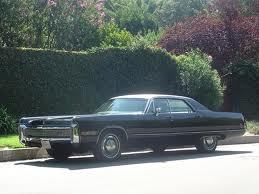
1973 Chrysler Imperial
Post Script Two:
Around 1956, Mayor W. S. Smylie succeeded in completing the defining project of his administration: the Twenty-Second Avenue overpass. Its dedication was marked with a parade through downtown. Here’s a photograph of the occasion taken south of the overpass looking north with the Threefoot Building in the background.

MODIFICATION AND CONTEMPT: WHICH VENUE?
February 10, 2011 § Leave a comment
Steve and Nancy are divorced in Clarke County, Mississippi. The divorce judgment awarded custody of the three minor children to Nancy and ordered Steve to pay her child support. Shortly after the divorce, Steve relocates to the coast. After a year or two, Nancy remarries and moves to Tupelo with her new husband.
It has been six years since the divorce, and now Nancy wants Steve to begin paying more child support. Steve wants to file a contempt/modification action against Nancy for her interference with his visitation, and to gain custody of their oldest son, who now wants to live with dad. Nancy has not lived in Clarke County in the past four years, and Steve has not lived there in the past five years.
Which chancery court will have jurisdiction? Lee County where Nancy and the children live? Harrison County where Steve lives? Or is it the county where the defendant (respondent) resides, based on who files first?
The answer is: None of the above.
Clarke County will continue to have jurisdiction to modify and enforce its own judgments, even though neither party any longer resides there.
In the case of Reynolds v. Riddell, 253 So.2d 834, 836-837 (Miss. 1971), the supreme court held that the court that had original jurisdiction and rendered the judgment is the court that retains jurisdiction to modify and enforce that judgment, regardless of the residence of the parties since the time.
The appellant in Reynolds had argued that the version of MCA § 93-11-65 at the time conferred jurisdiction to determine and modify child custody on any Mississippi court where the child resides or where the party having actual custody resides, or where the defendant resides. The phrase “party having actual custody” must pertain to a party who obtained custody in in original proceeding and hence applies to modifications, the appellant argued. Not so, replied the supreme court opinion. It stated that the legislative intent of MCA § 93-11-65 was:
” … to provide a means of judicially determining the legal custody of a child in those instances where its custody was in question and no previous adjudication had been made thereasto, or either there existed conflicting custodial adjudications. We are of the opinion that the legislature did not intend to divest a court of jurisdiction … which continues in that court for the purpose of modification upon the changed circumstances between the same parties. We hold, therefore, that the Chancery Court of Washinton County did not have jurisdiction too modify the decree of custody entered by the Chancery Court of Sunflower County since the latter had continuing jurisdiction over these minor children.”
The court cited older cases that reached a similar result.
Three exceptions have been carved out of the rule announced in Reynolds:
- Reynolds itself created a procedure to remove the case to another county. At page 837, the court stated: “To alleviate the unfortunate condition made apparent by this case, the court vested with exclusive and continuing jurisdiction may entertain a motion to transfer the cause to the county which is the residence of the parents and the children, and upon hearing this motion, if it appears to the court in the exercise of its sound discretion that time and expense would be saved and the best interest of the children served or promoted, then the motion might be properly sustained.” [Emphasis added] Note the highlighted language. It provides that the action may be transferred to the county where both parents and children reside, not to a county where one parent or one parent and the children reside. In other words, you may proceed in the county where the custody order was originally entered, or in another county if both parents and children reside in that county, but in no other.
- In Bubac v. Boston, 600 So.2d 951, 955 (Miss. 1992), the court held that a habeas corpus proceeding may temporarily modify an original custody adjudication in certain limited circumstances, and that the jurisdiction of the habeas court is statutorily in the county where the children are being illegally detained. The habeas modification is temporary only until a permanent modification proceeding can be held in the court having original jurisdiction. The temporary nature of habeas jurisdiction wa recently reaffirmed in Pruitt v. Payne, 14 So.3d 806 (Miss. App. 2009).
- In Brashers v. Green, 377 So.2d 597, 599-600 (Miss. 1979), the court again upheld the separate jurisdiction of the habeas court and applied what was then the law regarding child custody modifications in cases involving parties in different states, which has since been supplanted by the Uniform Child Custody Jurisdiction and Enforcement Act. And in a post UCCJA case, the same holding, Roach v. Lang, 396 So.2d 11, 13 (Miss. 1981).
Reynolds was a pre-MRCP case. We’ve talked here before about transfers and venue, and how the two concepts interact. I am not aware of any cases that tackle similar issues from the standpoint of rules-based transfer, but the Reynolds rationale is sound under the rules and application of venue concepts, in my opinion.
In the case of Harry v. Harry, 856 So.2d 748, 751 (Miss. App. 2003), the court held that an action for contempt may only be brought in the same court that rendered the original judgment, and the contempt action is ancillary to the original proceeding. Venue is exclusive in the original court even though the petitioner has moved to a different county in the same state. “Only the court contemned has jurisdiction to punish the contemnor.” Harry at 751; citing Tollison v. Tollison, 841 So.2d 1062, 1064 (Miss. 2003).
Neither the Uniform Child Custody Jurisdiction and Enforcement Act nor the Uniform Interstate Family Support Act offer any help. Those laws govern actions between a non-resident and a Mississippi resident, or between residents of other states, and do not apply to actions between exclusively Mississippi residents.
I’ve heard lawyers say for years that there are other ways to transfer, but the only authority I have ever found one way or the other is above. If you have something else that points in a different direction, let me know .
In sum, bring that modification or contempt action before the court that issued the original judgment that you are seeking to modify or enforce. If all of the parties and all of the children have relocated to another county, and they are all residing in that single county, you can petition the court to transfer the case to the new county.
MINIMUM CONTACTS FOR ALIENATION OF AFFECTION
February 9, 2011 § 4 Comments
Kristina and her husband Eric lived in Long Beach, Mississippi. Kristina commuted to work in Louisiana, where she began having a sexual relationship with William, a co-worker. All physical contact between Kristina and William occurred exclusively in Louisiana.
When they were apart, Kristina and William pursued their mutual infatuation via e-mail, cell phone and text messages. Many of the electronic communications were sent and received by Kristina while she was physically located in Mississippi.
Eric discovered the relationship and asked William to leave his wife alone. William persisted. Eventually Eric and Kristina were divorced and Kristina moved to Louisiana and married William.
Eric sued William in the County Court of Harrison County, Mississippi, for alienation of affection, alleging that his damages occurred in Mississippi, and that Kristina had sent and received communications while she was in the state.
William moved unsuccessfully to dismiss for lack of personal jurisdiction and took an interlocutory appeal to the supreme court.
In the case of Knight v. Woodfield, decided January 6, 2011, the Mississippi Supreme Court found that the phone calls, text messages and e-mails were sufficient “minimum contacts” with Mississippi to confer personal jurisdiction. The court cited International Shoe Company v. Washington, 326 US 310, 316 (1945), which states that “A defendant has ‘minimum contacts’ with a state if the defendant has purposefully directed his activities at residents of the forum and the litigation results from alleged injuries that arise out of or relate to those activties.”
The court also found that allowing the suit to go forward in Mississippi would not offend traditional notions of fair play and substantial justice because Mississippi has an interest in providing a forum for its residents who are injured by nonresidents and for other reasons.
The opinion, written by Justice Carlson, includes this language about the tort of alienation of affection:
Mississippi’s interest is enhanced because Louisiana does not recognize the tort of alienations, making Mississippi the only viable forum for Woodfield’s claims … the purpose of the tort of alienation of affections is the ‘protection of the love, society, companionship, and comfort that form the foundation of marriage …’ [citations omitted] Permitting claims for alienation of affections protects the marriage relationship and provides a remedy to those who have suffered loss of consortium as a result of the conduct of others …”
Justice Waller, joined by Chandler, dissented, disagreeing with the majority that the electronic communications constituted minimum contacts with Mississippi.
We’ve talked here before about the viability of alienation of affection as a cause of action. From the language in this case, it appears that alienation is as viable as ever.
ANOTHER NAIL IN THE GOODWILL COFFIN
February 8, 2011 § 2 Comments
“Goodwill” is the term used in accounting to describe the “prudent value” of a business over and above that attributable to the value of its assets, such as its reputation with customers and the value of its brand. An example would be the value that Coca Cola’s planet-wide brand recognition adds to the company’s value over and above the value of its assets.
Ever since the landmark decision in Singley v. Singley, 846 So.2d 1004 (Miss. 2002), in which the supreme court reversed the court of appeals and held that goodwill is not to be considered in business valuations for divorce, the courts have wrestled with the breadth of that decision. Singley, which involved a dental practice (in Meridian), accurately reflects the way professional practices are valued by valuation experts, who consider that the value of a professional practice depends heavily on the participation in it of its principal, so that it has no goodwill. The question lingered, however, as to how the court would apply the no-goodwill concept in other business valuations.
It is beyond the scope of this post to analyze Singley’s progeny, the most notable of which are Watson v. Watson, 882 So.2d 95 (Miss. 2004), and Yelverton v. Yelverton, 961 So.2d 19 (Miss. 2007). If you’re going to handle any divorce cases involving a busines, you will have to acquaint yourself with those decisions.
This post address the latest pronouncement on goodwill, which comes in the case of Lewis v. Lewis, handed down by the supreme court on February 3, 2011.
Lewis, which was before the court on certiorari from the court of appeals, involved valuation of a business enterprise jointly owned by the divorcing husband and wife to develop residential real estate. The court of appeals had reversed and remanded for the chancellor to correct errors in the valuation of the business. On cert, the supreme court, by Justice Randolph, upheld the court of appeals’ reversal and remand in part, but reversed the court of appeals to add that the trial court was precluded from considering goodwill in its analysis of the valuation.
In a cogent dissent, Justice Kitchens pointed out that Singley and the cases following it had correctly appled the exclusion of goodwill to the professional practices involved in those cases. The business in Lewis, however, was not a professional practice. Kitchens urged the court to recognize that Singley should be limited to solo professional practices or businesses that are closely analogous.
Justice Randolph referred sympathetically to Justice Kitchens’ dissent, pointing out that he had raised similar concerns in his own dissent in Watson to no avail. He pointed out that, if Singley lacked clarity on the point, the court’s decisions in Watson and Yelverton laid aside any doubt, and that goodwill is not to be considered. He went on to say that “Stare decisis demands this result.” Waller, Carlson and Graves joined Randolph in the opinion. Lamar and Chandler concurred. Only Kitchens dissented. Pierce did not participate.
Our appellate courts have not been presented with a business valuation involving nationally or even regionally recognized business entities based in Mississippi on a par with companies such as Viking, or Mississippi Chemical, or Structural Steel or Yates Construction. In such a case, it would be difficult to understand how the court could overlook “enterprise goodwill” as opposed to the “personal goodwill” in the precedent to this point. Yet our case law now is that any form of goodwill is to be ignored in valuing businesses in divorces.

