The Founders, Religion, and Conscience
April 24, 2020 § Leave a comment
Was it the intention of the founders to establish a Christian nation?
Witness their thoughts:
- “Who does not see that the same authority which can establish Christianity, in exclusion of all other Religions, may establish with the same ease any particular sect of Christians, in exclusion of all other Sects?” — James Madison
- “Because religious belief, or non-belief, is such an important part of every person’s life, freedom of religion affects every individual. State churches that use government’s power to support themselves and force their views on persons of other faiths undermine all our civil rights. Moreover, state support of the church tends to make the clergy unresponsive to the people and leads to corruption within religion. Erecting the ‘wall of separation between church and state,’ therefore, is absolutely essential in a free society.” — Thomas Jefferson
- “The religion of every man must be left to the conviction and conscience of every man; and it is the right of every man to exercise it as these may dictate … We maintain therefore that in matters of Religion, no man’s right is abridged by the institution of Civil Society, and that Religion is wholly exempt from its cognizance. The civil government functions with complete success by the total separation of the Church from the State.” — James Madison
- “We should begin by setting the conscience free. When all men of all religions shall enjoy equal liberty, property, and equal chance for honors and power we may expect that improvement will be made in the human character and the state of society.” — John Adams
- “I beg you be persuaded that no one would be more zealous than myself to establish effectual barriers against the horrors of spiritual tyranny, and every species of religious persecution.” — George Washington
- “I contemplate with solemn reverence that act of the whole American people which declared that their legislature should make no law respecting an establishment of religion, or prohibiting the free exercise thereof, thus building a wall of separation between church and state.” — Thomas Jefferson
- “It is contrary to the principles of reason and justice that any should be compelled to contribute to the maintenance of a church with which their consciences will not permit them to join …” — George Mason
- “Without freedom of thought, there can be no such thing as wisdom; and no such thing as a public liberty without the freedom of speech; which is the right of every man as by it he doe not hurt or control the right of another …” — Benjamin Franklin
- “Conscience is the most sacred of all property.” — James Madison
- “That religion, or the duty which we owe to our Creator, and the manner of discharging it, can be directed only by reason and conviction, not by force or violence; and therefore all men are equally entitled to the free exercise of religion, according to the dictates of conscience …” — George Mason
Law in the Time of Plague
April 22, 2020 § Leave a comment
Some ruminations on our current state of affairs:
- It was March 13, 2020, when the MSSC issued its first emergency administrative order to address covid-19 and the courts. From the vantage point of only a month and a week later, that seems like a century ago. What we hoped would be a week or two ordeal has persisted … and looks like it will continue to persist into the foreseeable future.
- Who could have imagined the scope of isolation? If I ever gave pandemic any thought at all it was on my scale of worrisome things right around quicksand, poisonous cobras, and werewolves. Now I think about it — a lot. Living with pandemic is like living in a city stalked by a random shooter. You never know whether this particular trip to the grocery store is the one that will do you, or whether standing in line at the post office is where it will get you, or whether this visit to the court house …
- The Governor is mulling over when to roll back the restrictions he imposed to limit spread of contagion. As for the courts, though, keep in mind that we are not subject to the Governor’s authority because we are a separate, equal branch of government. The MSSC has administrative authority over the courts. Of course the high court respects the Governor’s guidelines and tries to incorporate their boundaries into the court guidelines as much as possible, but in the final analysis the court goes its own way. My point being that, once the Governor drops his restrictions, do not expect the courts immediately to do the same. It might be that the courts may continue restrictions in place. Judges will continue to follow the MSSC’s Emergency Administrative Orders as long as they remain in effect, and as they are changed.
- One salutary, I suppose, development has been to influence mossbacks such as I closer to use of Zoom, Face Time, and who knows what else to do the court’s business. That may end up being a long-term and even permanent change that the pestilence brought to our daily practice.
Prescriptive Easement Fail
April 21, 2020 § Leave a comment
Steve Thornton filed suit as trustee of a family trust to establish a prescriptive easement to property owned by the trust. The original chancellor stepped aside after a bench trial, and the parties agreed that the successor chancellor could decide the case on the record made before the first chancellor. Following a review of the record, the successor chancellor ruled that Thornton had failed to meet his burden of proof and ruled for the defendants. Thornton appealed.
The COA affirmed in Thornton v. Purvis, et al., handed down April 14, 2020. Here’s how Judge Jack Wilson’s opinion for the unanimous court addressed it:
¶21. “The standard and burden of proof to establish a prescriptive easement is the same as a claim of adverse possession of land.” Thornhill v. Caroline Hunt Tr. Estate, 594 So. 2d 1150, 1152 (Miss. 1992). To establish a prescriptive easement, the claimant must show use of the easement that “was: (1) under claim of ownership; (2) actual or hostile; (3) open, notorious, and visible; (4) continuous and uninterrupted for a period of ten years; (5) exclusive; and (6) peaceful.” Id. at 1152-53 (quotation marks omitted).
¶22. A chancellor’s finding that the evidence was insufficient to establish a prescriptive easement is a finding of fact that we review under “the substantial evidence/manifest error test.” Mayton v. Oliver, 247 So. 3d 312, 322 (¶33) (Miss. Ct. App. 2017). Under that test, we will not reverse unless the chancellor’s findings of fact are manifestly wrong or clearly erroneous or the chancellor applied the wrong legal standard. Darnell v. Darnell, 234 So. 3d 421, 423 (¶4) (Miss. 2017). We will “accept a chancellor’s factual findings unless—given the evidence in the record—we conclude that the chancellor abused his or her discretion, and no reasonable chancellor could have come to the same factual conclusions.” Bluewater Logistics LLC v. Williford, 55 So. 3d 148, 155 (¶24) (Miss. 2011).
¶23. Each of the elements of a prescriptive easement “must be proven by clear and convincing evidence.” Thornhill, 594 So. 2d at 1153. “‘Clear and convincing evidence’ is such a high evidentiary standard that it surpasses even the standard of‘overwhelming weight’ of the evidence.” Miss. Comm’n on Judicial Performance v. Shoemake, 191 So. 3d 1211, 1218 (¶26) (Miss. 2016). “Where the appealing party has such a burden at trial, he necessarily has a higher hill to climb on appeal . . . .” Mullins v. Ratcliff, 515 So. 2d 1183, 1189 (Miss. 1987). “Put otherwise, the minimum evidentiary offering from the unburdened appellee necessary for affirmance is less than it would be if the preponderance of the evidence rule applied.” Id.; accord Matthews v. Whitney Bank, 282 So. 3d 786, 794-95 (¶29) (Miss. Ct. App. 2019).
¶24. Thornton argues that we should abandon our usual, deferential standard of review in this case. He contends that we should review Judge Martin’s findings de novo because Judge Martin did not preside over the trial or personally observe the witnesses. However, the cases that Thornton cites are inapposite. For example, in Amiker v. Drugs For Less Inc., 796 So. 2d 942 (Miss. 2000), the Supreme Court held that “a successor judge does not possess the power to vacate an initial judge’s order granting a new trial where . . . the successor judge sits in an inferior position to the first judge.” Id. at 948 (¶22) (emphasis added). Judge Martin did not vacate any prior findings by Judge Walker. Rather, Judge Martin simply made findings of fact based on the evidence presented at trial and his view of the property—just as the parties agreed that he should.
¶25. In addition, in Gulf Coast Research Laboratory v. Amaraneni, 877 So. 2d 1250 (Miss. 2004), the Supreme Court held that the record was “woefully inadequate” to support the findings of a successor judge because, among other issues, the court reporter had failed to transcribe most of the original trial. Id. at 1252-54 (¶¶10-15). Therefore, the Supreme Court vacated and remanded the case for a new trial. Id. at 1254 (¶15). The problem in Gulf Coast
Research Laboratory was the adequacy of the record, not the standard of review. In this case, Judge Martin was provided the full and complete trial transcript, and the parties agreed that the record was adequate for Judge Martin to render a final decision. Thornton simply disagrees with the decision that Judge Martin rendered.
¶26. Although Judge Martin did not personally observe the witnesses, “[t]he rationale for deference to the original finder of fact is not limited to the superiority of the trial judge’s position to make determinations of credibility.” Anderson v. City of Bessemer City, 470 U.S. 564, 574 (1985). “The trial judge’s major role is the determination of fact, and with experience in fulfilling that role comes expertise.” Id. There is no reason to believe that appellate second-guessing of such findings would do anything to improve their accuracy. Id. at 574-75. “In addition, the parties to a case on appeal have already been forced to concentrate their energies and resources on persuading the trial judge that their account of the facts is the correct one; requiring them to persuade [ten] more judges at the appellate level is requiring too much.” Id. at 575. The trial “should be the main event rather than a tryout on the road.” Id. (quotation marks and ellipsis omitted).
¶27. Thornton agreed that the record created at trial was adequate for Judge Martin to make findings and issue a final decision. That being the case, we apply our ordinary substantial evidence/manifest error test to those findings.
II. The chancellor did not manifestly err by denying Thornton’s claim.
¶28. The six elements of a prescriptive easement are set out above. Supra ¶21. To establish an easement by prescription, each of those six elements must be proved by clear and-convincing evidence. Therefore, the claim fails if the claimant fails to prove even one of the six elements. See, e.g., Miss. Sand Solutions LLC v. Otis, 248 So. 3d 813, 818-20 (¶¶19-29) (Miss. 2018); Paw Paw Island Land Co. v. Issaquena & Warren Counties Land Co., 51 So. 3d 916, 923-26 (¶¶27-41) (Miss. 2010); Biddix v. McConnell, 911 So. 2d 468, 475 (¶18) (Miss. 2005); Sharp v. White, 749 So. 2d 41, 43 (¶9) (Miss. 1999); Watts v.
Jackson, 281 So. 3d 203, 206 (¶18) (Miss. Ct. App. 2019).
¶29. As noted above, the chancellor found that Thornton failed to prove four of the six elements of a prescriptive easement. As to the “open, notorious, and visible” element, the chancellor found in part:
The problem with proving this element is the intermittent use proven by the Plaintiff. . . . Most, if not all of the use which was specifically referenced by the Plaintiff or his family members related to hauling hay or harvesting corn. This use is limited to a few days each year. No evidence was shown of daily, weekly or even monthly use or ongoing maintenance by the Plaintiff that might have put property owners on notice that someone was using the roadway. Considering the rural nature of the surrounding area and the lack of residences along the roadway, the Court cannot say that use a few days a year constitutes clear and convincing evidence of open, notorious and visible use.
¶30. A party claiming an easement by prescription is not required to prove “that the way has been in constant use, day and night.” Threlkeld v. Sisk, 992 So. 2d 1232, 1238 (¶17) (Miss. Ct. App. 2008) (quoting Rawls v. Blakeney, 831 So. 2d 1205, 1210 (¶16) (Miss. Ct. App. 2002)). However, the claimant is required to establish that the servient landowner knew of and acquiesced in the adverse use or that the adverse use was “so open, notorious, visible,
and uninterrupted that knowledge and acquiescence will be presumed.” Myers v. Blair, 611 So. 2d 969, 971 (Miss. 1992) (quoting McIntyre v. Harvey, 158 Miss. 16, 21, 128 So. 572, 573 (1930), overruled on other grounds by Rutland v. Stewart, 630 So. 2d 996, 999 (Miss. 1994)). We cannot say that the chancellor in the present case manifestly erred in finding that Thornton failed to establish this element of his claim by clear and convincing evidence.
¶31. To begin with, there is substantial evidence to support the chancellor’s finding that the Thorntons’ alleged use of the road was limited to a few days per year, which would not have provided sufficient notice to other landowners in this rural, sparsely populated area. Moreover, Timothy Patterson and Royce Welch described the path as just a “little pig trail” or “little trail” until the mid-1970s, when an oil company improved and widened it. Patterson
denied that the Thorntons used the path to plant or harvest crops or hay while he lived there, and Welch similarly denied that the Thorntons had ever grown hay, corn, or other row crops in the area. Accepting their testimony as true, nothing about the use or appearance of the road should have alerted neighboring landowners to any significant adverse use of their properties. The testimony of Patterson and Welch conflicted with testimony of Thornton and his other witnesses, who described driving down a gravel road via truck, tractor, and wagon even before the improvements in the 1970s. However, the mere presence of conflicting evidence does not render the chancellor’s findings manifestly erroneous. Rather, such conflicts must be decided by the trial judge, as the fact-finder. E.g., Powell v. Campbell, 912 So. 2d 978, 981 (¶9) (Miss. 2005). Therefore, we cannot say that the chancellor manifestly
erred by finding that Thornton failed to prove, by clear and convincing evidence, that his family’s use of the property was open, notorious, and visible.
CONCLUSION
¶32. All six elements of a prescriptive easement must be proved by clear and convincing evidence. If the claimant fails to meet his burden on any one element, the claim fails. We hold that the chancellor did not manifestly err by finding that Thornton failed to establish by clear and convincing evidence that his family’s use of Alvie Rankin Road was open, notorious, and visible. Therefore, we need not address the chancellor’s findings regarding
the remaining elements of Thornton’s claim. The judgment of the chancery court denying a prescriptive easement is AFFIRMED.
Lots of nice, helpful law there, and a fine exposition on the law of prescriptive easements and adverse possession.
Inability to Pay Attorney’s Fees
April 20, 2020 § Leave a comment
In the divorce action between Morgan and Melanie Ewing, on remand, one of the issues presented to the chancellor was whether Melanie was entitled to an award of attorney’s fees, and, if so, how much.
Following a trial, the chancellor ordered Morgan to pay Melanie an attorney’s fee of $11,807.57. Morgan again appealed.
In Ewing v. Ewing, decided April 7, 2020, the COA affirmed. Chief Judge Barnes wrote for the unanimous court:
¶16. Morgan claims that the chancery court also erred in awarding Melanie attorney’s fees in the amount of $11,808.57. “Attorney’s fees may only be awarded to a party who has shown an inability to pay his or her own fees . . . [, and] chancellors are instructed to make specific findings regarding the recipient’s ability to pay.” Evans v. Evans, 75 So. 3d 1083, 1089 (¶22) (Miss. Ct. App. 2011). Addressing the factors in McKee v. McKee, 418 So. 2d
764, 767 (Miss. 1982), the chancery court found that Melanie had “incurred $11,808.57 in attorney’s fees by a skilled attorney as a result of litigation spanning three (3) years which required a large degree of responsibility in management and time and precluded the prior legal counsel from other employment.” The court expressly determined that Melanie had an inability to pay her attorney’s fees, noting that Melanie’s 2015 financial declaration from the trial indicated a net monthly income (before child support) of $851.70 and net monthly expenses of $2,830.00, leaving her with a monthly deficit of $1,978.30.
¶17. Morgan claims that the chancery court erred in failing to take into account his inability to pay attorney’s fees as evidenced by his Rule 8.05 financial declarations. This Court has held that “[w]here neither party is able to pay more than his or her own fees, an award of attorney’s fees is inappropriate.” Evans, 75 So. 3d at 1089 (¶24) (citing Sarver v. Sarver, 687 So. 2d 749, 755 (Miss. 1997), overruled on other grounds by Pearson v. Pearson, 761 So.
2d 157, 163 (¶17) (Miss. 2000)). We find that the record indicates the chancery court did consider Morgan’s ability to pay in its order, stating:
Currently, Morgan’s net monthly income after payment of child support is $2,629.52. Morgan[’s] net income before payment of child support as of the date of divorce was $2,579.35. Morgan is directed to pay periodic alimony in the amount of $500.00 per month and $250.00 per month towards Melanie’s attorney’s fee, then he would still net $1,629.52 each month based upon his current income, which is sufficient considering Melanie has [four] children living with her and he only has himself.
Reviewing Morgan’s 2018 financial declaration, we note a minor discrepancy between the court’s calculation and ours—we find that Morgan would actually have a net monthly income of $1,879.53 (after taxes, insurance, child support, alimony, and attorney’s fees are deducted from his monthly income). Nevertheless, this amount is greater than the chancery court’s determination, and Morgan’s net monthly income has increased since 2015. Therefore, we find no merit to his argument and affirm the chancery court’s award of attorney’s fees to Melanie.
This is a good arrow to have your quiver if you have to argue for an award of attorney’s fees for a low-income client.
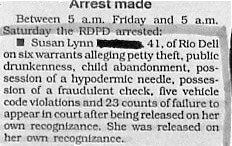


The Price Tag for Dishonesty
April 15, 2020 § Leave a comment
An old saw among lawyers is that “It’s better to be hurt by the truth than by a lie.”
One could say that T.J. Anderson’s dishonesty cost him $14,000+ in his divorce case. In essence the COA said precisely that in its opinion affirming the chancellor’s order that he pay his ex, Carrie, that sum plus interest to replace his son Robert’s educational fund. Here’s how Judge Tindell’s March 31, 2020, opinion in Anderson v. Anderson addressed it:
¶29. On the issue regarding the depletion of Robert’s savings account, the chancery court found as follows:
During their marriage Carrie’s grandmother gave Carrie, T.J., and [Robert] $14,000 to put into a savings account for [Robert’s] college education. T.J.
placed this money in his name and in the name of the child. T.J. withdrew the money from this account. He claims that Carrie knew of the withdrawal. While the Court does not believe that Carrie knew that T.J. was withdrawing his son’s money, it would be of small consequence. Carrie knowing would not be justification for the withdrawal. T.J. withdrew and used his son’s money. T.J. will be responsible for replacing any funds he withdrew from his son’s account in the approximate amount of $14,000 together with any interest those withdrawals would have generated.
¶30. T.J. asserts that the chancery court committed manifest error when it ordered that T.J. be fully responsible for replacing the $14,000 removed from Robert’s savings account, in addition to any lost interest attributable to the missing funds. Citing McLaurin v. McLaurin, 853 So. 2d 1279, 1286 (¶24) (Miss. Ct. App. 2003), T.J. argues that the money taken from that account was used to pay marital debts, and thus Carrie “should be equally responsible for replacing the money from the account.”
¶31. We find no merit in T.J.’s assertions. As noted above, when Robert was two years old, Carrie’s grandmother gave Robert $14,000 as a college fund, and T.J. put this money into a savings account in T.J.’s and Robert’s names. The record reflects that T.J. withdrew sums of money on different occasions from this account until there was no money left in the account. At trial, T.J. testified that Carrie was “generally aware” that he had withdrawn the money. Carrie, however, testified that she did not know T.J. had taken this money until the parties separated and she found the passbook savings account showing that the money was missing. T.J. admitted at trial that he did not put the money in the couple’s joint account. He testified that he “paid bills with it,” but he could not specifically account for it.
¶32. We find relevant in this analysis that the record reflects a number of incidents reflecting T.J.’s lack of candor with the chancery court. “[T]he chancellor is vested with the sole authority and responsibility to assess witness credibility as no jury is present. The chancellor alone hears the testimony and sees the demeanor of the witnesses.” Culumber v. Culumber, 261 So. 3d 1142, 1150 (¶24) (Miss. Ct. App. 2018) (citations and internal quotation marks omitted). In this case, the chancellor stated on the record that T.J. was “among the most dishonest individuals that [he had] had on the stand” in the chancellor’s nearly thirty years as a judge. Particular incidents at trial included T.J. substantially misstating his employment history and earnings and T.J. denying that he posted messages on social media berating Carrie and calling her inappropriate names. As described in the chancery court’s opinion and final judgment,
In Exhibit 43 Carrie was berated and called vile names. T.J. swore that he knew absolutely nothing about this posting. Several months later, after Carrie’s attorney had arranged for a police computer expert to testify, T.J. confessed that he had in fact sent the posting and had lied to the Court about it.
¶33. In light of these circumstances and our limited standard of review, we find that the chancery court’s order that T.J. replace the funds withdrawn from Robert’s account, plus interest that would have been generated on those withdrawals, was based on substantial, credible evidence. We therefore find that T.J.’s assignment of error on this issue is without merit.
A point or two:
- If you really expect the chancellor believe that your client spent funds on marital debts as T.J. claimed here, you’d best come up with some credible corroborating proof such as receipts or testimony, particularly when your client has already damaged his own credibility in his testimony.
- Vague testimony, such as T.J.’s general claim about the marital debts not only lacks credibility, it also is most unhelpful to the court. What bills? When? How much was paid? To whom?
Valuation with Less than Ideal Proof
April 14, 2020 § Leave a comment
If you’re looking for the most efficient way to drain your client of all credibility in financial proof, let him submit an 8.05 financial statement that only an idiot would accept as accurate.
When Michael and Lisa Dickinson were in trial over their divorce, Michael submitted a financial statement listing the value of their former residence as $500,000, unsupported by any other evidence. Lisa valued it at $126,170, supported by the tax collector’s bill and valuation. Neither party offered a professional appraisal. The chancellor found Lisa’s valuation more credible. Dissatisfied, Michael appealed.
In Dickinson v. Dickinson, decided March 31, 2020, the COA affirmed. Judge Tindell’s opinion:
¶25. Michael also argues that the chancellor erred in the valuation of the couple’s marital home. Michael concedes that neither he nor Lisa submitted formal appraisals of the home to the chancellor at trial. Rather, each party submitted their Rule 8.05 financial statements with their alleged valuations of the home. [Fn omitted] Michael submitted a $500,000 valuation of the home, which the chancellor found to be speculative and unsupported by any other evidence or documentation. Lisa submitted a valuation of $126,170 along with the Jackson County Tax Collector’s bill and valuation statement, issued on November 26, 2014, which also valued the home at $126,170. Based upon the limited evidence presented, the chancellor valued the home at $126,170 and awarded the home to Lisa.
¶26. Lisa argues that the chancellor appropriately valued the home based upon the limited available evidence, and she cites to Williams v. Williams, 264 So. 3d 722 (Miss. 2019), in support of her argument. In Williams, the Mississippi Supreme Court upheld a chancellor’s valuation of a couple’s marital property based upon limited evidence submitted by the parties. Id. at 728 (¶21). During the couple’s divorce proceedings, the wife submitted no evidence to the chancellor related to valuation other than her Rule 8.05 statement, while the husband did provide some documentation supporting his valuation of the marital property. Id. at (¶18). The chancellor ultimately valued the property based upon the husband’s documentation, which the wife appealed. Id. In upholding the chancellor’s valuation, the Supreme Court stated that it “refuse[d] to blame the chancellor for a party’s failure to present sufficient evidence of property value.” Id. at (¶20). The Supreme Court further held that “the chancellor’s duty is not to obtain appraisals of marital property.” Id. (citing Dunaway v. Dunaway, 749 So. 2d 1112, 1121 (Miss. Ct. App. 1999)). Where the parties present the chancellor with “less than ideal” proof, the Supreme Court held that the chancellor may rightfully use the available proof to arrive to the best conclusion possible. Id. at (¶21).
¶27. Here, the chancellor found Michael’s $500,000 valuation to be speculative and unsupported by any evidence, other than his Rule 8.05 financial statement. While Lisa also failed to submit an appraisal at trial, the chancellor found that her $126,170 valuation matched the Jackson County Tax Collector’s bill and valuation. Again, we cannot fault the chancellor for the parties’ lack of evidence. As such, we also cannot say that the chancellor
committed manifest error by using the best information available to value the marital home.
Thoughts:
- A common and ridiculous practice is for parties to assign high values to items they agree for the other to have, and low values to items that they want for themselves. In one case I had where the parties agreed that the husband would have ownership of a riding lawnmower, the wife valued it at $18,000, and the husband valued it at $200. There was no testimony that it was either gold-plated or rusted out, so I settled somewhere in the lower extremity of that range. The case was affirmed on appeal, so I guess I did something right.
- I think it’s malpractice if you don’t go over your client’s 8.05 in advance of trial and challenge the figures. You need to ask, among others: how did you come up with this figure?; are you really spending $700 a month on gas and oil?; why is the spinet piano valued at $10,000? If you don’t get those kinds of things straightened out in your office, you are sending your client off like a sheep to the slaughter.
- On a related note, those of you who don’t work with your clients on their 8.05’s should know that it is painfully obvious that you neglected this aspect of client representation. Figures don’t add up. Some are almost illegible. One I saw actually had a dirty footprint on the front page. Another chancellor calls those “Parking Lot 8.05’s” because they look like they were hastily scrawled in the parking lot before entering the courthouse — and they probably were.
Jointly-titled Separate Property
April 13, 2020 § Leave a comment
Carrie Anderson’s grandmother decided to give her a 59-acre parcel of land in 2013. When she went to the family lawyer’s office to pick up the deed, she found that he had added the name of her husband, T.J., to it as joint tenant. She later said that she was afraid to insist that it be titled in her sole name because of T.J.’s temper.
In 2015 the parties consented to an ID divorce and the chancellor found the property to be part of Carrie’s separate estate. T.J. appealed.
In Anderson v. Anderson, the COA affirmed. Judge Tindell wrote for the unanimous court:
¶18. The chancery court found that the fifty-nine acres from Carrie’s grandmother jointly titled in Carrie’s and T.J.’s names was Carrie’s separate, non-marital property, as follows:
While some coercion may have been placed on Carrie to have T.J.’s name place on the deed [to the fifty-nine acres], even if there had been no coercion, the Court would still find the 59 acres to be Carrie’s separate, non-marital property. The property came from Carrie’s grandmother debt free. The parties never improved the property or put any money into the property.
The chancery court recognized that “[i]nter vivos gifts and inheritances are considered non-marital property unless they have been commingled.” McDonald v. McDonald, 115 So. 3d 881, 885-86 (¶12) (Miss. Ct. App. 2013). The chancery court found that “[t]he fact that the 59 acres was jointly titled [in this case] did not make it a marital asset.” Id. at 886 (¶¶12-14) (finding property purchased with funds inherited by a husband was the husband’s
separate property despite the property being jointly titled in both the husband and the wife); see also Marter v. Marter, 95 So. 3d 733,737-38 (¶¶11-16) (Miss. Ct. App. 2012) (finding that property inherited by a wife prior to marriage and later jointly titled remained the wife’s separate property); Delk v. Delk, 41 So. 3d 738, 741-42 (¶17) (Miss. Ct. App. 2010) (recognizing that condominium property separately owned by a wife prior to marriage but
later jointly titled did not become marital property until the couple began using the property as their marital home, and thus the husband was not entitled to a full half of the proceeds from the condominium). The chancery court expressly noted that “[t]he parties never lived on or improved the property. There was absolutely no commingling with marital property nor was the property utilized for domestic purposes.” Continuing, the chancery court found that the fifty-nine acres did “not los[e] its status as nonmarital property,” and ordered that T.J. deed his interest in the tract of land to Carrie.
¶19. T.J. asserts that the chancery court committed manifest error in this determination because the property at issue in this case was never Carrie’s separate property in the first place, and thus the cases the chancery court relied upon in making its determination, McDonald, Marter, and Delk, are distinguishable. T.J. argues that in contrast to the circumstances in these cases, Carrie did not inherit the property, it was not purchased with inherited money, and was it not property Carrie owned prior to the marriage and later jointly titled. Rather, the property was acquired during the marriage and titled directly from Mrs. Hansberger to both T.J. and Carrie as an inter vivos gift; therefore, according to T.J., it is marital property, and he is entitled to an equitable division of that property.
¶20. Carrie, on the other hand, asserts that the evidence supports the chancery court’s determination that the fifty-nine acres from her grandmother is her separate property and that under the cases relied upon by the chancery court, the mere fact that the property is jointly titled in both her and T.J.’s names does not, standing alone, convert the property to marital property subject to equitable distribution.
¶21. In addressing this issue, we acknowledge that “[a]ssets acquired or accumulated during the course of a marriage are subject to equitable division unless it can be shown by proof that such assets are attributable to one of the parties’ separate estates prior to the marriage or outside the marriage.” Hemsley v. Hemsley, 639 So. 2d 909, 914 (Miss. 1994); see generally Deborah H. Bell, Bell on Mississippi Family Law § 6.03[1][a], at 139 (2d ed. 2011) (“Because of the presumption in favor of marital property, a spouse seeking separate classification bears the burden of proof.”). Although, as T.J. asserts, the record does contain the 2013 warranty deed from Mrs. Hansberger to both T.J. and Carrie obtained by them during their marriage, we find that the record also contains substantial, credible evidence supporting the chancery court’s determination that this property is attributable to Carrie’s separate estate.
¶22. In particular, although neither Mrs. Hansberger nor the attorney who prepared the deed testified at trial, Carrie testified that it was her grandmother’s intent that she (Carrie) have the property. [Fn omitted] Moreover, there was ample evidence presented at trial that Carrie legitimately feared for her safety and welfare if she did not have the land jointly titled, and thus she was essentially coerced into doing so. [Fn 9] Cf. Estate of Langston v. Williams, 57 So. 3d 618, 620-21 (¶10) (Miss. 2011) (describing the analogous concept of undue influence in the will context as using “undue methods for the purpose of overcoming the free and unrestrained will of the testator so as to control his acts and to prevent him from being a free agent”); Bailey v. Estate of Kemp, 955 So. 2d 777, 783 (¶23) (Miss. 2007) (discussing the analogous concept of duress as requiring “(1) that the dominant party threatened to do something which he had no legal right to do; and (2) that the wrongful threat overrode the volition of the victim and caused him to enter an agreement against his free will”).
[Fn 9] As detailed in the statement of facts, Carrie testified that she was too afraid of T.J. to have title placed in her name alone. Regarding this fear, the record reflects that T.J. had attacked Carrie, punched numerous holes in the walls and doors in both their Tupelo and Senatobia homes, killed several of their dogs, and frequently threatened and verbally abused Carrie. As noted, the chancery court granted Carrie a divorce on the statutory ground of habitual cruel and inhuman treatment.
¶23. In short, there is substantial, credible evidence that the property was intended to be Carrie’s property and that her fear of T.J. prevented her from having it titled in her name. The chancery court therefore was correct in relying on McDonald, 115 So. 3d at 885-86 (¶¶12-14), in determining that “[t]he fact that the 59 acres was jointly titled [in this case] did not make it a marital asset.” See also Marter, 95 So. 3d at 737-38 (¶¶11-16); Delk, 41 So. 3d at 741-42 (¶17). The record reflects that the property was debt-free, the parties made no financial contribution toward the property or its maintenance during the marriage, and the parties did not use it. We find no manifest error in the chancery court’s determination on this issue, and we therefore find that T.J.’s first assignment of error is without merit.
April 8, 2020 § Leave a comment
R.I.P. Attorney Les Prichard of Meridian, of complications from covid.
Les was retired many years and was in his 90’s. He was formerly a partner in the firm of Deen, Cameron, Prichard, and Young.

