JUDGE FAIR’S DAY
January 9, 2012 § Leave a comment
Judge Gene Fair’s investiture as a judge of the Mississippi Court of Appeals on Friday, January 6, 2012.
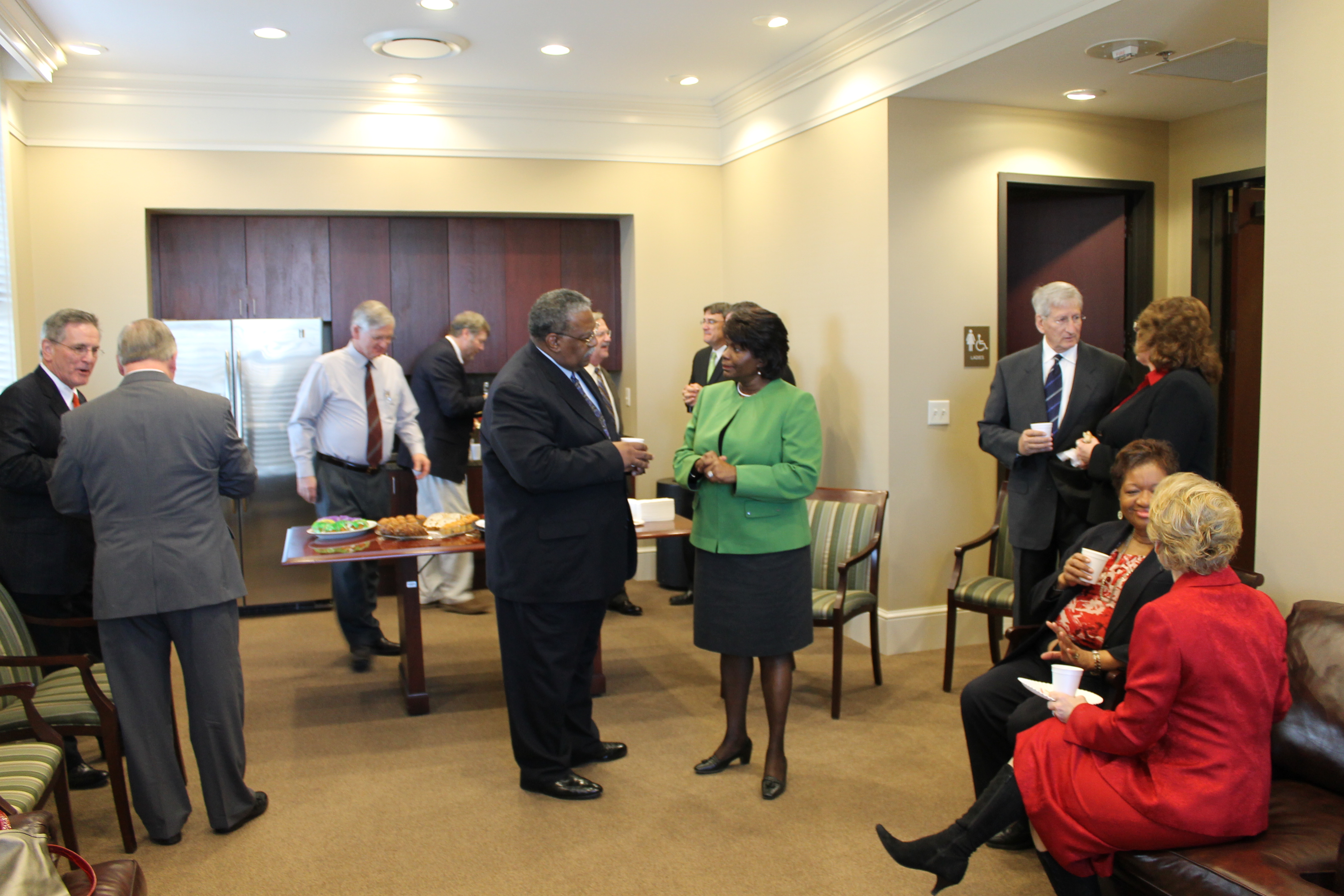
COA hosts coffee and breakfast refreshments for supreme court, chancery and circuit judges before the ceremony
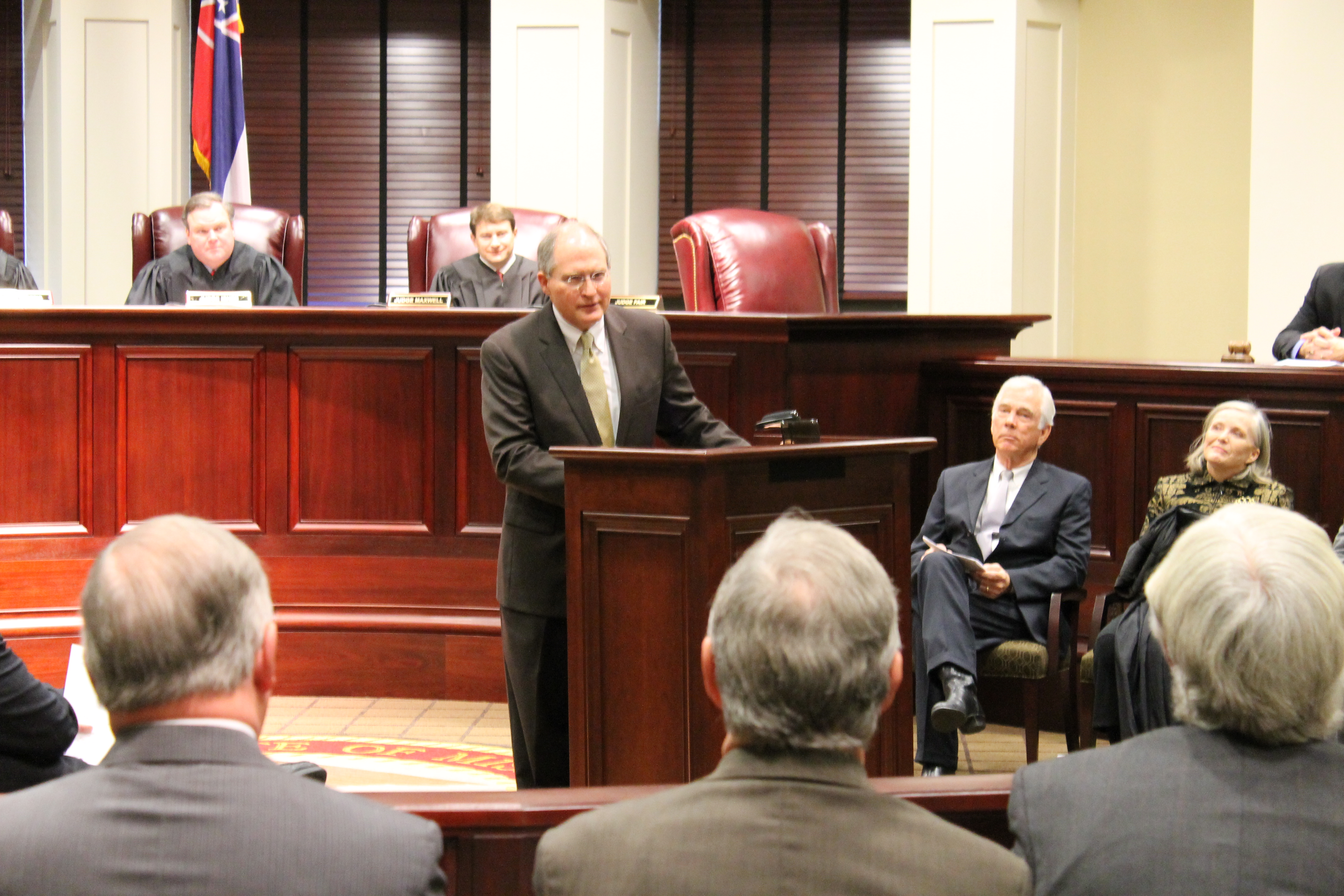
Chief Justice Waller's address
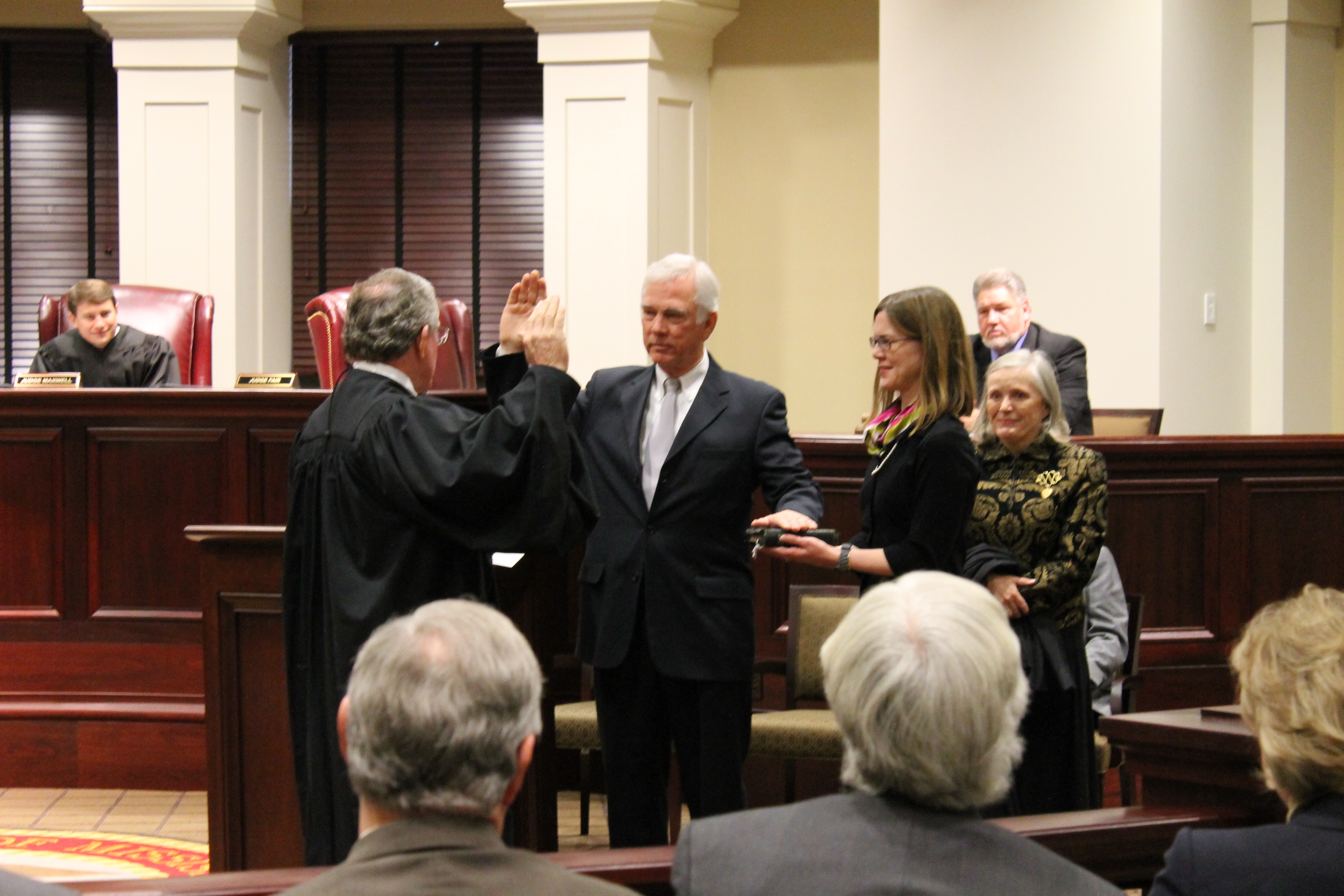
Judge Barbour administers the oath
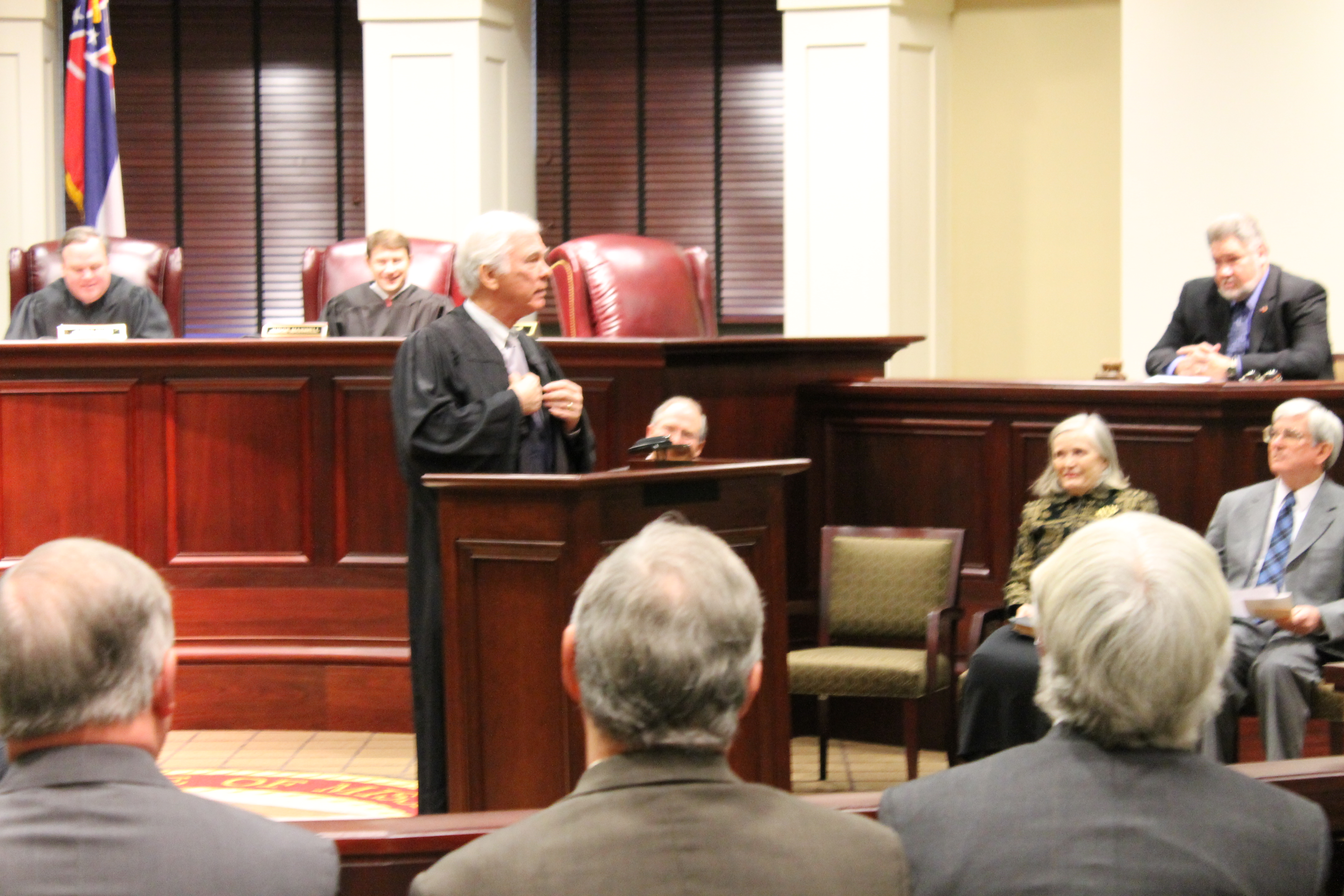
Newly invested Judge Fair's address
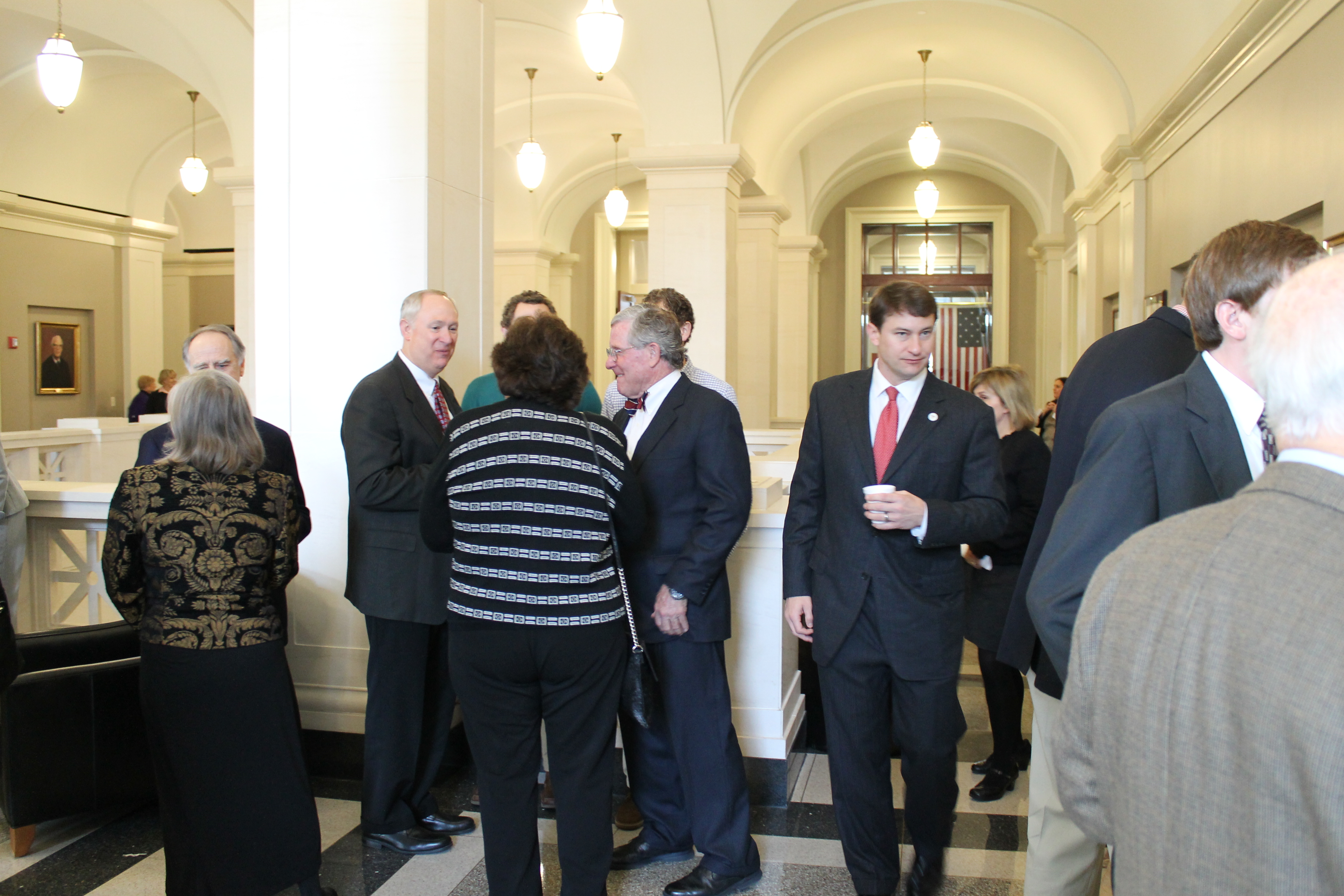
Crowd gathering for the reception
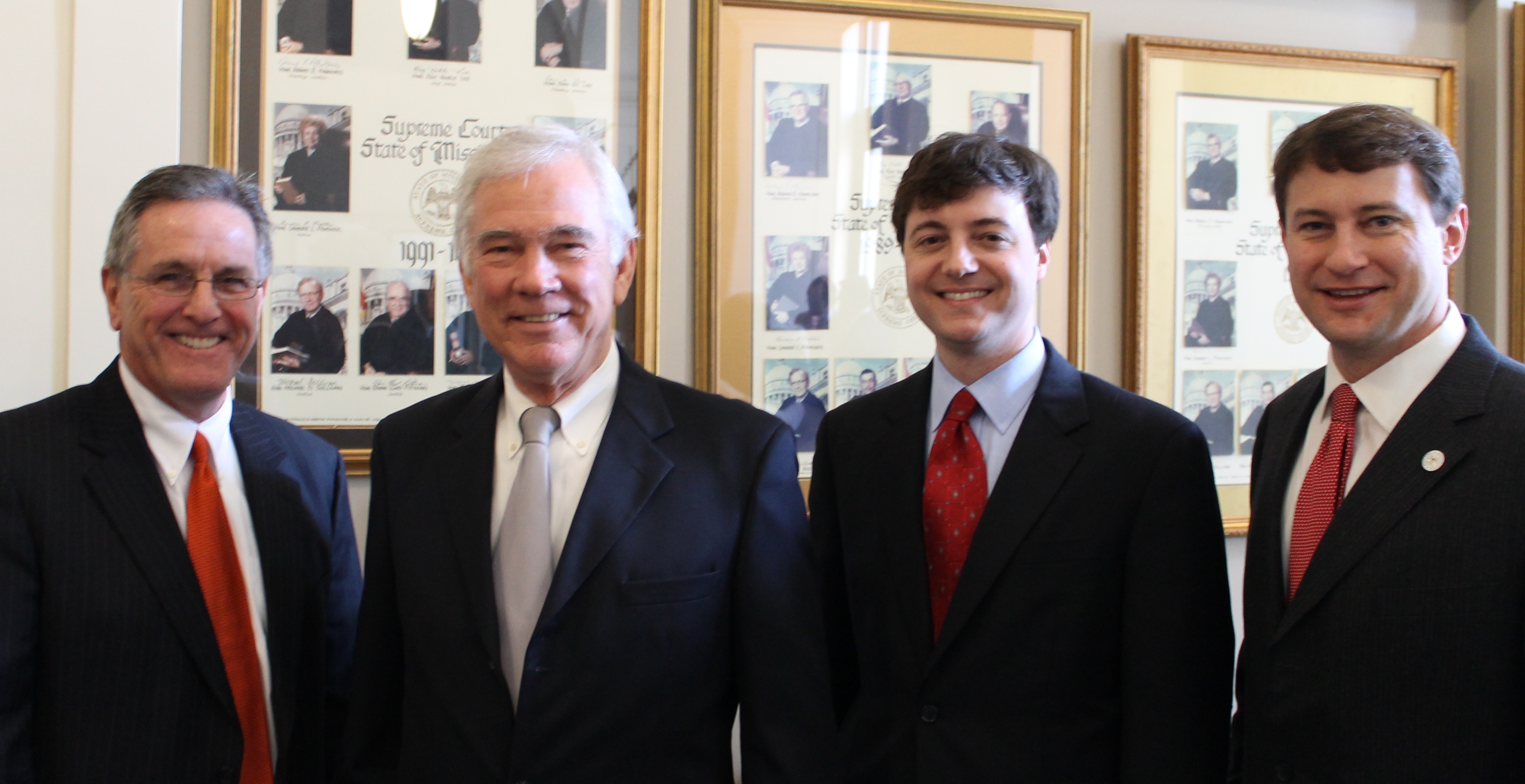
Chancellor Jim Davidson, COA Judge Gene Fair, Chancellor Joey Kilgore, COA Judge Jimmy Maxwell
RETURN OF THE BOOMERANG
January 6, 2012 § Leave a comment
More actual courtroom proceedings collected from hither and yon over the years …
Putting the “Dire” in Voir Dire
Q: Would you say that you have strong opinions?
A: My friends at the barber shop say I do, yes.
Q: And what do they say about your opinions?
A: Well, they call me “the hanging judge.”
~~~~~~~~~~~~~~~~~~~~
Q: Mr. Eugene Smith, are you related to my client here, the defendant Mr. Dan Smith?
A: Oh my gosh, no! Heavens no! Thank God I’m not!
~~~~~~~~~~~~~~~~~~~~
Q: Ma’am, is there any reason at all why you believe you could not be completely impartial in this case?
A: Yes, but I’d rather not say.
Q: Ma’am, we need to know what your reason is.
A: Judge, do I have to tell?
Judge: Yes, ma’am, you do.
A: It’s this lawyer, judge. He’s the most obnoxious person I think I’ve ever been around.
~~~~~~~~~~~~~~~~~~~~
Q: Would you say that your pregnancies were uneventful?
A: I never heard of one that was uneventful.
~~~~~~~~~~~~~~~~~~~~
Q: In what state were your children born?
A: A fairly good state, I would say, except one of ’em had a rash.
~~~~~~~~~~~~~~~~~~~~
Unidentified Flying Objections
Atty: Objection. Dead horse.
Court: Sustained.
~~~~~~~~~~~~~~~~~~~~
Atty 1: What did you see when you arrived on the scene?
Witness: I saw the car crashed into a light pole and a man lying in the street in a puddle of blood.
Atty 1: What happened next?
Witness: I run up to him and cradled his head in my arms, and he said …
Atty 2: Objection, hearsay.
Atty 1: It’s excited utterance, Judge, and dying declaration.
Atty 2: No foundation for either, your honor.
Court: It’s lunchtime. We’ll break here, and you lawyers can get some cases together and argue after the break.
[Court is in recess and returns after the lunch break]
Court: All right, counsel, do you have some authority for me to consider?
[Whereupon counsel each present the judge with several cases and argue their respective positions further]
Court: I have several appellate court opinions to review here before I rule on the objection. Court will be in recess subject to call by the bailiff.
[The judge retires to chambers and reads the case law. His staff attorney provides some research material. Finally, after an hour the judge returns to the court room.]
Court: Having read the cases submitted, and having done my own research, I am satisfied that the record to this point establishes that the statement made by the decedent was sufficiently spontaneous and related to the accident to qualify it as an excited utterance, which is an exception to the hearsay rule, and therefore I overrule the objection. Please repeat the question.
Atty 1: Sir, you said you cradled the decedent’s head in your arms. What if anything happened next?
Witness: [Annoyed at the delay] Well, I was going to say what the man said.
Atty 1: The judge has ruled that you can tell us.
Witness: He said, “duh,” and he died.
~~~~~~~~~~~~~~~~~~~~
To Insure Domestic Tranquility
Q: Ma’am, would you please tell the court about your sex life in the year leading up to the separation?
A: You mean with my husband, or what?
~~~~~~~~~~~~~~~~~~~~
Q: As for his drinking, could you smell the odor of alcohol when your husband would come home from work?
A: No, not really. I can’t smell.
Q: You can’t smell at all?
A: No, I lost my sense of smell some years ago. It has to be a very, very strong odor for me to smell it.
Q: I’m sorry to hear that. It must be a big disadvantage not to have a sense of smell.
A: Living with him, it’s actually quite an advantage.
JUDGE FAIR’S INVESTITURE TOMORROW
January 5, 2012 § Leave a comment
I was concerned that, up until Tuesday, there was no mention of Judge Gene Fair’s invesiture, much less appointment, on the Supreme Court’s web site. My chancery-court paranoia kicked in, and I wondered whether this was some new specie of persecution for us on the equity side.
My fears (exagerrated for this post, I assure you) were allayed by an anonymous insider, who reassured me that the silence had more to do with the holiday schedule than with an agenda. Whew.
If you can make Judge Fair’s ceremony tomorrow, I encourage you to do so. I plan to be there. Here’s the announcement:
December 29, 2011
An investiture ceremony for Judge Eugene L. Fair Jr. of the Court of Appeals of the State of Mississippi is scheduled for 10 a.m. Friday, Jan. 6, 2012, at the Gartin Justice Building, 450 High Street in Jackson.
The investiture will be webcast on the State of Mississippi Judiciary web site, www.courts.ms.gov. Members of the bench, bar and the public are invited.
Gov. Haley Barbour appointed Judge Fair to the District 5, Place 1 seat on the Court of Appeals. Judge Fair will replace Judge William H. Myers, who is retiring Dec. 31. The appointment is for one year. A special election will be held in November 2012 in the Court of Appeals district which includes Forrest, George, Greene, Hancock, Harrison, Jackson, Lamar, Pearl River, Perry, Stone and parts of Wayne counties.
Judge Fair, 65, of Hattiesburg, said, “I’m both honored and humbled by the appointment of the Governor.”
Gov. Barbour, his Chief of Staff Paul A. Hurst III, and Supreme Court Chief Justice Bill Waller Jr. will speak at the investiture. Former Mississippi Bar President George R. Fair, Judge Fair’s brother, will speak and will introduce special guests. Court of Appeals Chief Judge L. Joseph Lee will preside over the investiture ceremony.
Senior U.S. District Judge William H. Barbour Jr. will administer the oath of office.
Judge Fair’s wife, Dr. Estella Galloway Fair, will assist with the enrobing. Rev. Dr. Stephen Ramp, Judge Fair’s pastor at Westminster Presbyterian Church in Hattiesburg, will give the invocation. Rev. Dr. John C. Dudley of Hattiesburg, Administrative Presbyter of the Presbytery of Mississippi and Judge Fair’s former pastor, will give the benediction.
Judge Fair served for five years as a chancellor on the 10th Chancery Court. The district includes Forrest, Lamar, Marion, Pearl River and Perry counties.
Former Supreme Court Chief Justice Neville Patterson appointed him to the Mississippi Ethics Commission in 1984. Fair served on the commission for 20 years, including 19 years as vice-chair. He was board attorney for the Pat Harrison Waterway District 1988-1992.
Judge Fair grew up in Louisville. He earned a Bachelor of Arts degree from the University of Mississippi and a law degree from the University of Mississippi School of Law. During college, he was editor of The Mississippian for two years, and wrote for the Mississippi Law Journal. He helped pay his way through college with freelance writing for newspapers. He began working as a newspaper stringer at age 15, calling in sports scores and writing obituaries. He did freelance work for the Clarion-Ledger, the now defunct Jackson Daily News, the Meridian Star, the Associated Press and United Press International. He called his work as a news reporter and photographer “wonderful preparation to be a lawyer.”
He helped screen and recommend lawyers to fill judicial vacancies as a member of Gov. William Winter’s Judicial Nominating Committee. A similar group, Gov. Barbour’s Judicial Appointments Advisory Committee, recommended Fair to fill the vacancy on the Court of Appeals.
Fair ran unsuccessfully for election to the Supreme Court in 1988, and for the Court of Appeals in 1994. The 1994 race was for Position 1, District 5, the same position to which he has been appointed. He said, “I have thought about it (serving on an appellate court) for a long time. My uncle was Supreme Court Justice Stokes V. Robertson Jr., and I was greatly influenced by his dedication and love of the law. My cousin Charles Fair, having the same characteristics, had a similar influence on me.” His grandfather, also named Stokes Robertson, served as the first member of the House of Representatives from Forrest County and as Clerk of the House for four years. He was also Revenue Agent of the state of Mississippi, a statewide elective office later renamed State Tax Collector and abolished when William Winter held the office. His great-grandfather, G. C. Robertson, was the last Justice of the Peace of District 2, Perry County, before the county was split to form Perry and Forrest counties.
He served for four years on active duty with the U.S. Navy Judge Advocate General’s Corps during the Vietnam War, attaining the rank of Lieutenant Commander, and spent five years as a reservist in the Jackson Naval J.A.G. Reserve Unit.
He practiced law in Hattiesburg from October 1972 to December 2006. During that time, he tried cases in 57 courthouses across the state. He was admitted to practice law in all state courts, the U.S. District Courts for the Northern and Southern Districts of Mississippi, the Fifth U.S. Circuit Court of Appeals, the Supreme Court of Texas and the U.S. Supreme Court.
He served on the Mississippi Supreme Court Committee on Technology in the Courts 1988-1990, and on the Judicial Advisory Study Committee Technology Consulting Group 1993-1994.
He served as treasurer, secretary, vice-president and president of both the Young Lawyers Section of the Mississippi Bar and the South Central Mississippi Bar Association.
He held numerous leadership positions in the Mississippi Bar. He is a former member of the Board of Bar Commissioners, and is a Fellow of the Mississippi Bar Foundation and a Charter Fellow of the Young Lawyers.
He is a trustee, elder and Sunday School teacher at Westminister Presbyterian Church.
He is a former chairman of deacons, and was church treasurer for 18 years.
He is an Eagle Scout.
He has two daughters and four grandchildren. Melissa Fair Wellons M.D. is assistant professor at the University of Alabama Birmingham (UAB) School of Medicine. Julia Fair Myrick is a screenwriter and producer in Pasadena, Calif.
The 10-member Court of Appeals of the State of Mississippi is the state’s second highest court. The Supreme Court assigns cases to the Court of Appeals, and has discretionary review of its decisions. The Legislature created the intermediate appellate court in 1993 to speed decisions and relieve a backlog of appeals. The Court of Appeals began hearing cases in 1995.
LAWYER, KNOW THYSELF
January 4, 2012 § 9 Comments
Understanding what makes you tick is a key to understanding how you can be more effective as a lawyer, spouse or parent, and in every other role you undertake. A major element of what makes you tick is your personality. The way in which your personality operates defines you as a unique individual.
Carl Jung posited that personality consists of a combination of three components formed from three dichotomies: extraversion or introversion; sensing or intuition; and thinking or feeling. He saw extraversion or introversion as an attitude, and sensing, intuition, thinking and feeling as ways of functioning. According to Jung, every personality is a combination of one of each dichotomy. For example, an extraverted, sensing, feeling person has one type of personality and an introverted, intuitive, thinking person has an entirely different one. Katherine Cook Briggs and her daughter, Isabel Briggs-Meyers, added a fourth dichotomy based on lifestyle: judging and perceiving (judging = organized and on schedule; perceiving = disorganized and not punctual). Under their methodology, the personality consists of a combination of one each of the four dichotomies, resulting in 16 different personality types.
Briggs and Meyers came up with a personality inventory that sorts you into one of the 16 personality types. You can read more about the Meyers-Briggs Type Inventory (MBTI) here. For convenience, the dichotomies are assigned letters: E for extraversion; I for introversion; S for sensing; N for intuition; T for thinking; F for feeling; J for judging; and P for perceiving. The 16 personality types, then, are: INTP, INTJ, INFJ, INFP, ISTP, ISTJ, ISFJ, ISFP, ESTP, ESTJ, ESFJ, ESFP, ENTP, ENTJ, ENFJ, ENFP. Each has its own unique characteristics and ways of functioning.
Each of the 16 types represents the synthesis of preferences that the personality operates under, or the default settings if you will. Each of us can “turn off” those settings or reset them as the need arises. A strongly feeling person, for instance, can tune down the feeling function in order to operate more rationally in the court room. A more introverted person has to set aside that preference in order to get the full benefit of the Kiwanis Club membership. A judging person has to put away the schedules, personal planner apps, internet and cell phone while on vacation.
So which are you? You can take a brief questionnaire based on the Jungian/Meyers-Briggs typology here. The site will score it for you and give you a synopsis of the characteristics of your personality type, and you can read there more about your and other types. The questionnaire is similar to the MBTI and, in my experience, will produce similar results. For that matter, you can Google Meyers-Briggs and come up with plenty of other sites with much more info and other questionnaires. Some even offer in-depth analyses by “qualified” professionals — for a fee, of course.
A great book that explains personality typology in greater detail is Please Understand Me: Character and Temperament Types, by David Keirsey and Marilyn Bates. It includes the MBTI, which you can take and score yourself, as well as explanations of the various types and how they operate in various settings.
Is the MBTI accurate? Some professionals accept it, others question it, and some pan it. I like it because it’s a gateway to getting you to consider just how you function in this world. Realizing how you learn and process information, how you make decisions, how you work effectively and what is ineffective for you, can help you in almost every area of your life.
Most judges are strongly ST. All I’ll tell you about me is that I am not, so I process information and make decisions differently than some others. The rest you’ll have to puzzle out for yourself.
NEW YEAR’S RESOLUTION
January 3, 2012 § Leave a comment

WORKING BETTER …
1 DO ONE THING AT A TIME
2 KNOW THE PROBLEM
3 LEARN TO LISTEN
4 LEARN TO ASK QUESTIONS
5 DISTINGUISH SENSE FROM NONSENSE
6 ACCEPT CHANGE AS INEVITABLE
7 ADMIT MISTAKES
8 SAY IT SIMPLE
9 BE CALM
10 SMILE
______________________
From the bog, Mapping the Marvelous
DOLEAC FOR FAIR
December 30, 2011 § Leave a comment
I’m hearing that Ron Doleac is appointed to take Chancellor Gene Fair’s poaition.
FAREWELL TO 2011
December 29, 2011 § Leave a comment
This may be the last substantive post here for 2011. The next you read here will come in 2012.
As with every year, 2011 provided its bounty of blessings and pestilence. Each of us can take stock of his or her own legacy from the passing year.
From the standpoint of the year’s end the coming year always glows bright with prospects. We hope for and expect better things.
In 2012, here’s what I look forward to:
- Judge Eugene Fair being sworn in as the newest member of the COA. It will be a great advantage to have the perspective of a chancellor on the appellate court.
- That our judges at all levels will continue to be dedicated and sincere in their pursuit of fairness and justice.
- That our lawyers will continue in their dedication to their role in the rule of law, and that they will continue to improve and grow in professionalism and skill.
- That the economy will recover.
- That our political leaders will put aside partisanship and actually govern our nation and state for the common good.
- That our families and all we love will be healthy and free from danger and care.
- That our favorite sports teams will do well (Lord knows, mine could not do worse … except for the Saints).
And … well, that should be enough wishful thinking to get us started.
For all of you who read this blog, I ask God’s blessings on you, and I wish you the best in the coming year. God bless us one and all!
STANDARDS OF REVIEW
December 28, 2011 § 2 Comments
|
MATTER |
STANDARD OF REVIEW |
CASE LAW |
| Appeal to trial court from administrative agency action or ruling | Arbitrary and capricious | When this court reviews a decision by a chancery court or circuit court concerning an agency action, it applies the same standard of review that the lower courts are bound to follow. We will entertain the appeal to determine whether the order of the administrative agency (1) was supported by substantial evidence; (2) was arbitrary or capricious; (3) was beyond the power of the administrative agency to make; or (4) violated some statutory or constitutional right of the complaining party. Miss. Sierra Club v. Miss. Dept. of Environmental Quality, 819 So.2d 515, 519 (Miss. 2002). |
| Attorney’s fees | Abuse of discretion | Whether to award attorney’s fees rests entirely within the discretion of the trial court. A trial court’s decision on attorney’s fees is subject to an abuse of discretion standard. Unless the trial court is manifestly wrong, its decision regarding attorney’s fees will not be disturbed on appeal. Ward v. Ward, 825 So.2d 713, 720 (Miss. App. 2002). |
| Contempt – civil | Manifest error | In civil contempt actions, the trial court’s findings are affirmed unless there is manifest error. Riley v. Wiggins, 908 So.2d 893 (Miss. App. 2005). |
| Contempt – criminal | Ab initio | This court proceeds ab initio to determine whether the record proves the appellant is in contempt beyond a reasonable doubt. Brame v. State, 755 So.2d 1090, 1093 (Miss. 2000). |
| Domestic relations | Manifest error/clearly erroneous | In domestic relations cases the scope of review is limited b y the substantial evidence/manifest error rule. This court may reverse a chancellor’s findings of fact only when there is no substantial credible evidence in the record to justify his finding. Our scope of review in domestic relations matters is limited under the familiar rule that this court will not disturb a chancellor’s findings unless manifestly wrong, clearly erroneous, or if the chancellor applied an erroneous legal standard. Jundoosing v. Jundoosing, 826 So.2d 85, 88 (Miss. 2002). |
| Evidence, admission or exclusion | Abuse of discretion | The standard of review regarding the admission or exclusion of evidence is abuse of discretion. Yoste v. Wal-Mart Stores, Inc., 822 So.2d 935, 936 (Miss. 2006).A trial court’s decision to admit or exclude evidence will not be reversed unless a substantial right of a party is adversely affected. Robinson Prop. Group, L.P. v. Mitchell, 7 So. 3d 240, 243 (Miss. 2009). |
| Expert testimony | Abuse of discretion/clear error | The qualifications of an expert in fields of scientific knowledge are left to the sound discretion of the trial court. Its determination on this issue will not be reversed unless it clearly appears that the witness is not qualified. This court reviews the trial court’s decision to allow expert testimony under the well-known clearly erroneous standard. Similarly, an expert’s testimony is always subject to MRE 702. For a witness to give MRE 702 opinion, the witness must have experience or expertise beyond that of an average adult. Thus, we generally defer to the discretion of the trial court in determining whether an expert is qualified to testify, and we will only reverse when there was clear error or abuse of discretion in the decision to admit the testimony. Cowart v. State, 910 so.2d 726, 728-29 (Miss. App. 2005). |
| Findings of fact by chancellor | Manifest error/clearly erroneous | A chancellor’s findings of fact will not be disturbed unless manifestly wrong or clearly erroneous. This court will not disturb the findings of a chancellor when supported by substantial evidence unless the chancellor abused his or discretion, was manifestly wrong, clearly erroneous, or an erroneous legal standard was applied. Sanderson v. Sanderson, 824 So.2d 623, 625-26 (Miss. 2002). |
| Law, questions of | De novo | We conduct a de novo review for determinations of legal questions. Russell v. Performance Toyota, Inc., 826 So.2d 719, 721 (Miss. 2002). |
| Jurisdiction, in personam | De novo | An appellate court reviews jurisdictional issues de novo by examining the facts set out in the pleadings and exhibits to determine the propriety of the proceedings. American Cable Corp. v. Trilogy Commun., Inc., 754 So.2d 545, 549 (Miss. App. 2002). |
| Jurisdiction, subject matter | De novo | Whether the trial court had jurisdiction to hear a particular matter is a question of law, to which this court must apply a de novo standard of review. Edwards v. Booker, 796 So.2d 991, 994 (Miss. 2001). |
| Reconsideration under MRCP 59 | Abuse of discretion | A petition for reconsideration is treated as a motion to amend judgment pursuant to M.R.C.P. 59(e). Boyles v. Schlumberger Tech. Corp., 792 So.2d 262, 265 (Miss. 2001) (quoting In re Estate of Stewart, 732 So.2d 255, 257(Miss.1999)). [I]n order to succeed on a Rule 59(e) motion, the movant must show: (i) an intervening change in controlling law, (ii) availability of new evidence not previously available, or (iii) need to correct a clear error of law or to prevent manifest injustice. Brooks v. Roberts, 882 So.2d 229, 233(¶ 15) (Miss.2004) (citation omitted). This Court reviews the denial of a Rule 59(e) motion for abuse of discretion. Id. |
CAN ADULTERY BE HCIT?
December 27, 2011 § 1 Comment
If you prove adultery, can that get your client a divorce on the ground of habitual cruel and inhuman treatment (HCIT)?
In the COA case of Johnson v. Johnson, decided December 13, 2011, Willie Johnson argued that the chancellor improperly granted his wife, Hazel, a divorce on the ground of HCIT because the only proof against him was that he had committed adultery, which had been condoned. He contended that adultery is a separate and distinct ground, and that, since he had proven a complete defense to adultery, it was error for the trial court to grant his wife a divorce on another ground.
It’s an interesting argument, because condonation is an absolute defense against an act of adultery, but it’s much more difficult to apply against HCIT, which involves recurring (habitual) conduct.
Judge Griffis stated the opinion of the court:
¶24. While Willie might be correct that adultery alone cannot support a finding of habitual cruel and inhuman treatment, a pattern of adultery, when combined with other cruel and inhuman conduct, can support such a finding. Id. at 368 (¶¶12-13). In Fisher, the Mississippi Supreme Court held that the husband’s several acts of adultery and few acts of physical violence supported a finding of habitual cruel and inhuman treatment. Id.
¶25. Likewise, in this case, there was substantial evidence that Willie had committed several acts of adultery and that he had, on at least one occasion, committed an act of physical violence. Willie fathered at least two – possibly three – children out of wedlock with two different women during his marriage to Hazel. His affair with Jones spanned almost two decades – beginning in approximately 1991 at Utica Junior College and continuing up until the entry of divorce in 2010. Also, Hazel’s testimony and the hospital records indicate Willie physically assaulted her in their former marital home in May 2004. We find these facts are sufficient to establish that Willie’s conduct was cruel and inhuman.
¶26. We also find Hazel has shown the requisite impact on her physical or mental health. The hospital records indicate that she suffered bruises and lacerations following the incident in May 2004. Also, Willie’s affair with Jones caused significant stress for Hazel. Jones became possessive, jealous, and threatening. She made harassing phone calls to Hazel, damaged property in Hazel’s garage, and scattered Hazel’s wedding photographs on the street in front of Hazel’s house. Hazel testified that as a result of that behavior, she felt terrified and would often barricade herself inside her home.
¶27. Lastly, we do not find Hazel had condoned Willie’s adultery. Hazel did continue in the marriage after she learned about Willie’s affairs, but the evidence indicates she expected him to end the affairs and recommit to the marriage. She forgave him for his past indiscretions, but she did not consent to live in a marriage with a habitually unfaithful husband. This is not a case where isolated acts of adultery were forgiven by the other spouse. Rather, Willie’s adultery was habitual and continuous.
¶28. In Smith v. Smith, 40 So. 2d 156, 157 (Miss. 1949), the supreme court rejected the husband’s argument that his wife had condoned his habitual cruel and inhuman treatment by continuing in the marriage. The court distinguished a “single act” from “courses of conduct,” suggesting that it is more difficult to establish condonation of the latter. Id. The supreme court stated: “The effort to endure unkind treatment as long as possible is commendable and the patient endurance by the wife of her husband’s ill-treatment should not be allowed to weaken her right to a divorce.” Id. Likewise, in Lindsey v. Lindsey, 818 So. 2d 1191, 1195
(¶¶17-18) (Miss. 2002), the supreme court found the doctrine of condonation inapplicable under the facts of the case. The husband had forgiven his wife for her past acts of adultery, but the wife proceeded to commit adultery again. “Condonation can be avoided if . . . the marital offense is repeated.” Id. Based on these authorities, we find Hazel had not condoned Willie’s habitual adultery.
So there you have it. Habitual adultery can amount to HCIT and defeat a defense of condonation if it meets the basic requirements of HCIT.

