ONLY 3 MORE DAYS TO COMMENT ON MANDATORY PRO BONO
September 28, 2010 § Leave a comment
From the Mississippi Bar’s BAR BRIEFS …
October 1 Is Deadline to Submit Comments on Proposed Mandatory Pro Bono Rule
The Mississippi Supreme Court Rules Committee on the Legal Profession seeks comments on two proposed rule changes. The first proposed change would amend Rule 6.1 of the Mississippi Rules of Professional Conduct. As proposed the change would make pro bono service mandatory, and would increase the fee to be submitted in lieu of performance from $200 to $500. The second proposed rule change is to Rule 46 of the Mississippi Rules of Appellate Procedure. The proposed change would increase pro hac vice admissions fees from $200 to $500. These proposed rule changes may be found on the Supreme Court website at http://www.mssc.state.ms.us/rules/rulesforcomment/rulesforcomment.html . The deadline for filing comments is October 1, 2010. Comments are encouraged and should be filed with the Clerk of the Supreme Court, Gartin Justice Building, P. O. Box 249, Jackson, MS 39205-0249.
* * * * * *
I have read reports that only around 100 lawyers, out of 5,000 or so members of the Mississippi Bar have submitted comments. That’s pretty pathetic … and apathetic. This is a proposal that will impact your practice. At the risk of being boringly repetitious, I beg you to submit your comments. Just click on the link and fire away. You don’t even need to spend a postage stamp.
THE PARENT TRAP
September 28, 2010 § 5 Comments
We should all be familiar with the landmark case of Williams v. Williams, 843 So.2d 720 (Miss. 2003), in which the Mississippi Supreme Court held that it “refuse[s] to sanction the manifest injustice of forcing a man to support a child which science has proven not to be his.” In Williams, the father did not know until well after he was ordered to support the child that it was not his, and he had little contact with the child in the intervening years before he filed an action to terminate support. The Williams court, however, added this caveat:
“We do not hold that a man who is not a child’s biological father can be absolved of his support obligations in all cases. Those who have adopted a child or voluntarily and knowingly assumed the obligation of support will be required to continue doing so.” [Emphasis added]
Fast forward to 2009.
In the case of Lee v. Lee, 12 So.3d 548 (Miss. App. 2009), the Court of Appeals considered the appeal of Gregory Lee, Sr.
Mr. Lee had performed a home DNA test and discovered that there was a zero probability that one of the chilren he thought he had fathered was biologically his. Soon after the unfortunate discovery, Mr. and Mrs. Lee filed a joint Complaint for Divorce. Notwithstanding the DNA test results, the complaint alleged that the child was their indeed child, and their property settlement agreement provided for Mrs. Lee to have custody and for Mr. Lee to pay her support.
Two years after the divorce, Mr. Lee filed a petititon to modify and asked for DNA testing, which confirmed the home-test result that he was not the child’s father.
The Chancellor refused the modification, holding that Mr. Lee had voluntarily undertaken the duty to support the child with full knowledge that the child was not his, and under Williams, he could not be relieved of the support duty that he had assumed voluntarily.
On appeal, Mr. Lee argued that he had not been 100% convinced by the home test that he was not the father, and it was only when he got the court-ordered DNA test results that he knew conclusively for the first time of his non-paternity. He also pointed out that the home test was not legally binding, while the court-ordered test was.
The appellate court brushed aside the argument because Mr. Lee’s own inartfully drawn petition to modify stated that he knew as a result of the DNA test that he was not the father, and the only test that assertion in the petition could have referred to was the home test, since the court-ordered test was done after the petition was filed.
Having found that he did know at the time of the divorce that he was not the father, the court went on to distinguish Williams and to find it inapplicable because Mr. Lee knew when he undertook the obligation that he was not the father, he supported the child and exercised visitation with him. In Williams, the exact opposite of those facts existed.
The court also held that Mr. Lee had failed to prove a material change in circumstances that arose after the prior judgment that was sought to be modified. He knew the child was not his at the time, and that circumstance had not changed.
Bottom line is that Williams is an escape hatch for a dad who was led to believe that he fathered a child and only learned later that he did not. Williams, however, can not be used to relieve a support obligation in any case where the payor is related by blood to the child, or has adopted the child, or has otherwise voluntarily assumed the duty to support the child.
If you represent a father in an ID divorce, and he expresses any doubt as to whether a child is his, you should advise him of the ramifications of the Williams and Lee cases. If he wants to shrug it off and just “get it over with,” you should put your advice in writing and get him to sign off on a copy for your file.
YET MORE ON MANDATORY PRO BONO
September 27, 2010 § 3 Comments
The only thing I am hearing on mandatory pro bono (MPB) from lawyers in east Mississippi is stony silence. You would think that a measure with so many ramifications for lawyers, particularly small-town lawyers of which we have many, would provoke a major reaction.
Meanwhile, down the board, you will find an earlier post and some insightful comments from lawyers in other parts of the state on the subject, the latest from John Gillis in Water Valley, who makes some points that deserve your consideration.
Although I think Mr. Gillis and others make some valid and even persuasive points, I do disagree with their argument that MPB constitutes a form of involuntary servitude. In my opinion, that argument is is based on a business-model view of the legal profession, a view that is incomplete and incorrect. The law is a profession and not a business. Lawyers have a duty to the administration of justice.
The Preamble to the Rules of Professional Conduct states: “A lawyer is a representative of clients, an officer of the legal system and a public citizen having special responsibility for the quality of justice.” [Emphasis added] It goes on to say: “As a public citizen, a lawyer should seek improvement of the law, access to the legal system, the administration of justice and the quality of service rendered by the legal profession … A lawyer should be mindful of deficiencies in the administration of justice and the fact that the poor, and sometimes persons who are not poor, cannot afford adequate legal assistance. Therefore all lawyers should devote professional time and resources and use civil influence to ensure equal access to our system of justice for all who, because of economic or social barriers, cannot afford or secure adequate legal counsel.” [Emphasis added]
Mr. Gillis is perhaps too young to remember the days when all lawyers were subject to that infamous telephone call from the Circuit Judge to come defend an indigent prisoner. That practice persisted until counties began hiring public defenders to do the job. Back then I did not know a single attorney who refused the judge on the ground that the requirement was a form of Marxism (as Mr. Gillis characterizes it). Those of us who were fairly competent accepted the burden as an obligation of the profession, not always gladly I assure you, but always with the understanding that it was our professional responsibility.
I also do not understand the significance of the point that no other state has MPB. How does that matter?
As for the other arguments, I think they are sound and need to be considered. I am not sold on the idea of MPB, although I do lean toward it as a solution to a major problem facing the courts and the bar.
It does seem to me that two things are necessary before a final decision is made on MPB: First, much more study needs to be done; and second, many more lawyers’ voices’ need to be heard. The silence on the subject is baffling to me.
CHECKLIST FOR CLOSING AN ESTATE
September 27, 2010 § 20 Comments
- _____ Judgment opening the estate or admitting will to probate is filed, and there is no contest.
- _____ Oath of Executor/Administrator filed.
- _____ The Executor/Administrator has properly filed his or her bond, or it was waived by the will or by sworn petition of all heirs with entry of a court order authorizing the waiver.
- _____ Letters Testamentary or of Administration issued.
- _____ The affidavit of known creditors required by MCA § 91-7-145 was properly executed by the Executor/Administrator and filed before publication to creditors.
- _____ Publication of Notice to Creditors was made in “some newspaper in the county” that meets the criteria in MCA § 13-3-31, for three consecutive weeks, and it has been more than ninety days since the first publication.
- _____ Inventory and appraisement were done and timely filed, or were waived by the will or by all heirs by sworn petition with order so waiving.
- _____ All accountings were timely filed and approved by court order (other than the final accounting, which is now before the court), or waived by the will or excused by the court.
- _____ In the case of an administration, publication for unknown heirs has been completed, and a judgment determining heirs has been presented, or will be presented in advance of presenting the final accounting.
- _____ All interested parties to this estate have been served with the petition to close and all other closing documents, including the final account, and they have joined in the petition or have been duly served with a Rule 81 summons, and there is a proper return or properly executed waiver or joinder for each interested party.
- _____ All probated claims have been paid, and evidence of such payment is in the court file, or the probated claims will be paid in the course of closing the estate, and a final report will be filed evidencing payment.
- _____ The attorney’s fees and expenses, as well as those of the Executor/Administrator have been disclosed to all interested persons, and they have no objection.
DEDICATION DAY
September 26, 2010 § 1 Comment
The renovated “old courtroom” upstairs in the Clarke County Courthouse was dedicated today in a program attended by Clarke Countians and elected officials.
This is what the official program said about the renovation:
“Clarke County’s present Court House was constructed in the heart of the county seat in 1912. Nearly 60 years later, in 1969, the courtroom was remodeled, closing in the full-length windows on the east and west walls, and covering the balcony by the addition of a suspended Celotex ceiling. This provided a location for the large boiler system to heat and cool the building, since the third floor offices were no longer in use, except for use as storage space.
“By the year 2000, county officials discovered the availability of federal and state grants to be used for improvements to government buildings. Through grants provided by the Mississippi Department of Archives and History and the Historic Preservation Division of the “Save America’s Treasures” Act, work was begun to restore our historic 1912-era courtroom to its original grandeur.
“In 2008, Supervisor Tony Fleming organized the demolition process, using county employees and inmates from the Clarke County jail, to gut the area so that accurate blueprints could be produced. By January of 2009, local architect David Henderson of AEDD Plus and contractor BP Roofing and Construction of Laurel, Mississippi, had begin work.
“Since all historic structures are required to adhere as closely as practicable to the original design, every effort was made to replicate the original handiwork. Most of the flooring is original to the building, as are the large ceiling beams. The metal ceiling panels are exact duplicates of those used in the original construction.
“Today we proudly present our newly-restored courtroom to the people of Clarke County. Let us remember to be grateful for the foresight of our county officials in providing a stately and securebuilding in which to conduct our county’s business.”
My previous post about the renovation is here.
Photos from the program:

The crowd gathers for the program
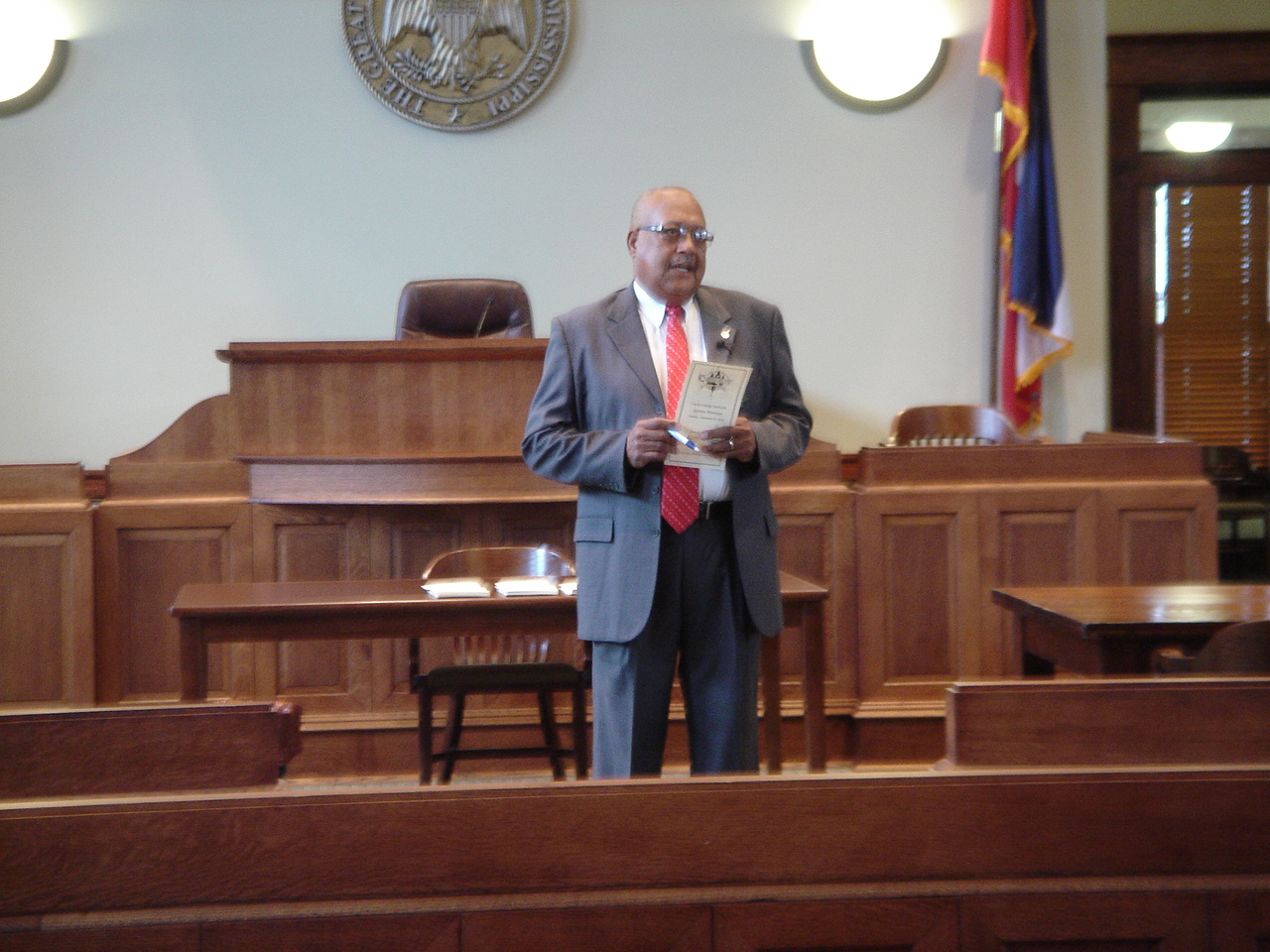
Board of Supervisors President Arthur Nelson chairs the program

Circuit Clerk Beth Doggett recognizes the judges and elected officials
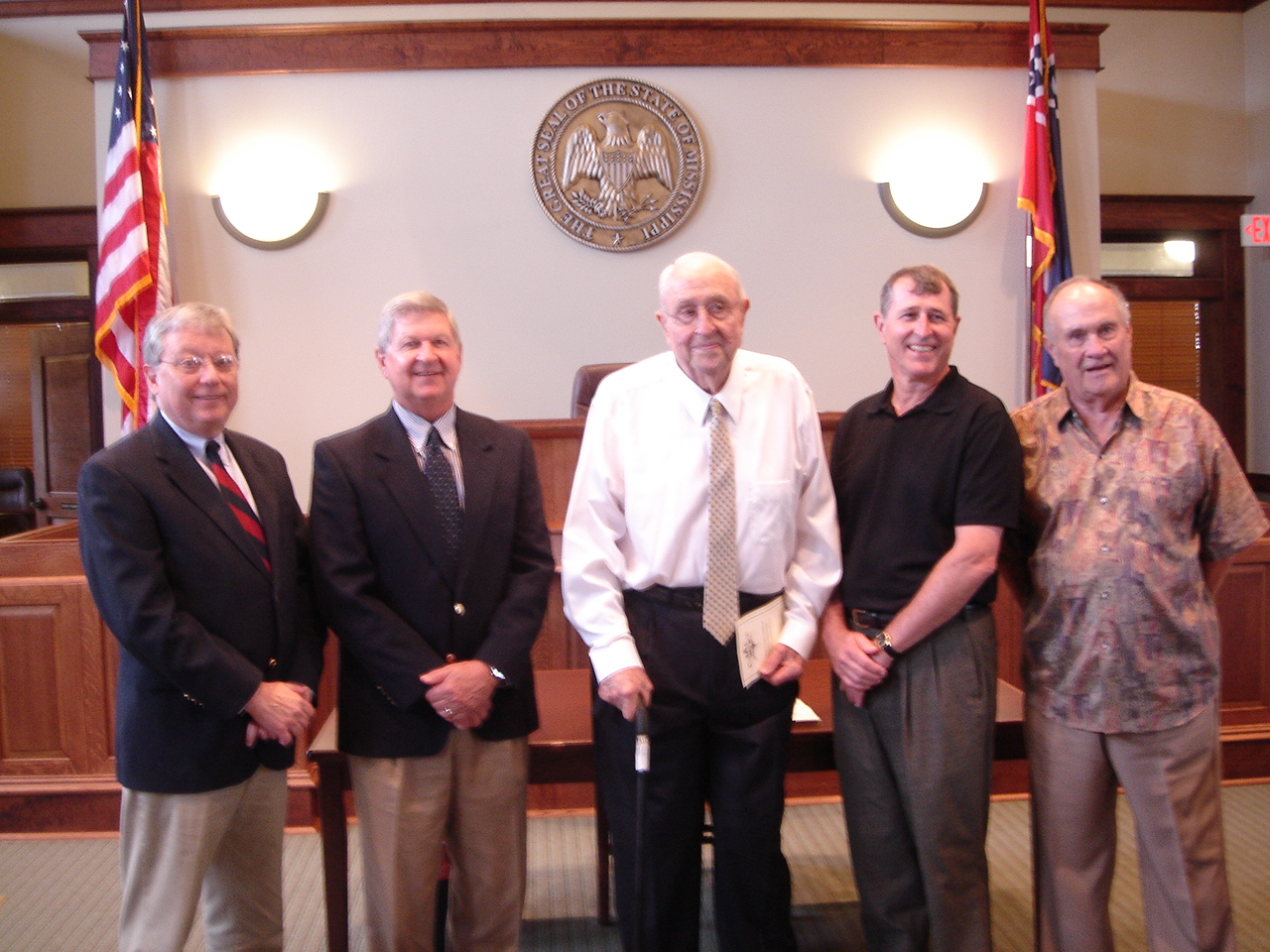
L to R, Chancellor Primeaux, Circuit Judge Bailey, retired Ciruit Judge Williamson, Circuit Judge Williamson, retired Chancellor Warner
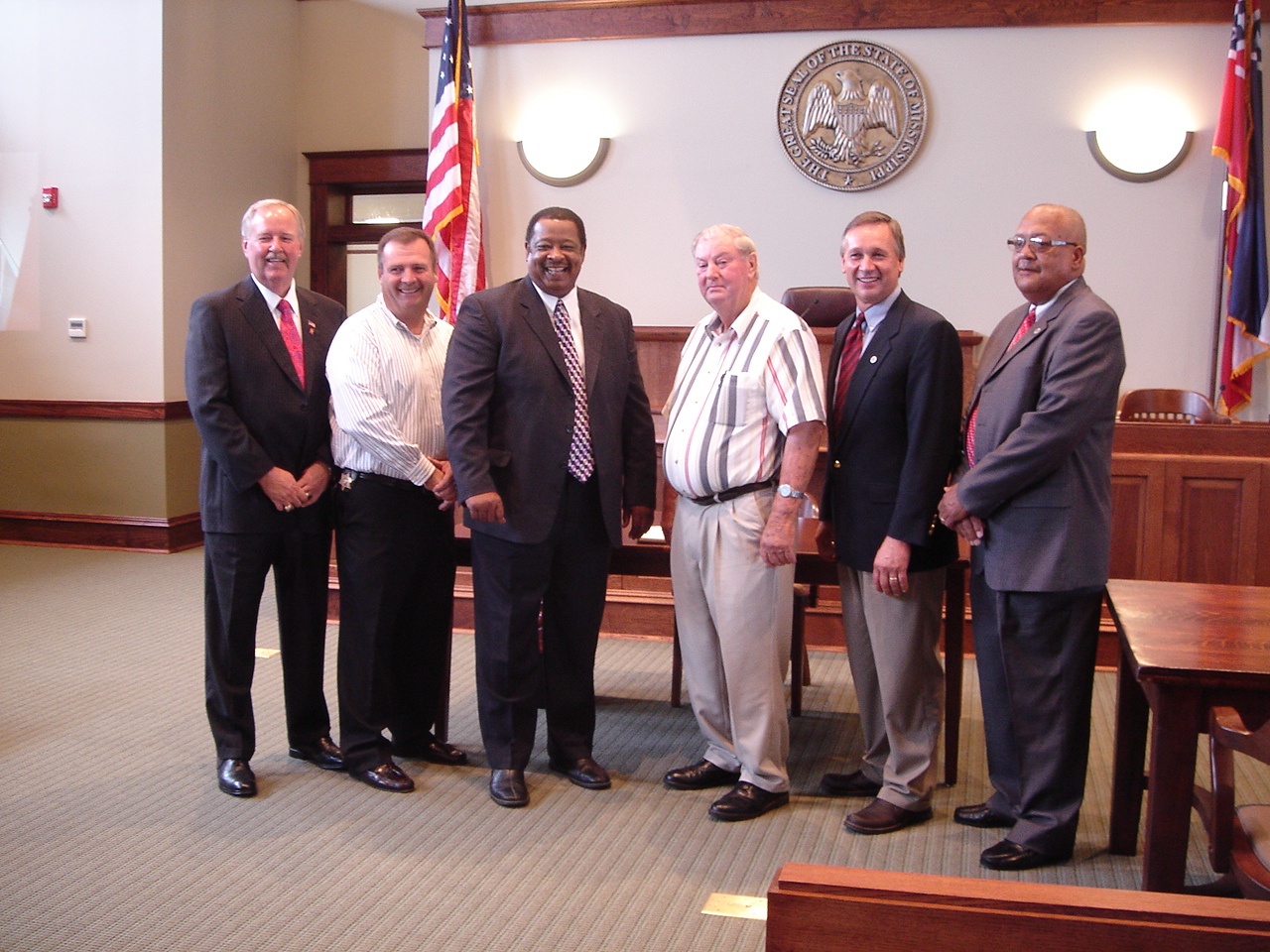
L to R, Dist. 4 Supervisor Paul Mosley, Sheriff Todd Kemp, Dist. 2 Supervisor Cleveland Peebles, Dist. 3 Supervisor Willie Roberson, Dist 5 Supervisor Tony Fleming, and Dist 1 Supervisor and Board President Arthur Nelson

Chancery Clerk Angie Chisholm hosts the reception refreshments downstairs
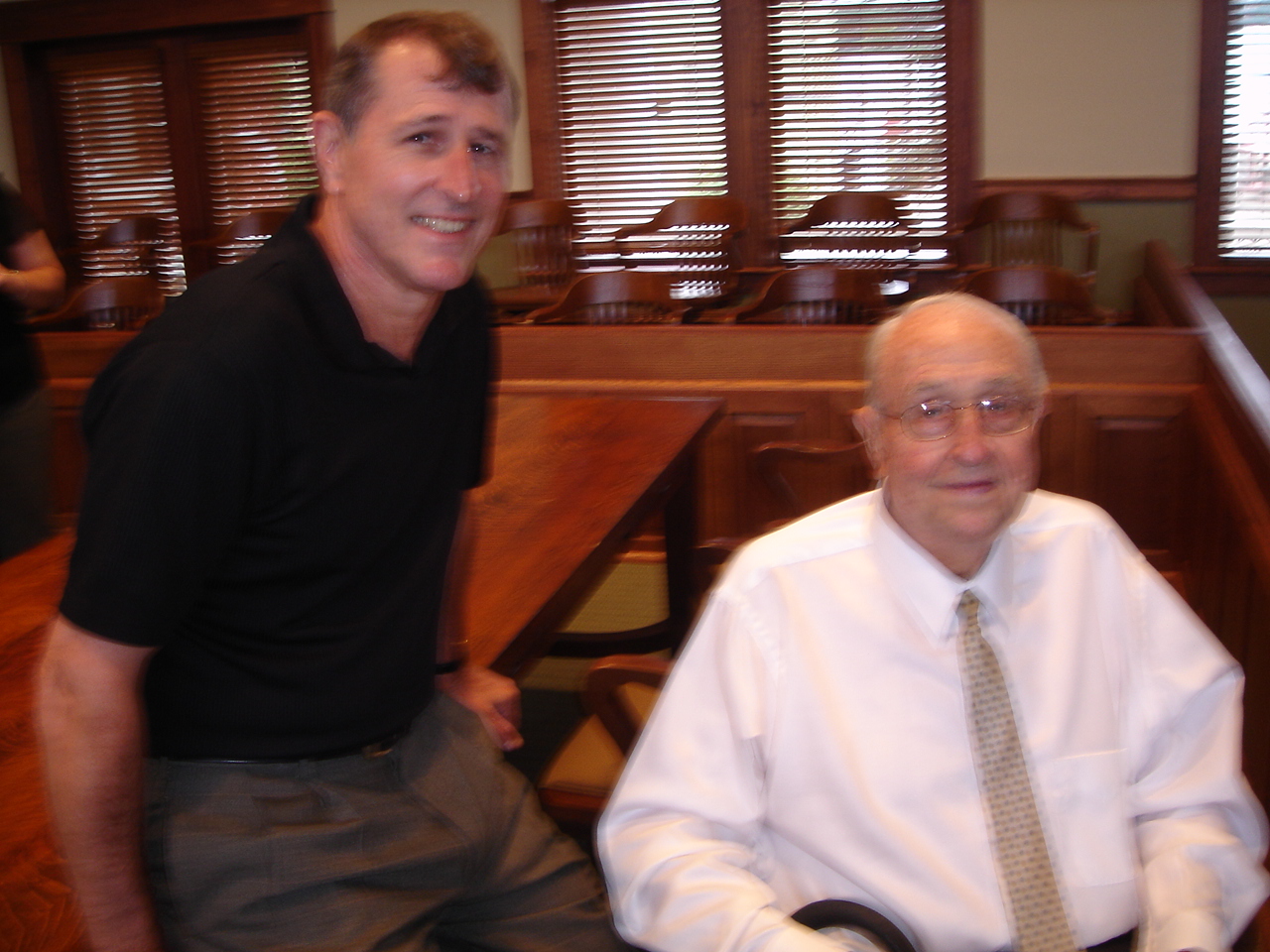
Father and son: Circuit Judge Lester F. WIlliamson, Jr. on the left and retired Circuit Judge Lester F. Williamson, Sr. on the right
WHAT DO PROSPECTIVE CLIENTS WANT TO KNOW?
September 24, 2010 § Leave a comment
Not a knock on anybody’s web site or advertising strategy, but I thought this clever venn diagram pointed out a weakness in many law office marketing strategies: lawyers don’t really know what information prospective clients are really wanting to know as they make a lawyer selection decision.
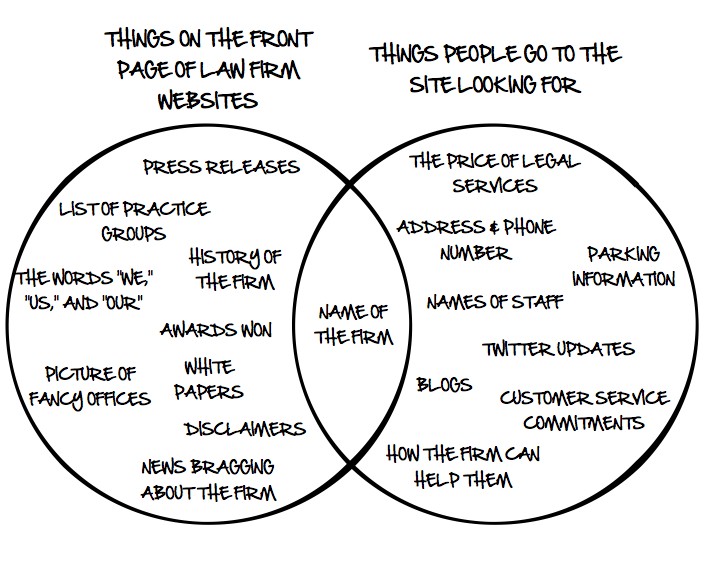 I found this and some other pretty interesting professional marketing ideas at the[non]billablehour blog. You might find it useful, too.
A MILESTONE WORTH NOTING
September 24, 2010 § Leave a comment
Meridian attorney Champ Gipson celebrated his 89th birthday yesterday. He graduated from Cumberland Law School and has been a member of the bar for more than 65 years.
Champ is still active, and even makes a court appearance now and then. He was in my court this spring filling in for his former law partner of many years, Jim Williamson. I see Champ most Wednesday mornings for breakfast at Jean’s, where he always has only one cup of coffee.
If you see Champ, wish him a happy birthday and commend him for his long legal career.
“QUOTE UNQUOTE”
September 23, 2010 § Leave a comment

Lao Tzu
“No one can get inner peace by pouncing on it.” — Harry Emerson Fosdick
“It is an ironic habit of human beings to run faster when we have lost our way.” — Rollo May
“Nature does not hurry, yet everything is accomplished.” — Lao Tzu
VOUCHERS YOU CAN VOUCH FOR
September 23, 2010 § 6 Comments
by Jane Stroble Miller, Senior Staff Attorney for the Twelfth Chancery Court District
Shortly after graduating from law school I was confronted with a baffling legal question. An older and more experienced attorney was attempting to do something that Mississippi statutes and case law clearly stated he could not do. In my naiveté I assumed he knew of a statute or case about which I was ignorant that allowed him to act as he did. After several hours of exhaustive research I called a former professor and mentor, the Honorable William Champion. On hearing my dilemma, he chuckled and informed me that I had just encountered an attorney who had been practicing law for so long that he had lost touch with what the law was.
Recently I again encountered this phenomenon in my duty as staff attorney in monitoring probate matters. One of my tasks is to try to explain to attorneys why the chancellor feels that their accountings do not meet the requirements of both the statutes and the Uniform Chancery Court Rules (UCCR). In a meeting with an older attorney, I pointed out that he had failed to attach vouchers to his accounting. He insisted that he could not provide the necessary documentation “because the banks no longer returned the original canceled checks,” and remained firmly stuck to that position. I realized that I would have to do some research to arrive at a definitive answer.
Section 91-7-277, MCA, requires that the annual account show ” … disbursements, every item of which and the amount thereof to be distinctly stated and supported by legal voucher …” Sections 91-7-279 and 93-13-71, MCA, prescribe the form for vouchers and provide that the account shall be rejected by the clerk unless the vouchers are in the proper form. The only exception to the voucher requirement is when the guardian is an approved financial institution.
Over time, attorneys began using original canceled checks as “legal vouchers,” and the courts recognized them as such. Although neither the statutes nor case law identify canceled checks as “legal vouchers,” there is authority in UCCR. In fact, UCCR 6.04 does specifically refer to “a receipt or cancelled bank check …” as a voucher.
The problem with canceled checks as vouchers, however, is that if you stop at the check, you have omitted the most important, and meaningful, part of Rule 6.04. The sentence of the Rule dealing with vouchers, in its entirety is as follows: “Every such voucher shall consist of a receipt or cancelled bank check showing to whom and for what purpose the money was paid.” [Emphasis added]
In other words, if the canceled check fulfills the function of showing “to whom and for what purpose the money was paid,” then it is a proper voucher within the meaning of the Rule. If the canceled check does not do that job, it is not an acceptable legal voucher. Put even plainer: if the canceled check would not otherwise be acceptable as a receipt, it simply is not a legal voucher.
UCCR Rule 6.06 (Lost Vouchers) reinforces my conclusions. It states that if the original voucher is lost or destroyed, a duplicate or ” … receipt from the person or corporation to whom the money was paid or the property was delivered … ” may be accepted by the court. Again, the function of a voucher is to document actual payment, the recipient and the purpose.
I even looked at Black’s Law Dictionary, which defines voucher as ” … an account, receipt, or acquittance, that shows on its face the fact, authority, and purpose of the disbursement.”
Given no hard and fast definition of a “legal voucher,” I formulated the following requirements for a voucher to be sufficient to comply with our laws:
- A voucher must first and foremost be legal evidence that the money was disbursed for the purpose for which it is authorised or allowed.
- It must be in writing or printed and show the payee, amount and date, and services or goods for which the disbursement was made.
- A check made out to “cash” , even an original canceled check is not a “legal voucher.”
Canceled checks, whether copies or original, really only prove that a payee was paid a certain amount of money. In some circumstances, canceled checks may not be adequate proof. For instance, when a court has authorized the purchase of a computer for a minor ward, a canceled check to Best Buy or Sam’s Club does not prove the money was disbursed for a computer. The check could have just as likely been used to purchase a big screen television or a new set of tires for the guardian’s car. The same holds true for many canceled checks for clothing or personal items. Since vouchers are supposed to be “evidence,” the better practice is for an attorney to have printed receipts that match the date and amount of a canceled check. The guardian should provide the attorney with register tapes, tags or price stickers from the items purchased to prove that the disbursements were actually made for the ward and not for another party or purpose.
The best yardstick that both a judge and attorney could employ in determining the adequacy of a voucher would be to ask whether or not the proof would be of such a nature and sufficiency to be admissible as evidence at a trial and contains all the information necessary to convince the average person that the disbursement was made for what the guardian claimed it was made.
It took me a little time, digging and thought to arrive at my conclusions, but I had Professor Champion’s wisdom as a starting point and a reminder that sometimes we can practice law so long that we lose touch with what the law is.
 The Better Chancery Practice Blog