4 WAYS TO LOSE THE NATURAL PARENT PRESUMPTION
November 2, 2011 § 3 Comments
It’s an axiom of Mississippi law that the natural parents, if fit, are presumed to have the first right against everyone else in the world to have custody of their children. K.D.F. v. J.L.H., 933 So.2d 971, 980 (Miss. 2006). This means that, if the natural parent is challenged for custody by a non-parent, there must be a showing of unfitness that will trigger an Albright analysis to determine the best interest of the children.
That presumption, however, can be lost. Here are the 4 ways:
- Voluntary Court Order. If the parent voluntarily relinquishes custody and there is a court order to that effect, the presumption is lost, and the party to whom custody is relinquished gets custody until there can be shown to be a material change in that person’s household that is having an adverse effect on the children, and it is in the best interest of the children to change custody. Grant v. Martin, 757 So.2d 264 (Miss. 2000). In Grant, the MSSC held that the natural mother who had agreed by court order giving her parents custody had given up the natural parent presumption, with the effect that she had to prove material change-adverse effect-best interest to regain custody. Under Grant, it is immaterial whether the natural parent is unfit or has abandoned or deserted the children; the operative fact is the agreement memorialized by a court order. Note that the court has declined to extend Grant to include temporary orders. Vaughn v. Davis, 36 So.3d 1261, 1266 (Miss. 2010).
- Abandonment. A parent who is shown by “clear proof” to have abandoned the children has lost the presumption. McKee v. Flynt, 630 So.2d 44, 47 (Miss. 1993). Abandonment is ” … any conduct on the part of the parent which evinces a settled purpose to forego all duties and relinquish all parental claims to the child …” In re Leverock and Hamby, 23 So.3d 424, 429 (Miss. 2009), citing Ainsworth v. Natural Father, 414 So.2d 417, 419-20 (Miss. 1982), which defined abandonment as including both active relinquishment and avoidance of duty.
- Desertion. Inaction or avoidance of duty toward the children. Requires clear and convincing evidence. In Leverock, at 33, the Court found that a father had deserted his son by completely avoiding both his moral and legal duties and obligations as a father for more than two years, during which time he had showed a complete disregard for the welfare of his son. The court said that the father had chosen “ ‘to take an extended holiday from the responsibilities of parenthood’ and we find that he should not now be able to claim the benefit of his status as a natural parent….” Once the finding of desertion is made based on clear and convincing evidence, the court must embark on an Albright analysis.
- Adjudication of Unfitness. When the court awards custody to a third party based on the natural parent’s unfitness, the presumption no longer applies, and the material change-adverse effect-best interest standard applies. Adams v. Johnson, 33 So.3d 551, 555 (Miss. App. 2010).
PLEADINGS AND THE PROOF
November 1, 2011 § 2 Comments
“It is the pleading that makes the case for adjudication, and it is the evidence that sustains or defeats it upon the final hearing.” Terry v. Jones, 44 Miss. 540, 1871 WL 8413 (1871).
Voilà! After 140 years and a sea-change in the rules of Mississippi pleading, that ancient formula holds oh-so true in our courts. The pleadings frame the issues; the evidence admitted at trial determines the outcome.
Put another way: THE PLEADINGS ARE NOT EVIDENCE.
This immutable principle has not only for ages been a bedrock of procedure in Mississippi courts, it has also been the rock that has dashed the case of many an unseasoned or unwary practitioner.
Don’t ever assume because you have pled something that the court will take it as true. On the contrary, without actual evidence in the record, the court can not take it as true, whether it wants to or not.
I have seen lawyers leave key elements of their cases lying on the court room floor simply because they neglected to offer proof thereof. This is a chronic problem when it comes to claims for attorney’s fees, but the problem is not limited to that issue. I see Rule 59 motions more frequently than I’d like where the motion claims I “overlooked” a point, but the attorney concedes that the witness never testified about the matter. I should grant the motion, the lawyer pleads, because it was, after all, in the pleadings.
Here’s the deal: If you don’t include a properly-pled issue in your pleadings, the court can not consider it. BUT, just because it is in your pleadings does not mean it is established; you still have to put on evidence in support of it.
THE LAW OF INTENDED CONSEQUENCES
October 31, 2011 § Leave a comment
Who owns a joint savings account? If your answer is that each person named on the joint account owns 100% and is entitled to withdraw and spend all of it, step right up here with us other average intellects.
If, on the other hand, your answer was to the effect that “It depends on what the parties intended,” then take your gold star and step over there with all the other geniuses.
Here is a scenario to illustrate:
Marie, Edward, Josie and Bennie are siblings. Together they open two savings accounts and a CD for the benefit of their elderly parents.
Each account requires the signature of two of the four parties to make a withdrawal.
The mother died, and after her death Marie and Edward unilaterally withdrew some of the money and put it in a “safe place” to be used to do some repairs on property owned by the dad in which the four siblings had an ownership interest. The father then died.
It is undisputed that the siblings had agreed when they opened the accounts that, upon death of the parents, any money remining was to be divided equally among all four siblings.
Josie and Bennie took exception to the withdrawal and filed suit in circuit court for charging Marie and Edward with the tort of conversion. Marie and Edward took the position that each sibling possessed an equal ownership interest in the accounts, and that they had legal authority to make the withdrawals. They denied that there was any conversion as a matter of law, because they had absolute authority to withdraw the funds. Josie and Bennie took the position that the withdrawal violated the parties’ agreement, and that the funds were being unlawfully withheld.
The circuit judge granted summary judgment in favor of Josie and Bennie, and Marie and Edward appealed.
In the case of Stevens and Bohannon v. Smith and Bohannon, decided October 4, 2011, by the COA, the court affirmed the circuit court.
The decision recited the familiar rule of joint accounts:
Regarding joint accounts, it is well settled in Mississippi that joint-account holders have given each other absolute authority over an account “and the unconditional power to withdraw all or any part of the account.” Triplett v. Brunt-Ward Chevrolet, Oldsmobile, Pontiac, Buick, Cadillac, GMC Trucks, Inc., 812 So. 2d 1061, 1066 (¶9) (Miss. Ct. App. 2001) (citing Deposit Guar. Nat’l Bank v. Pete, 583 So. 2d 180, 184 (Miss. 1991)).
Although Marie and Edward had the unqualified right to withdraw the funds, they did not have the right to deprive Josie and Bennie of their right to an equal interest in the funds. The court said at ¶ 12, Citing Drummonds v. Drummonds, 248 Miss. 25, 31, 156 So.2d 819, 821 (1963), that ” … joint accounts are presumed to be vested in the names of the account depositors as equal contributors and owners in the absence of evidence to the contrary; however, intent of the parties is the controlling factor.” And:
The peculiar features of a joint and several bank account make it difficult, if not impossible, in most cases, to determine what portion of the account belongs to each depositor. A long series of deposits which cannot be traced to their source, and a similar series of withdrawals which cannot be traced to their destination, are normally involved. This defect is inherent in the severalty feature of such bank accounts wherein each depositor is allowed to treat joint property as if it were entirely his own. A joint bank account of this kind is generally a creature of contract between parties avowedly indifferent to the exact percentage of ownership between themselves. It is said that the law should take them at their word and give effect to their contract without making detailed evidentiary inquiries to establish factual ownership. The prevailing view seems to be, however, that while joint accounts are presumed to be vested in the names as given in the deposit as equal contributors and owners in the absence of evidence to the contrary, the intention of the parties is the controlling factor, and where a controversy arises as to the ownership thereof evidence is admissible to show the true situation.” [Emphasis in bold added]
Since the undisputed proof in this case was that the parties had agreed to a joint ownership arrangement for the funds remaining after the parents’ death that were not needed for their care, it was conversion for Marie and Edward to deprive Josie and Bennie of their share of the funds.
The decision does not mention the parol evidence rule. It seems to me that there are parol evidence considerations in that the agreement to deposit the money into a joint account is a contract evidenced by the signature card and the bank regulations that are usually printed on it. Doesn’t this case in essence say that the agreement between the parties can be varied by parol evidence even when the agreement is not shown to be ambiguous?
So what are the ramifications of this case for family law practitioners? In my opinion, this rationale opens another line of attack in the situation where one spouse has withdrawn money from a joint account in anticipation of divorce. I say “another line of attack” because claiming the money is subject to equitable distribution is the usual, obvious course. But what if, for instance, it is undisputed that the parties had agreed that the proceeds from sale of husband’s separately-owned horses that were deposited into a joint account were to be used specifically to pay for the college education of his child by a previous marriage instead of being divided? Or what if it had been agreed that the joint income tax refund that was deposited in a joint account was to be used 100% to pay off husband’s credit card debts that had been incurred for the household? In either case where you represented the husband, it would clearly be in his interest to look to the intent of the parties rather than to equitable distribution.
“QUOTE UNQUOTE”
October 28, 2011 § 2 Comments

San hunters of the Kalahari
“Among the San Bushmen of South Africa … the hunt for game with poison-tipped arrows depends on moving rapidly across the veld. … When men become too old to participate in the hunt, they become makers of arrows — and tradition ascribes to the arrow maker the primary credit for the kill. … Similarly, only when women are too old for childbearing are they permitted to become shamanic healers, a translation of the love and care they have given their children to the health of the wider community. In both cases, an appropriately limited effort is recognized as having a profound value.” — Mary Catherine Bateson
“The great thing about getting older is that you don’t lose all the other ages you’ve been.” — Madeleine L’Engle
“When I was young, I was amazed at Plutarch’s statement that the elder Cato began at the age of eighty to learn Greek. I am amazed no longer. Old age is ready to undertake tasks that youth shirked because they would take too long.” — W. Somerset Maugham
ANYWAY
October 27, 2011 § Leave a comment
People are often unreasonable, irrational, and self-centered. Forgive them anyway.
If you are kind, people may accuse you of selfish, ulterior motives. Be kind anyway.
If you are successful, you will win some unfaithful friends and some genuine enemies. Succeed anyway.
If you are honest and sincere people may deceive you. Be honest and sincere anyway.
What you spend years creating, others could destroy overnight. Create anyway.
If you find serenity and happiness, some may be jealous. Be happy anyway.
The good you do today, will often be forgotten. Do good anyway.
Give the best you have, and it will never be enough. Give your best anyway.
In the final analysis, it is between you and God. It was never between you and them anyway.
_______________________________
Credited to various sources, but it doesn’t matter who came up with it; it’s a way to live as a lawyer.
WHAT PRICE JUSTICE?
October 26, 2011 § 2 Comments
There were lawyers ‘way back in 1960. You youngsters will have to take my word for that. Heck, I will even have to take my word for that, because I was a mere 11 years old at the time.
Those 1960’s lawyers had the ingenious idea that bar-mandated fee schedules would accomplish some good things, such as providing some protection for clients against unconscionable fees, giving lawyers a framework for determining what would be reasonable, and would give the courts a measuring device.
I remember when I was admitted to the Mississippi bar, all of us received a navy binder with ethical rules, useful telephone numbers and mailing addresses, and fee schedules. Later, as a young lawyer in Memphis in 1974, I received my copy of the Memphis and Shelby County bar’s fee schedule.
We lawyers all regarded fee schedules as a benign thing.
Then the US Supreme Court saw a bugbear lurking among that legal finery, and declared fee schedules unacceptable. Legal fees were free to float through the ceiling, and, indeed, the roof; clients be danged. Freed of gravity, legal fees have done what all things do when unfettered by an earthward pull.
Meridian lawyer Dan Self brought me a fascinating document published May 2, 1960, by the Mississippi State Bar. It’s entitled Fee Computation and Law Office Management. It offers a look at how law practice has changed, as well as how it hasn’t changed, in the intervening 51 years. I won’t bore you with the rusty nuts and bolts of law office management, but I am sure you will find some of the fee schedule entertaining. Consider:
- Advice and consultation by telephone or in office … $5.00
- Advice and consultation out of lawyer’s office … $10.00
- Preparation of Articles of Partnership with capital less than $5,000 … $150.00
- Incorporation (obtaining charter, drafting by-laws, conducting first meeting of stockholders and directors and preparing minutes thereof, and reporting organization to the Secretary of State) … $250.00
- Will or codicil for estate with value less than $2,500 … $15.00
- Will or codicil for estate with value greater than $2,500 … $25.00
- Certficate of title for 32-year chain of title … $50
- Complaint for divorce, custody or separate maintenance, uncontested … $100.00
- Complaint for divorce, custody or separate maintenance, contested … $150.00, plus time for trial
- Chancery court trials: Preparation of pleadings … $100; Court appearances per day … $150
I can testify that these fees were aspirational by the time I spent any time in Mississippi court rooms. Around 1981, I tried a three-day trial before then-Chancellor Howard Pigford. Since I prevailed, he awarded my client a “reasonable attorney’s fee” in the princely sum of $150. That was $50 a day for some heavy lifting.
UCCR 8.06 ON STEROIDS
October 25, 2011 § 7 Comments
Unless you’ve been practicing law under a rock for the past umpteen years, you are surely aware of the requirements of UCCR 8.06. That’s the rule that mandates filing each party’s name address and telephone number with the chancery clerk, with service on the other party, in every action involving custody of children, and within five days of any change.
Did you know that there is a statutory counterpart to UCCR 8.06 that requires even more detailed information in paternity and child support cases?
MCA § 93-11-65 (5) now provides that:
Each party to a paternity or child support proceeding shall notify the other within five (5) days after any change of address. In addition, the noncustodial and custodial parent shall file and update, with the court and the state registry, information on that party’s location and identity, including social security number, residential and mailing addresses, telephone numbers, photograph, driver’s license number, and name, address and telephone number of the party’s employer. This information shall be required on entry of an order or within five (5) days of a change of address.
This provision is not limited to DHS actions for support. In my opinion, it applies in all cases where there is a provision for child support, including irreconcilable differences divorces. You should see to it that this is addressed in your property settlement agreements and judgments.
ONE TOKE OVER THE LINE
October 24, 2011 § 5 Comments
MCA § 93-5-1 lists the statutory grounds for divorce. Ground “Sixth” is “Habitual and excessive use of opium, morphine or other like drug.”
The somewhat archaic language of the statute has given rise to some obvious questions, including:
- What frequency of drug use is required to be considered habitual?
- When is use of opium, morphine and “other like drugs” excessive (and, for that matter, when is it not excessive?)
- What drugs are included in the definition of “other like drugs?”
Perhaps the leading case to address these questions has been Ladner v. Ladner, 436 So.2d 1366 (Miss. 1983), in which the MSSC held that the husband’s daily use of drugs was so excessive that he had lost the ability to control his use, and the prescription drugs that he used and abused had an effect on him similar to that which would have been produced by opium or morphine, including adverse effects on his cognitive abilities, social and family relationships, and work.
In the case of Carambat v. Carambat, decided by the MSSC on October 20, 2011, the court held that marijuana is a drug included in the definition of “opium, morphine and other like drugs,” and affirmed the grant of a divorce on the ground. The court spelled out that the ground requires that the plaintiff prove the spouse’s drug use was: (a) habitual and frequent; (b) excessive and uncontrollable; and (c) that it involved opium, morphine, or drugs with a similar effect as opium or morphine. Habitual use is proved with evidence that the spouse customarily and frequently used drugs. Excessive use is proven by showing that the offending spouse abused drugs. In determining whether a drug fits the definition of “other like drug,” the trial court should consider the using spouse’s ability or inability to support his wife and family, or to properly attend to business, as well as the guilty spouse’s ability or incapacity to perform other marital duties, or his causing the marital relationship to be repugnant to the innocent spouse.
The court found that evidence in the record did support the chancellor’s findings that the husband’s use of marijuana was habitual and excessive, and that it did have an effect similar to opium and morphine in that it did affect his ability to work and support the family, his family relationships and the family’s financial stability, rendering the marital relationship repugnant to the wife.
At trial, the husband had attempted to argue that the wife knew about his marijuana use before the marriage, and that she condoned his use during the marriage, but the chancelor refused to entertain his objections. On appeal, the MSSC upheld the chancellor, noting that MRCP 8 requires that an affirmative defenses such as condonation must be specifically pled as required, and if not pled is waived. The husband had failed to plead condonation, and the wife timely objected when he attempted to interpose the defense. The MSSC held that the defense was waived.
The husband had also attempted to raise the defense of recrimination on appeal, claiming that the wife had committed adultery. He had not, however, filed a counterclaim or otherwise raised the issue in any pleading, resulting in the same result as that for his failed condonation claim. The court also noted that MCA § 93-5-2 does not mandate denial of a divorce when there is evidence of recrimination.
In a cogent dissent, Justice Carlson takes the position that Mississippi is the first state to hold that marijuana use is a ground for divorce. He also opines that the court’s ruling will open the floodgates to many more divorces. His dissent is worth a read for his argument highlighting the differences between opiates and marijuana, and their statutory treatment in our law. Justices Dickinson and Kitchens joined Carlson’s dissent.
A few points I glean from this case:
- The court has fairly well spelled out the abc’s of what it will take to get a divorce on this ground. If your case fits the recipe, you will likely have some success.
- The key to whether the drug in your case will fit the definition is what effect it has on the life of the using party and its effect on the other spouse and the marriage.
- I agree with Justice Carlson that many cases that formerly were purely habitual cruel and inhuman treatment (HCIT) cases with marijuana use are now candidates for this ground, which could spell an increase in the number of cases. BUT, keep in mind that the burden of proof for ground the Sixth is clear and convincing evidence, which is a considerably heavier burden than the preponderance required for HCIT.
- A side effect of this decision will be to remove any doubt that marijuana use can be included in the discussion of the kind of drugs that can trigger a divorce. Again, the turning point will be the effect on the other spouse and the marriage itself because of the offending spouse’s conduct. What about “synthetic marijuana’ and marijuana substitutes?
- If you expect to raise condonation or recrimination as defense, whether at trial or on appeal, you had better plead them as required in MRCP 8(c).
BOOK LIFE
October 23, 2011 § 3 Comments
You might assume from the fact that I haven’t posted a book review this year that I have not been reading, but, as George Carlin used to say, “Au contraire, mon frère.” Actually, I am a chronic reader who always has a book or two going. Here are capsule reports on some books I have read in 2011 that are worth mentioning.
 A Feast of Snakes, by Harry Crews. A wacky offering from Georgia native Crews, whose boozy, trailer-park, washed-up-high-school-football-hero characters evoke southern trashiana. In this story, a rattlesnake hunt festival culminates in violence, mutilation, and sex, strangely told in a style that vacillates from savage to hilarious to ironic.
W hat Jesus Meant, by Garry Wills. In an era when so many politicians try to co-opt Jesus’ message to validate their own positions, it’s refreshing to read the real meaning behind the words. Wills calls upon his doctorate in the classics and Greek in this book to analyze the meaning of many passages attributed to Jesus in the New Testament. It’s an eye-opening and sometimes surprising revelation. Thanks to Stewart Parrish for recommending this.
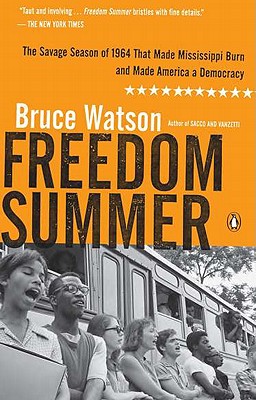 Freedom Summer, by Bruce Watson. The blisteringly hot summer of 1964 was not only the most heated of the Civil Rights Movement, it was then that Mississippi was targeted for massive social change by several civil rights groups for black voter registration drives and Freedom Schools. This book describes the cultural milieu of Mississippi and the South at the time, the volunteers, the violence and even death that met them, and the legacy of the era. Freedom Summer touched many parts of Mississippi, and Meridian played an important part, both positively and ignominiously.
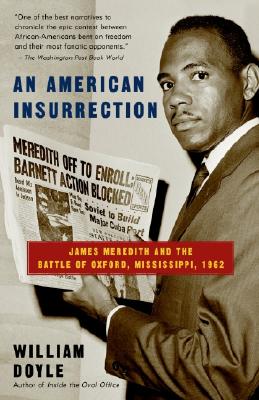 An American Insurrection, by William Doyle. Riveting, hour-by-hour account of the turmoil surrounding the admission of James Meredith to the University of Mississippi in 1962. I had previously reviewed Frank Lambert’s Battle of Ole Miss here, and it is certainly worth a read, but Doyle’s book is much more detailed, and unfolds like a suspense novel.
 Crooked Letter, Crooked Letter, by Tom Franklin. This is a fine little piece of fiction set in a rural Mississippi village. The lives of white Larry Ott and black Silas Jones unexpectedly intersect as a series of startling events unleashes an avalanche of revelations that change the past, present and future of everyone involved.
 Faulkner’s County, by Don H. Doyle. This book is nominally the history of Lafayette County and Oxford, and by extension Faulner’s Yoknapatawpha County and its seat of Jefferson. The expected references to Faulkner’s works are here, pinpointing fictional locales and events in real geography. But the book is so much more. Set in the familiar hills and gullies of Lafayette County, we learn the stories of the earliest settlers and the Chickasaw natives, the depredations of the Civil War, the railroad, and the gradual rise to civilization of the rough hill-countrymen. This is not only the story of Lafayette County, but also the story of the north Mississippi hill country from the early Chickasaw days to the early days of the twentieth century.
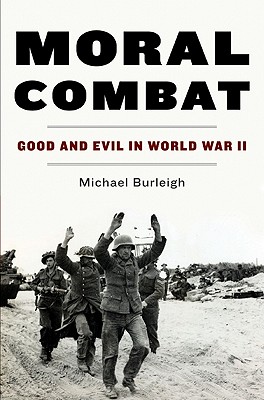 Moral Combat, by Michael Burleigh. Most histories of World War II focus on the strategies, tactics, politics and logistics of the struggle. This book takes a close look at the policy decisions of the leaders and their effects on combatants and non-combatants. As one would expect, the atrocities committed against the Jews are studied, but so are the gratuitous murders committed in the guise of combat, the ethnic cleansing in the USSR, political fratricide, and strategic decisions that cost thousands of lives. This is not light reading, but it’s a thoughful approach to understanding the difficult moral issues that arise in war.
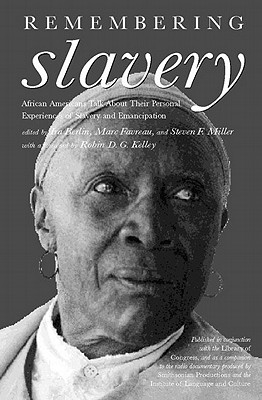 Remembering Slavery, ed. by Ira Berlin, Marc Favreau and Steven F. Miller. Compiled from actual interviews with former slaves, this book describes what it was like to be a slave, their work, the people who subjugated them, family life, slave culture, and life after emancipation.
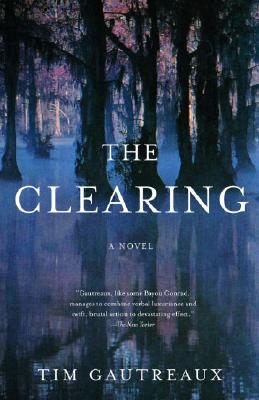 The Clearing, by Tim Gautreaux. This novel tells the story of a dysfunctional northeastern family who take control of a logging operation in the Atchafalaya swamp of south Louisiana in the 1920’s. When long-suppressed resentments surface, lives are torn apart. Tim Gautreaux is known mostly as a short-story writer, and this is his first novel. Some readers might find that this work is more elongated short story than novel, but it is well-written and worth your time.
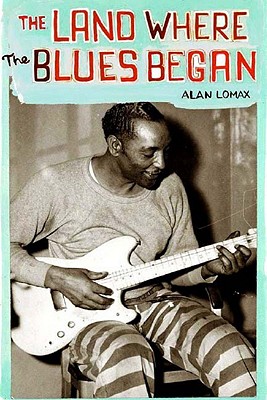 The Land Where the Blues Began, by Alan Lomax. A big part of the story of Mississippi is the story of the blues and blues musicians. Alan Lomax tells the story of the Mississippi Delta, how it gave birth to the blues, and how the desperate poverty and oppression of blacks shaped their music.
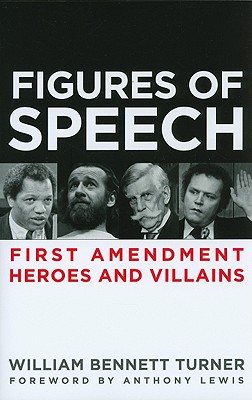 Figures of Speech, by William Bennett Turner. Here are the heroes and villians of the First Amendment, men and women whose legal struggles over free speech issues shaped the law of the land.
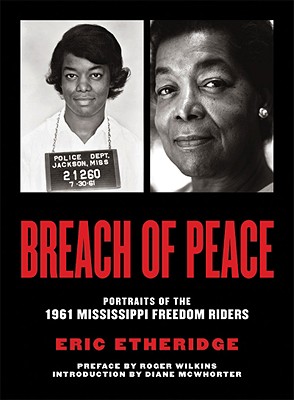 Breach of Peace, by Eric Etheridge. Mr. Etheridge mined a wealth of information compiled by Mississippi’s Sovereignty Commission to compile this fascinating portrait of the Freedom Riders who came in waves to Mississippi in 1961 from across the nation in an attempt to break the iron clasp of the state’s apartheid laws. Using mugshots and documentary material, supplemented with interviews and updated photos of the participants, Etheridge masterfully tells their story.
Reading now …
My Reading Life, by Pat Conroy.
The Summer of 1787, by David O. Stewart.
The Portable Faulkner, ed. by Malcolm Cowley. A re-read.
Profiles in Courage, by John F. Kennedy. Another re-read.
Soon off the shelf …
The Eyes of Willie McGee, by Alex Heard.
The Wandering Falcon, by Jamal Ahmad.
World War Z, by Max Brooks. A gift from my old friend, Carol.
Hope and History, by Vincent Harding. A gift from my new friend, Mark Levy.
The Bible Salesman, by Clyde Edgerton.
What It’s Like to Go to War, by Karl Marlantes.
RIP CHAMP GIPSON
October 22, 2011 § Leave a comment
RIP Meridian attorney Champ Gipson. September 23, 1921 – October 20, 2011.

