MAKING CHILD SUPPORT RETROACTIVE
March 13, 2012 § Leave a comment
Until 1991, the only way to get child support for a period predating your judgment was under MCA § 93-9-11, which allows the court to assess past education and necessary support and maintenance for a child for “one (1) year next preceding the commencement of an action” of paternity.
That changed with the case of Lawrence v. Lawrence, 574 So.2d 1376, 1384 (Miss. 1991), which held that the chancellor may make an upward modification of child support effective as of the date of filing of the pleading seeking modification. Downward modification is effective as of the date of the judgment of modification.
In the case of Strong v. Strong, 981 So.2d 1052, 1054-55 (Miss.App. 2008), the parties entered into a consent for divorce on the sole ground of irreconcilable differences and submitted the following matters for adjudication by the court:
“The parties submit all other issues relating to the extent of the Husband’s visitation with the children, child support, the existence of temporary child support arrearage, health insurance coverage for the children, payment of medical expenses not covered by insurance, life insurance with the children as beneficiaries, claiming the children as dependants for tax purposes, payments of college expenses; and all other related child visitation and support issues to the Court for adjudication.” [Emphasis added]
The court of appeals held that language adequate to uphold the chancellor’s decision to award temporary child support for the twelve months preceding the temporary order in the case, where the payor did not object to presentation of proof on the point. The court said:
“¶ 13. In order to obtain child support, it must be requested in the pleadings or be tried by the consent of the parties. Lee v. Stewart, 724 So.2d 1093, 1095-96 (¶¶ 3-4) (Miss.Ct.App.1998). Lee is instructive to this particular case. There, the chancellor awarded one year of past-due support even though the issue was never raised in the original or amended complaints. Id. at 1095(¶ 3). This Court held that since Lee failed to make a contemporaneous objection when the evidence was introduced on the issue at trial, the issue was tried with Lee’s implied consent. Id. at 1096(¶ 4) (citing Atkinson v. Nat’l Bank of Commerce of Miss., 530 So.2d 163, 166 n. 2 (Miss.1988)).”
It is interesting that both Strong and Lee turn on either a pleading for relief or trial of the issue without objection. The clear implication is that if you include a prayer in your pleading for past child support, it will open the door to that relief by the court.
Whether to grant retroactivity is discretionary with the court. Weeks v. Weeks, 29 So.3d 80, 89 (Miss. App. 2009). I take the position that you must include a specific request for retroactivity in your pleading, or I will not grant it. My rationale is that you are trying to take money (i.e., property) from the other party, and that requires due process under the Fifth Amendment, which in turn requires adequate notice and opportunity to be heard.
LIMIT: ONE DIVORCE PER CUSTOMER
March 12, 2012 § Leave a comment
Lane and Cristal Kimbrough appeared before a special chancellor to present their case for divorce. The case was apparently bifurcated, with the court hearing first only the divorce grounds, and the remaining issues to be tried later.
As for divorce grounds, Cristal charged Lane with habitual cruel and inhuman treatment and habitual drunkenness. Lane counterclaimed that Cristal had been guilty of habitual cruel and inhuman treatment and adultery.
At trial, after having heard the proof only on the grounds for divorce, the special chancellor dismissed all of the pled grounds and held that the parties were divorced “one from the other on the grounds of desertion.” The basis for his ruling was that both parties had recognized that the marriage was broken by virtue of having filed for divorce against each other, and they had in essence lived separate and apart within the same residence for more than two years, “abandoning the marital relationship.”
Both parties appealed.
In Kimbrough v. Kimbrough, decided by the COA February 28, 2012, the COA reversed and remanded, saying that “The chancellor’s grant of the divorce to both parties on the equal fault ground of desertion was clear error.” Judge Russell, writing for the majority, stated:
“The Mississippi Supreme Court has held that a chancery court may not grant a divorce based on each party’s fault-based grounds. Hyer v. Hyer, 636 So. 2d 381, 383-84 (Miss. 1994). This Court has stated: “There can be but one divorce granted. Where each party has requested a divorce and offers proof sufficient to establish a basis for divorce, the chancellor must then determine which of the parties will be granted a divorce.” Garriga v. Garriga, 770 So. 2d 978, 983 (¶23) (Miss.App. 2000).
The court reversed and vacated the trial court’s judgment, declining to address any other issues.
Judge Griffis dissented for the reason that the COA should not have accepted and ruled on the appeal at all, since the trial court’s judgment disposed of less than all the issues pending (i.e., custody, child support, equitable distribution, etc.). He agreed that, if the COA should keep the appeal, the chancellor’s grant of a mutual divorce should be reversed, but he would have held that Cristal should have been granted a divorce based on the record.
Quite often lawyers present agreed Irreconcilable Differences divorce judgments granting both parties a divorce. That does not fly in the face of Hyer and Garriga because Irreconcilable Differences is not a fault-based ground.
In fault-based cases, however, the court can grant only one divorce per case. Mutual divorces are forbidden.
BOOK LIFE
March 11, 2012 § Leave a comment
What I’ve read in the past 5 months.
 How Fiction Works, by James Wood. Using excerpts from the likes of of Faulkner, Flaubert, James and other great writers, Wood analyzes the writers’ tools and approaches that set great literature apart from less accomplished writing. You will find the author’s keen insights entertaining, witty and revealing. This is a must read for anyone who loves well-written fiction.
 Every Day by the Sun, by Dean Faulkner Wells. Poignant reminiscence of the Faulkner family, and in particular the author’s uncle and guardian, William Faulkner. From her unique vantage point, Wells tells intimate details of the family and its history, some of which are familiar, some personal and telling. What emerges is a portrait of the world-renowned author not only as the eccentric and sometimes aloof intellectual who some in his community viewed as a poseur, but also as a caring, tender and generous provider for the many family members who relied on him. We also come to know the family, with its stress-cracks, peculiarities and tensions.
 The Wandering Falcon, by Jamil Ahmad. This is the story of Tor Baz, a young boy who grows into manhood in the tribal areas of Waziristan, in the borderlands of Pakistan and Afghanistan, and becomes known as “The Wandering Falcon.” Ahmad, who penned this book at age 80, is a master story-teller and skillful writer who worked for years as a civil servant in the region and is intimately familiar with the folkways of the tribes. What sets this book apart is its stark style that evokes the mountains and deserts inhabited by the people of the story, and their ways that put tribal loyalty and survival before everything else. Told in the fashion of a tale told in the desert cross-legged on a Persian carpet across a campfire, you will be entranced as it unfolds, folds back on itself, and unfolds again, revealing unexpected nuances again and again.
 My Reading Life, by Pat Conroy. Reading Conroy is like enjoying a homemade lasagna. It’s not fine cuisine, but it’s filling, satisfying, delicious and something you could come back to time after time. His writing is not fine literature, but it’s satisfying, fun to read, and something you could come back to time after time. This little book is a sketch of the people and events who influenced his writing. With his customary skill at manipulating the reader, you will find yourself laughing, near tears and smiling to yourself, often all on the same page.
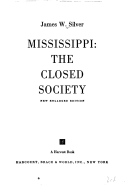 Mississippi: the Closed Society, by James W. Silver. The seminal 1963 book by then-Ole Miss history professor Silver, who braved threats to his life and career to castigate Mississippi’s leadership and silent majority for the atmosphere and crises that led up to the climactic riots at the admission of James Meredith to the University of Mississippi in 1962. Silver, who was an eye-witness and befriended Meredith, tells the story from a perspective that few other southerners in that dangerous, conflict-ridden period dared to share.
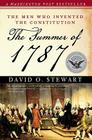 The Summer of 1787, by David O. Stewart. It took only 10 weeks during the sweltering summer of 1787 to craft the United States Constitution, but after reading this book, you will marvel that it ever got done at all. The Constitution was a masterpiece of compromise, the making of which should be a lesson that all legislators, particularly the most dogmatic of our federal lawmakers, should be required to know by heart. There are some fascinating personalities here, some familiar like Washington, Franklin and Madison, and some not so much, like George Mason, Gouverneur Morris, Edmond Randolph, Charles Pinkney and James Rutledge.
 World War Z, by Max Brooks. An oral history of the Great Zombie War that raged out of China and came perilously near extinguishing all of civilization. Okay, it never really happened, but you will be entertained by Brooks’s ingenuity and style, and you will end up knowing lots more about zombies and their savagery than, perhaps, you thought you needed to. Zombies are an obsession of my old friend Carol, who gifted me this book.
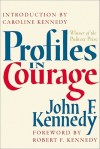 Profiles in Courage, by John F. Kennedy. Eight vignettes depicting acts of extraordinary political courage by US Senators, including Mississippi’s own LQC Lamar of Oxford. Although the future US president (with substantial ghosting help from his friend Theodore Sorenson) wrote this book in 1955 while he was a senator, it should be required reading 56 years later for our politicians who seem unequipped for statesmanship and compromise. Many of the figures in this book sacrificed their political careers to do what they believed was(and in many cases proved to be) best for the nation. That’s a startlingly quaint concept in the 21st century, but one that bears study and emulation now more than ever. This is a re-read of a book I read for the first time around 1964.
 What it is Like to Go to War, by Karl Marlantes. The emotional, moral, psychological, spiritual and physical cost that the experience of war exacts from the warrior and society. Marlantes served as a Marine in Viet Nam, where he won the Navy Cross, Bronze Star and two Purple Hearts, among his commendations. He is a Yale and Oxford graduate and Rhodes scholar. This book is articulate and insightful, offering a philosophical view that draws heavily on the author’s own combat service.
 The Bible Salesman, by Clyde Edgerton. What starts out as the beguilingly interesting story of Henry, the rustic bible salesman who peddles donated books, morphs into a thinly-plotted crime caper with a love story intertwined, punctuated by flashbacks involving a tippling stepfather, talking cats and a retarded neighbor. Maybe it’s just me, but this seems to me like the ideas for three good books crammed into one almost-good book. There are some humorous scenes here, in particular the cat funeral, and the author is skilled at depicting rural southerners of the last century. Edgerton’s writing will keep you reading. At the end, though, you wish you knew more about the characters, and you wish the action were better thought through.
 The Portable Faulkner, ed. by Malcolm Cowley. Brilliant anthology of Faulkner’s best stories extracted from his novels. Here are the well-known The Bear, Old Man, A Rose for Emily, and An Odor of Verbena, as well as some not-so-well-known, such as The Raid and The Courthouse. Familiar or not, you will admire Faulkner’s astonishing use of description, his metaphors and similes, and his unequaled skill at deciphering and depicting the innermost operations of the human heart. This collection is an approachable introduction to Mississippi’s most revered writer of fiction for those who have not read him and for those who have found his writing impenetrable. If you know Faulkner’s writing, you will find this collection an enjoyable entertainment. A re-read of a book I read around 1973.
 Saving Jesus from the Church, by Robin R. Meyers. Avowedly liberal Congregational pastor Meyers challenges orthodoxy and urges a return to first principles espoused by Jesus himself, rather than the accretions of belief added by the churches through the centuries. He emphasizes that faith is a relationship and a way of acting, not a set of beliefs. This book will make you question your religion, but will deepen your faith.
RIP JOHN CAPERS
March 9, 2012 § Leave a comment
Rest in peace, Meridian attorney John W. Capers, who died March 8, 2012.
SCENE IN MISSISSIPPI
March 9, 2012 § 7 Comments
Where in Mississippi is this? (The tire-man sculpture is about 20 feet tall, btw; the horse is real).

RIP ARLO TEMPLE
March 8, 2012 § Leave a comment
Rest in peace, William Arlo Temple, 85, of Meridian. Former Circuit Judge and respected attorney.
DST THIS WEEKEND
March 8, 2012 § Leave a comment
Can it be? Daylight savings time (DST) already? That’s what my calendar says: Sunday, March 11, “Daylight Savings Time begins.” So, at 2:00 am on Sunday, if you haven’t set your clock ahead, erasing a precious hour of slumber, you will be late for church or any other activity you have planned that day.
Although it seems awfully early for DST, it seems awfully early for a lot of things this year. Daffodils started blooming here in east-central Mississippi ‘way back in January, as did the forsythias. We have had an indoor-outdoor hibiscus blooming since last month, as is my wife’s fecund lemon tree (lugged faithfully inside and then back outside with every approaching and passing cold front). The peach trees beside the house are awash in hot pink blooms. The trees are leafing out.
And if you need more convincing, here’s the first robin of spring …


Okay, he didn’t quite make it. Maybe he had a brief, spectacularly unsuccessful “Angry Birds” episode, or maybe he was distracted by a neighborhood cat. Whatever, his pilot error resulted in this fatal collision with one of my dining room windows and suspension in the now-punctured window screen.
So we skipped winter, and spring is here. The balmy days and nights will soon yield to the blast-furnace heat and sauna humidity of summer … perhaps as soon as next month, at the pace we have been going.
Oh, I’m sure we’ll yet have a spell of cold weather. Seems like we always do in April. I remember one April, around the 8th, when we had eleven inches of snow. The temperatures did skitter back into the 80’s a mere couple of days after our “Mississippi blizzard,” but nature had had its way, reminding us once again that it can be cold when it chooses to be.
We shouldn’t really complain about this early grace of pleasantry, I know. The temperatures are easy and the breezes are light (if pollen-filled). Still, I look down the calendar at August and September and wonder what these warm temperatures portend. It’s only natural when you have been through a calamity like August, 2005.
Stay tuned.
JUDICIAL PAY RAISE CLEARS THE HOUSE
March 7, 2012 § Leave a comment
83-37. Needed 78 to pass. Now on to the Senate.
Thanks and congrats to all who were involved in and supported this effort.
SOME PENDING SENATE BILLS YOU MIGHT WANT TO WATCH
March 7, 2012 § 1 Comment
Here are some bills pending in the Mississippi Senate that might affect your chancery practice:
SB 2031. Gaming winnings may be intercepted for child support obligation.
SB 2037. Allows for redaction of Social Security numbers in recorded documents.
SB 2046. Requires disclosure in real estate transactions if meth production took place on the property.
SB 2087. Mandatory reporting of child abuse.
SB 2664. Amends the statute providing for parental consent to abortion to include intellectually disabled persons, and makes some other changes.
SB 2677. Adverse possessor must reimburse the other party for property and other taxes paid.
SB 2806. Changes and clarifies the rules for a landowner’s duty to a trespasser or licensee.
SB 2807 and SB 2708. How and when a landlord may dispose of abandoned personal property.
SB 2853. Allows both Circuit Court and County Court to adjudicate custody in paternity actions. Is this one more step toward the disappearance of chancery courts?
SB 2856. Court may restrict visitation of person convicted of violent crime.
Not included are bills that I considered to duplicate other senate bills or pending House bills.
SOME PENDING HOUSE BILLS YOU MIGHT WANT TO WATCH
March 6, 2012 § 5 Comments
Some bills pending in the Mississippi House of Representatives may affect your practice of law in chancery court. Here are some selected bills you might want to follow:
HB 2. Prohibits Mississippi courts from applying foreign law when the result would be a ” … violation of a right guaranteed by the Constitution of this state or of the United States, including, but not limited to, due process, freedom of religion, speech, or press, and any right of privacy or marriage as specifically defined by the Constitution of this state.”
HB 128. Clarifies the duty of a sex offender to notify any volunteer organization in which he or she is involved.
HB 144. The interest rate on judgments shall be ” … at a per annum rate equal to the discount rate at the Federal Reserve Bank in the Federal Reserve district in which the court is located, beginning from a date determined by the judge hearing the complaint to be fair but in no event before the filing of the complaint.”
HB 178. Uniform Foreign-Country Money Judgments Recognition Act.
HB 180. Allows postnuptial agreements. This bill is one to watch. It would change the ground rules for postnuptials, and could have a big impact on the way property settlement agreements are enforced in irreconcilable differences divorces that become contested.
HB 191. Enacts the Uniform Adult Guardianship and Protective Procedeedings Jurisdiction Act, which clarifies jurisdiction between states in guardianships and adult guardianships, much as the UCCJEA did for child custody.
HB 218. Requires random drug screening for all public school students in grades 6-12.
HB 248. Social Security numbers no longer required to record deeds.
HB 299. Unlawful to use DNA test results for any discriminatory purpose.
HB 300. Adds irreconcilable differences as a thirteenth ground to be granted ” … upon proof of any behavior, conduct, habit or demeanor engaged in or assumed by the offending party which substantially impairs the joint purposes of the marriage or which has rendered future cohabitation between the parties unlikely.”
HB 303. Increases the values of some exempt property.
HB 304. Adjusted gross income for child support over $50,000 would be presumptively subject to the guidelines, requiring findings to make it not so.
HB 313. Adds a third category of grandparents entitled to an award of grandparent visitation rights: whenever it is in the child’s best interest.
HB 320. Allows covenant in a deed not to sell to registered sex offenders.
HB 321. Purchaser at a tax sale can not be held civilly liable for environmental or other conditions on the property pre-existing the sale.
HB 354. Further restrictions on residence of registered sex offenders, contact with victims, and more.
HB 459. Creates a state-wide task force to study ways to reduce child abuse. No members of the judiciary are invited to participate.
HB 475. Amends MCA § 93-5-23 to provide that “The court shall order a noncustodial parent to pay at least one-half (1/2) of the reasonable cost of child care expenses in addition to child support obligations.” This is a major change.
HB 484. Judicial and DA pay raise, 2012 version. Please ask your legislator to vote in favor. There will be no tax increase to fund it; court costs will pay for it.
HB 491. Amends the definition of vulnerable persons to include persons under 10 years of age.
HB 550. Prohibits concealed weapons in any county-owned facility. If this passes, how will it affect the law enacted last year that specifically allowed carrying of firearms into court houses?
HB 562. In all civil actions, the losing plaintiff is liable for the defendant’s attorney’s fees and expenses. No mention of the losing defendant being liable for the plaintiff’s fees.
HB 668. Allows partisan judicial elections. A perennial bill.
HB 698. Similar to HB 2, but specifically references Sharia law.
HB 739. Court proceedings to be electronically recorded.
HB 817. Loser pays attorney’s fees in adverse possession cases.
HB 858. Increases from $50,000 to $100,000 adjusted gross income the presumption that the child support guidelines are inapplicable.
HB 886. Changes the rescission limit for acknowledgement of paternity to one year.
HB 949. Clarifies the duties of the guardian ad litem.
HB 963. An adopted person over the age of 18 may be provided the identity of the biological father.
HB 1110. Revises certain provisons pertaining to durable powers of attorney.
HB 1114. The Human Embryos Act and Ethical Treatment of Human Embryos Act.
HB 1172. Permits an injunction to prevent withholding of nutrition to a disabled person.
HB 1210. Seized drug money subject to child support obligations.
HB 1234. Judicial salaries would be tied to the southeastern average, and adjusted periodically accordingly.
HB 1254. Repeals adverse possession entirely.
HB 1258. Nonlegal custodian may authorize medical and educational expenditures upon presentation of an affidavit.
HB 1268. Makes several significant changes to the adoption statutes, including a provision that an attorney representing an adoption agency must complete training.
HB 1269. Makes it a crime to use a child’s Social Security number on a tax return without authorization. Maybe this will stop the chronically recurring problem of duelling claims of minors as dependents by ex-spouses.
HB 1272. Arbitration clauses between a seller and provider and a citizen of Mississippi are non-binding.
HB 1273. A contract must be printed in 10-point font or greater in order to be enforceable.
HB 1324. This is one at which you might want to take a close look. It changes notice representation rules in estates, guardianships and trusts, and defines what is necessary to bind interested persons and wards.
HB 1329. Clarifies the requirements that must be met for an engineer to qualify as an expert witness.
HB 1335 and HB 1337. Chancery court may order commitment of person who has a propensity to be a sex offender.
HB 1341. If the court requires electronic filing, a computer and scanner must be provided at the court house.
HB 1385. Authorizes Covenant Marriage, in which the parties contract that there will be no divorce between them except on the grounds of adultery or desertion.
HB 1387. Judicial candidate must be a qualified elector in his or her district.
HB 1394. Judicial pay is tied to the pay of the US Marshal.
HB 1421. Adds littoral landowners to the statute defining the rights and obligations of riparian landowners, and adds some restrictions.
HB 1481. Revises the requirements for informed consent to abortion.
Senate bills in another post.

