“QUOTE UNQUOTE”
August 6, 2010 § Leave a comment
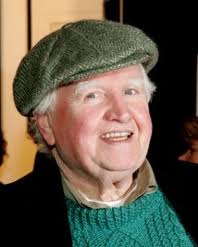
Malachy McCourt
“Resentment is like taking poison and waiting for the other person to die.” — Malachy McCourt
“Through anger, the truth looks simple.” — Jane McCabe
“You taught me to be nice, so nice that now I am so full of niceness, I have no sense of right and wrong, no outrage, no passion.” — Garrison Keillor
“QUOTE UNQUOTE”
August 6, 2010 § Leave a comment
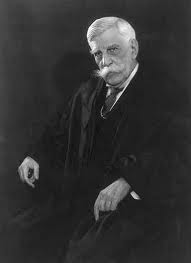
Justice Holmes
“If there is any principle of the Constitution that more imperatively calls for attachment than any other it is the principle of free thought — not free thought for those who agree with us but freedom for thought that we hate.” — Oliver Wendell Holmes, Jr.
“They [the makers of the Constitution] conferred, as against the government, the right to be let alone — the most comprehensive of rights and the right most valued by civilized men.” — Louis Brandeis
“It is not the function of our Government to keep citizens from falling into error; it is the function of the citizens to keep the Government from falling into error.” — Robert H. Jackson
THE OUTER LIMITS OF DECORUM
August 6, 2010 § Leave a comment
This from the Chicago Tribune online edition of July 19, 2010:
Elmhurst eye-rolling incident raises questions
By Annemarie Mannion, Triblocal.com reporter
Elmhurst officials are considering creating a “disturbance and disorderly conduct” violation after a resident accused of rolling her eyes and sighing was ejected from a public meeting.
City Attorney Don Storino has been directed by the city’s finance and council affairs committee to look at various sources including “Robert’s Rules of Order,” Illinois state statutes and policies adopted by other municipalities for a legal definition of disorderly conduct and disruptive behavior.
He is expected to report his findings to the committee on July 26.
Ald. Stephen Hipskind said Darlene Heslop rolled her eyes and sighed while attending a June 14 committee meeting. Heslop, who was asked to leave the meeting, said she favors adding a definition of disorderly conduct to the municipal code.
“I’d like for them (city officials) to have a better understanding of the open meetings act and its meaning and to understand what disorderly conduct is,” she said.
Under state law, disorderly conduct is “an act in such unreasonable manner as to alarm or disturb another, or to provoke a breach of the peace.”
Heslop, who was asked to leave the meeting during discussion of a proposal for the city to hire a state lobbyist, which she opposes, said she hopes adding the definition will help city officials better understand “what the public is entitled to” when attending a city meeting or conducting city business.
Storino said the issues of conduct or behavior during a city meeting are not usually criminal matters.
“It’s not in any way a punishable offense by a fine,” he said. “It’s a matter of decorum.”
TRIAL BY CHECKLIST: EQUITABLE DISTRIBUTION
August 5, 2010 § 23 Comments
A practice tip about trial factors is here.
The decision in Ferguson vs. Ferguson, 639 So.2d 921, 928-9 (Miss. 1994), sets out the factors that the trial court must address in making a determination of equitable distribution. Those factors are:
- Substantial contribution to the accumulation of the property, based on direct or indirect economic contribution to the acquisition of the property, contribution to the stability and harmony of the marital and family relationships as measured by the quality, quantity of time spent on family duties and the duration of the marriage, and contribution to the education, training or other accomplishment bearing on the earning power of the spouse accumulating the assets.
- The degree to which each spouse has expended, withdrawn or otherwise disposed of marital assets and any prior distribution of such assets by agreement, decree or otherwise.
- The market value and the emotional value of the assets subject to distribution.
- The value of assets not ordinarily, absent equitable factors to the contrary, subject to distribution, such as property brought to the marriage by the parties, and property acquired by inheritance or inter vivos gift by or to an individual spouse.
- Tax and other economic consequences, and contractual or legal consequences to third parties, of the proposed distribution.
- The extent to which property division may, with equity to both parties, be utilized to eliminate periodic alimony and other potential sources of future friction between the parties.
- The needs of the parties for financial security with due regard to the combination of assets, income and earning capacity.
- Any other factor that in equity should be considered.
Some principles of equitable distribution to bear in mind:
- Equitable distribution applies to marital assets, which are assets acquired through the work efforts of one or both parties during the marriage. Included in the definition of marital assets is added value, as where an asset was the pre-marriage property of one party, but its value was increased during the marriage by contribution. An example is a 401(k) plan with a value of $10,000 at the time of the marriage that increases through contributions during the marriage to $100,000. The increased value attributed to contributions is a marital asset.
- Equitable distribution does not mean equal distribution. The division must be equitable, considering all of the Ferguson factors. Each asset need not be divided; the overall division must be fair.
- Equitable division of the marital estate involves four steps: (1) The trial court classifies each asset as marital or non-marital; (2) The court determines the value of each asset based on the proof, which may require appraisals; (3) The marital assets are divided equitably based on the Ferguson factors; and (4) move on to the Armstrong factors to determine whether, after equitable distribution, alimony is appropriate.
- The parties’ separate, or non-marital, assets are not subject to equitable division, although they are to be taken into consideration in the distribution as well as in ajudicating the need for alimony. The values of non-marital assets must be in the record as well as that of the marital assets.
- Equitable distribution may be used to eliminate the need for an alimony award. As the court stated in Ferguson at 639 So.2d 921, 929 (Miss. 1994), “Alimony and equitable distribution are distinct concepts, but together they command the entire filed of financial settlement of divorce. Therefore, where one expands, the other must recede.”
- The contribution of a homemaker to the marital estate is presumed equal to that of a wage-earner, but the presumption can be overcome with proof that the homemaker’s contribution was actually minimal.
- A spouse may be granted a greater share based on greater need.
- In making its allocation of assets, the court considers the asset value net of debt, and may also factor in the amount of debt assigned to a party in determining how to award assets.
- The valuation date is in the judge’s discretion, but the judge can be influenced by your proof and argument. Give careful consideration to the date you wish for the assets to be valued. For example, due to fluctuations in the stock market, it may be in your client’s interest for the valuation date to be closer to the date of the divorce than to the date of separation. Make your position and its rationale clear to the court. Caveat: The appellate courts have made it clear that entry of a temporary judgment stops accumulation of marital assets, so that any increased value or newly acquired assets after the temporary are the separate property of the party to whom they are attributable.
Equitable distribution is a complex subject with many nuances that are far beyond the scope of this post. I recommend that you obtain a copy of Professor Deborah Bell’s Family Law in Mississippi, which includes an exhaustive analysis of the subject at Chapter VI.
JUDGE SWEAT TAKES A STAND
August 4, 2010 § 1 Comment
It was my good fortune to have Judge Noah S. “Soggy” Sweat as a Trial Practice professor at the Ole Miss Law School. He was in his 50’s by the time I encountered him, but he retained a jaunty air and wry sense of humor that captivated his students and others who came within his thrall. His classes were renowned for their humor, but there was some serious learning, too. Judge Sweat loved zipping around campus and Oxford in his sport car and dark-tinted aviator glasses. He was a notorious prankster who enjoyed imbibing with good company from time to time. On the serious side, he was a former Circuit Judge in Corinth, and was the moving force behind and founder of the Mississippi Judicial College. He died in 1996.
Judge Sweat’s high water mark, so to speak, came as a young state legislator in 1952, when the body was debating control of alcohol, as it did for many years until legalization in 1966. The debates were often fractious, and feelings ran strong.
If the legislature was a lion’s den for lawmakers who dared to take a stand on the controversial issue, Judge Sweat was its Daniel. On April 4, 1952, he delivered one of the most remarkable speeches in Mississippi history, and, indeed, in the history of American oratory. Some say it was delivered on the floor of the legislature, and some say it was at a banquet. No matter; it is genius of the first order. Here is his short, brilliant address:
My friends, I had not intended to discuss this controversial subject at this particular time. However, I want you to know that I do not shun controversy. On the contrary, I will take a stand on any issue at any time, regardless of how fraught with controversy it might be. You have asked me how I feel about whiskey. All right, here is how I feel about whiskey:
If when you say whiskey you mean the devil’s brew, the poison scourge, the bloody monster, that defiles innocence, dethrones reason, destroys the home, creates misery and poverty, yea, literally takes the bread from the mouths of little children; if you mean the evil drink that topples the Christian man and woman from the pinnacle of righteous, gracious living into the bottomless pit of degradation, and despair, and shame and helplessness, and hopelessness, then certainly I am against it.
But, if when you say whiskey you mean the oil of conversation, the philosophic wine, the ale that is consumed when good fellows get together, that puts a song in their hearts and laughter on their lips, and the warm glow of contentment in their eyes; if you mean Christmas cheer; if you mean the stimulating drink that puts the spring in the old gentleman’s step on a frosty, crispy morning; if you mean the drink which enables a man to magnify his joy, and his happiness, and to forget, if only for a little while, life’s great tragedies, and heartaches, and sorrows; if you mean that drink, the sale of which pours into our treasuries untold millions of dollars, which are used to provide tender care for our little crippled children, our blind, our deaf, our dumb, our pitiful aged and infirm; to build highways and hospitals and schools, then certainly I am for it.
This is my stand. I will not retreat from it. I will not compromise.
“PRIMARY PHYSICAL”: A CUSTODY CONUNDRUM
August 3, 2010 § 7 Comments
Many lawyers use the term “primary physical custody” in their property settlement agreements. For example: “The parties shall share joint legal custody, and wife shall have primary physical custody of the minor children.”
If the intent was for wife to have exclusive physical custody, use of the word “primary” in that sentence is probably harmless, if meaningless.
Consider, however, language in a property settlement agreement that provides, “The parties shall share joint legal and physical custody, with wife to have primary physical custody and husband to have secondary physical custody.” For lawyers looking for a way to mollify a father demanding custody or at least joint custody, and a mother insisting on sole custody, such language sounds like a nice, painless way to make the father feel included in the physical custody loop while leaving the mother in first place, right? Think again.
In Porter v. Porter, 23 So.3d 438 (Miss. 2009), the parties’ agreement used the “primary” and “secondary” language above. The Mississippi Supreme Court pointed out that the joint custody statute includes no definition of the terms “primary physical custody” or “secondary physical custody.” The court held that the term “primary physical custody” could not be used to transform what was expressly a joint physical custody arrangement into a de facto sole physical custody arrangement. In other words, the use of the language “primary physical custody” has no legal meaning in our law, and its use may import dangerous ambiguity into your otherwise carefully-crafted agreement, leaving it open to an interpretation neither you nor your client ever intended.
Imagine having to explain to your client who thought she would be “primary” in the custody arrangement that she and her ex-husband are on an equal custodial footing. Do you think she might be a bit peeved at her attorney?
In my opinion, the same result as in Porter would be reached in the situation where the parties agreed to this language: “The parties shall share joint legal and physical custody, and wife shall have primary physical custody.”
And the same result with this language: “The parties shall have joint custody, and wife shall have primary physical custody.” The reason that this language would produce the same result is found in § 93-5-24 (5) (a), MCA, which states that ” … ‘joint custody’ means joint physical and legal custody.”
I believe that attorneys often operate under the mistaken belief that “primary physical custody” designates the person who has final decision-making authority in a joint custody arrangement. The Porter case tells us that is not so. If you want the wife to have final decision-making authority, use language to this effect: “The parties shall share joint custody of the minor children, and wife shall have final decision-making authority in matters of the children’s health, education and welfare.”
Practice Tip: Avoid using the term “primary physical custody” or any other term not defined in the statute when crafting your custody provisions.
JUDGING IN THE BLIND
August 2, 2010 § 5 Comments
Is this you? Your client, Otis, is on the witness stand. Otis is testifying about his finances from Exhibit 2 in evidence, which is his Rule 8.05 financial statement — $350 a month for groceries, $100 for entertainment, $360.48 car note, and so on — and the only ones in the court room who are looking a copy of at his Rule 8.05 financial statement while he testifies are Otis, you and the lawyer on the other side. You glance at the judge, who is sitting there staring off into some faraway void, eyes glazed, his mind drifting off into starry space where Otis’ crucial testimony will never penetrate. The judge is missing the most important evidence in your case!
Where did you go wrong?
If you answered that the Chancellor doesn’t have a copy of the exhibit about which Otis is testifying and so is deprived of the most potent tool you have for the judge to follow and later recall Otis’s testimony, you are absolutely correct. Give yourself a gold star and a pat on the back for a correct answer to this quiz. Give yourself a big, fat F for your trial technique.
Uniform Chancery Court Rule 3.05 states that, “Unless excused by the Court, it shall be the duty of an attorney to distribute copies of any exhibits to the Court and opposing counsel when offered.” That includes the Rule 8.05 financial statements.
Some attorneys not only offer the exhibit; they also offer the court a separate, extra copy for the judge to mark up. That’s a pretty shrewd practice.
If you aren’t making sure that the court has the original exhibit or a copy when you ask a witness about it, you are asking the court to judge your case in the blind. Put yourself in the judge’s shoes: Without the exhibit, you are asking the judge to listen to, comprehend, copy down and digest literally dozens of figures, often delivered in rapid-fire, machine-gun fashion, when the figures are right there on the exhibit, and the judge could be following along, thoughtfully assimilating the testimony and jotting down a few helpful notes.
The principle is not limited to financial statements. I once had an attorney take a stack of photos in evidence from the bench, present them to the witness one by one, and ask the witness to describe and make observations about each. To this day, I have no idea what the witness was talking about. Had I had a separate copy, I could have looked at each photo simultaneously with the description, and perhaps that would have influenced the outcome of the case.
A week does not go by that I am put in the position of judging in the blind, and it is always to the detriment of the client. How do you expect the judge to get the benefit of your client’s testimony about her financial statement or other exhibit if you take the document away from the judge before she testifies about it?
A variation on this theme occurs when the lawyer actually begins questioning the client about the financial statement and the witness, for crying out loud, does not even have a copy to look at. That’s like sending the poor client into a knife fight without a knife.
I have actually begun stopping trials and ordering attorneys to comply with Rule 3.05. The lawyer who complies with Rule 3.05 not only appears to be prepared, professional and effective; she is prepared, professional and effective. Surely you don’t want to be embarassed by appearing unprepared and clueless.
Practice Tip: Always have the original and FOUR copies of all exhibits. That’s the original for introduction into evidence, copy one for yourself, copy two for your client, copy three for opposing counsel, and copy four either for the opposing party or for the court to mark up. Copies are cheap, compared to cost to your client of not having them.
PIGGING OUT ON REAL CAJUN
July 31, 2010 § 4 Comments
Being possessed of a genuine Cajun pedigree, I am sensitive — perhaps overly so, I admit — to the use of the term Cajun when it comes to cuisine. In the land of my upringing, the word “Cajun” emphatically is not synonymous with “obnoxiously seasoned,” as it is most everywhere else.
Authentic Cajun cuisine is rustic, simple, earthy and straightforward. The ingredients are what have been traditionally available locally in Cajun country: fresh seafood, pork and beef, crawfish, rice, okra, peas, yams and corn. The seasonings are uncomplicated: salt, red and black pepper, and the “trinity” of onions, bell pepper and celery (in place of the mirepoix that serves as the base of so many other cuisines). Done properly, the flavors of Cajun cuisine are to be savored and enjoyed, not suffered through and sweatily wrestled with.
Thus, I approached Chef Donald Link’s restaurant COCHON (PIG en francais) in New Orleans last night with doubt bred from many disappointing experiences that have taught me through the years that the only good Cajun cooking is in Acadiana.
Only this time there was no disappointment.
Link’s success with Cajun food comes from his focus on a much-ignored aspect of the region’s cooking: Boucherie. As in locally produced pork and beef butchered locally and turned into the most delectable morsels that one could imagine.
In my own home town of Abbeville in southwest Louisiana there were several boucheries that prepared and sold superb boudin (noir and blanc), andouille, gratons (cracklins), sausages, tasso, pork roasts and chops, stuffed chickens, steaks and beef roasts, and every imaginable piece of pig that the law allows (and some that it doesn’t). Hebert’s and Richard’s (that’s pronounced Ree-shard’s for the uninitiated) are the two best in Abbeville, in my opinion.
Where Link succeeds is in evoking the fantastic flavors and textures of the boucherie in his cooking.

The wood-fired oven
The first thing that one senses on entering COCHON is the smoky atmosphere. The chefs cook in a wood-fired oven. Now, one could consider that an affectation in the sense that you just won’t find a wood-fired oven in any boucherie that you visit in southwest Louisiana, but honestly, I can’t argue with the results.

Cochon de lait ready to be carved
My dish was cochon de lait — suckling pig — served on a bed of grits, corn and okra. The best cochon de lait is seasoned by slitting the uncooked meat and stuffing in a mixture of garlic, parsley and other savory herbs, then roasting on a spit over an open fire. The result should be a crispy, cracklin’-like skin and tender, melt-in-your-mouth meat with delicate flavors. And that is exactly what I got. The skin was crisp and salty, a perfect counterpoint to the succulent, sage-y tenderness of the meat.

Cochon plated

Lisa's ham hocks with eggplant and shrimp dish
Lisa ordered ham hocks with black-eyed peas and maque choux (sauteed corn, tomato, onions, bell pepper). The ham hocks were dusted in corn flour, roasted and fried. Although they were flavorful, we found them a little on the tough side. Braising would probably have been as kind to the flavor and yet produced a more tender dish. The maque choux was quite good.
We shared a dish of eggplant and shrimp, a concoction commonly found on the Cajun household table, and although it was not traditional in its presentation, it was every bit as good as what one might enjoy on a home visit to Carencro or Erath.
All in all, we found the cooking superior and the atmosphere exceptional. The service was attentive without being intrusive. Our questions were answered knowledgeably and accurately.
Chef Link comes by his Cajun cooking honestly, having been raised in southwest Louisiana and having learned from his German-Cajun grandparents to cook and enjoy the cuisine. He is the author of Real Cajun, a cook book that introduces the best of boucherie in Cajun cuisine for American kitchens.
Be sure you make reservations or you will be disappointed. We arrived a little early and were seated without a problem, but the placed filled quickly around 7 pm. COCHON is located in the warehouse district at 930 Tchoupitoulas, a few blocks west of Lee Circle. Parking on the street did not appear to be a problem, but we found it easier to take a cab in lieu of wrangling with the traffic.

On the way to a full house
COCHON is a restaurant we will visit again. I am drawn to the catfish courtbouillon, fried boudin with pickled peppers, and the pork cheeks. Lisa would like to try the smoked beef brisket with horseradish potato salad and the caramelized onion and grits casserole. We know it will all be good.
EVOLUTION OF THE LAUDERDALE COUNTY COURTHOUSE
July 30, 2010 § 1 Comment
When Lauderdale County was established in 1833 out of Choctaw lands ceded in 1830 at Dancing Rabbit Creek, there was already a settlement at Marion, named for the famous South Carolina “Swamp Fox” of Revolutionary War fame. Since the community was located near the center of the new county, it was the logical place to name as county seat.
Meridian was incorporated in 1860, and, except for a setback in 1864 thanks to General Sherman, grew rapidly. In 1870, as a result of a public referendum, the county seat was relocated to Meridian, a few miles to the southwest of Marion.
The county’s first courthouse was built in 1890 at the present site, where it stood until 1903, when it was destroyed by fire. If there is a photograph of that first building, I have been unable to locate it, even after checking with the Lauderdale County Archives.
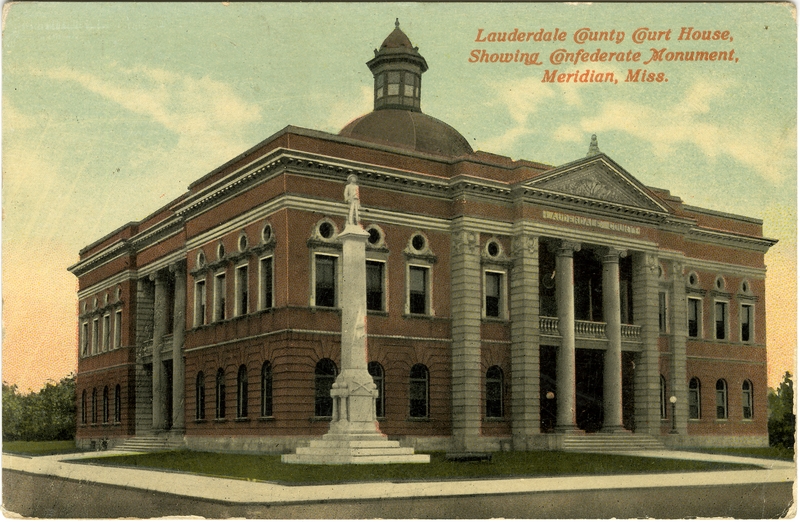
In 1904-1905, a new courthouse was built on the original site. It was in the Beaux Arts style in fashion at the time, and featured a dome with cupola and sculpted figures.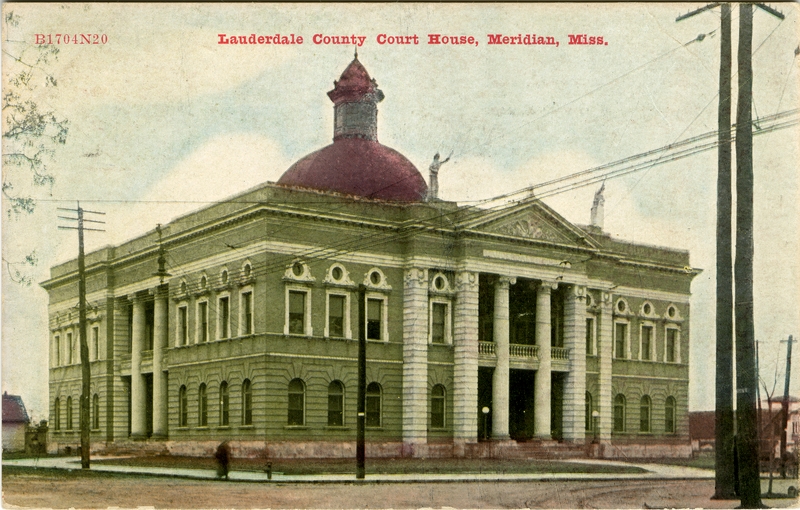
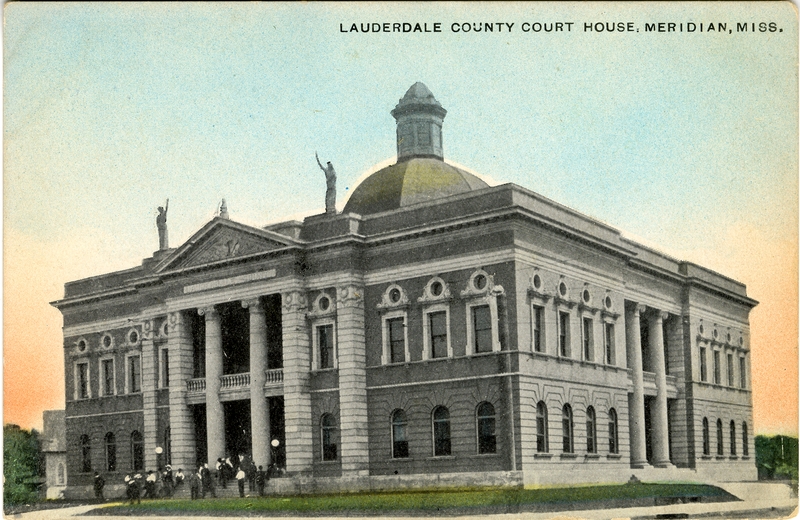
Some time later, the statues were removed, and even later, probably in the 1920’s, a Confederate memorial was erected on the northwest corner of the site. You can click on the photos for larger, more detailed view.
In 1939, the building was enlarged and extensively remodeled in Art Deco style. A jail was added on the top floor. The work was part of President Roosevelt’s federal works projects aimed at creating jobs to get the country out of the Great Depression.
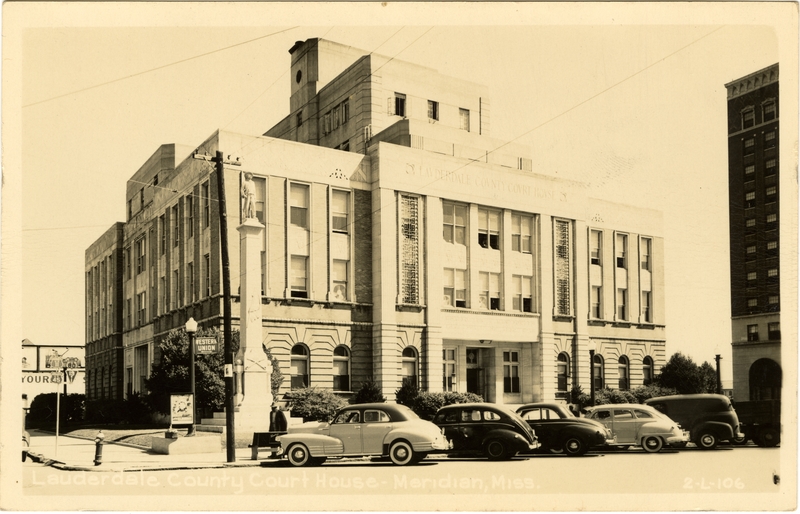 The building has remained essentially unchanged in appearance since the 1939 renovation. The photo to the left shows the west entrance in the early 1950’s.
In the 1970’s, a ramp was built at the west entrance for handicap accessibility. The ramp originally bore the inscription LAUDERDALE COUNTY COURTHOUSE, but the lettering was replaced in the 1980’s by a marble memorial honoring and naming the military of Lauderdale County who were killed in war.
A porch with benches was added at the south entrance in the 1980’s.
In the late 1990’s, before the new jail on Fifth Street could be built, a metal fire escape enclosed by chain-link fencing was constructed on the east side, giving jail inmates an escape onto Nineteenth Avenue into a chain-link enclosure in case of fire. The fire-escape apparatus was removed after the new jail was completed and put into operation.
The courthouse was designated a Mississippi Landmark on April 6, 1999, and is listed on the National Register of Historic Places as a contributing element of the Meridian Downtown Historic District.
The photos above, along with around 4,600 others showing scenes from all around Mississippi during the period from 1892 to the 1940’s, are available at the Mississippi Department of Archives and History’s website here.
 Above is a view of the courthouse as it appears today. It shows the DA’s office lit up in trial preparation on a rainy evening. This unusual photo was taken by Meridianite Ken Flynt, and is used with his permission.


SHOULD WE RETHINK ALIENATION OF AFFECTION?
July 29, 2010 § 3 Comments
Philip Thomas, the Jackson lawyer who blogs at MS Litigation Review & Commentary has posted some trenchant thoughts about the cause of action for alienation of affection in Circuit Court that is sometimes used either for vengeance or to coerce a settlement in Chancery.
I found his comments so thought-provoking for family law practitioners that I have copied and pasted it below rather than simply providing a link.
I recommend Mr. Thomas’s blog to you as a regular read.
Sick of Alienation of Affection Lawsuits?
I’m sick of alienation of affection lawsuits. Who’s with me?
I’m sick of this one, which ironically was filed by a former Miss. Supreme Court Justice (McRae) who advocated abolishing the cause of action while he was on the Court. I’m sick of this one, which is just getting started. I’m sick of the one involving my old law firm that recently was the subject of a Supreme Court decision. I’m sick of the entire cause of action.
Here are just a few of the problems that I have with the cause of action:
In summary, it’s a bad cause of action that should be abolished