LOST WILLS
January 5, 2011 § 5 Comments
Does it ever happen to you that an heir shows up in your office and says something to the effect that “Mom says you kept the original of dad’s will. All we have is this [dogeared, coffee-stained, footprinted] copy,” and hands you a bedraggled handful of papyrus? Well, if it hasn’t, it will.
Of course, you did not retain the original [for you younger attorneys: NEVER keep the original of your client’s will]. So what will you do with this forlorn sheaf?
You will probate it. Yes, probate it. But it’s only a copy, you say; and the original will is required to be produced (See, MCA § 91-7-5, -7 and -31). True. But it is possible to probate a lost or destroyed will.
In the case of Estate of Mitchell, 623 So.2d 274, 275 (Miss. 1993), the court said:
The law regarding admission into probate of a lost will is discussed at length in Warren v. Sidney’s Estate, 183 Miss. 669, 184 So. 806 (1938). Sidney’s Estate sets forth the elements necessary to probate a copy of a lost will are: (1) the proof of the existence of the will; (2) evidence of its loss or destruction; and (3) proof of its contents. Sidney’s Estate, 183 Miss. at 675-76, 184 So. at 807. A fourth element has been added: (4) that the testator did not destroy the will with the intent to revoke it. Robert A. Weems, Wills and Estates § 7-17, p. 216 (1983). This last element, which is most central to this case, arose from the theory that when a will cannot be found following the death of a testator and it can be shown that the testator was the last person in possession of the will, there arises a rebuttable presumption of revocation.
Where a will which cannot be found following the death of the testator is shown to have been in his possession when last seen, the presumption is, in the absence of other evidence, that he destroyed it animo revocandi … 57 Am.Jur., Wills, § 551. Adams v. Davis, 233 Miss. 228, 237, 102 So.2d 190, 193 (1958); Phinizee v. Alexander, 210 Miss. 196, 200, 49 So.2d 250, 252 (1950); Horner, Probate Prac. & Est. § 79 (4th ed.). This presumption extends to all duplicate copies, even executed duplicates. Adams, 233 Miss. at 237, 102 So.2d at 194; Phinizee, 210 Miss. at 199, 49 So.2d at 252; Horner § 79.
The proponent of the will must prove each of these elements by clear and convincing evidence. See Estate of Leggett v. Smith, 584 So.2d 400, 403 (Miss.1991); Estate of Willis v. Willis, 207 So.2d 348, 349 (Miss.1968); Adams, 233 Miss. at 237-38, 102 So.2d at 194. (“The intent to revoke must appear clearly and unequivocally.” Sidney’s Estate, 183 Miss. at 676, 184 So. at 807. “The policy of the law requires such contents to be established by the clearest, most convincing and satisfactory proof.” Robert A. Weems, Wills and Estates § 7-17, p. 216 (1983).
Your petition will have to recite on personal knowledge of the petitioner, or supported by affidavits on personal knowledge, all four of the required factors.
You should probate the lost or destroyed will in solemn form. To do otherwise gives an unfair advantage to the proponent of the missing document. Probate in solemn form also seals off the protests of other interested parties and, as a practical matter, takes you directly to the hearing with notice that you will likely wind up in anyway.
At hearing, you will need to prove your four elements by clear and convincing evidence.
- Proving the existence of the will is not usually much of a problem. You will have that copy, or, if no copy is available, someone with personal knowledge can testify that the will did exist. MRE 1001-1008 would appear to govern the issue. As Rule 1008 states, the issue is for the trier of fact to determine.
- Loss of the will can be proven by testimony that the decedent kept his or her papers in a particular place and that an exhaustive search has not turned it up, or that the cabinet where the will was kept was destroyed by fire, or that it was in a repository that has now vanished.
- The “Dead Man’s Statute” has been supplanted by MRE 803(3), so proof of its contents should not be a major obstacle, so long as there is a witness with personal knowledge.
- And the same hearsay exception would apply to the testator’s destruction or intended revocation.
An interesting wrinkle appears in an ancient case, Vining v. Hall, 40 Miss. 83 (Miss. Err. & App. 1866), that is still good law. In Vining, there was conflicting and inconclusive testimony about the contents of the lost or destroyed will, but no disagreement that it included a revocation clause expressly revoking all prior wills. The court held that the revocation clause was effective despite the fact that the dispositive terms of the will could not be determined. See, Weems, Wills and Administration of Estates in Mississippi, Third Ed., § 7.15.
DO I NEED TO OPEN AN ESTATE TO DO THAT?
January 4, 2011 § 4 Comments
Seated in your office are the decedent’s adult children, asking your advice about daddy’s estate, which consisted of $5,000 in a bank account, a high-mileage car, and his last paycheck from Lockheed, which they have yet to receive. They candidly tell you that they don’t have a lot of money to pay to probate an estate.
I know what you’re thinking: “Oh, well. One more low-to-no fee estate won’t kill me.”
But hold on a minute. Take time out to check out these statutes: MCA §§ 91-7-322 and 323, and 81-5-63 and 81-12-143. You’ll see that they allow you with some simple paperwork to get your clients the money and title to the car without the necessity of opening an estate.
MCA § 91-7-322 and 81-5-63 allows the bank to pay up to $12,500 to the decedent’s “successors” as defined in the statute, with the filing of a simple affidavit. The same section would authorize issuance of title to the car.
MCA § 91-7-323 allows the former employer to pay any outstanding wages directly to the successors.
MCA § 81-12 143 authorizes a savings and loan to pay a savings account to successors without an administration, provided that they execute a bond.
THE SOUND AND THE FURY OF THE UNVANQUISHED POSTMAN
January 1, 2011 § 1 Comment
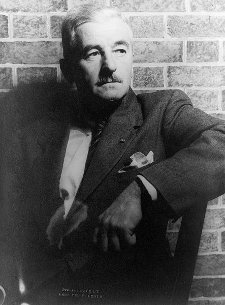 In December 1924, a postal inspector from Corinth, Miss., leveled a series of charges against the postmaster at the University of Mississippi. “You mistreat mail of all classes,” he wrote, “including registered mail; … you have thrown mail with return postage guaranteed and all other classes into the garbage can by the side entrance,” and “some patrons have gone to this garbage can to get their magazines.”
The slothful postmaster was William Faulkner. He had accepted the position in 1921 while trying to establish himself as a writer, but he spent most of his time in the back of the office, as far as possible from the service windows, in what he called the “reading room.” When he wasn’t reading or writing there he was playing bridge with friends; he would rise grumpily only when a patron rapped on the glass with a coin.
It was a brief career. Shortly after the inspector’s complaint, Faulkner wrote to the postmaster general: “As long as I live under the capitalistic system, I expect to have my life influenced by the demands of moneyed people. But I will be damned if I propose to be at the beck and call of every itinerant scoundrel who has two cents to invest in a postage stamp. This, sir, is my resignation.”
Thanks to Futility Closet.

COLLATERAL DAMAGE FROM THE FALL OF ZEUS
December 30, 2010 § 2 Comments
Hinds County Circuit Judge Swan Yerger yesterday dismissed with prejudice Eaton Corporation’s lawsuit against Jeffery Frisby, et al., based on a finding that counsel for Eaton knew that Ed Peters was clandestinely attempting to influence the then trial judge, Bobby DeLaughter, and sanctioned Peters’ actions for their client’s benefit.
Judge Yerger found that dismissal of the billion-dollar suit was necessary to protect the integrity of the judicial system. Philip Thomas comments on it here, with links to much more information on the suit. Tom Freeland adds his thoughts here.
The demise of Eaton’s suit is collateral damage from the Scruggs judicial scandal, which shed the light of day on Ed Peters’ activities vis a vis Judge DeLaughter in Scruggs’ legal battle with the Wilson law firm and gave reason to scrutinize his actions in Eaton. If Balducci’s efforts to corrupt Judge Lackey had succeeded or never been reported, what is the likelihood that the improprieties in Eaton would ever have been uncovered? And if Peters had gone undetected, would the defendants have suffered a billion-dollar miscarriage of justice? Thankfully, we will never know for sure.
SOMETHING VENTURED, SOMETHING GAINED
December 30, 2010 § Leave a comment
The germ of an idea for this blog popped up after a conversation I had with a young lawyer. We discussed a matter involving an estate, and I realized it was at least the fourth time that I had had the same discussion with different lawyers. I thought that there must be a better way to address lawyers’ questions and concerns about practice, and I filed the notion away in the recesses of my mind.
A couple of months later a chancellor in another district called me and we discussed our mutual exasperation over lawyers either ignoring or not even being aware of changes to the adoption jurisdiction requirements. Again, I thought there had to be a more efficient way to spread the word about these things.
Then, while reading a blog one day, it hit me: “Duh. This is the obvious way to do it.”
And after a little experimentation, I launched this blog on June 14, 2010, about six and one-half months ago.
It’s been a rewarding experience for me. Lawyers from around the state have told me they keep up with the blog. I have seen lawyers questioning witnesses using checklists they printed from posts here. Several lawyers have told me that they print out posts that they find useful and keep them in a binder for future reference. Out-of-district lawyers have told me they appreciated being able to find out in advance what I expected for a minor’s settlement, an irreconcilable differences divorce, or an intestate estate. I have had comments and e-mails from attorneys telling me that a post I made helped them resolve a difficult issue in a case.
All of that is what I hoped for when I started this. I hope you have found something here that you can use and that keeps you in touch.
In the six and one-half months of this blog there have been more than 220 posts. There have been 215 comments, but that is misleading because, for some reason, WordPress counts a link to another post as a comment. My guess is that we’ve had around 100 actual comments. We get between 150 and 200 views of the blog on a typical weekday, and 50-60 on a typical weekend or holiday. Those are views of the home page — the one you see when you sign on the blog. When a specific post is viewed separately, it is counted separately. The all-time most viewed post, with 532 unique views (and climbing; there have been 8 this week so far), is Sympathy for the Devil, my rather unsympathetic review of Curtis Wilkie’s The Fall of the House of Zeus. No doubt some of that traffic was driven by Tom Freeland’s mention of it and link on his own, popular NMissCommentor blog.
The all-time top twenty posts in 2010, followed by each post’s unique number of views, are:
TOOLS OF THE TRADE
December 29, 2010 § 4 Comments
If you were a carpenter, you’d want to have the finest power tools you could afford. If you were a doctor, you’d try to invest in the best diagnostic instruments available. If you were a farmer, you’d want to have a really good tractor with all the implements. If you were a — well, you get the idea. If you’re going to do a job, you need to be sure you have the right tools AND use them.
Lawyers are no different. If you’re going to practice in Chancery Court, you need to have ready access to the information you need AND use it.
Every lawyer’s most important tool is that perfect case on all fours with the one you are presenting to the court. It is a satisfying coup, indeed, to hand the judge that gem of a case with a confident smile while your opponent stands by twiddling his thumbs. The Court of Appeals hands down decisions every Tuesday, and the Supreme Court hands down decisions every Thursday (holidays and vacation days excepted). You can read the decisions as soon as they are published online at the Mississippi Judiciary website. And all of the court rules and directories are there, too.
Finding that perfect case used to be a matter of digging through the digests and key numbers, then finding the volume with your case in it and making a photocopy. Nowadays, you can find what you’re looking for on the Mississippi Bar’s website at Casemaker, which is a free online legal research engine paid for through your bar dues. If you prefer, WestLaw and Lexis have subscription services.
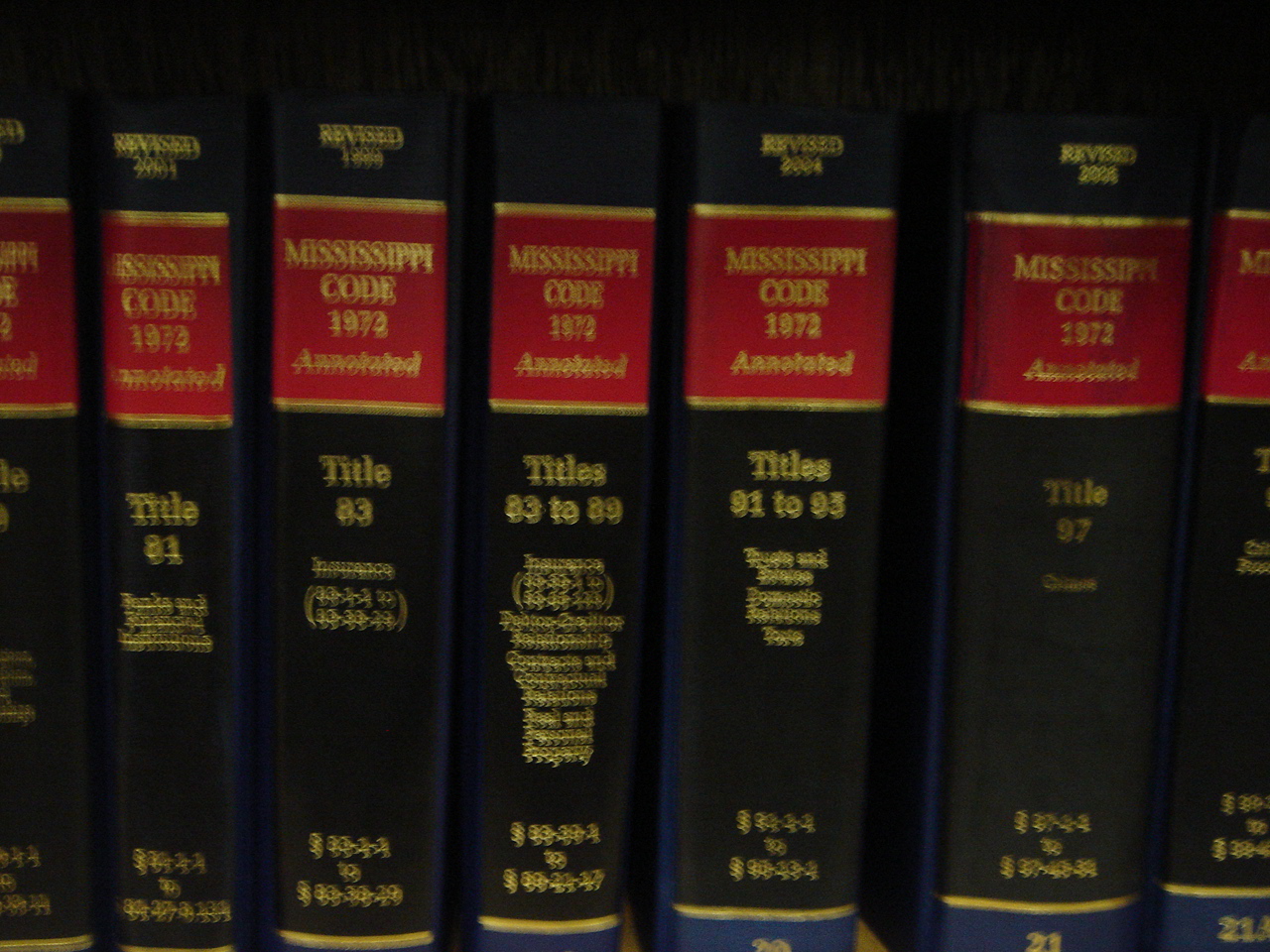 Of course, the MISSISSIPPI CODE is indispensable. If you can’t afford your own copy, you can browse and copy it online through CaseMaker or one of the subscription services, but many of us find it more productive to be able to flip through the pages of a book. The annotations in the code are a gold mine of authority and starting points for further research for any lawyer. If you do any probate work, you will experience a lot of frustration and failed efforts if you do not read the code. The answers to 99% of all questions that lawyers ask me about probate matters are right there in the statutes, in black and white.
MISSISSIPPI RULES OF COURT. Every lawyer who comes to trial should have a copy of the rules with her or him. You will need to flip to that specific hearsay exception so you can convince the court to let in that crucial evidence, or you will need to know what rule to cite to get around that objection to the timeliness of your motion. It’s all in the rules. But before you ever get to court, you need to be familiar with what’s there and where you can find it. It’s never very convincing to say, “Judge, I know it’s in there somewhere; I remember hearing aboout it back in law school.” If you only had one book in your library (and I hope you have more than just one!), it should be your rule book.
Any lawyer who will do much family law should have one or both of these books in his or her library …
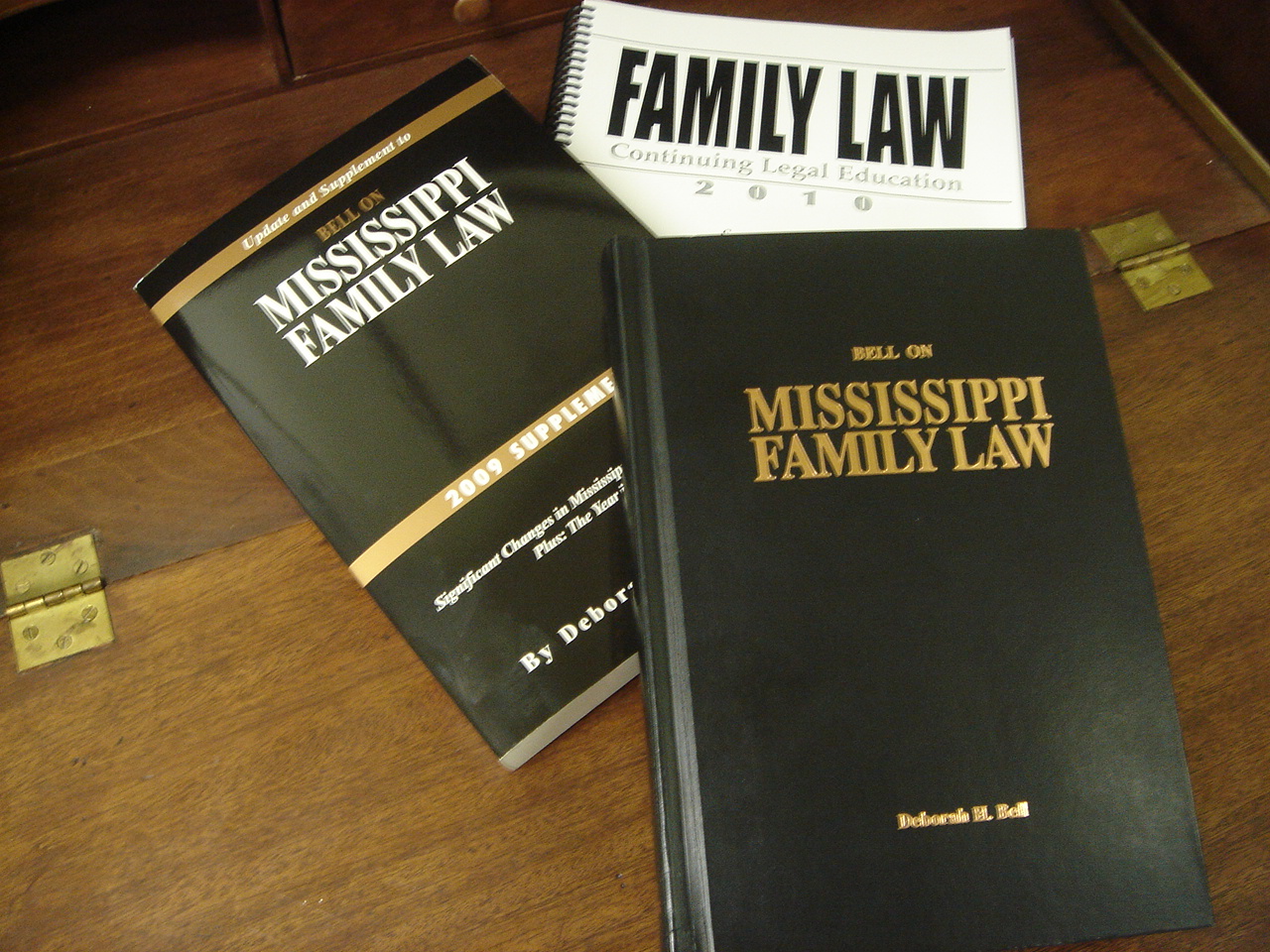 BELL ON MISSISSIPPI FAMILY LAW. Professor Deborah Bell of the Ole Miss Law School has published what many consider the definitive reference work on divorce, custody, child support, and all things family law in Mississippi. Her text, along with its annual supplement, are well organized, thorough and concise statements of the law upon which you can rely in advising your client, preparing your case, presenting your case, and even briefing an appeal. Professor Bell’s work has been cited as authority by the appellate courts and is considered authoritative in trial courts as well. If you have a significant family law practice, you should arrange to take in a Professor Bell seminar. They are held every May, one in Oxford, one in Jackson, and one on the coast, and you will not find a more complete annual overview of developments.
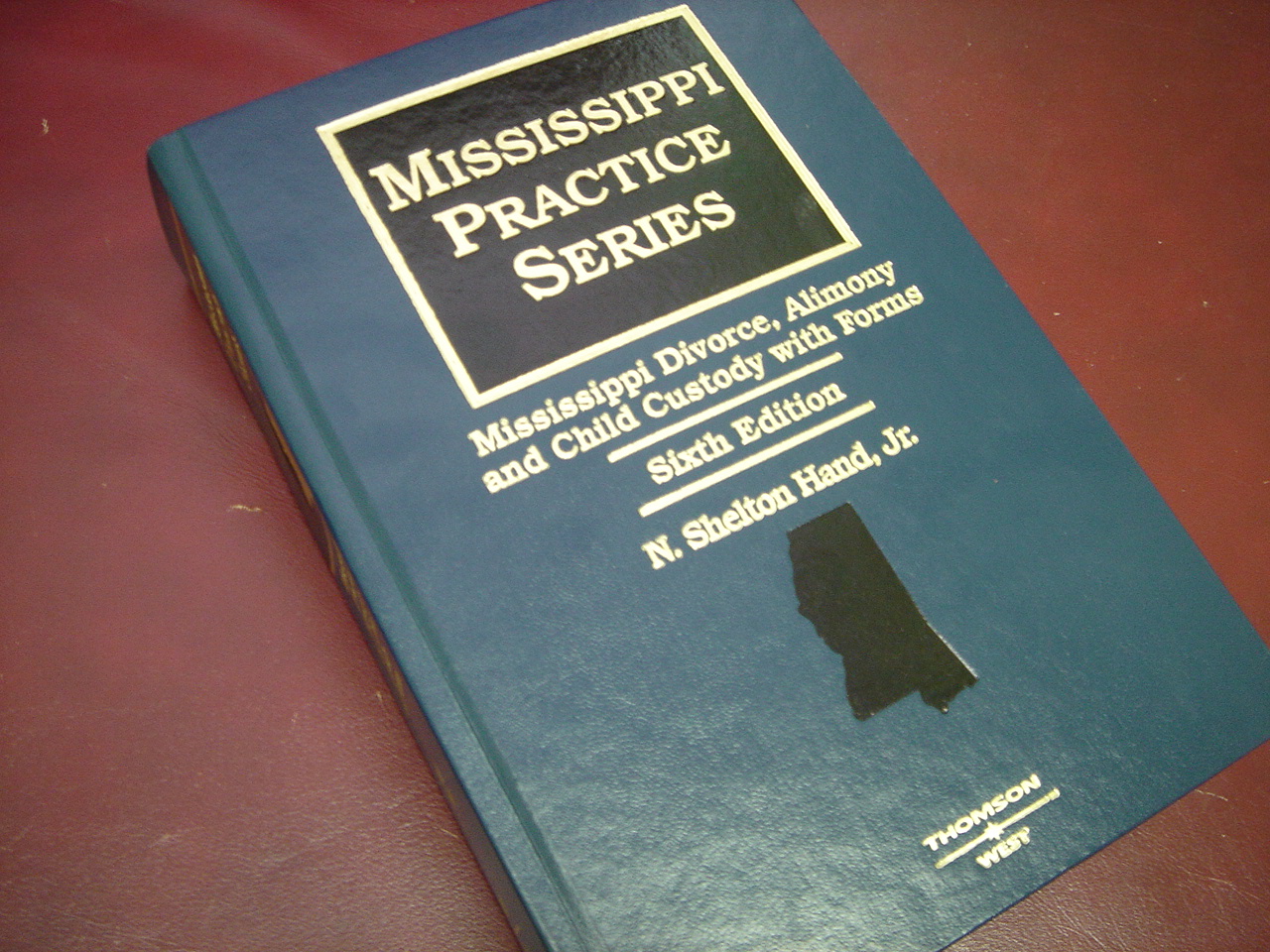 MISSISSIPPI DIVORCE, ALIMONY AND CHILD CUSTODY. Professor Shelton Hand’s treatise has been a go-to authority in Mississippi for many years, and includes suggested forms as a bonus. Another feature of Hand’s work is his discussion of pleadings and procedural matters, which, coupled with the forms, may be a benefit to young practitioners more concerned with filing a viable pleading, having it served, and setting the case for hearing.
If you do any probate work, you might find these texts helpful …
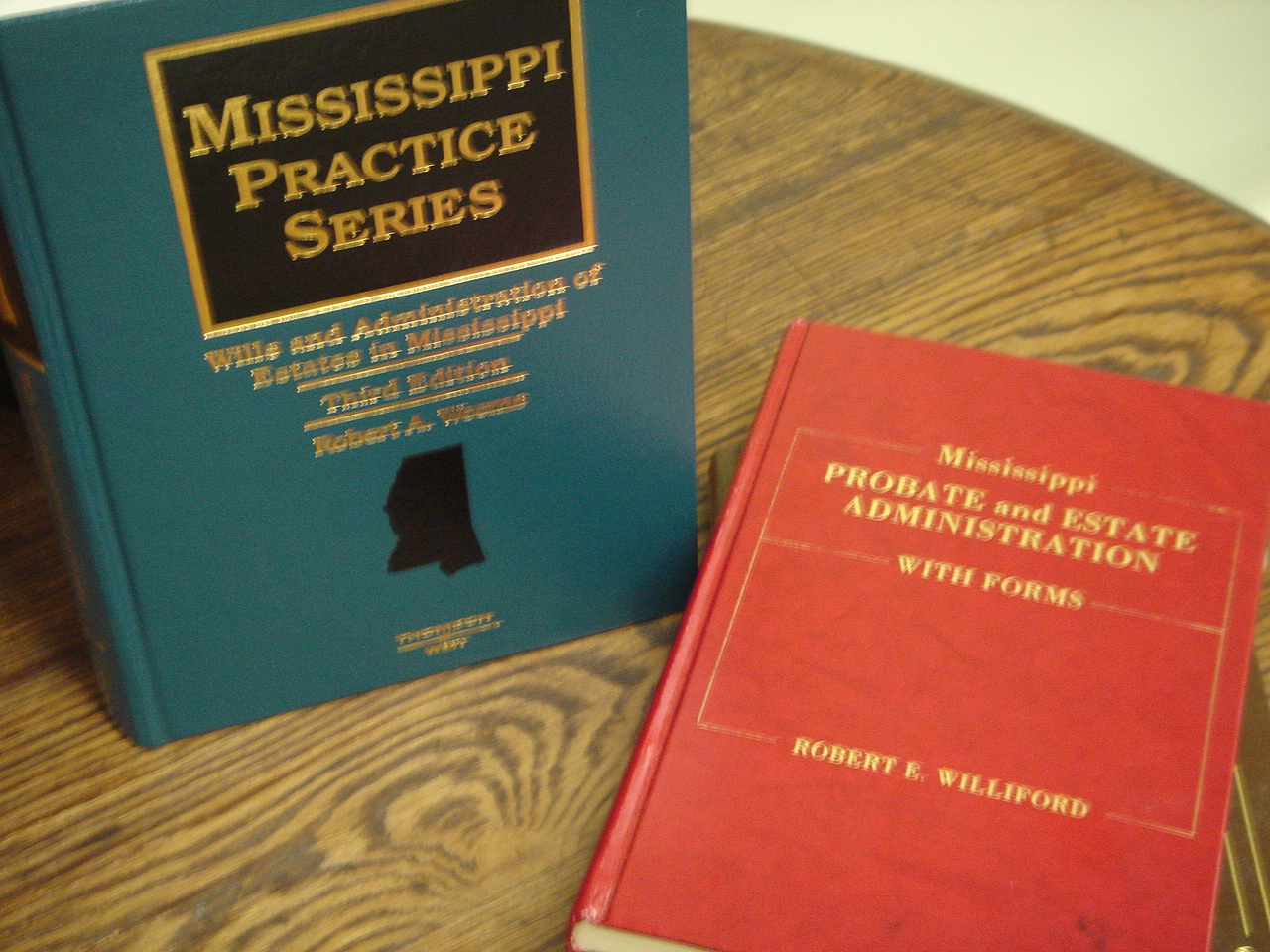 WILLS AND ADMINISTRATION OF ESTATES IN MISSISSIPPI. By Robert A. Weems.
PROBATE AND ESTATE ADMINISTRATION. By Robert E. Williford.
Yes, it’s true that everything you need to know about probate is in the code, but finding the exact answer to your specific question in the multitude of statutes can be a time-intensive task. These two books can help you sort through that haystack of statutes to find the right answer to your question. Complete with case citations and text by the authors.
Some helpful guides to chancery practice …
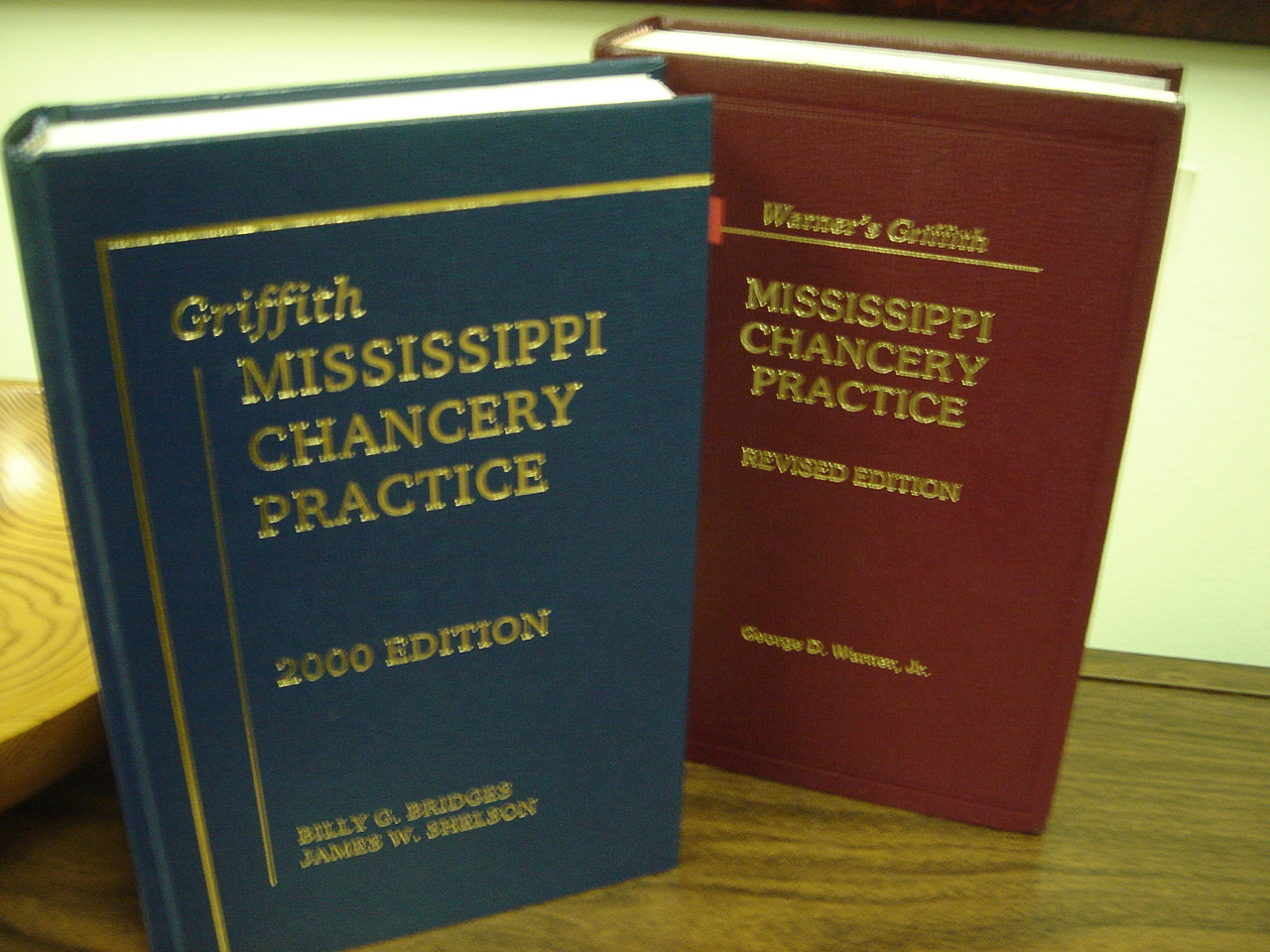 GRIFFITH MISSISSIPPI CHANCERY PRACTICE. By Billy Bridges and James Shelson. Updated Warner’s version of Griffith in 2000. Judge Bridges and Mr. Shelson again updated Griffith through the beginning of the new century.
WARNER’S GRIFFITH MISSISSIPPI CHANCERY PRACTICE. By George D. Warner, 1991. The first update to Judge Griffith’s cornerstone work in more than 40 years. Judge Warner took Griffith’s text and incorporated the Mississippi Rules of Civil Procedure, as well as important developments in the law in the intervening time.
And two old gems that were black letter authority for years …
GRIFFITH’S MISSISSIPPI CHANCERY PRACTICE. 1950 Edition. Originally published in 1925, Griffith is the seminal authority on Chancery Court in Mississippi. Almost all of the procedural provisions have been supplanted by the Mississippi Rules of Civil Procedure and the Uniform Chancery Court Rules, but there is no more authoritative text in Mississippi for understanding the philosophy, history and approach of Chancery Courts.
DIVORCE AND SEPARATION IN MISSISSIPPI. 1957. This work by professor Bunkley updated the original by Judge A.B. Amis of Meridian first published in 1934. There have been so many developments in the procedural and substantive law of the family in our state that it is tempting to regard this book as a mere historical curiosity. Some provisions bear looking at, however. The provisions about how to plead non-residency to support publication, for example, are models that modern-day attorneys should consider. The book was written in an era when careful pleading was essential to survival of one’s suit, and more careful pleading would benefit most lawyers and clients today.
And two recent additions …
PROFESSIONAL RESPONSIBILITY FOR MISSISSIPPI LAWYERS by Jeffrey Jackson and Donald Campbell and COMMENTARY ON JUDICIAL ETHICS IN MISSISSIPPI by Donald Campbell and Jeffrey Jackson arrived on the scene in 2010. These two works were published by MLI (Mississippi Law Institute), a function of the Mississippi College Law School. The unique aspect of these books is their focus on Mississippi, and I am not aware of any comparable works on these subjects of vital importance to bench and bar. Both are impressive in their depth of scholarship and thoroughness. The set is pricy for a small firm at $245, and, admittedly, they are not reference works you will turn to every day, but the odds are that they will be worth every cent you pay when you really need them. If you are practicing in the Twelfth District and would like to look over a set, feel free to drop by my office and browse through for yourself. MLI’s description and an order form can be found here.
LOSING: NOT THE NEXT BEST THING TO WINNING
December 28, 2010 § 1 Comment
This from Philip Thomas’s excellent blog Mississippi Litigation Review & Commentary. If these thoughts do not resonate with with your experience as a litigator, you might consider some tamer undertaking …
Losing Sucks
Posted on March 3, 2010 by Philip Thomas
You heard me. Losing a trial sucks. On multiple levels. Sorry if you don’t like my vocabulary.
Even worse, a win does not even out a loss. Tennis great Andre Agassi described it as well as anyone that I’ve heard even though he was talking about tennis and not trials:
Now that I’ve won a slam, I know something that very few people on earth are permitted to know. A win doesn’t feel as good as a loss feels bad, and the good feeling doesn’t last as long as the bad. Not even close.
Shortly after I started my first job as a lawyer I heard veteran trial lawyer Natie Caraway say basically the same thing. It took personal experience winning and losing trials to understand it.
For me a loss on appeal does not feel bad as a loss at a trial. And the loss of a bench trial does not feel as bad as the loss of a jury trial. The loss of a jury trial feels the worst because you hang it all on the line for twelve people who you don’t know and you are shattered when you find out that you could not convince them. And if you believe in your clients case–and most lawyers do–you think that the jury got it wrong. That makes it worse.
I have no answer for the best way to deal with a loss. But I agree with Chicago lawyer John Tucker on this point:
Courtroom lawyers and people who play sports are engaged in an endeavor where there is a winner and loser of every contest, and no matter how good they are, sometimes they lose.In fact, in both endeavors it is often true that the better they are the harder their contests and the more often they will lose. You don’t have to like it-in fact, you had better not-but you won’t last long if you don’t learn to get over it, or at least put it far enough behind you to go on to the next case.
Some lawyers lose a big trial and never recover. They are habitually afraid to re-enter the courtroom for fear of losing again. The best lawyers get over it and seek the adrenalin rush of going back in and putting it all on the line again.
 The Better Chancery Practice Blog