UCCR 8.06 ON STEROIDS
October 25, 2011 § 7 Comments
Unless you’ve been practicing law under a rock for the past umpteen years, you are surely aware of the requirements of UCCR 8.06. That’s the rule that mandates filing each party’s name address and telephone number with the chancery clerk, with service on the other party, in every action involving custody of children, and within five days of any change.
Did you know that there is a statutory counterpart to UCCR 8.06 that requires even more detailed information in paternity and child support cases?
MCA § 93-11-65 (5) now provides that:
Each party to a paternity or child support proceeding shall notify the other within five (5) days after any change of address. In addition, the noncustodial and custodial parent shall file and update, with the court and the state registry, information on that party’s location and identity, including social security number, residential and mailing addresses, telephone numbers, photograph, driver’s license number, and name, address and telephone number of the party’s employer. This information shall be required on entry of an order or within five (5) days of a change of address.
This provision is not limited to DHS actions for support. In my opinion, it applies in all cases where there is a provision for child support, including irreconcilable differences divorces. You should see to it that this is addressed in your property settlement agreements and judgments.
ONE TOKE OVER THE LINE
October 24, 2011 § 5 Comments
MCA § 93-5-1 lists the statutory grounds for divorce. Ground “Sixth” is “Habitual and excessive use of opium, morphine or other like drug.”
The somewhat archaic language of the statute has given rise to some obvious questions, including:
- What frequency of drug use is required to be considered habitual?
- When is use of opium, morphine and “other like drugs” excessive (and, for that matter, when is it not excessive?)
- What drugs are included in the definition of “other like drugs?”
Perhaps the leading case to address these questions has been Ladner v. Ladner, 436 So.2d 1366 (Miss. 1983), in which the MSSC held that the husband’s daily use of drugs was so excessive that he had lost the ability to control his use, and the prescription drugs that he used and abused had an effect on him similar to that which would have been produced by opium or morphine, including adverse effects on his cognitive abilities, social and family relationships, and work.
In the case of Carambat v. Carambat, decided by the MSSC on October 20, 2011, the court held that marijuana is a drug included in the definition of “opium, morphine and other like drugs,” and affirmed the grant of a divorce on the ground. The court spelled out that the ground requires that the plaintiff prove the spouse’s drug use was: (a) habitual and frequent; (b) excessive and uncontrollable; and (c) that it involved opium, morphine, or drugs with a similar effect as opium or morphine. Habitual use is proved with evidence that the spouse customarily and frequently used drugs. Excessive use is proven by showing that the offending spouse abused drugs. In determining whether a drug fits the definition of “other like drug,” the trial court should consider the using spouse’s ability or inability to support his wife and family, or to properly attend to business, as well as the guilty spouse’s ability or incapacity to perform other marital duties, or his causing the marital relationship to be repugnant to the innocent spouse.
The court found that evidence in the record did support the chancellor’s findings that the husband’s use of marijuana was habitual and excessive, and that it did have an effect similar to opium and morphine in that it did affect his ability to work and support the family, his family relationships and the family’s financial stability, rendering the marital relationship repugnant to the wife.
At trial, the husband had attempted to argue that the wife knew about his marijuana use before the marriage, and that she condoned his use during the marriage, but the chancelor refused to entertain his objections. On appeal, the MSSC upheld the chancellor, noting that MRCP 8 requires that an affirmative defenses such as condonation must be specifically pled as required, and if not pled is waived. The husband had failed to plead condonation, and the wife timely objected when he attempted to interpose the defense. The MSSC held that the defense was waived.
The husband had also attempted to raise the defense of recrimination on appeal, claiming that the wife had committed adultery. He had not, however, filed a counterclaim or otherwise raised the issue in any pleading, resulting in the same result as that for his failed condonation claim. The court also noted that MCA § 93-5-2 does not mandate denial of a divorce when there is evidence of recrimination.
In a cogent dissent, Justice Carlson takes the position that Mississippi is the first state to hold that marijuana use is a ground for divorce. He also opines that the court’s ruling will open the floodgates to many more divorces. His dissent is worth a read for his argument highlighting the differences between opiates and marijuana, and their statutory treatment in our law. Justices Dickinson and Kitchens joined Carlson’s dissent.
A few points I glean from this case:
- The court has fairly well spelled out the abc’s of what it will take to get a divorce on this ground. If your case fits the recipe, you will likely have some success.
- The key to whether the drug in your case will fit the definition is what effect it has on the life of the using party and its effect on the other spouse and the marriage.
- I agree with Justice Carlson that many cases that formerly were purely habitual cruel and inhuman treatment (HCIT) cases with marijuana use are now candidates for this ground, which could spell an increase in the number of cases. BUT, keep in mind that the burden of proof for ground the Sixth is clear and convincing evidence, which is a considerably heavier burden than the preponderance required for HCIT.
- A side effect of this decision will be to remove any doubt that marijuana use can be included in the discussion of the kind of drugs that can trigger a divorce. Again, the turning point will be the effect on the other spouse and the marriage itself because of the offending spouse’s conduct. What about “synthetic marijuana’ and marijuana substitutes?
- If you expect to raise condonation or recrimination as defense, whether at trial or on appeal, you had better plead them as required in MRCP 8(c).
BOOK LIFE
October 23, 2011 § 3 Comments
You might assume from the fact that I haven’t posted a book review this year that I have not been reading, but, as George Carlin used to say, “Au contraire, mon frère.” Actually, I am a chronic reader who always has a book or two going. Here are capsule reports on some books I have read in 2011 that are worth mentioning.
 A Feast of Snakes, by Harry Crews. A wacky offering from Georgia native Crews, whose boozy, trailer-park, washed-up-high-school-football-hero characters evoke southern trashiana. In this story, a rattlesnake hunt festival culminates in violence, mutilation, and sex, strangely told in a style that vacillates from savage to hilarious to ironic.
W hat Jesus Meant, by Garry Wills. In an era when so many politicians try to co-opt Jesus’ message to validate their own positions, it’s refreshing to read the real meaning behind the words. Wills calls upon his doctorate in the classics and Greek in this book to analyze the meaning of many passages attributed to Jesus in the New Testament. It’s an eye-opening and sometimes surprising revelation. Thanks to Stewart Parrish for recommending this.
 Freedom Summer, by Bruce Watson. The blisteringly hot summer of 1964 was not only the most heated of the Civil Rights Movement, it was then that Mississippi was targeted for massive social change by several civil rights groups for black voter registration drives and Freedom Schools. This book describes the cultural milieu of Mississippi and the South at the time, the volunteers, the violence and even death that met them, and the legacy of the era. Freedom Summer touched many parts of Mississippi, and Meridian played an important part, both positively and ignominiously.
 An American Insurrection, by William Doyle. Riveting, hour-by-hour account of the turmoil surrounding the admission of James Meredith to the University of Mississippi in 1962. I had previously reviewed Frank Lambert’s Battle of Ole Miss here, and it is certainly worth a read, but Doyle’s book is much more detailed, and unfolds like a suspense novel.
 Crooked Letter, Crooked Letter, by Tom Franklin. This is a fine little piece of fiction set in a rural Mississippi village. The lives of white Larry Ott and black Silas Jones unexpectedly intersect as a series of startling events unleashes an avalanche of revelations that change the past, present and future of everyone involved.
 Faulkner’s County, by Don H. Doyle. This book is nominally the history of Lafayette County and Oxford, and by extension Faulner’s Yoknapatawpha County and its seat of Jefferson. The expected references to Faulkner’s works are here, pinpointing fictional locales and events in real geography. But the book is so much more. Set in the familiar hills and gullies of Lafayette County, we learn the stories of the earliest settlers and the Chickasaw natives, the depredations of the Civil War, the railroad, and the gradual rise to civilization of the rough hill-countrymen. This is not only the story of Lafayette County, but also the story of the north Mississippi hill country from the early Chickasaw days to the early days of the twentieth century.
 Moral Combat, by Michael Burleigh. Most histories of World War II focus on the strategies, tactics, politics and logistics of the struggle. This book takes a close look at the policy decisions of the leaders and their effects on combatants and non-combatants. As one would expect, the atrocities committed against the Jews are studied, but so are the gratuitous murders committed in the guise of combat, the ethnic cleansing in the USSR, political fratricide, and strategic decisions that cost thousands of lives. This is not light reading, but it’s a thoughful approach to understanding the difficult moral issues that arise in war.
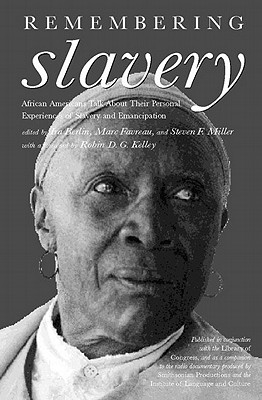 Remembering Slavery, ed. by Ira Berlin, Marc Favreau and Steven F. Miller. Compiled from actual interviews with former slaves, this book describes what it was like to be a slave, their work, the people who subjugated them, family life, slave culture, and life after emancipation.
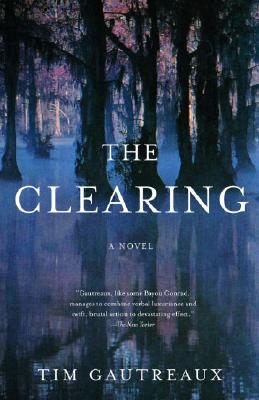 The Clearing, by Tim Gautreaux. This novel tells the story of a dysfunctional northeastern family who take control of a logging operation in the Atchafalaya swamp of south Louisiana in the 1920’s. When long-suppressed resentments surface, lives are torn apart. Tim Gautreaux is known mostly as a short-story writer, and this is his first novel. Some readers might find that this work is more elongated short story than novel, but it is well-written and worth your time.
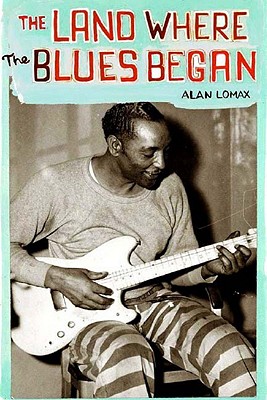 The Land Where the Blues Began, by Alan Lomax. A big part of the story of Mississippi is the story of the blues and blues musicians. Alan Lomax tells the story of the Mississippi Delta, how it gave birth to the blues, and how the desperate poverty and oppression of blacks shaped their music.
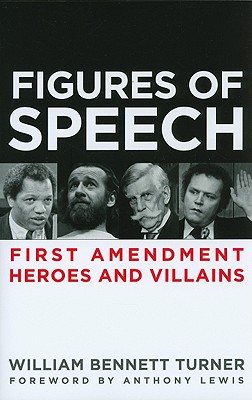 Figures of Speech, by William Bennett Turner. Here are the heroes and villians of the First Amendment, men and women whose legal struggles over free speech issues shaped the law of the land.
 Breach of Peace, by Eric Etheridge. Mr. Etheridge mined a wealth of information compiled by Mississippi’s Sovereignty Commission to compile this fascinating portrait of the Freedom Riders who came in waves to Mississippi in 1961 from across the nation in an attempt to break the iron clasp of the state’s apartheid laws. Using mugshots and documentary material, supplemented with interviews and updated photos of the participants, Etheridge masterfully tells their story.
Reading now …
My Reading Life, by Pat Conroy.
The Summer of 1787, by David O. Stewart.
The Portable Faulkner, ed. by Malcolm Cowley. A re-read.
Profiles in Courage, by John F. Kennedy. Another re-read.
Soon off the shelf …
The Eyes of Willie McGee, by Alex Heard.
The Wandering Falcon, by Jamal Ahmad.
World War Z, by Max Brooks. A gift from my old friend, Carol.
Hope and History, by Vincent Harding. A gift from my new friend, Mark Levy.
The Bible Salesman, by Clyde Edgerton.
What It’s Like to Go to War, by Karl Marlantes.
RIP CHAMP GIPSON
October 22, 2011 § Leave a comment
RIP Meridian attorney Champ Gipson. September 23, 1921 – October 20, 2011.
MORE HISTORY OF THE LAUDERDALE COUNTY COURT HOUSE
October 21, 2011 § Leave a comment
I posted here about the evolution of the Lauderdale County Court House, which included various historical photos of the building.
Below is a photo of Meridian looking east-southeast, obviously from a vantage point in the Threefoot Building, Meridian’s 16-story Art Deco icon, which had been built in 1929. The Lauderdale County Court House is the domed, Beaux-Arts-style building in the right center. The photo had to have been taken before 1939, because that is the year when the WPA work removed the dome, replaced it with a squarish jail, and transformed the façade from Beaux Arts to Art Deco. The photo, then, had to have been taken between 1929 and 1939.
If you compare this photo to some in the prior post, you will notice that the statues that originally adorned the court house roof above the west-facing columned entrance are removed. The Confederate memorial has been installed on the northwest corner of the lawn.
In other details of the photo, look to the right of the court house, east of and about a block from the Lamar Hotel building, and you will see the old jail that predated the one installed atop the court house during the WPA renovation.
You will also notice the residential neighborhoods to the east that extend in this photo within a block of the court building. I imagine some of the more everyday lawyers strolled to work from home in those neighborhoods back when this photo was taken. The more prosperous barristers lived in the mansions along Eighth Street, or around Highland Park, or in the ample residences on Twenth-Third and Twenty-Fourth Avenues.

Here is a post-card photo of the jail building. Notice the Soulé foundry building to the left (east) of the jail. Its location will give you a clue as to the site of the old jail.

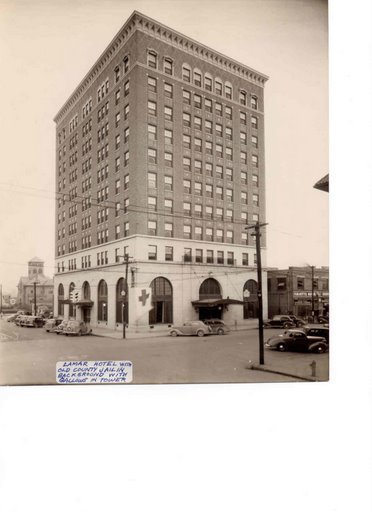
And below is a photo of the Lamar Hotel looking southeast, with the jail to the left, or east. Notice the caption, “Lamar Hotel with old County Jail in background with gallows in tower.” Before the state employed a travelling electric chair, executions for capital offenses were carried out in the various counties by hanging. Meridian, in forward-looking fashion, had a permanent gallows for the purpose, rather than having to go to the expense of constructing an ad-hoc apparatus as the need arose. Even back in those days, Lauderdale County had innovative leadership.
Q & A WITH JUDGE GRANT
October 20, 2011 § 1 Comment
Chancellor John Grant is one of two chancery judges serving in the Twentieth District (Rankin County). Here is a Q & A he provided for 12 CCDM:
Q: Tell us some of your personal preferences that lawyers from outside your district need to know before they come before you.
A: Lawyers should be properly attired, punctual and bring with them a working knowledge of the law and procedure with regard to the issue before the court.
Q: What are the three attributes that you would consider to set the good lawyers apart from the bad ones?
A: Good lawyers are always well organized and prepared.
Good lawyers are dignified and extend civility to fellow members of the bar and to the court.
Good lawyers are expedient in their presentations. (They don’t have to ask the same question three times. They make their point and move on.)
Q: What is the main thing lawyers should know to avoid doing in your court room during a trial?
A: They should avoid being disruptive or discourteous, whether it be in the questioning of a witness or in making argument before the court.
Q: What part of your job do you enjoy the most?
A: I probably most enjoy being able to participate in the adoption of a child by worthy parents. At other times, it is knowing that an important and difficult decision that I had to make was the right one.
Q: What part of your job do you enjoy the least?
A: Having to remove children from a parent who that child loves first comes to mind. Having to sanction a member of the bar for misbehavior is another in the “least” category.
Q: What is your pet peeve as a judge?
A: A lawyer will act with restraint and will not be allowed to transition a court case into a dramatic performance for the benefit of onlookers or client.
Q: Tell us a funny story about something that happened in your court room.
A: We had a very contentious domestic case one day involving a female pro se litigant and her ex-husband. Prior to the beginning of trial she could only write down her request for a continuance because she could not speak due to some type of throat condition. She professed an inability to properly present her case due to this malady. Her request was denied.
Within 5 minutes of beginning trial the lady’s voice mysteriously returned.
Epilogue: She lost the case.
Q: Cell phone ringing during a trial: death penalty, stern look, dismay, or no reaction?
A: Stern look only. (After all it has happened to me – accidentally, of course!)
Q: Lawyer tells you, “That’s not how we do it back in ________ County.” Discuss.
A: This comes up from time to time and I usually respond using the great Judge Cortwright’s classic line, “Mr. Jones, are you in Hinds County?”
Q: Who do you model yourself after as a judge?
A: I hope I have some of the qualities of three of my favorite mentors: Ed Cortwright, Sebe Dale and Mike Carr.
Q: Who do you consider to be the best chancellor you ever appeared before, and what set that chancellor apart?
A: Probably Judge Ed Cortwright. He possesses great character and integrity, much like other fine judges I have known. What set him apart, however, was his brilliant legal mind.
Q: Share your innermost thoughts and feelings about MRCP 81.
A: Many have expressed hate for this rule. However, once one is around it constantly for an extended period of time and gets to really understand its application, it reveals itself as probably one of the best protectors of due process for litigants. After all, what’s not to like about a type of process that informs a litigant of when and where to appear for trial?
Q: What do you do to try and get control of your probate docket?
A: We require annual accountings, the timeliness of which are monitored by computer program. We also have certain days allocated during the year to deal with delinquent accountings and other fiduciary related matters.
Q: Should chancery and circuit court systems be merged?
A: No.
Q: There are 19 appellate judges. What would be the ideal number of former chancellors serving on the two appellate courts?
A: About 19.
Q: Tell us your favorite quote.
A: ”When I was 14, my old man was so stupid I could hardly stand to have him around the house. However, when I became 21, I was astonished at what my father had learned in 7 short years.” (sic) Abraham Lincoln
Q: Tell us your favorite court room movie.
A: My Cousin Vinnie (“Mr. Gambini, are you on drugs?”)
SCRUGGS-PETERS-DELAUGHTER CONNECT-THE-DOTS GAME
October 19, 2011 § 2 Comments
Of all the sad aspects of the Scruggs saga, the one that most troubles me is the chain of events that led to the downfall of Circuit Judge Bobby DeLaughter. Up to now, what we have known of his culpability could be gleaned from his own guilty plea and from reading between the lines of other disclosures. Ed Peters’ involvement, and how he interacted with DeLaughter, has been left mostly to conjecture and street gossip.
Thanks to motions filed by Scruggs in federal court, however, Peters’ grand jury testimony, or a portion of it, has been unsealed, and you can read for yourself the sordid details. Tom Freeland has summarized it, and has another post about it. You can read Peters’ testimony for yourself here and here. Freeland followed up with another couple of posts that you can find on his blog.
Philip Thomas has a post questioning why Peters has never been prosecuted in state court.
Some had considered DeLaughter a sort of wunderkind of the bench. They expected special things of him after he stepped out of the role as prosecutor of Byron De la Beckwith into a circuit judgeship. But he was a long-time associate of Ed Peters, the Hinds County DA, and he allowed himself to be in a position to be influenced by Peters. Peters took advantage of the cozy relationship to demand hefty fees from clients who expected him to influence the circuit judge. Peters’ testimony reveals how they did it.
It still turns my stomach to read this stuff, but it’s important for us to know and understand how this unfolded so that we can take measures to ensure that it will never happen again.
WHAT IS THE EXTENT OF THE DISABILITIES OF MINORITY?
October 17, 2011 § 3 Comments
Minors can not act for themselves. We call this the “disability of minority,” and the chancery court is charged with protecting their rights. Alack vs. Phelps, 230 So. 2d 789, 793 (Miss. 1970).
The principle of minority disability is in keeping with the ancient maxim of equity that “When parties are disabled equity will act for them.” Griffith, Mississippi Chancery Practice, Section 34, page 37 (1950 ed.). More than 130 years ago, in the case of Price vs. Crone, 1871 WL 8417, at 3 (1870), the Mississippi Supreme Court stated:
“Nothing is taken as confessed or waived by the minor or her guardian. The court must look to the record and all its parts, to see that a case is made which will warrant a decree to bind and conclude [the minor’s] interest, and of its own motion, give the minor the benefit of all objections and exceptions, as fully as if specially made in pleading … There being no power in the infant to waive anything, a valid decree could not be made against her, unless there has been substantial compliance with the requirements of the law, in the essential matters.” [Emphasis added]
Thus, the chancery court can and should act on its own initiative to protect and defend the minor’s interest.
In the case of Khoury vs. Saik, 203 Miss. 155, 33 So.2d 616, 618 (Miss. 1948), the supreme court held that, “Minors can waive nothing. In the law they are helpless, so much so that their representatives can waive nothing for them …” This is so even where the minor has pled, appeared in court, and even testified.” Parker vs. Smith, et al., 150 Miss. 849, 117 So. 249, 250 (Miss. 1928).
Our modern MRCP 4(e) embodies these concepts wherein it specifically states that, “Any party … who is not an unmarried minor … may … waive service of process or enter his or her appearance … in any action, with the same effect as if he or she had been duly served with process, in the manner required by law on the day of the ate thereof.” There is no provision in MRCP 4 that permits a minor to join in an action on his or her own initiative, or to waive process; in fact, the express language of Rule 4 makes it clear that such is not permitted.
It is a long-held fundamental of Mississippi law that process must be had on infants in the form and manner require by law, and a decree rendered against minors without service in the form and manner required by law is void as to them, as they can not waive process. Carter vs. Graves, 230 Miss. 463, 470, 93 So.2d 177, 180 (Miss. 1957).
The purpose of the protective posture of the law is clear: “Minors are considered incapable of making such decisions because of their lack of emotional and intellectual maturity.” Dissent of Presiding Justice McRae in J.M.M. vs. New Beginnings of Tupelo, 796 So.2d 975, 984 (Miss. 2001). During the formative adolescent years, minors often lack the experience, perspective and judgment required to recognize and avoid choices that are not in their best interest. Belotti vs. Baird, 443 U.S. 622, 634, 99 S.Ct. 3035, 3043 (1979).
In the case of In the Matter of R.B., a Minor, by and through Her Next Friend, V.D. vs. State of Mississippi, 790 So.2d 830 (Miss. 2001), R.B., an unmarried, seventeen-year-old minor, became pregnant and sought chancery court approval of an abortion, pursuant to MCA § 41-41-55(4). The decision described her as, ” … of limited education, having attended school through the eighth grade,” and largely ignorant of the medical and legal implications of her request. Id., at 831. The decision reveals that the chancellor went to great pains to develop the record that the young girl had not been informed of the possible complications of the surgical procedure, that she was emotionally fragile and susceptible to mental harm, that there were services available to the youngster of which she was unaware, and other pertinent factors. Id., at 834. The supreme court upheld the decision of the chancellor, saying,
“R.B. has failed to persuade us that she is mature enough to handle the decision (for an abortion) on her own. The record does not indicate that the minor is capable of reasoned decision-making and that she has considered her various options. Rather the decision shows that R.B.’s decision is the product of impulse.” Id., at 834.
It has long been the law in Mississippi that all who deal with minors deal with them at their peril, since the law will take extraordinary measures to guard them against their own incapacity.
The principle of minority disability is ingrained in many facets of Mississippi law:
- Minors may not vote. Article 12, Section 241, Mississippi Constitution.
- Minors may not waive process. MRCP 4(e).
- Minors may not select their own domicile, but must have that of the parents. Boyle vs. Griffin, , 84 Miss.41, 36 So. 141, 142 (Miss. 1904); In re Guardianship of Watson, , 317 So.2d 30, 32 (Miss. 1975); MississippiBand of Choctaw Indians vs. Holyfield, 490 U.S. 30, 40; 109 S.Ct. 1597, 1603 (1989).
- Minors may not enter into binding contracts regarding personal property or sue or be sued in their own right in regard to contracts into which they have entered. MCA § 93-19-13.
- Minors may not have an interest in an estate without having a guardian appointed for them. MCA § 93-13-13.
- Minors may not purchase or sell real property, or mortgage it, or lease it, or make deeds of trust or contracts with respect to it, or make promissory notes with respect to interests in real property without first having his or her disabilities of minority removed. MCA § 93-19-1.
- Minors may not be bound by contracts for the sale of land, and may void them at their option.Edmunds vs. Mister, 58 Miss. 765 (1881).
- Minors may not choose the parent with whom they shall live in a divorce or modification; although they may state a preference, their choice is not binding on the chancellor. MCA § 93-11-65; Westbrook vs Oglesbee,606 So.2d 1142, 1146 (Miss. 1992); Bell vs. Bell, 572 So.2d 841, 846 (Miss. 1990). Minors may not after emancipation be bound by or enforce contracts entered into during minority except by following certain statutory procedures. MCA § 15-3-11.
- Minors may not legally consent to have sexual intercourse. MCA § 97-3-65(b).
- Minors may not legally consent to be fondled. MCA § 97-5-23(1).
- Minors are protected by an extended statute of limitations. MCA § 15-1-59.
It’s important to be aware of the legal status of the persons with whom you are dealing in land transactions, estates, contracts, and many other legal matters. In Mississippi, minors have many legal protections and disabilities that the courts will zealously guard.
“QUOTE UNQUOTE”
October 14, 2011 § 1 Comment

Lawyer and Chancellor Sir Thomas More
“About half the practice of a decent lawyer consists of telling would-be clients that they are damned fools and should stop.” — Elihu Root
“They have no lawyers among them, for they consider them as a sort of people whose profession it is to disguise matters.” — Sir Thomas More, in Utopia
“An incompetent attorney can delay a trial for years or months. A competent attorney can delay one even longer.” — Evelle J. Younger
 The Better Chancery Practice Blog