ANOTHER WRINKLE IN WITHDRAWING FROM REPRESENTATION
November 21, 2011 § 1 Comment
We’ve talked here before about the proper procedure to withdraw from representing a client.
It often happens that the judge signs an order letting the attorney out, and in the same order sets the case for trial. That can cause problems for the remaining attorney and client, as was the case in Turner v. Turner, decided by the COA on November 1, 2011.
The Turner litigation spanned 4 years of conflict between Jane and Michael over a divorce and custody. There were trial dates set and continued, and intervening pleadings, culminating in a trial date on November 12, 2009.
On the last date set for trial, Michael appeared and saw his attorney talking first with counsel opposite and then the chancellor. He learned that his attorney had made a motion ore tenus to withdraw, even though UCCR 1.08 requires a written motion and notice. There also was not five days’ notice to opposing counsel or Michael, as required in MRCP 6. The judge signed an order on November 12, entered the next day, allowing Michael’s attorney to withdraw over counsel opposite’s objection and continuing the divorce trial to December 8. That order is the only record of what transpired that day. According to Michael, his attorney took him to a conference room where his attorney told him of the withdrawal and offered assistance in finding new cocunsel; however, Michael said that the attorney did not advise him of the reset trial date, and the attorney later testified that he had no recollection whether he had advised Michael of the trial date.
On December 8, 2009, court convened for the divorce and Michael was not present. The record showed that he had never missed any prior scheduled proceedings. The chancellor granted Jane a divorce on the ground of habitual drunkenness, and awarded her custody, marital property and attorney’s fees.
Michael timely filed a motion under MRCP 59 and 60 to set the divorce aside for lack of proper notice of the trial setting. The chancellor refused, citing MRCP 5. Michael appealed.
The majority COA opinion rejected the rationale that MRCP 5, which essentially provides that notice to an attorney is imputed to the client, was applicable here. Citing Fairchild v. GMAC, 254 Miss. 261, 265, 179 So.2d 185, 187 (1965), the opinion held that an attorney who has moved to withdraw cannot at the same time continue to exercise authority on behalf of the client with respect to other matters. “While ‘withdrawal is prospective [and] does not erase those steps in the proceeding already taken,’ withdrawal likewise prevents an attorney from taking future steps on behald of his client.” Id. The Turner opinion stated at ¶21 that “We find [Michael’s attorney] could not simultaneously withdraw as Michael’s representative and be ‘counsel for the defendant’ for purposes of notice of the December 8 hearing.”
The COA admonished trial judges to follow UCCR 1.08 and MRCP 6 in entertaining motions to withdraw, and found that due process was lacking in this case. At ¶25, the court prescribed the solution for future cases:
” … [I]n cases where permission to withdraw is granted outside of the presence of the requesting attorney’s client, to avoid future notice problems, it is certainly permissible for a chancellor to enter a written order scheduling a future hearing, which expressly conditions the requesting attorney’s withdrawal only upon submission of proof to the court that he or she has given notice of the subsequent hearing to the client. Another suitable method, under this circumstance, would be to allow withdrawal of counsel subject to the condition that subsequent papers may continue to be served upon counsel for forwarding purposes as the judge may direct, unless and until the client appears by other counsel or pro se.”
In my opinion, the problem in this case could have been avoided if the defendant had been required to sign off on the order that let his attorney out of the case and set the trial date. He would have been hard-pressed to argue later that he did not have notice of the trial date. That’s the practice we try to follow in this district. Of course, we also try to follow UCCR 1.08 and MRCP 6 in these situations, but sometimes things come up at the last minute, and, in those cases we try to document as best we can.
The majority opinion in Turner provoked staunch dissents from Judges Russell and Griffis. Russell attacked the chancellor’s grant of a divorce, denial of visitation and other relief. Griffis took issue with the majority’s due process rationale.


THE VALUE OF VALUATION
November 17, 2011 § 3 Comments
Some lawyers like to play a cat-and-mouse game in which they go light on some proof, expecting the chancellor to fill in the blanks in their client’s favor. Sometimes that strategy fails calamitously.
The latest case in point is Powell v. Powell, decided by the COA on November 8, 2011, an equitable distribution case. Sherida Powell and her husband James were locked in a battle over the marital estate, the major components of which were the marital residence, some future payments from the sale of a business, and James’s retirement account. The chancellor decided the values based on the proof, and sherida hit the appeal button, complaining that the judge’s adjudication of values was incorrect.
The COA, via Judge Irving, disagreed with Sherida. The opinion is instructive about what works and does not work as proof of values, so I am quoting it here:
¶20. Sherida first attacks the value that the chancery court assigned to the marital home, which James testified was worth $80,000 before he renovated it prior to his marriage to Sherida. Sherida complains that numerous documents could have been provided to prove the value of the home. While such documents could have been provided, they were not–not by James, and not by Sherida. Sherida was entitled to provide whatever documentation she could obtain regarding the value of the home; in the absence of such, we decline to find error with the chancery court’s valuation of the home. * * *
¶21. Sherida next complains that the chancellor erred in “failing to calculate the value” of the future payments on the promissory note from ASAP’s sale. We note that Sherida made no effort to provide a calculation of the future value of the payments. In the absence of any valuation of the ASAP promissory note payments, we decline to hold the chancery court in error in its valuation of the payments.
¶22. Sherida also complains that James’s retirement account should have been considered a marital asset. In her brief, Sherida concedes that the only evidence as to the value of the account came from her trial exhibit 31. That exhibit was simply a summary of Sherida’s valuation of certain assets, including James’s retirement account. It appears that Sherida’s “value” for the account is simply the percentage that she believes she should receive of each of his monthly disability checks. This did not provide the chancery court with an adequate valuation of the retirement account. No other evidence was presented by either party that conclusively established the account’s value. Under these circumstances, the chancery court did not err in declining to evaluate the account as a marital asset.
A few nuggets from this case:
- The chancellor has no duty to go out and develop your proof for you. It’s up to you to put adequate proof in the record to support your client’s position. If you don’t do so, the appellate courts are not going to entertain your complaint that the judge should have found a different way.
- The chancellor can pick and choose what to believe from equivalent proof. In other words, if each party simply lobs up a guess as to a value, the judge can pick which one to swing at and hit. It’s up to you to come up with weightier proof, like an appraisal from a qualified appraiser, or some other weightier source, if you want to have the upper hand as to values.
- If you want the judge to calculate future values or some such, then offer an expert, or a stipulated table, or something of the like. Don’t expect the trial judge to perform actuarial and trigonometric calculations when you have not provided the template to do so.
- If you fail to provide adequate proof of the valuation of a retirement account and the parties’ relative contributions to it, you do so at your client’s peril. Here, the fallout was a finding by the trial court that the account was not marital. In Pierce v. Pierce, 42 So.3d 658 (Miss.App. 2010), the fallout was a remand for further findings of fact.
- If you don’t put evidence into the record, don’t expect to be able to argue about it on appeal. And don’t expect the trial judge to rule in your favor, either.
- Once again … the more difficult you make it for the trial judge to figure out, the less likely you will prevail, as I have often said here before.
- When you have a valuation case, jump on it early. Get your client to bring you as many documents as possible, such as account balances, valuations, appraisals and financial statements. Get tax returns with depreciation info. Collect closing statements and property tax data. Use discovery to get admissions as to admissibility and authenticity of documents, and to admit values. Discover the existence of any other documents. If valuation will be contested, line up your experts. And remember that experts must be designated no later than 60 days before trial, per UCCR 1.10, if you were requested to disclose them in discovery.
There’s another interesting aspect to this case, and you can read about it here.
WHAT’S YOUR NUMBER?
November 16, 2011 § 1 Comment
In a couple of weeks, the population of the world will pass seven billion. That’s 7,000,000,000 people on the third rock from the sun.
BBC has a site where you can go, click in your birth date, and find out what number person you were on this planet.
The site tells me, based on my birth date, location and gender that:
- I am the 2,513,525,838th person born among the 7 billion pop.
- My life expectancy is 75.4 years (that will be in 2025 or so, for you “planners” out there).
- I was the 75,616,463,538th person to have lived since history began.
A UN site with even more detailed info is here.
If you enjoy stats, this is a thought-provoking and entertaining way to see how you fit into this rapidly changing — and growing — world.
So how will this help you practice law? I have no idea. I just found it interesting.
JUSTICE CARLSON PLANS TO STEP DOWN
November 15, 2011 § 2 Comments
Mississippi Supreme Court Presiding Justice George Carlson announced yesterday that he will step down when his term ends at the end of 2012. The vacancy created by his retirement is in the northern district.
Carlson, of Batesville, served for 19 years as a Circuit Judge in the 17th district. He was appointed by Governor Ronnie Musgrove to fill a vacancy on the Mississippi Supreme Court, and he has served on the high court for the last 11 years.
The justice said that he wants to spend more time with his family, alhough he continues to enjoy his work on the court.
He timed his announcement to allow time for careful consideration and planning for the campaign in the 33-county northern Supreme Court district.
His announcement at the Mississippi Judiciary web site is here. The Clarion-Ledger article, which mimes most of the official announcement instead of doing its own reporting, is here.
DIVORCE F*A*I*L
November 14, 2011 § Leave a comment
One of the most valuable service you can render your clients is to convince them that it is indeed difficult to get a divorce in Mississippi without an agreement therefor.
Most clients present facts that would fall generally in the ballpark of habitual cruel and inhuman treatment (HCIT), if anything. And yet, HCIT is not an easy ground upon which to obtain a divorce. The Mississippi Supreme Court’s stringent definition of the ground has really not changed since its pronouncement more than eighty years ago:
“Conduct only as endangers life, limb, or health, or creates a reasonable apprehension of danger thereto, thereby rendering the continuance of the marital relation unsafe for the unoffending spouse, or such unnatural and infamous conduct as would make the marital relation revolting to the unoffending spouse and render it impossible for him or her, as the case may be, to discharge the duties thereof.” Russell v. Russell, 128 So. 270, 272 (Miss. 1930)
In the decades following Russell, Mississippi trial and appellate courts in practice allowed the HCIT divorce where the chancellor was satisfied that the parties “need to be divorced from each other,” even when the offending conduct was less than that defined. In essence, HCIT became an incompatibility ground.
In 1984, however, the MSSC returned to a strict adherence to the Russell standard in Gallaspy v. Gallaspy, 459 So.2d 283, 285 (Miss. 1984). Since then, the appellate decisions reflect the stricter standard, and your case will F*A*I*L if it does not measure up.
To complicate matters, there is the requirement of corroboration.
As for the facts supporting the ground, there is a breathtaking scope of opinions showing what has not passed muster as HCIT. Here is a sampling:
- Wife’s weight ballooned from 165 to 210 because she drank too much beer, but husband bought the beer for her and drank with her, and she was not exactly undernourished at the time when the parties tied the knot. When husband would come home in the evenings a few minutes late, wife would cry and complain that he had been off somewhere with some other woman. Husband said that wife’s treatment had caused him to become nervous and upset, and he had lost 11 pounds, but the court found that he was not at home enough for his health to have been materially affected by any habitual conduct on wife’s part. Husband testified: ‘If I was a few minutes late getting home, she would be waiting and crying under the assumption that I had been out to see another woman, which was untrue;’ and further that she would not have supper prepared for him, and that he would sometimes have to cook his own supper and his own breakfast; and that she was indifferent to her own personal appearance. The court pointed out, on the other hand, that wife had been able to hold a position of employment as cashier at a restaurant for a long period of time. F*A*I*L: Skelton v. Skelton, 111 So.2d 392, 393 (Miss. 1959).
-
Wife complained about the marital residence that ‘the location wasn’t right’; it was ‘too far out of town’; she ‘would not make any choice in the selection of colors’; and ‘she said she was not going to live in that house.’ The parties had many differences, compounded by their son’s congenital hypospadias that required numerous, expensive surgeries that the husband resisted. Wife complained that husband was not employed in a respectable job and was not making enough money; his friends ‘were not much’, and were not welcome in her house; she did not like his work and the hours were too long for what he was making. They would quarrel. He would try to ‘shut up’ at first, and if that would not stop her he would walk out of the house. ‘She would run me off from the house.’ He and his son got along all right on minor corrections, but, if she did not agree, she would attempt to overrule him in the boy’s presence. Husband wanted his son’s condition to be corrected, but thought it could be done in the South nearer home and the doctor told him that it could be done here but she would not hear to this and said that she was going to continue with the doctors in New York. He said that the effect of her attitude and treatment were such that it was on his mind all of the time; he would neglect his work; he would forget things and have to re-do his work; and that this troubled him very much all of the time. ‘There were times when he did not think that he would be able to live any more.’ However, when she was away, there was no domestic trouble on his mind. He did not think that they could live together with reasonable happiness and satisfaction. He was willing to accept the full custody of the boy and contribute to his support within his means. F*A*I*L: Taylor v. Taylor, 108 So.2d 872, 873-874 (Miss. 1959).
-
Husband, an attorney, marries wife for the second time. There are accusations of infidelity, a failed business, overspending, heavy debt, and hostility that ripens like a rotting peach into genuine mutual hatred. F*A*I*L: Wilson v. Wilson, 547 So.2d 803, 804-805 (Miss. 1989).
- Husband and wife have differences in religious views, wife is not as fastidious a housekeeper as husband would like, and wife is not demostrative enough to suit husband, so that husband is seriously unhappy in the marriage. F*A*I*L: Marble v. Marble, 457 So.2d 1342, 1343 (Miss. 1984).
- Husband gave wife the “silent treatment.” He has called her stupid on occasion and sometimes would not listen to her. Wife complained that she suffered from stress. She took the position that husband’s conduct endangered her health and created apprehension of danger, to such an extent, that she felt the relationship was unsafe, even though she did admit, several times in the record, that husband never physically abused her. F*A*I*L: Ayers v. Ayers, 734 So.2d 213, 214 (Miss. App. 1999).
- Wife contended that husband’s conduct created a reasonable apprehension of danger, rendering the relationship unsafe for her, based on: (1) Husband threw her onto a bed to take her pants off; (2) husband punched a hole in the bedroom door and put a gun barrel into his mouth; (3) husband hit her several times during an altercation; and (4) husband hit the car windshield in front of the parties’ son. She also complained of husband’s abusive name-calling and his constant nagging and complaining about her make-up, clothes, and hair style. Wife also argued that husband’s accusing her of being homosexual constituted “conduct so unnatural and infamous as to make the marriage revolting to the nonoffending spouse and render it impossible for that spouse to discharge the duties of marriage.” She cited Hibner v. Hibner,217 Miss. 611, 613, 64 So.2d 756, 757 (1953), for the proposition that false and malicious charges of adultery or immoral conduct which would “naturally tend to cause shame, humiliation or disgrace” would justify a divorce on the grounds of habitual cruel and inhuman treatment. Wife conceded, however, that husband had never actually called her a lesbian, and there was no evidence that David ever accused her of being such to anyone else, other than “insinuating” it to the children by saying “[y]our mother loves another woman more than she loves you.” The supreme court rejected wife’s argument that she was entitled to a divorce under Muhammad v. Muhammad, 622 So.2d 1239, 1250 (Miss.1993), cert. denied, 510 U.S. 1047, 114 S.Ct. 698, 126 L.Ed.2d 665 (1994), which held that a party is entitled to a divorce “if a spouse’s actions which cause deep personal misery that has no foreseeable end is the gravamen of the action for divorce by reason of habitual cruel and inhuman treatment.” That case involved a situation where the husband had moved the family into the community of an oppressive religious cult whose rules and social order were extremely oppressive to women and dictated virtually every facet of life, so that the wife had been “relegated … to a status and set of living conditions that would be unbearable to a great many, if not a majority, of the women living in our modern society.” Id. at 1250. The appellate court found that her situation did not reach that level. The chancellor had said that “[t]here is a great conflict in evidence in this case. And I’m sure that everyone that sat here and heard this case knows. There is almost irreconcilable conflict in many areas of the case … most of the evidence in this case had to do with the parties fussing back and forth with each other with a few physical altercations. It seems to the Court that each party gave about as good as they got when they had these physical altercations. The Court is not impressed by the trips of either party to Magee General Hospital in order to try to bolster their case, which the Court believes was contrived on the part of both parties.” F*A*I*L: Bowen v. Bowen, 688 So.2d 1374-1376-1378 (Miss. 1997).
- Husband charged that wife was disinterested in having sex, and that they had gone six months without a sexual encounter. Wife conceded lack of interest, but said that they had sex more frequently than husband claimed. The parties had frequent, intense arguments over finances and wife’s spending habits. F*A*I*L: Tackett v. Tackett, 967 So. 2d 1264, 1267 (Miss. App. 2007).
- “Boorish, obnoxious and selfish behavior.” Too much to catalog in this space. F*A*I*L: Talbert v. Talbert, 759 So.2d 1105, 1109 (Miss. 1999).
- Controlling behavior by husband, clinical depression of wife, questions about whether wife was a lesbian, husband severly beat wife’s post-separation boyfriend. F*A*I*L: Morris v. Morris, 804 So.2d 1025, 1029 (Miss. 2002).
The number of misfires has dwindled over the years as the “consent” divorce has come to the fore. Every now and then, however, an HCIT case comes through, raising with it the issue whether the ingredients of the Russell recipe are present in the case. Before you launch off into the treacherous waters of the HCIT divorce, consider the shoals, rocks and cross-currents that await your client. You might want to plot an alternate course.
In my opinion,. HCIT requires some creative thinking to make it work. You have to look at the totality of the circumstances and craft your case as strongly as possible to demonstrate the impact of the offending spouse’s behavior on the innocent spouse. Check out Judge Maxwell’s latest on the subject. It’s about as good an exposition on the subject as you will find.
BIRTHPLACE OF THE BLUES
November 13, 2011 § Leave a comment
To his everlasting credit, Governor Hayley Barbour exercised his executive prerogative and installed signs at the entranceways into Mississippi with the legend, “Birthplace of America’s Music.” Indeed.
It’s no secret that Mississippi — and the Mississippi Delta in particular — is where America’s quintessential music was born, took hold, and grew into an irrepressible force. It was the blues, the music of heartfelt pain, that was born out of the oppression and destitution of a people. It was the blues that made its way down the river to New Orleans, cross-bred with barrelhouse and ragtime and grew into Jazz. Jimmie Rodgers melded the blues with the music of hill whites and gave birth to country music. The blues directly spawned rock-a-billy, rock and roll, rhythm and blues, and soul, and almost every form of popular music in the past 100-plus years has a blue tinge.
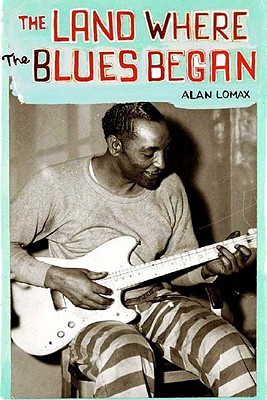 The Land Where the Blues Began is Alan Lomax’s engrossing portrait of the Mississippi Delta, its culture and history, its blues artists, its oppression and exploitation of black people, and how this region of contradictions, savage racism, plantations, and juke joints gave rise to such formidable music.
Lomax ranged across the south from the 40’s through the 70’s, recording not only the music of original blues artists, but also their stories and recollections in their own words. The author continued the work of his father, who had begun the project in the late 20’s and 30’s.
What emerges from the stories he captured is a picture of the struggles and suffering of poor blacks in the Delta, and how they found release in music. Here are the stories of the cruel levee camps, the muleskinners, plantation life, the escape to Memphis and the factories of the north, Parchman farm. It becomes plain to the reader that the civil war did not end slavery, but merely transformed it into other forms of enforced servitude and destitution for blacks in Mississippi.
The main focus of this book, though, is the music. Lomax expertly analyzes the music’s African genes and the religious and early American musical strains that influenced and deepened it.
Lomax was a Texan who died in 2002. He is renowned as one of the great field collectors of indigenous music, particularly American music, although he did field work in Europe, the Caribbean and Africa as well. He had Mississippi roots that helped his understanding of the tortured Delta folkways. At page 186 of the book is this passage: “My father’s people were ‘peckerwoods’ from Meridian, Mississippi, ‘from the upper crust of the poor white trash,’ he used to say.”
If you want to understand Mississippi, you have to understand the blues and the music’s astonishing breadth of influence. The blues is merely one manifestation of Mississippi’s disproportionate impact on American literature, music and entertainment, dramatically belying the state’s stereotypical backwardness and reactionism. Lomax’s book is an excellent starting point.
 If you want to understand the blues, you have to experience the Delta. Steve Cheseborough’s Blues Travelling is a travel guide that will open doors and by-ways to the region. Here you will find the towns and villages, grave sites, joints, monuments and historic locations, restaurants, museums and venues of the blues culture. There are maps and suggestions, along with articles telling the story.
If you are a Mississippian, you can explore the Delta in several easy day trips. This book will enrich the experience for you, telling you the stories of the places and people you encounter. You will probably find yourself stopping to explore places you would have bypassed.
As a bonus, the book includes forays into Memphis, Jackson, north Mississippi, and even Meridian.
Lisa and I have found this book particularly helpful in our blues explorations. I recommend it to you.

Q & A WITH JUDGE ROBERTS
November 10, 2011 § 1 Comment
Chancellor Edwin Roberts is one of two chancery judges in north Mississippi’s far-flung 18th District (Benton, Calhoun, Lafayette, Marshall, Tippah). Here is his Q & A.
Q: Tell us some of your personal preferences that lawyers from outside your district need to know before they come before you.
A: Be prepared in all meanings of the word, i.e. research your client’s story, interview your witnesses, know the facts and applicable law, and more!!!!!!
If you try to think about the rational and reasonable resolution to your case, your thinking will be in line with mine…
Act in a respectful, dignified, and professional manner in the Courtroom…
Q: What are the three attributes that you would consider to set the good lawyers apart from the bad ones?
A: a. They care..about their case, client, and the profession…..
b. They work hard as a result
c. They have a sense of responsibility
Q: What is the main thing lawyers should know to avoid doing in your court room during a trial?
A: Getting emotionally involved…Attorneys should try to maintain an objective approach with their Client’s best interest in mind. Remember, Client’s ARE already emotionally involved…you need to help them with levelheaded thinking…this means arguing their case based based on the FACTS and Law rather than EMOTIONS!!!!
Q: What part of your job do you enjoy the most?
A: Helping people…
Q: What part of your job do you enjoy the least?
A: Unprepared and unprofessional Lawyers…
Q: What is your pet peeve as a judge?
A: Unprepared and emotionally invested lawyers as well as unnecessary litigation
Q: Cell phone ringing during a trial: death penalty, stern look, dismay, or no reaction?
A: YES!!!!
Q: Who do you model yourself after as a judge?
A: Chancellor William Anderson
Q: Who do you consider to be the best chancellor you ever appeared before, and what set that chancellor apart?
A: Chancellor William Anderson(Author of PASS v. PASS)….All lawyers as well as litigants perceived they had a fair hearing in front of a fair and impartial Judge….
Q: Share your innermost thoughts and feelings about MRCP 81.
A: Needs amending…keep inherent nature of “Equity” practice, but remove burdensome and unreasonable requirements of summons..ie adapt Rule 4 Process..bring back fiats and inherent power of Chancery Court to hear matters of emergency, child custody, etc.
Q: What do you do to try and get control of your probate docket?
A: Education of Clerks and their responsibilities…
Q: Should chancery and circuit court systems be merged?
A: ABSOLUTELY NOT!!!!
Q: There are 19 appellate judges. What would be the ideal number of former chancellors serving on the two appellate courts?
A: More than we have now…
Q: Tell us your favorite quote.
A: “Every Saint has a past and every sinner has a future.” Oscar Wilde ” To err is Human, to forgive Divine”
Q: Tell us your favorite court room movie.
A: My Cousin Vinny
THE MORNING AFTER
November 9, 2011 § Leave a comment
As is always the case the morning after an election, I awake to discover that I won some and lost some. I”m sure your experience is pretty much the same.
Overall, though, I’m pleased that we once again came together in this ancient civic ritual of our republic and peaceably renewed our government through the ballot, resolving our differences via democracy.
Cynics will argue that I am wrong, that special interests, plutocrats and autocrats actually govern, and that electoral democracy is a chimera designed to placate the masses. As with all overstatements, there is a kernel of unfortunate truth in that, but even the most hardshell cynic can not deny that we did get to vote, and our votes counted.
Some years ago when I campaigned for the judgeship I now hold, I was astonished at the number of people who told me that they would be happy to vote for me if they were registered to vote, but they weren’t registered because they did not want to bother with jury duty.
Think about it. They are shirking the two core privileges/responsibilities of a citizen in a democracy: the right to vote, and the right to a jury of one’s peers. This is mind-boggling to me. Some of these are the very same people who wave the flag, act like patriots, and criticize politics and politicians with whom they disagree. These are some of the same people who welcome back our troops from conflicts afar and forward partisan emails about supporting our troops.
I don’t know about you, but I don’t think of those people as fellow citizens. They are, I hope, fellow taxpayers, and they are fellow occupants of space on this continent, but citizens? No. They are not supporters of our military. They are parasites sponging off of the blood and sacrifice of all who truly valued our freedom and sacrificed their lives, their fortunes and their sacred honor to preserve it.
Lawyers have traditionally had a special role to play as guardians of our democratic ways. They have been looked to as leaders, policy makers, defenders of those whose rights are threatened, and active in the political arena. That role has been blunted, in my opinion, over the past 25 or so years by one party that has vilified lawyers and cynically attacked their legitimate role in society, as well as by lawyers themselves, who have increasingly become shopkeepers interested more in a safe profile and the bottom line. That’s a pity — if my opinion is accurate. If you disagree, feel free to comment.
So to those of you who exercised the grandest privilege of your liberty yesterday and voted, I tip my hat to you and embrace you as my fellow citizen. We may not have voted the same way, but we made our voices — however small — heard.
And to those of you lawyers who are hunkered down with your bottom line, I urge you to do yourselves and your embattled profession a favor by sticking your head up out of the trenches, look about you at the surrounding landscape, roll up your sleeves, and lead. Critics be damned.
 The Better Chancery Practice Blog