Must There be a Pending Adoption for TPR to Proceed?
March 25, 2015 § 2 Comments
We discussed the TPR statute yesterday in the context of the MSSC’s holding in Chism v. Bright that the statutory prerequisites in MCA 93-15-103(1) must be met before the chancellor may proceed to consider the grounds for termination of parental rights.
The last of those prerequisites is
… when adoption is in the best interest of the child, taking into account whether the adoption is needed to secure a stable placement for the child and the strength of the child’s bonds to his natural parents and the effect of future contacts between them …
In the COA case Farthing v. McGee, decided February 17, 2015, the chancellor ruled in part in a TPR case that the statute required a pending adoption action in order for TPR to proceed. The COA disagreed. Judge Maxwell wrote for a unanimous court, with Judge James specially concurring:
¶20. We also note the chancellor believed a pending adoption petition was a prerequisite to considering grounds for termination. But while an apparent concern of the statute is when a parent’s rights may be terminated for a child to be adopted, there is no statutory mandate that an actual petition must be filed before termination is sought. See Miss. Code. Ann. § 93-15-103(1). Instead, our supreme court recently reemphasized the court must consider if “adoption is in the best interest of the child” as one of the three prerequisites to considering grounds for parental-rights termination. Chism v. Bright, 152 So. 3d 318, 323 (¶15) (Miss. 2014) (emphasis added). Our high court made no mention of the necessity for a pending adoption petition.
¶21. On remand, the chancellor shall consider the GAL’s report when addressing the prerequisites of section 93-15-103(1), as discussed and emphasized by the supreme court in Chism, 152 So. 3d at 323 (¶15). If those prerequisites are deemed met, the chancellor shall address the abandonment-related grounds raised in Kristen’s termination request. [Footnote omitted]
So, until the supremes speak further on this topic, the rule is that the trial court must take into account whether adoption is in the best interest of the child, but no adoption action needs to have been filed.
This is the first case of which I am aware in which the courts have looked at TPR through the prism of Chism ( I know, I did that on purpose). Judge Maxwell’s opinion specifically mentions the abandonment language of prerequisite 1, which I discussed yesterday. That’s comforting and lends a little more weight to the idea that TPR might not be as moribund as we thought.
A Second Look at the TPR Prerequisites
March 24, 2015 § 2 Comments
We talked here earlier in the year about the MSSC’s December 11, 2014, ruling in Chism v. Bright that held, in essence, that until the statutory prerequisites are met, the chancellor may not proceed to examine whether the statutory grounds have been met.
Here’s what the court said:
¶15. As mentioned above, the chancellor found that Jim’s parental rights should be terminated because he exhibited “ongoing behavior which would make it impossible to return the minor child to his care and custody because he has a diagnosable condition, specifically alcohol and drug addiction, unlikely to change within a reasonable time which makes him unable to assume minimally, acceptable care of the child . . . .” But neither the chancellor nor the Court of Appeals addressed subsection (1) of Section 93-15-103, which sets out three prerequisites that must be met before the court may invoke any specific ground for termination. Section 93-15-103(1) states:
(1) When a child has been removed from the home of its natural parents and cannot be returned to the home of his natural parents within a reasonable length of time because returning to the home would be damaging to the child or the parent is unable or unwilling to care for the child, relatives are not appropriate or are unavailable, and when adoption is in the best interest of the child, taking into account whether the adoption is needed to secure a stable placement for the child and the strength of the child’s bonds to his natural parents and the effect of future contacts between them, the grounds listed in subsections (2) and (3) of this section shall be considered as grounds for the termination of parental rights. The grounds may apply singly or in combination in any given case.
Miss. Code Ann. § 93-15-103(1) (Rev. 2013) (emphasis added). See also In Re Dissolution of Marriage of Leverock and Hamby, 23 So. 3d 424, 428 (Miss. 2009). This Court previously has categorized the three prerequisites in subsection (1) as follows:
(1) the child has been removed from the home of its natural parents and cannot be returned to the home of his natural parents within a reasonable length of time or the parent is unable or unwilling to care for the child; (2) relatives are not appropriate or are unavailable; and (3) adoption is in the best interest of the child.
Leverock, 23 So. 3d at 428 (emphasis added).
The Supreme Court concluded that, since the child had not been removed from Jimmy Chism’s home as provided in prerequisite 1, it was improper for the chancellor to proceed to consider the grounds.
But are there only three prerequisites, or are there really three with one having an alternative? Notice that it is the supreme court that numerically categorized the prerequisite section, not the legislature. TPR is purely a creature of statute. The rules of statutory construction require that we give effect to every provision and try to harmonize language that may appear not to fit. Here’s how I would read section 103(1):
1. (a) When a child has been removed from the home of its natural parents and cannot be returned to the home of his natural parents within a reasonable length of time because returning to the home would be damaging to the child or
(b) the parent is unable or unwilling to care for the child,
2. relatives are not appropriate or are unavailable,
3. and when adoption is in the best interest of the child, taking into account whether the adoption is needed to secure a stable placement for the child and the strength of the child’s bonds to his natural parents and the effect of future contacts between them,
the grounds listed in subsections (2) and (3) of this section shall be considered as grounds for the termination of parental rights. The grounds may apply singly or in combination in any given case.
The court actually addressed 1(b) in its opinion at ¶ 16, finding that Jimmy had not been proven to have been unable or unwilling g to care for the child.
So to the extent that I rang the alarm bell over the impending doom of our TPR statute, I unring that bell for now, subject to how the courts will apply this statute in the wake of Chism. There was a recent case that did address it, which I will talk about here tomorrow.
For now, though, I wish the court would clarify that there is an alternative in prerequisite 1 — abandonment — that is actually the most common and customary basis for TPR.
The Honorable Profession
March 23, 2015 § 1 Comment
A piece on a law listserv recently talked about the popular perception of lawyers as dishonest, and contrasted it with Abraham Lincoln’s reputation as an honest lawyer and politician.
What caught my eye in the short essay was this quote from Mr. Lincoln:
There is a vague popular belief that lawyers are necessarily dishonest…the impression is common, almost universal. Let no young man choosing the law for a calling for a moment yield to the popular belief—resolve to be honest at all events; and if in your own judgment you cannot be an honest lawyer, resolve to be honest without being a lawyer.
I don’t know about his characterization as “vague.” These days, My impression is that the popular belief is more vivid than vague.
And who can blame folks, what with the several lawyer scandals that have made headlines. Thank goodness for the financiers, securities frauds, and members of congress who have bumped the legal profession off the unpopularity bulletin boards lately.
One thing that strikes me in Mr. Lincoln’s statement is that juxtaposition of the words “necessarily dishonest.” That usage is fraught with meaning. It conveys that, in order to do one’s job as a lawyer, it is necessary to be dishonest. Is that the popular conception? That’s what pop culture would suggest. There is, after all, a television series in which a law professor teaches students about how to skirt and violate the law and get away with it (that’s my impression; I haven’t bothered to watch any episodes). I guess I could go on and on, but you could also, so I’ll leave it at that.
I think the vast majority of lawyers strive mightily to be not only honest, but also honorable. You can not be one without the other.
Honesty and honor are two closely related concepts. In fact, their root words are the same:
“Honesty” derives from the Old French (h)oneste, which in turn derives from the Latin honestas. The Latin noun was formed from the adjective honestus, likely deriving from honos, “honor,” which is of uncertain etymology. The Roman linguist Varro suggested onus, “burden,” as the root of honos, as if honor weighs us down morally. In his encyclopedic work Etymologiae, likely composed in the seventh century of the Common Era, Isidore of Seville defined honestas as honor perpetuus, literally “perpetual honor,” and then more straightforwardly as honoris status, “the condition or state of honor.” Around 1930, the classical philologist T. G. Tucker suggested that the root of honos was *ghen-, to “make big, full,” but a definitive derivation remains elusive. The first definition of honestas given by the Oxford Latin Dictionary is “Title to respect, honourableness, honour,” followed by “Moral rectitude, integrity,” in which sense it was frequently opposed to utilitas, “expediency.” Cicero refers to a dissensio, or conflict, between the two, and Horace praises Lollius for preferring the honestum to the utile. Less frequently honestas was used in the sense of “Decency, seemliness,” one of the early secondary senses of “honesty” in English. [From In Character]
So, to get down to the root of it, the honest person is worthy of being honored, is perpetually bearing the burden and responsibility of being honest, morally right, with integrity, decency, and seemliness. The dishonest person is dishonorable, unencumbered by rectitude, lacking integrity, expedient, indecent, unseemly.
Of course, the concept of dishonesty has many shades. On one extreme is outright deceit. On the other is lack of candor and dissimulation. Every action between those two brackets is dishonest.
With honesty comes credibility. I can tell you as a fact-finder in court that evasiveness and dissembling take almost as heavy a toll on one’s credibility as out-and-out lying. A mere tinge of dishonesty can tarnish one’s honor. Even an appearance of impropriety can be fatal.
Thanks to Winky Glover




Trust Account Woes
March 19, 2015 § 2 Comments
The facts in Mississippi Bar v. Ogletree, handed down March 5, 2015, are straightforward:
¶3. . . . In January 2011, John Buckley hired Ogletree to represent him in a child-support modification matter. Ogletree requested a $1,000 retainer, from which he would charge $250 per hour. Buckley gave Ogletree a check for $400 as partial payment of the retainer. While Ogletree maintained three trust accounts at the time, he did not deposit Buckley’s $400 check into any of them. Rather, the check was deposited into Ogletree’s general operating account. Ogletree subsequently terminated his representation of Buckley. Ogletree wrote Buckley a check for $400 from one of his trust accounts to refund Buckley’s partial payment of the retainer. The check was returned for insufficient funds. Ogletree then delivered $440 in cash to Buckley.
Buckley’s wife, apparently unhappy with the caliber of representation, filed a bar complaint against Ogletree. The Bar, in its investigation, asked for Ogletree’s trust account information, which Ogletree could not produce. Instead, what records he had showed that he had a practice of commingling funds and using client funds to pay his personal expenses, and, worse, that his trust accounts were overdrawn from time to time.
The bar filed a Formal Complaint, and the Complaint Tribunal recommended a six-month suspension. Aggrieved, the Bar appealed, taking the position that a three-year suspension was warranted by the facts and precedent. The MSSC affirmed the Complaint Tribunal. Justice Coleman dissented, joined by Justice Randolph.
You can read the opinion for your own edification, but here are a few thoughts, especially for the young lawyers who haven’t given this much thought:
- Mr. Ogletree got off relatively light, if you can call not being able to practice the profession by which you earn a living for six months “light.” The fact is, as Justice Coleman’s dissent points out, misconduct involving trust accounts is serious misconduct, and disbarment is not out of the question.
- The purpose of a trust account is to hold the client’s money in trust until it is either withdrawn by agreement after having been earned by the lawyer, or is paid out according to the directions of the client. The client funds must be deposited in an account separate from the lawyer’s firm and personal accounts. The trust account should be in an entirely separate bank from the client’s firm and personal accounts.
- Before you withdraw any funds from a trust account, you should have authorization of the client. If the withdrawal is for fees or expenses, you should spell out how that will be done in a written agreement with your client.
- You must keep meticulous records of your trust account transactions, itemizing records of specific client deposits and withdrawals. Failure to keep adequate records of your trust account transactions is a violation in and of itself.
- Mr. Ogletree testified that he usually moved money and made personal deposits from his own funds to balance the accounts. That won’t work. You can’t “borrow” money from your trust account, no matter how badly you’re strapped, and “replacing” the funds before the transgression is discovered does not undo the wrong.
- Mr. Ogletree pled in his defense that his wife had been seriously ill, and that her illness had taken an emotional and physical toll on him. No doubt that swayed the majority of the Tribunal and the MSSC to pare down his punishment. Still, what effect would it have on your practice to close your doors for six months, much less three years?
When it comes to your trust account, don’t cut corners, keep accurate records, and never, ever succumb to the temptation to dip into it as a rescue fund.
Switching Parents
March 18, 2015 § 1 Comment
A lawyer presented me with an interesting adoption query not too long ago. The natural parents are agreeable to the paternal grandmother adopting their child, but they want the father to retain his parental rights so that he can provide health insurance covering the child, and so that he can maintain a relationship and regain custody in the event that something happens to the grandmother. In essence, the parties propose substituting the grandmother for the mother. Can this be done?
The answer, in a word, is no.
That’s because MCA 93-17-13 precludes it. Here’s the pertinent language:
… and all parental rights of the natural parent, or parents, shall be terminated, except as to a natural parent who is the spouse of the adopting parent.
So the only situation in which the parental rights of a parent may survive adoption is where the spouse of a natural parent is adopting the child. In that case, the natural parent/spouse retains his or her parental rights.
The same result would obtain in a situation where the parties agree that a third party may adopt the child, but want to retain their parental rights for some reason. That is not permitted under the statute.
The essence of adoption is the severance of the legal relationship between the child and one or both parents, with a substitution of a new parental relationship. If the arrangement you propose to the court does not accomplish that within the parameters of 93-17-13, you need to think through some alternatives.
I posted in 2012 about a similar adoption conundrum. You can read about it here.
Wearin’ O’ the Green
March 17, 2015 § Leave a comment
Happy Saint Paddy’s Day to all you Irish and Irish at heart out there.

U-Turn in a Temporary Administrator Case
March 16, 2015 § Leave a comment
I posted here previously about how and why the chancery court may appoint a temporary administrator in a contested estate case. The post dealt with the case of Parker v. Benoist, decided in August, 2014, which is notable for establishing the good faith exception to challenges to in terrorem clauses in wills.
In its 2014 decision, the MSSC affirmed the chancellor’s refusal to appoint a temporary administrator, even though the court was troubled by the chancellor’s statement that he believed uncontested evidence was necessary to support removal of the executor and appointment of a temporary administrator. I said about the appellate decision, “To put it in simpler terms: even though the chancellor followed the wrong road map, he arrived at the right destination, so no reversal.”
The MSSC granted rehearing, and in an opinion rendered February 19, 2015, withdrew its original opinion and substituted a new opinion reversing the chancellor’s decision and remanding on the basis that he applied a wrong legal standard in refusing to appoint a temporary administrator.
So, I withdraw my prior statement and substitute the following: “To put it in simpler terms: the chancellor followed the wrong road map, and even though he may have arrived at the right destination, the case is reversed and remanded so he can follow the correct road map.”
The 2015 opinion does not affect the court’s original ruling about in terrorem clauses.
Courthouses of Mississippi
March 13, 2015 § 4 Comments
Here’s the next helping. I still need your submissions.

Tallahatchie at Sumner – LP

Tallahatchie at Sumner – LP

Clarke – LP

Desoto – Wesley Hisaw

Forrest Chancery – Barbie Parham

Attala Chancery – Glen Huggins

Jones Laurel – Noelle McKinnin

Sunflower- Chancellor Jane Weathersby

Amite – Beverly Kraft

Attala – Glenn Huggins

Tippah – Vicki Childers
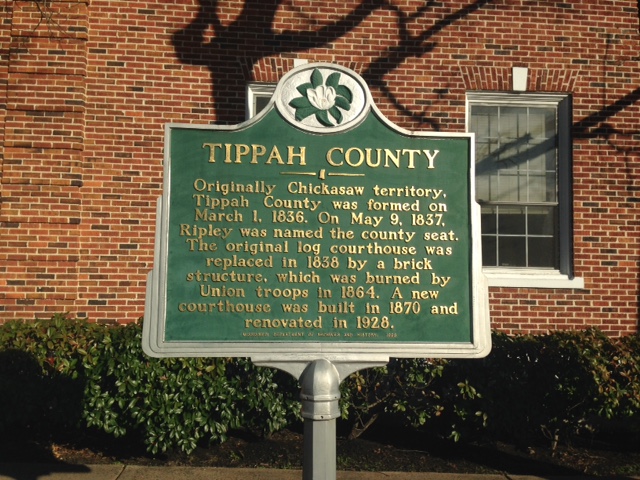
Tippah – Vicki Childers
Pie Are Squared
March 12, 2015 § 3 Comments
What’s so special about 3-14-15 at 9:26:53 a.m. and p.m.?
I’ll give you a few minutes to ponder that configuration of numbers. (Waiting. Waiting. Waiting.)
Okay, for you non-math-nerds out there: the numbers of the date and time together are the first ten digits of the mathematical constant pi (π), which, as I am sure you dimly recall, is the ratio of a circle’s circumference to its diameter.
The coincidence of date and time = π happens only once each century.
What does this have to do with the law? Well, nothing, I guess. Except that if the courthouse were open on the notable day, you could bring a pecan π to the courthouse for all to share. That not being the case this particular century, simply bake your own and enjoy it Saturday with a scoop of vanilla ice cream. You deserve it after a busy week practicing law.

