WHAT IS THE FUTURE FOR LAWYERS?
May 17, 2013 § 4 Comments
If you haven’t noticed, the legal profession is at a pivot-point. The big firms have been downsizing for years, finding it more and more difficult to payroll armies of lawyers as damage caps and other litigation-discouraging measures have eroded the caseloads of both defense and plaintiffs’ firms. Corporate clients in a bad economy are relying more and more on in-house counsel and alternate dispute resolution as ways to cut legal costs.
Here in Mayberry, the everyday folk simply don’t have the money to pay big fees when a divorce or custody war looms. They look for cheaper ways, and the internet beckons with the alluring promise of bright success via fill-in-the-blank forms.
Against this backdrop, law school grads are finding more and more that there simply are no jobs. Those student loan repayments loom large as unanswered resumes and rejections pile up.
Richard Susskind, a UK lawyer who has studied the British and American legal systems, has been probing these and other developments to discern the future of the law and the legal profession as society moves inexorably deeper into the technological age. In his book, The End of Lawyers?, he raised the question whether lawyers had not become an anachronism, to be replaced by legal technicians handling routine legal matters, a handful of litigation specialists doing courtroom work, and platoons of document-analysis specialists, financial advisors, legal counselors, and others performing at greatly reduced cost the components of what lawyers do now for $300-$500 an hour. His point is that delivery of legal services will yield to the forces of economics and technology until it offers cheaper, more efficient ways to serve the public.
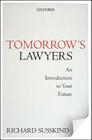 Susskind’s latest book, Tomorrow’s Lawyers: An Introduction to Your future, condenses all of the foregoing into a concise, quick read, readily accessible to any busy practitioner. The pocket-size book is only 164 pages of text, but it is crammed with provocative ideas. Susskind not only talks about the forces that are reshaping law and the practice, but also how they impact the courts and delivery of legal services.
This is a brilliant book. I commend it to all lawyers and judges, particularly those who will be involved in the legal system over the next 15-20 years. The forces of change that Susskind highlights will be either a sweeping tide of change or a sweeping tide that carries many away. We can ride it and adapt to it, or we can drown in it. We get to choose.
In my opinion, many of the ways we do business in our courts are straight from the nineteenth century. There have been some intrusions of technology, but for the most part Abe Lincoln and his contemporaries would likely find themselves right at home in our courts. We should not be afraid to examine the ways we plead, offer proof, take testimony and otherwise carry out due process in trials and hearings with a view toward streamlining the processes, making them less costly, and trimming months — if not years — off them.
I encourage you to read Mr. Susskind’s book and give this some thought. It’s your future.
WHEN THE JUDGE STICKS HIS NOSE INTO IT
March 4, 2013 § Leave a comment
Judges can be nosy. When no one is asking the question that the judge wants to know the answer to, you might just hear the judge start asking her own questions. I’ve talked about it in a post here before.
In the COA case of Knights’ Piping, Inc. and Knight v. Knight, et al., decided December 11, 2012, the appellant took issue with the chancellor’s frequent and vigorous interrogation of witnesses. The COA, by Judge Irving, found nothing improper in how the judge approached it:
¶14. Benny asserts that the chancery court erred in its interrogation of witnesses during trial. Under Rule 614(b) of the Mississippi Rules of Evidence, “[t]he court may interrogate witnesses, whether called by itself or by a party.” However, “it is grounds for reversal if the trial judge abuses the authority to call or question a witness by abandoning his impartial position as a judge and assuming an adversarial role.” Powell v. Ayars, 792 So. 2d 240, 248 (¶29) (Miss. 2001) (citation omitted).
¶15. While the chancery court interjected numerous times during the trial, we do not find that the court abused its discretion or abandoned its impartial position. Generally, the court’s questions were intended to clear up confusing testimony or encourage testimony from recalcitrant witnesses, which our supreme court has recognized as appropriate circumstances under which a trial judge may question witnesses. See id. at 248-49 (¶30). Additionally, the court gave the attorneys the opportunity to ask further questions of witnesses, if necessary, based on the court’s questions. This issue is without merit.
Lawyers in this district will tell you that I frequently ask questions to clarify or to get the information I feel that I need to make a decision. I always give the attorneys an opportunity to ask questions based on what I asked. Judge Mason, on the other hand, seldom asks questions. It’s a matter of personal discretion and style. In my years of practice, I can say that I saw about every variation on this theme that one could imagine, from active participation in the trial to stony, sweat-inducing silence.
Chancellors will tend also tend to get involved when they become convinced that the witness is being untruthful, or evasive, or that there is some other kind of chicanery taking place. In Knight, the chancellor became so impatient with evasive and non-responsive answers that he began deeming certain answers as admitted. The appellant again took issue, and the COA again rejected his argument:
¶16. Benny argues that the chancery court erred in deeming his alleged non-responsive answers to certain questions as admitted. For example, during cross-examination, the following exchange occurred between Benny and Harold’s attorney:
Q: And, of course, you indicated yesterday that Harold missed 30 days [of work] and so that’s—that’s why you fired him?
A: He also told me—
[THE COURT]: The answer is—for the witness—the witness is being evasive—is that is why he fired him because Harold missed 30 days. That’s the answer. Ask your next question.
Q: When you changed the locks, you denied Harold access to his property, correct?
A: I did not.
Q: Did you give him a key?
A: Couldn’t locate him.
[THE COURT]: The answer is—
[THE WITNESS]: No.
[THE COURT]: —he did not give him a key.
¶17. Based on our review of the record, the chancery court admonished several witnesses regarding non-responsive answers—not just Benny. Furthermore, Benny’s answers to the questions he complains about on appeal were evasive. Therefore, the chancery court did not err in presuming that the true answers would be unfavorable to Benny’s position and deeming his non-responsive answers as admissions. This issue is without merit.
Taking answers as admitted is an extreme measure, but it’s one that can be merited in a situation like the one in Knight, where the witnesses are not forthcoming.
As for the chancellor’s demeanor, it’s a simple fact that judges get exasperated, just like lawyers and parties do. It usually happens after a long, tedious stretch of trial where one frustration accumulates on another until the judge’s patience is exhausted, and he blows a gasket. Yes, it would be better to keep one’s cool, and calmly navigate through the perturbance, but judges are human, and they are focused on getting to the truth of what is the most equitable outcome in the case. Thwarted in that quest, they tend to get testy.
ACCESS TO JUSTICE
February 13, 2013 § 5 Comments
Anyone who has spent any time in chancery court has witnessed the hapless flailings of people ineffectively trying to represent themselves in legal matters, some of which would be challenging enough for an experienced legal professional, much less someone completely unversed in the complexities of the substantive law, evidence, due process and procedure. It is never a pretty sight.
Last Friday I attended a symposium at Ole Miss on Poverty and Access to Justice. I should say, more accurately, that I attended the morning sessions. I came away with some misconceptions corrected, hope that something constructive can be done, and an idea of some steps I can take in my own district.
The symposium papers are published at Supra, which is the online publication of the Mississippi Law Journal. I encourage you to click on the link and read them to get an idea of the scope of the problem, as well as ideas that people are pursuing to address it.
And it is a problem with several facets:
- There are the poor and illiterate who could not afford even a modicum of legal representation, and so are prey to loan sharks, unscrupulous merchants, and sharp dealers of every imaginable stripe. Legal Services, which is on the verge of extinction, has tried with underfunded and understaffed offices to provide representation to as many as possible, but there are not enough resources to keep up with the numbers.
- There are the growing numbers of people who no longer have the financial means to hire an attorney, and take on the task themselves.
- There are the few who simply believe that they will somehow be equal to the task, or that the judge will help them.
- There are the online purveyors of self-help legal kits. I’ve posted here about them.
The dilemma created by these cross-currents is that on the one hand we have people whose poverty and lack of education create nearly insuperable barriers to accessing the legal system, and, on the other hand, we have too few legal resources available to low- and no-pay clients.
In the court room, the judge is responsible to be fair to both sides. The opposing lawyer has a duty to zealously represent his or her client. It’s not called an adversarial system for nothing.
In my district, I am going to organize a group of lawyers who are interested in doing something to work on solutions. We are going to work with the Mississippi Access to Justice Commission and try to alleviate the problem in our corner of the universe. Our efforts will likely not eradicate the adverse impact of poverty vis a vis the legal system, but that’s no reason not to try.
MORE WARNERISMS
December 20, 2012 § 2 Comments
In my prior post on former Chancellor George Warner, I focused on some of his more humorous rulings. But there was sagacity in his rulings, too. Here are a few excerpts his opinions that show his shrewd understanding of the law, as well as the trial court’s and lawyers’ role in enforcing its rule. These are from opinions published in Judge Warner’s book, Through the Eyes of a Judge …
From a 1987 opinion in which he distills the purpose of a court of equity …
That there is no existing case means nothing. If courts never ventured past existing law, our law would become musty, stale, out of date, and soon cease to exist.
This court believes the first great maxim of equity is certainly applicable, to-wit: Equity will not suffer a wrong without a remedy. The plaintiff has suffered a wrong, and this court will provide a remedy.
From a 1988 opinion on the maxims of equity in the grand scheme of jurisprudence …
In law school we hear talk about the great maxims of equity. Sometimes we get so wrapped up in modern practice, we neglect the fact that our Court system is the greatest in the world. Some of the great part on which we operate is embodied in the maxims of equity. These are statements or principles of how Courts should treat litigants and the rights of parties that come before the Court. A lot of our maxims, in my opinion, rise even above the Constitution because they go to the guts and heart of what is going on. The last great maxim of equity was: “No one should be condemned without a legal chance to be heard.” The maxim is so clearly founded in natural justice that even a savage would understand it, and modern government observes it as an indidpensable principle.
From a 1987 opinion on burgeoning family law …
In thirty-two and a half years as a member of the Bar and a member of the bench, the Court has found on numerous occasions why very few lawyers would accept an appointment or ever serve as a Chancery Judge. Those who do, sjhould sometimes have their sanity examined. This is a field of law and this is the Court in which himan emotions and family prroblems are generated with all the animosity God gives people the ability to produce. The more the problems, the better the lawyers, the more the law. This is why family law evolved in the last five years to a third branch of law. A decade ago, we had two branches of law, Civil and Criminal. Family law is the most prolific law in the changing and evolving of laws, rules, procedures, and concepts.
I am quite aware that this case will give the appellate court, and the judge thereon to whom it may be assigned, the opportunity to either have a field day in family law and domestic relations, or simply go bananas, depending on his or her temperament.
from a 1992 opinion on enforcing court orders …
The last time I was in Quitman, a gentleman approached me on the street and said, “Warner, I served on grand juries with you [when the judge served as 10th Circuit District Attorney] thirty years ago. I thought you were dead.” In the movie Jeremiah Johnson, a similar statement was made when a prospector said, “Some folks say you’re dead, some folks say you will never die.”
As long as this Judge is living, one of the most dangerous things people can do is disobey court orders. When I took an Oath to see that they were enforced, I meant when I said: “I will.”
And this from a 1990 decision about where the buck stops — or doesn’t …
Courts do not exist to make people happy with their decisions. We simply have to make a decision as best we can, based on what we perceive to be the facts, the evidence and the law.
* * *
If anybody desires to appeal, perhaps the Supreme Court will find this is an instance where we need divine appellate reaction. Perhaps the judges in Jackson are far more divine in their knowledge than us trial judges, and if so, I would appreciate their insight.
WHERE DID MISSISSIPPI’S CHANCERY COURTS COME FROM?
December 6, 2012 § 1 Comment
Note: Since neither of the law schools in Mississippi require their students to study chancery courts and equity jurisdiction as a discrete subject, I thought it would be useful and informative to set out a brief history of how we came to have separate chancery courts in our state, as a starting point for understanding how our courts have developed separate practices and procedure.
When the Mississippi Territory was created in 1798, there was influx of settlers into the region around Natchez, where significant wealth began to be accumulated. As land was developed and plantations were established, there was a growing need for legal professionals to research and litigate land claims, and to advise the growing business community.
Lawyers came to the new territory from Maryland, Virginia and the Carolinas. They brought with them the knowledge of their own legal systems based on English jurisprudence and judicial organization. The first chancery courts in the colonies had been established in Maryland, and that state’s equity system was regarded as being one of the most advanced. The courts in the Atlantic states administered equity as had the chancery courts of England.
The immigrant attorneys influenced the territorial legislature, and the first territorial courts established were the Superior Courts, which had both legal and equitable jurisdiction. Interestingly, the legislation establishing those courts provided that they “may ordain and establish all necessary rules for the orderly conducting of business in equity,” meaning that the courts and not the lawmakers made the rules of procedure.
Mississippi achieved statehood in 1817, and the first state constitution authorized the legislature to establish a separate court of chancery. From the inception of the State of Mississippi, then, chancery court has been a constitutional court. Nonetheless, it was several years before the legislature acted on its authority. In 1821, at the urging of Virginia native George Poindexter, the legislature did establish the separate superior court of chancery.
Supreme Court Justice Joshua G. Clarke (for whom Clarke County is named) was selected as the state’s first chancellor. At the time, the position of chancellor was appointed, and was regarded as preferable to a seat on the Supreme Court.
Practice in chancery then was vastly different from what it is now. There was one chancellor, who sat at the seat of government and one or two additional places, and to whom the cases were brought. Trials were the exception. Instead, testimony was presented by deposition. The “Learned Chancellor” examined the facts presented in the light of any applicable precedent (the case law of New York and England were the primary authorities until Mississippi developed its own substantial body of law), and rendered a scholarly and, hopefully, wise decision, which could then be appealed to the supreme court.
The constitution adopted in 1832 made the position of chancellor an elected one, and it is believed that Mississippi’s were the first elected chancery judges. That constitution provided for separate courts of equity, but also authorized the legislature to give circuit courts concurrent equity jurisdiction “in all cases where the amount or thing in controversy does not exceed $500; also all cases of divorce and for foreclosure of mortgages.” The provision for concurrent jurisdiction was made because it was burdensome for poorer litigants to have to travel to the locale of the chancery court.
To help alleviate the caseload, the position of Vice-Chancellor was created in 1842, and another was created in 1846. At that point, the three chancellors began riding what amounted to a circuit, holding court in different sections of the state, similar to our federal courts now.
By 1856, the business in chancery court had grown to such an extent that the constitution was amended in that year so that the circuit judges held chancery court in each county.
Up to 1868, probate matters had been entrusted to local “probate courts,” inferior to the chancery courts, which were staffed by lay persons who had no legal training or experience, and no judicial background. As a result, business was frequently mishandled, and the chancery courts were swamped with suits stemming from the inferior court actions. It was often said that the only issue when reviewing the action of a probate court was whether its actions were void or merely voidable.
As for practice and procedure, the principle established in territorial days that the chancellors would establish their own procedures continued in effect, but there was no central authority for the rules, and there was a confusing proliferation of procedural rules and practices that varied greatly from one chancellor to another. The resulting confusion gave rise to a call for uniformity among the courts.
Another source of dissatisfaction with the chancery system was that as the population grew there was an increasing demand for court time, but too few judges to meet the demand. Some called for more chancery judges, and others wanted to abolish the chancery courts and vest equity jurisdiction in the circuit courts, which were already in place serving every county.
In 1868, there was another constitutional convention formed due to Reconstruction. Its constitution once and for all established chancery court as a separate court, with chancellors sitting in districts across the state, comparable to already-established circuit court system. The concurrent jurisdiction arrangement with circuit court was terminated, as were the probate courts; the chancery courts with jurisdiction over the matters they fomerly handled.
In the wake of the 1868 constitution, the legislature began to address dissatisfaction with the patchwork of court procedures and rules by passing laws dictating procedures to the courts.
The provisions of the 1868 constitution for chancery carried over into the 1890 constitution, for the most part.
Over the years there were few changes in court legislation. In 1916, the legislature passed a bill requiring that the former method of taking testimony by deposition in chancery be abolished in favor of oral testimony.
In 1924, the legislature adopted the Chancery Practice Act, which settled once and for all, until 1981, that the legislature, and not the courts, would control the procedural and evidentiary rules of the courts.
_____________________________________
This information is distilled from Judge Griffith’s Mississippi Chancery Practice, 2nd Ed., 1950.
WHAT DOES IT TAKE TO TRIGGER RELIEF FROM FRAUD ON THE COURT?
October 10, 2012 § 4 Comments
Basically, all you have to do is bring it to the court’s attention, and the judge can do the rest. That’s what the COA decision in Finch v. Finch, handed down October 2, 2012, says.
But before we talk about Finch, let me remind you of the MSSC decision in Trim v. Trim, which held that “the intentional filing of a substantially false Rule 8.05 statement is misconduct that rises above mere nondisclosure of material facts to an adverse party,” and constitutes fraud upon the court. There is no time limit to when that issue can be raised. So to allow your client to submit a false 8.05 is to allow the judgment always and forever to be vulnerable to possibly fatal attack, as was the case in Trim.
Only two months ago the COA held in Rogers v. Rogers that if you are going to claim fraud on the court, you will have to prove all of the classic elements of fraud, or you will fall short.
Now we have Finch, further defining the scope of fraud on the court. In Finch, Rosemary and Stewart, no longer love birds, got an irreconcilable differences divorce in which the special chancellor awarded Rosemary alimony based on financial proof submitted by the parties, including Rosemary’s claim that she was paying certain marital debts that she claimed she had been paying throughout the marriage.
The special chancellor’s appointment expired, and a newly-elected chancellor took the bench and assumed responsibility for the case.
In post-divorce litigation, Stewart asked the court to find Rosemary in contempt and to modify the alimony to take into consideration that Rosemary had “falsely represented” to the court that she had been paying the marital bills. He claimed and proved that she had failed to pay an American Express account, forcing Stewart to borrow some $38,000 to pay it. Also, she had not disclosed other family debt in the divorce that affected Stewart.
The chancellor found that Rosemary’s actions were a fraud on the court, and she decided that the fraud permitted her to reduce the alimony under MRCP 60(b). Stewart had not filed a 60(b) motion, had not specifically requested any 60(b) relief, and did not specifically plead or charge fraud. Rosemary appealed, claiming that it was error for the chancellor to grant 60(b) relief sua sponte, which had the effect of setting aside and doing away with issues to which the parties had agreed and settled before the original trial.
Judge Ishee’s opinion for the court states:
¶18. While Stewart did not file a Rule 60(b) motion, he did allege fraud in the petition for contempt and modification. Furthermore, “[t]he chancery court is vested with broad equitable powers with which it is able to decide if the original order was entered by mistake, fraud of a party, or for another reason justifying relief from the judgment under Rule 60(b) and may do so upon its own motion.” Tirouda v. State, 919 So. 2d 211, 214 (¶7) (Miss. Ct. App. 2005) (citing Edwards v. Roberts, 771 So. 2d 378, 386 (¶28) (Miss. Ct. App. 2000)).
Rule 60(b) even states: “This rule does not limit the power of a court to entertain an independent action to relieve a party from a judgment, order, or proceeding, or to set aside a judgment for fraud upon the court.” Accordingly, the chancery court did not err by finding fraud upon the court and altering the final divorce decree without Stewart filing a Rule 60(b) motion.
Rosemary also tried to claim that the fraud, if any, was on Stewart and not on the court, which argument the COA rejected, based on Trim. She argued in addition that there was inadequate proof in the record of the elements of fraud, which the COA likewise rejected, based on the proof in the record and the findings of the chancellor.
To return to my initial point: all that was necessary in this case was to give the chancellor a suggestion that there may have been a fraud on the court, and she picked it up and ran with it. The chancellor has broad, equitable power when it comes to relief under MRCP 60(b), which the court can exercise on its own motion. In this particular case the problem was fraud, but 60(b) vests the court with the same equitable powers to address mistake, “or any other reason justifying relief from judgment …”
FIGHTING THE TIDE THAT WOULD SWEEP AWAY DECORUM
August 23, 2012 § 4 Comments
UCCR 1.01 says that “All proceedings in the Chancery Court … shall be conducted with due formality and in an orderly and dignified manner … The dignity and respect of the Court shall be preserved at all times.” The rule also bans ” … drinks, food, gum or smoking …” and “Bickering or wrangling … Applause or demonstration … and the use of profane or indecent language.”
Courtroom decorum is one of those things that varies widely from district to district, depending on the personality of the chancellor and his or her tolerance level for various forms of behavior.
In my district, I try to make sure that the formality of the courtroom is preserved, that all proceedings are conducted with the attention and gravity that they deserve so that litigants can see that we take their business seriously.
Despite our best efforts, though, philistinism encroaches even into our courtrooms. A few examples:
- The woman who dropped the “f-bomb” repeatedly in the course of a Clarke County hearing until I had her dragged off in handcuffs to do 30 days in jail. This was after she had assaulted another witness in the hall before court was convened, resulting in her having to sit through her trial in manacles between 2 burly deputies.
- The man in the same trial who flipped off the judge. That cost him 5 days in jail.
- The woman who appeared for a hearing in my courtroom in Meridian who wore a t-shirt that read “If you f-ing think I am f’ing going to do what you tell me, m’f”er, you are f’ing crazy.” I sent her home with instructions not to return to the courthouse property until she changed her attire. (By the way … all the f-words cited here were spelled out fully … you can fill in the spelling for yourself).
- Judge Mason had a hearing recently in which a matronly grandmother appeared wearing a t-shirt with a similar message, although not as graphic as mine.
- The man who enters the courtroom in the middle of a trial and calls out loudly to some witnesses, “Lawyer said y’all can come sit out in the hall; y’all come on out here with me.”
- The select few (all women) who came to court for child support enforcement cases wearing pajamas, and in one case pajamas with fluffy slippers. I don’t know about where you live, but it’s not that uncommon to see folks traipsing about in pajamas in this outpost on the edge of civilization, but I think wearing them to court crosses some kind of line.
Of course, the foregoing are merely a few more blatant examples. We have all seen and heard cell phones blaring, courtroom observers blurting out answers to questions or other “helpful” information, and other disruptions by laypeople who I guess don’t know any better. But the problem is not limited to laypeople.
Lawyers can be insensitive to the demands of decorum, too. Shortly after I took the bench, before I banned beverages from my courtroom altogether, I had to ask a lawyer to stop repeatedly shaking a large (2-liter?) convenience-store mug of ice while counsel opposite argued a motion. On another occasion I asked a lawyer to set aside a Dr. Pepper she swigged out of through her cross-examination of a witness.
Those are fairly obvious assaults on decorum. A less obvious example is when several lawyers highjack the hearing with banter and joviality to the extent that the sense of the proceeding is lost completely. Everyone enjoys an injection of a soupçon of humor into a tense trial every now and then, but I reviewed a record once for a trial conducted by another chancellor where the banter and kidding went on for 22 pages. That’s too much, and it sends the message to the parties that their business is trivial.
When I practiced, I always advised my clients to come to court dressed appropriately. And I instructed them in how to behave: no displays of dismay or approval; never interrupt a question or the judge speaking; no gum; no hats; no beverages; show respect for opposing counsel and the judge; and so on and so forth. I think most attorneys do the same, but it’s obvious that the thought has still not occurred to some.
I think preserving decorum in our courts is important. For one thing, it keeps emotion-charged proceedings from getting out of hand. For another, it conveys the message that what is transpiring is serious and taken seriously by the bench and bar. And it sets the courtroom experience apart from the living room where everyone speaks at the same time over the cacophony of the tv.
JUDICIAL ELECTIONS 2012
May 14, 2012 § Leave a comment
Friday, May 11, was the qualifying deadline for 2012 judicial elections. Although this is not a general judicial election year, some appellate posts are up in their rotation, and there are three special elections. Here are the qualifiers:
- Chief Justice William Waller, Jr., will face Earle S. Banks for Supreme Court Justice District One, Position One.
- Justice Leslie D. King is unopposed for Supreme Court Justice District One, Position Two.
- Justice Mike Randolph will face Talmadge Braddock for Supreme Court Justice District Two, Position Three.
- Josiah Dennis Coleman and Richard (Flip) Phillips are running for Supreme Court Justice District Three, Position Three, which is the position being vacated by retiring Justice George C. Carlson, Jr.
- Judge Ermea Russell is opposed by Ceola James and Latrice Westbrooks in the special election for Court of Appeals District Two, Position Two.
- Judge Gene Fair is unopposed in the special election for Court of Appeals District Five, Position One.
- Chancellor M. Ronald Doleac is unopposed in the special election for Chancery Court Judge District Ten, Place Four.
FLYING SOLO
April 26, 2012 § Leave a comment
A couple of weeks ago there was a news item about a woman who had to pilot a small plane to an emergency landing when her husband, who had been at the controls, had a sudden heart attack and collapsed. The story had a happy ending due to the assistance of a good-samaritan private pilot who took to the air, flew beside the first craft, and instructed the woman into a safe, but bumpy, landing.
Pro se litigants are like those untrained pilots who take the controls of their own aircraft. Only there is not a helpful, experienced pilot to guide them to a happy conclusion. Most of them crash and burn, some fatally, others with considerable cuts and bruises, and all the worse for wear. Here are my 3 most recent experiences:
- Man appears self-represented for temporary hearing, refuses the opportunity to negotiate with opposing counsel, and turns down any continuance. He sits mute through direct examination (heavy on leading questions), raising no objections. He has no questions on cross examination. After plaintiff rests, he says he has no testimony or evidence to present, after being told he may take the stand, or call other witnesses, or present any documentary evidence. Needless to say, the results were not in his favor.
- Woman appears pro se in defense of DHS contempt action for non-payment of child support. She has filed no pleadings, but claims in her testimony that the child has been living with her, and that her income is reduced anyway, so that the child support ordered 9 years ago should be modified downward. I explain that she must file pleadings to put DHS on notice of her claims, and I recess the hearing to allow her to do that. I could have simply rendered a judgment against her, but … well … nevermind.
- Man files pro se complaint for custody. At hearing he calls a single witness who testifies that he has never seen the plaintiff and the minor child together. It’s not clear to me how this helps promote his claim for custody. He then says he has no other testimony, even after I explain that he may take the witness stand and testify in his own behalf. Then he has a change of heart and says he has some papers he wants me to look at. One by one he offers several County Court judgments for child support for other children, which opposing counsel graciously allows in. Then the plaintiff rests. After the 41(b) motion is granted the defendant testifies and, based on her testimony I order visitation and award her the tax exemption for the child.
None of these top the pro se “partition” case I had several years ago. Both plaintiffs and defendant were self-represented. The plaintiffs’ pleadings asked for partition. At hearing, though, the proof was that defendant had lived in the home in which the heirs had an interest and had dismantled the fireplace. The plaintiffs wanted it restored or to recover their damages. I dismissed the complaint and sent them to County Court to pursue a lawsuit.
A Meridian air guardsman in the 70’s crashed his F-4 and suffered a broken back. As he was being wheeled on a stretcher into the hospital, a local tv news reporter stuck a microphone in his face and asked what had caused the accident. Through his pain the pilot replied,”I ran out of air speed, altitude and experience all at the same time.” That about sums it up.
UPDATE ON LEGISLATION
April 19, 2012 § 2 Comments
I posted here and here about pending legislation that might affect your chancery court practice.
Here is a list of pending bills affecting the judiciary that are still alive (or as the legislators say, “not dead”).
As you can see, most of what has survived has to do with criminal laws and procedure, or domestic violence, with a couple of exceptions.
HB 484. Judicial and DA pay raise, 2012 version passed both houses and was signed into law.
HB 1268. Makes several significant changes to the adoption statutes, including a provision that an attorney representing an adoption agency must complete training, is in conference.
Believe it or not, that is all from the previous lists I posted that has made it this close to the finish line.
 The Better Chancery Practice Blog