SYMPATHY FOR THE DEVIL
December 12, 2010 § 8 Comments
 Curtis Wilkie’s THE FALL OF THE HOUSE OF ZEUS is the story of the rise and fall of powerful trial lawyer Dickie Scruggs. It is entertainingly well written, as one would expect of an author with Wilkie’s gift for the word, and microscopically researched. Wilkie’s book complements KINGS OF TORT, Alan Lange’s and Tom Dawson’s treatment of Scruggs’ downfall from the prosecution point of view. Those of you who savor Wilkie’s keen writing and incisive journalism will not be disappointed by this book. The subject matter is a must-know for all Mississippi lawyers and jurists, and citizens as well. I recommend that you buy and read this book.
Although I commend Wilkies’s book to you, I do find it troubling that it is unabashedly sympathetic to Scruggs. Wilkie finally acknowledges their friendship at page 371, the third-to-last page of the book.
As a member of the legal profession for nearly four decades and a member of the judicial branch, I can find no sympathy whatsoever for Scruggs at this stage of his life. His flirtations with unethical conduct and illegality are legion. Even his acolyte (Stewart Parrish’s excellent descriptive), Tim Balducci, said in a candid moment that his approach to corruptly influence judge Lackey was not his “first rodeo” with Scruggs, and that he knew “where all the bodies are buried.” Big talk? Perhaps. But to me it eloquently bespeaks Scruggs’ history: His involvement at the shadowy edges of Paul Minor’s illegal dealings with Judges Wes Teel and John Whitfield; his use of stolen documents in the tobacco litigation; his use of questionably acquired documents in the State Farm litigation; and the hiring of Ed Peters to influence Judge Bobby Delaughter. Are there more?
Wilkie suggests that Scruggs’ increasing dependence on pain-killer medication led him to fall carelessly into a trap laid for him and Balducci by a scheming Judge Lackey, who had it in for Scruggs because of Scruggs’ political attacks on Lackey’s friend George Dale. He posits that Lackey created the crime, and that Scruggs had set out initially “only” to improperly influence Lackey.
The pain killers may be a contributing reason, but even a first-year law student knows that is not an excuse.
What about the idea of a trap? I leave it to lawyers far better versed in criminal law and procedure to address that. To me, the issue is finally resolved in this sentence on page 337: “But Scruggs had acknowledged, ‘I joined the conspiracy later in the game.'” Case closed as far as I am concerned. Moreover, Scruggs was not an unsophisticated convenience store owner charged with food stamp fraud. He was a sophisticated, powerful lawyer skilled in manipulating the levers of legal machinery. He was not a gullible rube who did not grasp the significance of his actions or their consequences. He was a lawyer and as such was held to the highest standard of propriety vis a vis the judiciary, a standard he trod into the mud.
As for Judge Lackey, the author skillfully excerpts quotes from the judge’s testimony to support his charge that Lackey had an animus against Wilkie’s friend, in particular the judge’s use of the term “scum” to describe Scruggs. From my perspective, I can understand how someone in Lackey’s position would view the arrogant and powerful lawyer as scum when he saw how Scruggs had seduced the star-struck young Balducci, whom Lackey liked, into impropriety and, indeed, illegality. Some of Dickie’s and Curtis’ influential and powerful friends in Oxford may buy Wilkie’s and Scruggs’ attempt to tar Judge Lackey, but I do not. Judge Lackey chose to stay on the side of right and Scruggs chose the other side. The point goes to the judge.
Scruggs’ plaint that he only intended to commit an unethical act, not a crime — in other words that the consequences were unintended — is a familiar theme in history. Henry II of England griped to his knights that he was irked by that troublesome bishop, Thomas Becket. The knights, knowing from experience how far they could go before incurring the wrath of their king, promptly rode to Canterbury and rid their sovereign of that meddlesome priest, killing him at the altar. Likewise, Scruggs’ knights, Balducci, Patterson, Langston, Backstrom and the others, knew the ballpark Scruggs was accustomed to playing in, and they set out with his money and influence to promote his (and their) interests in the accustomed manner of doing business.
Henry II did penance for the rest of his life for what he saw as the unintended consequences of his actions. Will Scruggs try to redeem himself for the damage he did to the legal profession and the legal system? Time will tell. When he is released from prison, he could find ways to devote some of his hundreds of millions of dollars to improving the courts and the legal profession and restoring integrity to the profession that made him rich. In the final decades of his lfe, he could become known as a philanthropist who advanced the law and the legal profession, with his past a footnote. I hope that is what he does.
Read this book and judge it yourself. You may see it differently than I. The story, though, and its lessons, are important for Mississippians to know and understand.
OLD TIMES HERE ARE NOT FORGOTTEN
August 13, 2010 § 2 Comments
“The past is never dead. It’s not even past.” — William Faulkner in REQUIEM FOR A NUN
“The past is a foreign country; they do things differently there.” — L.P. Hartley in THE GO-BETWEEN
No region of our nation has revered, understood, embraced, been bedevilled by and romanticized its past more than has the South. Much of the South’s history since the Civil War has been the history of evolving race relations in a culture determined to preserve inviolate its notion of its past. Beginning in the 1950’s, however, the irresistable force of change in the form of the civil rights movement collided head-on with the immovable object in the form of “massive resistance,” and the resulting explosion that destroyed the foundation of segregation began the transformation of southern culture that continues to this day.
 Bill May called my attention to DIXIE, by Curtis Wilkie. I had seen this book in various book stores (as I had seen its author, Mr. Wilkie, around Oxford), but had passed it over. On Bill’s recommendation, I got a copy and read it.
On its face, DIXIE is a history of the South’s agonizing journey through the watershed era of the civil rights movement and into the present, a chronicle of the events that shook and shattered our region and sent shock waves across the nation. The events and figures parade across his pages in a comprehensive panorama: The assassination of Martin Luther King, Jr., James Meredith and the riot at Ole Miss, Ross Barnett, Jimmy Carter, Eudora Welty, Brown v. Board of Education, Freedom Summer, Aaron Henry, the Ku Klux Klan, the struggle for control of the Democratic Party in Mississippi, White Citizens Councils, sit-ins, John Bell Williams, William Winter, Willie Morris, Charles Evers, Byron de la Beckwith and Sam Bowers, Trent Lott and Thad Cochran, William Waller, the riots at the Democratic Convention in Chicago in 1968, and more. As a history of the time and how the South tore itself out of the crippling grip of the past, the book is a success.
The great charm and charisma of this book, however, is in the way that Wilkie weaves his own, personal history through the larger events, revealing for the reader how it was to be a southerner in those days, both as an average bystander and as an active participant.
The author grew up in Mississippi, hopscotching around the state until his mother lighted in the town of Summit. His recollection of life in the late 40’s and 50’s in small-town Mississippi echoes the experiences of many of us who were children in those years, and will enlighten those who came along much later.
Wilkie was a freshman at Ole Miss when James Meredith enrolled there in 1962, sparking the riot that ironically spurred passage of the 1964 Civil Rights Act. On graduation Wilkie took a job with the Clarksdale newspaper and developed many contacts in Mississippi politics that eventually led him to be a delegate at the 1968 Democratic Convention in Chicago, where he was an eyewitness to the calamitous events there.
Through a succession of jobs, Wilkie wound up a national and middle-eastern corresondent for the BOSTON GLOBE, and even a White House Correspondent during the Carter years. His observations and first-hand accounts of his personal dealings with many of the leading figures of history through the 60’s and 70’s are fascinating.
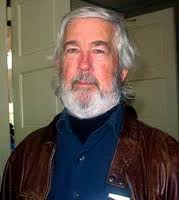
The author
When he had left the South, Wilkie believed he was leaving behind a tortured land where change could never take place, and where he could never feel at home with his anti-racism views and belief in racial reconciliation. He saw himself as a romantic exile, a quasi-tragic figure who could never go home again, but over time he found the northeast lacking, and he found the South tugging at him whenever he returned on assignment.
When his mother became ill, Wilkie persuaded his editor to allow him to return south, and he moved to New Orleans, from where he covered the de la Beckwith and Bowers Klan murder trials and renewed his acquaintanceship with many Mississippi political and cultural figures, including Willie Morris, Eudora Welty and William Winter. He began to discover that the south had undergone a sea change in the years that he was away, and that the murderous, hard edge of racism and bigotry had been banished to the shadowy edges, replaced largely by people of good will trying their best to find a way to live together harmoniously. He found a people no longer dominated by the ghosts of the ante-bellum South.
In the final chapter of the book, Wilkie is called home for the funeral of Willie Morris, and the realization arises that he is where he needs to be — at home in the South. His eloquent end-note answered a question Morris had posed to him some years before: “Curtis, can you tell us why you came home?” Wilkie’s response:
Just as Vernon Dahmer, Jr. had said, I, too believe I came home to be with my people. We are a different people, with our odd customs and manner of speaking and our stubborn, stubborn pride. Perhaps we are no kinder than others, but it seems to me we are … We appreciate our history and recognize our flaws much better than our critics. And like our great river, which overcomes impediments by creating fresh channels, we have been able in the span of Willie’s lifetime and my own to adjust our course. Some think us benighted and accursed, but I like to believe the South is blessed with basic goodness. Even though I was angry with the South and gone for years, I never forsook my heritage. Eventually, I discovered that I had always loved the place. Yes, Willie, I came home to be with my people.
Those of you who lived through the troubled years recounted here will find that Wilkie’s accounts bring back memories that are sometimes painful and sometimes sweet. For readers who are too young to recall that era, this book is an excellent history as well as an eye-opening account of what it was like to grow up in that South.
Wilkie’s new book, THE FALL OF THE HOUSE OF ZEUS, about the Scruggs judicial bribery scandal, is due out in October.

Wilkie and visiting Harvard students in the Circle at Ole Miss at the site of the 1962 riot
TWILIGHT OF THE GODS
July 25, 2010 § 2 Comments
 They were so powerful that they thought they were gods, immune from the misfortunes of mere mortals. They were Dickie Scruggs and all of his allies and fellow-travelers who rose to unparalleled power and wealth through bribery and corruption, until their un-god-like downfall. Their story is an epic Mississippi saga.
The next book on the grotesquerie of Dickie Scruggs and his ilk will be out soon. THE FALL OF THE HOUSE OF ZEUS, by Mississippian Curtis Wilkie, former BOSTON GLOBE foreign correspondent and current Ole Miss professor, is set to be released October 19, 2010, and the author will be at Square Books in Oxford that day to talk about his book and autograph copies.
Author Richard Ford made these comments about the book on the Square Books web site …
Addictive reading for anyone interested in greed, outrageous behavior, epic bad planning and character, lousy luck, and worst of all, comically bad manners. Wilkie knows precisely where the skeletons, the cash boxes and the daggers are buried along the Mississippi backroads. And he knows, ruefully — which is why this book demands a wide audience — that the south, no matter its looney sense of exceptionalism, is pretty much just like the rest of the planet.
I reviewed Alan Lange’s and Tom Dawson’s book on the Scruggs downfall here.
 The Better Chancery Practice Blog