Addressing the Disconnect
July 9, 2015 § 1 Comment
The MSSC is soliciting comments on an important proposed amendment to MRE 802 and the comment to MRE 804 . You can find the proposed rule and comment changes at this link.
These changes address the current inconsistency between MRCP 32 and MRE 802. MRCP 32(a)(3)(E) makes it possible to offer the testimony of a “medical doctor” via deposition instead of by personal appearance, but MRE 802 does not allow for its admissibility unless the physician meets one of the enumerated exceptions, and mere physicianhood is not one of them. The MRE prevails, though, because MRE 1103 states that “All evidentiary rules, whether provided by statute, court decision or court rule, which are inconsistent with the [MRE] are hereby repealed.”
We’ve posted about this problem here before. That previous post spells out how lawyers got caught in the gap between the two rules and wound up getting hurt. You don’t want something like that to happen to you.
BAH, Humbug
July 8, 2015 § 2 Comments
If you practice law in or around Biloxi, Columbus, Meridian, or any locale where military are among your clientele, you are no doubt acquainted with the concepts of BAH and BAS.
BAH is military-ese for Basic Allowance for Housing, and BAS is the acronym for Basic Allowance for Sustenance (i.e., groceries).
The question whether BAH and BAS should be included in income for calculation of child support has often percolated up in chancery court, and the answer has varied. Some of the confusion, perhaps has been due to the fact that BAH and BAS are not included in taxable income. The COA confronted the issue in a recent case.
In Price v. Snowden, Tim Snowden had agreed to pay 14% of his adjusted gross income (AGI) to Donna Price as child support for a child he had fathered outside marriage. When it came time to pay, Tim did not include BAH and BAS in his income for calculation of child support, apparently on advice of a CPA and after consultation with DHS. Donna sued for contempt based on underpayment. Tim took the position that BAH and BAS were not includable in his income for child support purposes.
In a decision handed down June 30, 2015, Judge Griffis wrote for the court:
¶10. Donna claims that Tim has underpaid his child-support obligation. The child-support order provides that “[Tim] will pay [Donna] child support based upon [f]ourteen [p]er[c]ent (14%) of his adjusted gross income pursuant to statutory guidelines.” The order also provides that this amount is to be adjusted annually.
¶11. We begin with the child-support guidelines. Mississippi Code Annotated section 43-19-101(3)(a) (Supp. 2014) provides that “gross income” includes the following:
[G]ross income from all potential sources that may reasonably be expected to be available to the absent parent including, but not limited to, the following: wages and salary income; income from self-employment; income from commissions; income from investments, including dividends, interest income and income on any trust account or property; [the] absent parent’s portion of any joint income of both parents; workers’ compensation, disability, unemployment, annuity and retirement benefits, including an Individual Retirement Account (IRA); any other payments made by any person, private entity, federal or state government or any unit of local government; alimony; any income earned from an interest in or from inherited property; any other form of earned income; and gross income shall exclude any monetary benefits derived from a second household, such as income of the absent parent’s current spouse[.] (Emphasis added).
¶12. When the original order was entered in 2004, Tim was an officer of the United States Navy. Tim received nontaxable federal payments for basic allowable housing (BAH) and basic allowable subsistence (BAS). Tim testified that his attorneys told him to rely on his mother-in-law, acting as his tax accountant, to calculate his monthly child-support obligation. His mother-in-law claimed she read the statute and “double-checked” with social services to determine that child-support calculations were to be based solely on taxable income.
¶13. Here, Donna and Tim agreed to an escalation clause to determine the appropriate amount of child support. Previously, this Court noted that “[t]he parties may in fact agree of their own volition to do more than the law requires of them. Where such a valid agreement is made, it may be enforced just as any other contract.” Stigler v. Stigler, 48 So.3d 547, 551 (¶9) (Miss. Ct. App. 2009) (internal citations omitted). Here, Donna and Tim both agreed to the escalation clause as written. Tim has not contested the validity or enforceability of the clause in this action. Thus, it is a valid clause in their agreement.
¶14. In Bustin v. Bustin, 806 So. 2d 1136, 1139 (¶8) (Miss. Ct. App. 2001), this Court considered the language “any other form of earned income” in section 43-19-101(3)(a), containing the provisions commonly referred to as the child-support guidelines. Sue and William Bustin were divorced, and William was ordered to pay child support for two children at the statutory amount of twenty percent of his gross income. Id. at 1137 (¶2). After the divorce, William was promoted to be the pastor at his church, and was given a housing allowance of $1,500 per month. Id. William brought a motion to modify his child support obligation, for contempt, and for sanctions, while Sue responded with her own motion to modify. Id. at (¶3). The chancellor determined that William’s housing allowance should be included in the calculation of his gross income. Id. at (¶1). This Court held:
It appears from a plain reading of the text that the statute addresses the issue of income and what is included when tabulating child support. The phrase “any other form of earned income” would seem to include items in a person’s salary package. William is given that housing allowance as part of his salary from the church. If William went to a bank tomorrow and applied for a loan, he would most definitely list his housing allowance as income in order to show that he would be able to repay his loan. Salary from one’s employer is one of the key elements when estimating everything from income taxes to interest rates on a bank loan.
Moreover, computing one’s income for taxation is different than computing one’s income for child[-]support purposes. Our state must protect the best interests of the child. One of the ways Mississippi accomplishes that goal is child[-]support enforcement through statutes. Our statutes delineate what is to be considered as gross income for the purposes of computing child support. This issue is also without merit.
Id. at 1140 (¶¶10-11).
¶15. Quite frankly, this interpretation of section 43-19-101(3)(a) leads to a logical result. Uniform Chancery Court Rule 8.05(a) requires the parties to file a “detailed written statement of actual income and expenses.” The Rule 8.05 form provides for the detail of income and expense. Income is to be disclosed in section 2. Line 13, “Present Monthly Gross Income,” requires the disclosure of “[m]onthly reimbursed expenses and in-kind payments to the extent that they reduce personal living expenses such as cars, travel, gas, phone, etc.” This amount is included in the calculation for the chancellor to determine gross income. Similarly, the Rule 8.05 form provides for the expense to be deducted. Section 3, “Monthly Expenses,” requires a party to disclose “[m]onthly mortgage or rent payments.”
¶16. We find that Tim’s BAH and BAS payments are a “form of earned income” under section 43-19-101(3)(a). The United States Navy paid Tim additional income for his housing and subsistence, and these payments were earned by Tim and assisted him with the payment of his monthly expenses.
That settles that. BAH and BAS must be included in AGI for calculation of child support. That’s going to smart some for the payor, because BAH and BAS are gross sums from which no taxes are deducted. And it’s a nice development for the payee, because it’s going to result in a bigger sum of child support. For lawyers, it answers a question that has heretofore gone unanswered in Mississippi case law.
A few morsels for thought:
- At Meridian Naval Air Station, two student pilots, A and B, both apply for on-base housing the same day. Pilot A is assigned the last available base house; he gets no BAS or BAH. Pilot B has no choice but to live off-base due to the unavailability of base housing, and he receives BAS and BAH as a result. Both would pay substantially different amounts in child support. Fair?
- Pilot B does not pocket the BAH. He pays all of it and some from his own pocket to rent a house in Meridian. Yet he will be taxed 14% + in child support on that amount. It is a legitimate point that not everyone gets their housing paid by their employer, but the fact is that people enlisting in the military do so with the understanding that, in return for generally lower pay than in the private sector, they will be provided with amenities such as housing.
- Pilot A will receive free housing and meals, yet the value of that will not show up on his paycheck stub or on his tax return so it can be quantified for child support calculation. Fair?
- Both pilots A and B have their groceries subsidized at the base commissary. That benefit does not show up on a pay stub or tax return, yet it can amount to thousands of dollars a year, and it escapes child support calculation. Fair?
I don’t have any answers to those questions. I’m just laying the groundwork for someone else’s appeal, I guess.
Whose Burden of Proof is it, Anyway?
July 7, 2015 § 6 Comments
There must be a gazillion cases that stand for the proposition that the proponent of a position in a case bears the burden of proving every element of the position by competent evidence. It’s not the opponent’s job to do that. And it certainly is not the judge’s, because for the judge to step in and make sure that one party or the other is meeting his or her burden would — or should — subject that judge to sanctions by the Judicial Performance Commission. When the proponent fails to meet the burden of proof, dismissal is appropriate. That’s what R41(b) is for.
The above principle has me scratching my head over a recent COA decision.
Sharon Harris filed a complaint for a TRO and preliminary injunction against the National Oak Park High School Alumni Association, Inc. (NOPHSAA), seeking to prevent the organization from removing her as president because it had not followed its own bylaws. After reviewing legal memoranda submitted by the parties, the chancellor dismissed her complaint, relying on MCA 79-11-277(2), which authorizes a board of directors to remove any officer at any time with or without cause.
Sharon appealed, and asked the MSSC to supplement the record with the national organization’s bylaws and Roberts Rules of Order, which the court granted after the chancellor confirmed that those documents had been before him at the trial level, even though they were not made a part of the record. Nowhere in the record, apparently, were the organization’s Mississippi bylaws.
The COA, in Harris v. National Oak Park High School Alumni Association, Inc., decided June 30, 2015, reversed and remanded, saying this:
¶14. The record on appeal fails to reflect what NOPHSAA’s Mississippi bylaws require regarding a quorum, voting-eligibility requirements, the Board’s meeting procedures, and the validity of telephonic meetings and telephonic voting. Accordingly, we must remand this case for the chancellor to provide findings as to whether the Board followed applicable bylaw requirements for a quorum, meetings, and voting when the Board voted to dismiss Harris in a meeting where some members attended and voted by telephone. [Footnote omitted]
Now, I may be missing something, but if the record fails to reflect what the Mississippi bylaws require, and the case turns on what the Mississippi bylaws require, is the COA saying that the judge is required to make sure that they get into evidence? That’s a novel approach as far as Mississippi jurisprudence is concerned. Indeed, it’s a novel approach as far as American jurisprudence is concerned. Anyone who has ever tried a case, or sat as a trial judge, can tell you that, in the USA, it’s up to the parties, not the judge, to make a prima facie case. That’s what the term “adversarial system” means.
The COA’s decision cites Speights v. Speights, 126 So.3d 76, 82 (Miss. App. 2013), to support the above-quoted language. Speights reversed a chancellor’s award of attorney’s fees because there was no evidence in the record of its reasonability. Using that logic, the COA should have affirmed in this case, because, if the chancellor had granted Sharon her relief, his ruling would have been unsupported by any evidence at all.
The COA noted at ¶ 12 that the chancellor “provided no factual findings for appellate review.” What factual findings are required when the proponent fails to meet his or her burden of proof? The COA’s own decision states repeatedly that the key evidence is absent from the record. So even without the judge’s findings of fact the COA was able to see clearly the failure of the plaintiff to make a prima facie case, as did the astute chancellor.
In my opinion, the chancellor did exactly what a trial judge is supposed to do: dismiss this case for failure to meet the burden of proof. Does the COA think it is the chancellor’s job to investigate and make the record complete? The COA reversed a chancellor for that very thing last year.
Oh, and just for lagniappe, Sharon now has the recipe on remand for a do-over that will get her a W at trial and on the next appeal.
I hope either the COA or the MSSC fixes this lest it become precedent.
Making Your Legal Life Easier
July 6, 2015 § 2 Comments
It’s no secret that the legal profession is one of the most stressful there is. Stress takes its toll in the form of burnout, substance abuse, failing relationships, depression, and even suicide.
The way that you practice law can add to or alleviate your stress. Here are a few things you can do to make your legal life easier:
- Avoid putting yourself in difficult situations. Answer the discovery early. You can always supplement it later to make it meet your exacting standards. Don’t keep putting things off until you face three or four simultaneous, crushing deadlines. Deal with unpleasant things first, so you can give your attention to and enjoy dealing with the pleasant ones.
- Forgive yourself. You are your own worst critic. If you err or even fail, pick yourself up and dust yourself off, analyze what you did wrong, fix it as best you can, and move on to the next thing. And quit beating yourself up about it.
- Schedule sanely. No one can or should try a contested divorce on Monday and Tuesday, with a break for an hour Tuesday to argue a motion in county court, then a contested probated claim Wednesday morning, followed by depositions Wednesday afternoon. Then six appointments Thursday morning, with three Social Security hearings Thursday afternoon. And winding up the week with a temporary hearing and a contempt two counties distant. Give yourself some time to breathe. You are not Superman or Wonderwoman.
- Let your secretaries be your shock absorbers. Don’t avoid your clients; they need to communicate with you. By all means, return your phone calls, but don’t let them interrupt you every few minutes with a barrage of what-ifs and speculation. Manage your own time; don’t let it manage you.
- Underpromise and overdeliver. Temper your clients’ expectations with reality. Never promise what you know you can’t accomplish, and then blame it on the judge or that scoundrel attorney on the other side. When you tell your clients that, realistically, they have an uphill climb to modify custody, but you will give it your best shot, they not only will appreciate your candor, but, if you prevail they will marvel at your legal skill; if you don’t, they at least understand why.
- Be objective. It’s your client’s battle, not yours. Don’t let it get personal. You are there to represent your client, not to be your client’s alter ego. That lawyer on the other side is your opponent in this case, not your personal enemy.
- Get organized. Put systems in place to help you deal with your business in a rational manner. The more haphazard and disorganized you are, the more you will have to deal with the unexpected and overwhelming.
The Courthouses of Mississippi
July 2, 2015 § Leave a comment

Tate -Leon Hannaford

Copiah – Joey Norton

Copiah – Joey Norton

Jefferson – Bennett Wilson

Marshall – Beverly Kraft

Pontotoc – Beverly Kraft

Prentiss – Beverly Kraft

Sharkey – Beverly Kraft

Tishomingo – Beverly Kraft
Boatwright is Dry-Docked
June 30, 2015 § 10 Comments
The legal travails of Toulman and Grace Boatwright have been chronicled here before.
To bring you up to date, this is the case in which: (1) a chancellor recused before ruling on a R59 motion; (2) the remaining chancellor refused to rule on the motion; (3) there was an appeal; (4) the COA reversed on the basis that the second chancellor should have ruled on the motion; (5) on remand the second chancellor recused, and a special chancellor took up the case and ruled on the R59 motion; (6) Toulman appealed again; (7) five (yes, 5) judges of the COA recused (if you’re counting, that’s seven recusals in this saga); and (8) the COA affirmed in Boatwright v. Boatwright, handed down June 23, 2015.
It seems a shame to draw the curtain closed on this epic, which arose in 2004, more than eleven years ago. (Of course, if cert is granted …)
Judges Carlton, Lee, and Irving would have granted a new trial, which would have kept this case going for perhaps an additional eleven years (optimistically speaking).
In case you’re trying to diagram this: McGehee wrote the prevailing opinion, in which Griffis, and Ishee joined; Carlton, Lee, and Irving dissented. Barnes, Roberts, Maxwell, Fair, and James did not participate. A 3-3 tie is an affirmance.
On the serious side, both the majority opinion, written by Special Judge McGehee, and the dissent, penned by Judge Carlton, address some weighty issues of judicial ethics arising out of the social relationships between attorneys and judges. This particular case came to grief when the chancellor accepted an invitation to go turkey hunting with one of the lawyers involved in the Boatwright litigation while the case was pending. Both opinions discuss the ethical considerations involved and their ramifications.
As with many ethical questions, there are not only murky areas, but different people in good faith can see things differently and draw different conclusions, as was the case here.
What is sometimes difficult to see is where to draw the line. In the Guardianship of McClinton case decided only last February by the COA, the court brushed aside attorney Michael Brown’s argument that the judge had an improper social relationship with another attorney in the case because the judge frequently had lunch with that attorney and they attended college football games together. For those of us here on the ground, it can be hard to draw distinctions so as to arrive at a firm idea of appropriate conduct.
The main thing is for us all to take to heart the serious ethical implications involved in the social interactions between lawyers and judges, and to be sensitive to them. It’s absolutely true that litigants, their families and friends, and passers-by are watching everything we do and drawing their own conclusions.
Where do we go from Here?
June 29, 2015 § 1 Comment
SCOTUS has spoken in Obergefell v. Hodges, handed down last Friday, making it unlawful for any state to refuse to issue licenses for same-sex marriage (SSM) to persons applying within the state, and making it unlawful for any state to refuse to recognize SSM that was performed legally in another jurisdiction. That pretty well wipes out Mississippi’s position on the issue.
There is a hiccup in Mississippi, however, in that the AG takes the position that, until the 5th Circuit lifts the stay imposed by US Dist. Judge Carlton Reeves in the litigation challenging Mississippi’s law that is on appeal in New Orleans, Mississippi may not issue marriage licenses for SSM.
After that is resolved, however, what impact will Obergefell have on family law in Mississippi? Here are a few of my own opinions:
- Ferguson will still govern equitable distribution, Albright will still govern child custody, the statutes and Huseth will still govern child support, and so on and so on. For the life of me, I do not see any substantive issues that will not be resolved by the familiar substantive rules that are already in place.
- Likewise, our procedures remain the same. Only the gender of the parties is different.
- I heard some lawyers Friday opining that chancery courts need to brace for a flood of divorces from SSM. I don’t get that logic. Oh, I am sure there will be some, but there have to be the marriages first, and my impression is that most gays in Mississippi have been awaiting this development rather than going to other states for SSM, since that other-state marriage would not be recognized under our law anyway.
I think this decision will have the same kind of aftermath as Roe v. Wade. That 1973 case (that’s 42 years ago, for the math-challenged) spawned legislation and litigation that continue to this day as opponents try to probe for a way around it or to ascertain its limits, and proponents try to enforce it. Both Obergefell and Roe v. Wade are substantive due process cases, and those just take longer people to accept, if they ever do.
As with Roe v. Wade, this latest case involves issues that sound in morality and religious teaching, rendering compromise and accommodation much less likely. the role of SCOTUS is to interpret the Constitution, not the Bible. We all know that, and I, for one, prefer for SCOTUS and the other two branches of government to stay out of the Bible-interpretation business. Still, when cases like this fall in that overlap area, they spawn a lot of consternation among the citizenry.
Oh, and as a chancellor, it is my role to apply the law as I am presented with it. That I will do. I have read the majority opinion and the dissents, so I know what is required of me.
As lawyers, you will represent your clients. Those who benefit from the decision whom you take on as clients, as well as those who challenge it.
I have to confess that I was a little surprised at the scope of the decision. I thought the court would say that states must recognize the legal marriages of other states, but that the rules of marriage would be left to the states. That proves, among other things, that I am no constitutional-law scholar.
So, these are my preliminary thoughts. It will be interesting to look back at this 42 years hence — in the unlikely event that I’m still around.
The Courthouses of Mississippi
June 26, 2015 § 3 Comments
Thanks, I now have them all.

Washington – Drew Tominello

Issaquena – Beverly Kraft
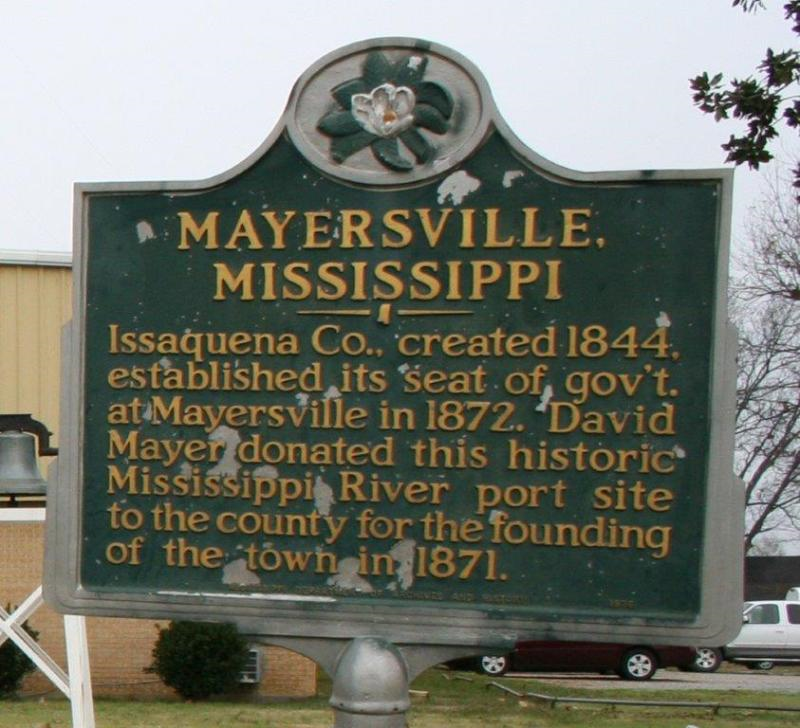
Issaquena – Beverly Kraft

Lincoln – Michael Gleason

Lee – Beverly Kraft

Panola at Sardis – Helen Kelly

Oktibbeha Circuit – Beverly Kraft

Oktibbeha Chancery – Sandra Jackson

Pike – Lauren Foreman
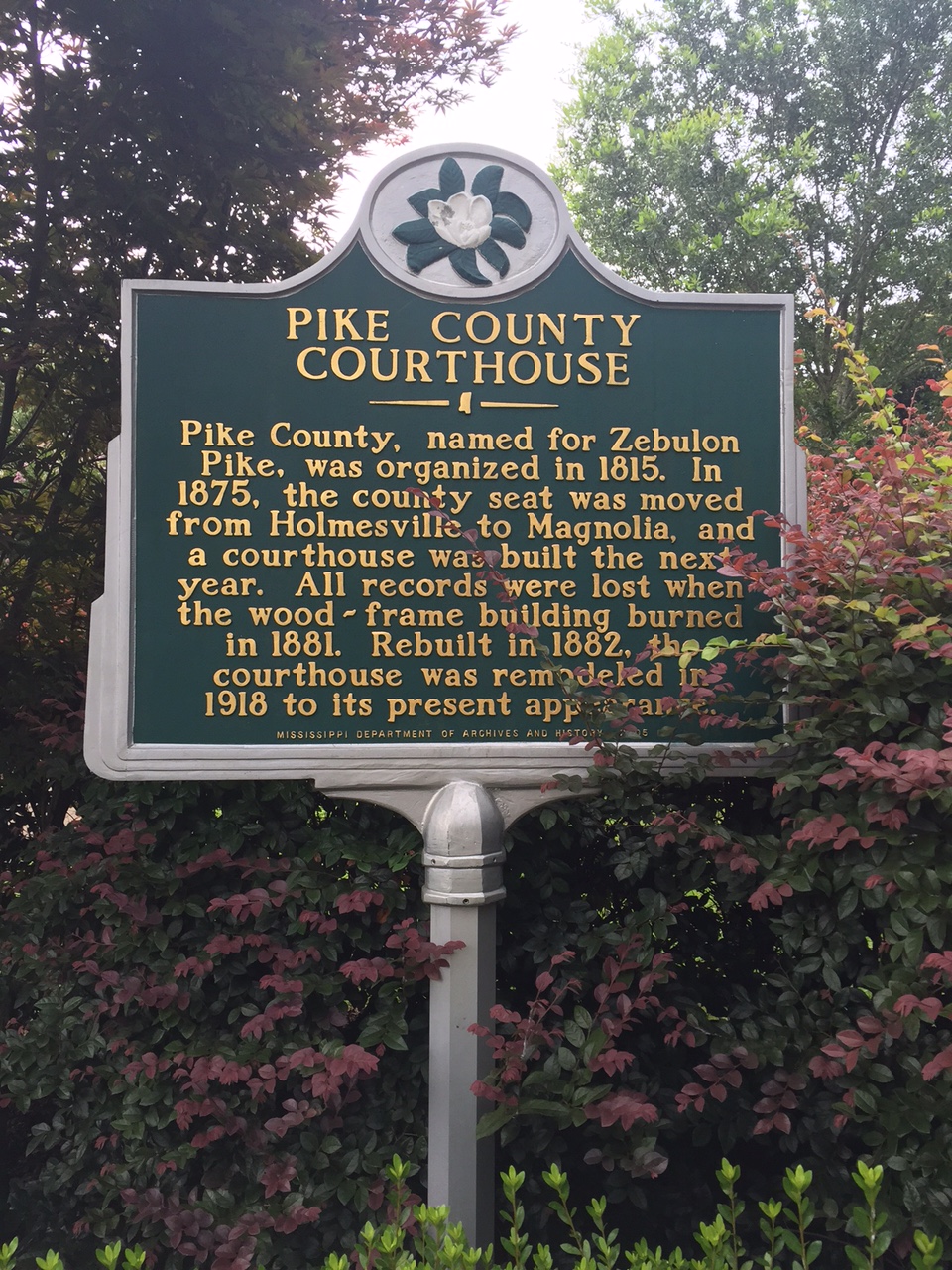
Pike – Lauren Foreman

Lawrence – Robert Evans
Reprise: Lost Wills
June 25, 2015 § 2 Comments
Reprise replays posts from the past that you might find useful today.
LOST WILLS
January 5, 2011 § 3 Comments
Does it ever happen to you that an heir shows up in your office and says something to the effect that “Mom says you kept the original of dad’s will. All we have is this [dogeared, coffee-stained, footprinted] copy,” and hands you a bedraggled handful of papyrus? Well, if it hasn’t, it will.
Of course, you did not retain the original [for you younger attorneys: NEVER keep the original of your client’s will]. So what will you do with this forlorn sheaf?
You will probate it. Yes, probate it. But it’s only a copy, you say; and the original will is required to be produced (See, MCA § 91-7-5, -7 and -31). True. But it is possible to probate a lost or destroyed will.
In the case of Estate of Mitchell, 623 So.2d 274, 275 (Miss. 1993), the court said:
The law regarding admission into probate of a lost will is discussed at length in Warren v. Sidney’s Estate, 183 Miss. 669, 184 So. 806 (1938). Sidney’s Estate sets forth the elements necessary to probate a copy of a lost will are: (1) the proof of the existence of the will; (2) evidence of its loss or destruction; and (3) proof of its contents. Sidney’s Estate, 183 Miss. at 675-76, 184 So. at 807. A fourth element has been added: (4) that the testator did not destroy the will with the intent to revoke it. Robert A. Weems, Wills and Estates § 7-17, p. 216 (1983). This last element, which is most central to this case, arose from the theory that when a will cannot be found following the death of a testator and it can be shown that the testator was the last person in possession of the will, there arises a rebuttable presumption of revocation.
Where a will which cannot be found following the death of the testator is shown to have been in his possession when last seen, the presumption is, in the absence of other evidence, that he destroyed it animo revocandi … 57 Am.Jur., Wills, § 551. Adams v. Davis, 233 Miss. 228, 237, 102 So.2d 190, 193 (1958); Phinizee v. Alexander, 210 Miss. 196, 200, 49 So.2d 250, 252 (1950); Horner, Probate Prac. & Est. § 79 (4th ed.). This presumption extends to all duplicate copies, even executed duplicates. Adams, 233 Miss. at 237, 102 So.2d at 194; Phinizee, 210 Miss. at 199, 49 So.2d at 252; Horner § 79.
The proponent of the will must prove each of these elements by clear and convincing evidence. See Estate of Leggett v. Smith, 584 So.2d 400, 403 (Miss.1991); Estate of Willis v. Willis, 207 So.2d 348, 349 (Miss.1968); Adams, 233 Miss. at 237-38, 102 So.2d at 194. (“The intent to revoke must appear clearly and unequivocally.” Sidney’s Estate, 183 Miss. at 676, 184 So. at 807. “The policy of the law requires such contents to be established by the clearest, most convincing and satisfactory proof.” Robert A. Weems, Wills and Estates § 7-17, p. 216 (1983).
Your petition will have to recite on personal knowledge of the petitioner, or supported by affidavits on personal knowledge, all four of the required factors.
You should probate the lost or destroyed will in solemn form. To do otherwise gives an unfair advantage to the proponent of the missing document. Probate in solemn form also seals off the protests of other interested parties and, as a practical matter, takes you directly to the hearing with notice that you will likely wind up in anyway.
At hearing, you will need to prove your four elements by clear and convincing evidence.
- Proving the existence of the will is not usually much of a problem. You will have that copy, or, if no copy is available, someone with personal knowledge can testify that the will did exist. MRE 1001-1008 would appear to govern the issue. As Rule 1008 states, the issue is for the trier of fact to determine.
- Loss of the will can be proven by testimony that the decedent kept his or her papers in a particular place and that an exhaustive search has not turned it up, or that the cabinet where the will was kept was destroyed by fire, or that it was in a repository that has now vanished.
- The “Dead Man’s Statute” has been supplanted by MRE 803(3), so proof of its contents should not be a major obstacle, so long as there is a witness with personal knowledge.
- And the same hearsay exception would apply to the testator’s destruction or intended revocation.
An interesting wrinkle appears in an ancient case, Vining v. Hall, 40 Miss. 83 (Miss. Err. & App. 1866), that is still good law. In Vining, there was conflicting and inconclusive testimony about the contents of the lost or destroyed will, but no disagreement that it included a revocation clause expressly revoking all prior wills. The court held that the revocation clause was effective despite the fact that the dispositive terms of the will could not be determined. See, Weems, Wills and Administration of Estates in Mississippi, Third Ed., § 7.15.
 The Better Chancery Practice Blog