NEW COURT COSTS EFFECTIVE 7-1-12
July 2, 2012 § 2 Comments
Per the Lauderdale County Chancery Clerk’s office:
ADOPTION $139.00
ALCOHOL/DRUG COM’T/INVOL $149.00
ALCOHOL/DRUG COM’T/VOL $94.00
ANSWER $10.00
BIRTH CERTIFICATE CORRECTION $89.00
BOND VALIDATION $149.00
CASE TRANSFER (as applicable) $149.00
COMPLAINTS $149.00
CONTEMPT/MODIFICATION $149.00
CROSS COMPLAINT/COUNTER CLAIM $25.00
DIVORCE/CONTESTED $149.00
DIVORCE/NON-CONTESTED $94.00
EMANCIPATION $94.00
ESTATE $149.00
FOREIGN JUDGMENT $149.00
GUARDIANSHIP/CONSERVATORSHIP $149.00
INJUNCTION $149.00
LAND DISPUTE $149.00
MENTAL COMMITMENT $400.00
MINORS SETTLEMENT (w/o Guardian) $94.00
MINORS SETTLEMENT (with Guardian) $149.00
MUNIMENT OF TITLE $94.00
NAME CHANGE $94.00
PARTITION SUIT $149.00
PATERNITY $149.00
REMOVAL OF MINORITY $89.00
SEPARATE MAINTENANCE $149.00
STIPULATED AGREEMENT $94.00
TRO $149.00
WRIT OF GARNISHMENT $94.00
DICTA
June 22, 2012 § Leave a comment
- What does the world look like from the point of view of your poodle? There are cameras you can buy to attach to Fido that will record his daily meanderings. Mr. Pet Cam is one model among several. For a more elevated perspective, you can even go to your neighborhood Wal-Mart and buy a remote-controlled helicopter with a camera, too. It may be paranoia, but I think there are some privacy implications here.
- Thanks to all of you who read this blog. Wordpress provides the blogger with stats, so I can track numbers. In 2012, after two years, we are averaging around 450 views a day, a number I find incredible. Now, I don’t know whether that’s unique viewers or the same people making repeated visits; in other words, whether it’s one person viewing 450 times or 450 different people. Either way, I marvel at the numbers. Lawyers and judges from across the state tell me about how things they’ve found here made some difference, and I hear that it’s mentioned at some CLE programs. Good. If it helps, it’s serving its purpose.
- How rational are you? You can take this quiz and get the author’s assessment of where you stand. It seems to me to be more a test of your logic skills. But is rationality simply logic and its mastery? Intuitive folks tend to look beyond logic to connect the dots, and most of us are quite rational.
- John M. MacDonald and Robert J. Samson write in the NYT that mass immigration hurts neither the economy nor public safety, and is in fact beneficial.
- The state’s monopoly over liquor sales was a conservative attempt to regulate citizens’ liberty vis a vis the use of alcohol. It’s the system we employ in Mississippi. Jonathan Turley in USA Today calls it our traditional socialism, and calls for an end to it.
- Meanwhile, in N.Carolina, the legislature has amended its own liquor sales law to allow the state-controlled stores to open during hours more advantageous to delegates, plenipotentiaries, pols and paparazzi who will be in attendance at the Democratic National Convention scheduled for Charlotte in September. Skoal!
- It’s mindbending to someone like me whose sensibility is so firmly rooted in the mid-twentieth century that there could be something like 3-D copying and printing, and that ordinary people are actually using it home to produce remarkable things. But then again, my generation thought things like a watch phone (Dick Tracy), or face-to-face communication by television (or computer), or bionic prostheses and the like were things we’d only ever see in comic books and fantasic tv shows.

COACHING FROM COUNSEL’S TABLE
June 20, 2012 § 1 Comment
Atty 1: Can you tell the court why you did not call the police right away when you say that he hit you and knocked you down?
Atty 2: Objection. The witness could not have called because her husband had broken the telephone before he hit her.
That, my friends, is a speaking objection. It’s a pernicious, baleful, noxious thing, odious to judges. So what exactly is the big problem with speaking objections? Let’s look at what predictably happens next in that trial we started above …
Judge: Objection is overruled.
Atty 1: Judge says you can answer my question.
Witness: Well, I could not call because my husband had broken the telephone before he hit me.
How could one expect a different answer after her attorney told her what to say?
One of the most important functions of a chancellor is to weigh the credibility of witnesses and to determine the weight to give to their testimony. I think most chancery judges, if not all, would assign that witness’s testimony on that point almost no weight at all because it was not her testimony.
I have had to caution counsel not to make speaking objections and to limit any comment on objections to legal bases (e.g., hearsay, irrelevant, compound question, etc.).
Speaking objections actually do your case more harm than good.
JUDICIAL ELECTIONS 2012
May 14, 2012 § Leave a comment
Friday, May 11, was the qualifying deadline for 2012 judicial elections. Although this is not a general judicial election year, some appellate posts are up in their rotation, and there are three special elections. Here are the qualifiers:
- Chief Justice William Waller, Jr., will face Earle S. Banks for Supreme Court Justice District One, Position One.
- Justice Leslie D. King is unopposed for Supreme Court Justice District One, Position Two.
- Justice Mike Randolph will face Talmadge Braddock for Supreme Court Justice District Two, Position Three.
- Josiah Dennis Coleman and Richard (Flip) Phillips are running for Supreme Court Justice District Three, Position Three, which is the position being vacated by retiring Justice George C. Carlson, Jr.
- Judge Ermea Russell is opposed by Ceola James and Latrice Westbrooks in the special election for Court of Appeals District Two, Position Two.
- Judge Gene Fair is unopposed in the special election for Court of Appeals District Five, Position One.
- Chancellor M. Ronald Doleac is unopposed in the special election for Chancery Court Judge District Ten, Place Four.
2012 LAWS THAT MAY AFFECT YOUR CHANCERY PRACTICE
May 9, 2012 § Leave a comment
Here is the final list of 2011-2012 legislative session bills that passed both houses. Some of these are awaiting the governor’s signature.
HB 159. Revises confidentiality in domestic abuse cases. Although this statute is among the criminal procedure laws, it offers some guidance for the chancery/county court practitioner who handles domestic violence cases about who is entitled to confidentiality in such cases, what information should be treated as confidential, and some means to accomplish it. Signed by the Governor. Effective July 1, 2012.
HB 484. Judicial pay raise. Discussed here before. Signed by the governor.
HB 780. Revises jurisdiction in domestic violence cases. This bill makes several significant changes. Venue is in the county where the alleged abuse occurred, and if the case is filed in the wrong county the judge “shall transfer” the action to the appropriate venue. A chancellor presented with a petition for emergency relief may refuse to consider it, but not for the sole reason that it should have been filed in justice or county court instead. The obvious problem with requests for emergency relief in chancery is that they can be used to “poison the well,” so to speak, or to prejudice the chancellor for or against a party in a pending divorce case. This bill makes many other changes to the law that you need to be aware of if you do any domestic violence practice. It has been signed into law by the governor, and takes effect July 1, 2012.
HB 1157. Conforms DHS child support enforcement to federal requirements. A few minor tweaks to the law, passed in conference, not yet signed by the governor.
HB 1268. Revises various statutes pertaining to adoption. If you do any adoptions at all, you must get familiar with this bill. It amends MCA 93-17-3 to add the requirement that a home study be done in all adoptions, and to provide that no out-of-state residents may adopt unless they have first complied with the Interstate Compact for Placement of Children, and adds some post-placement reporting requirements. It requires that the Indian Child Welfare Act be complied with as a prerequisite to adoption in appropriate cases. It amends MCA 93-17-6 to require DNA testing when the father appears or contests, and, most importantly, clarifies the publication requirements for an unknown father. It adds an interesting qualifier to the provision that the parental rights of a father who has not “met his full responsibilities of parenthood” be terminated by tacking on the phrase “and is unwilling to do so,” changing, in my opinion, the emphasis from past non-performance to past non-performance coupled with future unwillingness. The bill passed conference and is awaiting the governor’s signature.
HB 1588. Appropriations for the judicial branch.
HB 2256. Prohibits sex offender access to MYCIDS, beaches and campgrounds. This bill adds more proscriptions against sex offender activity where they may come into contact with children, prohibiting them from beaches and camp grounds where children gather. They are also prohibited from accessing the youth court MYCIDS data base. The bill also permits youth court referral to drug courts. Signed by the governor. Effective in part on passage, and in part on July 1, 2012.
HB 2367. Clarifies the definition of abuse and neglect of vulnerable adults. Amends MCA 43-47-5 and other statutes to clarify the definition of abuse and neglect as it relates to vulnerable adults. Signed by the governor. Effective July 1, 2012.
Click on this link to view a list, with links, of all the legislation affecting courts that passed during this session.


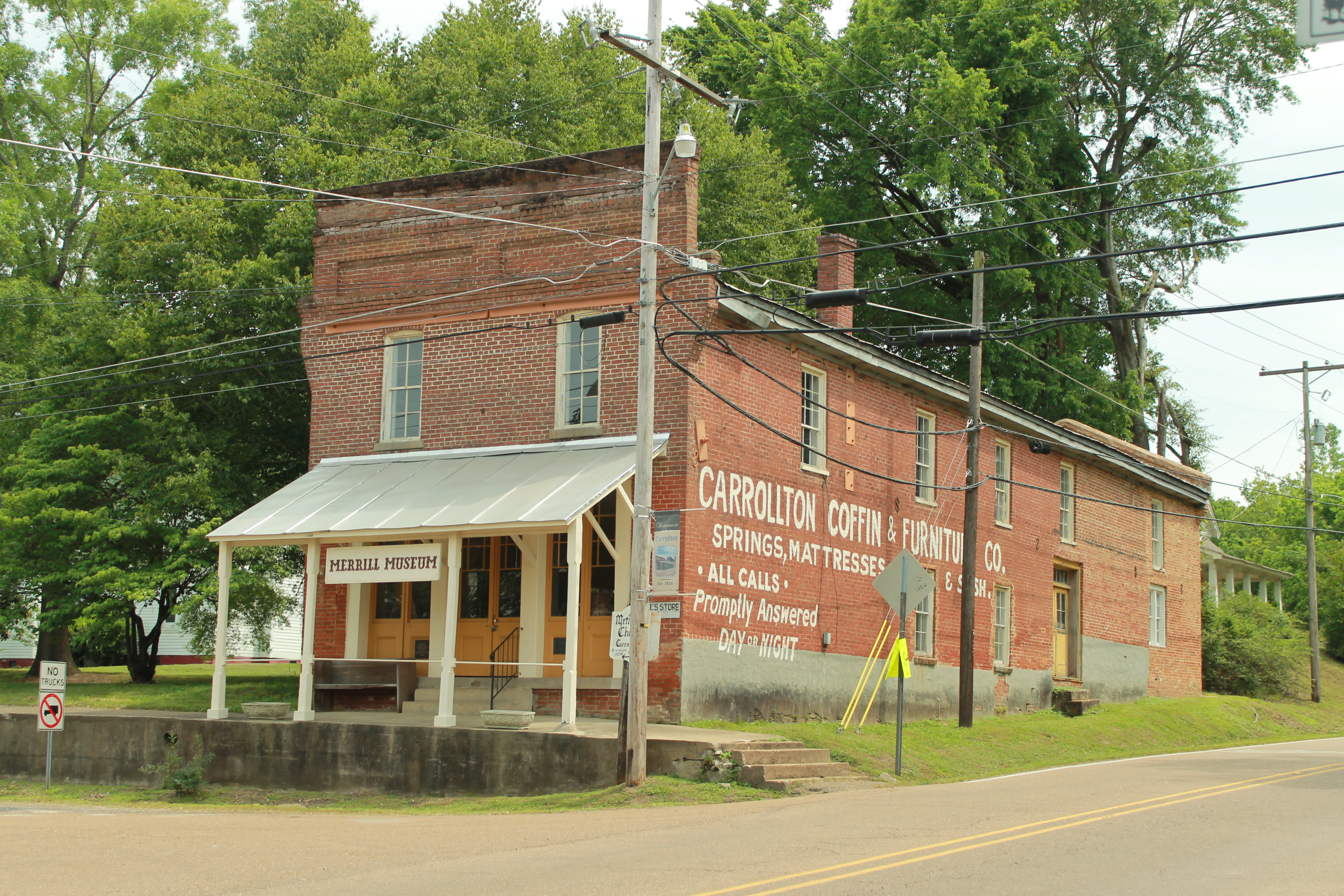
CARROLLTON
May 5, 2012 § Leave a comment
 Carrollton, population 400, County Seat of Carroll County, population 10,500, a hillcountry county for the most part, falling off into the Delta along its western edge. The Carroll County Picture Show in Bobbie Gentry’s Ode to Billy Joe was here. The movie version of Faulkner’s The Reivers, starring Paul Newman, was filmed in Carrolton. The extinct hamlet of Avalon, in northwest Carroll County, was the birthplace of bluesman Mississippi John Hurt.
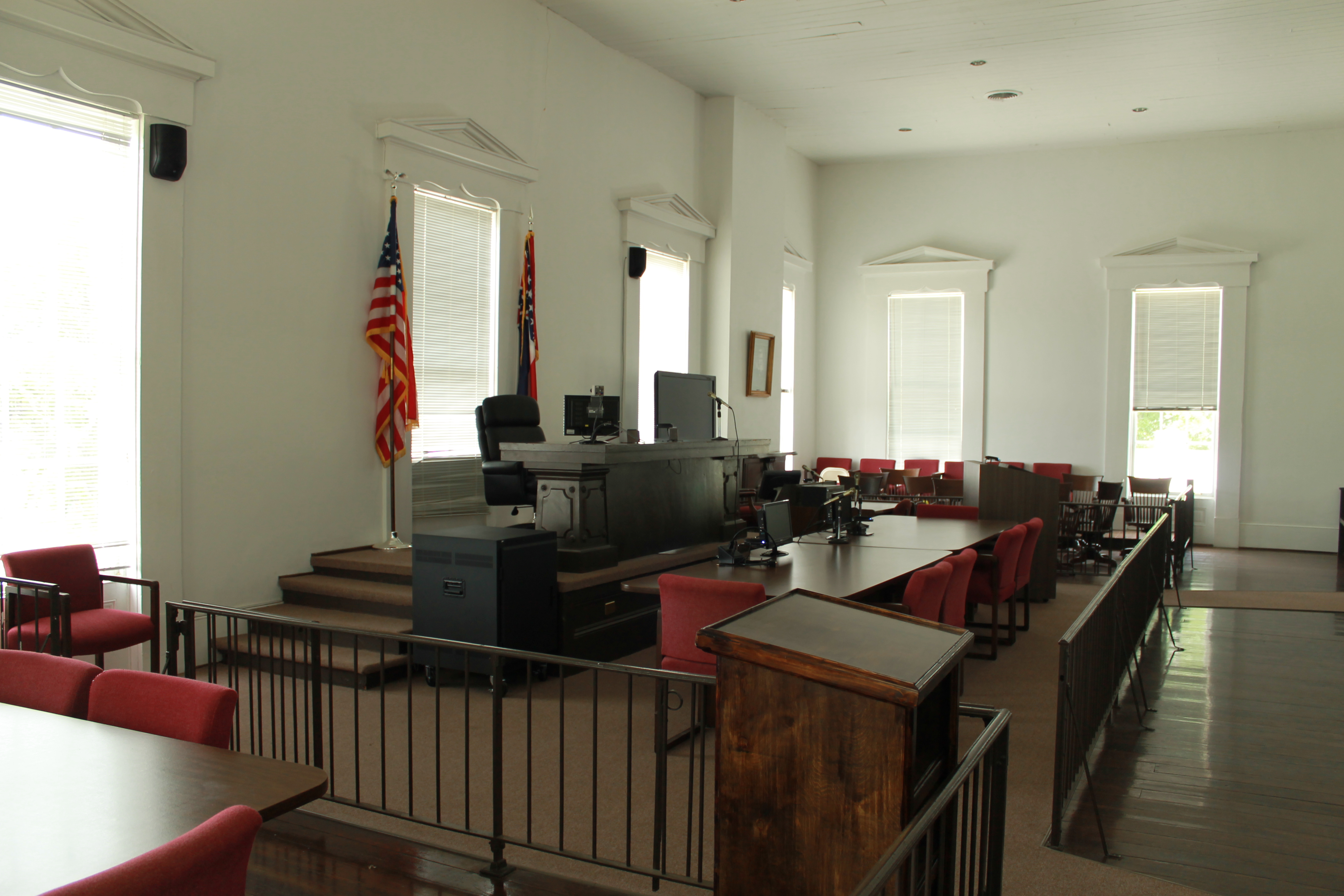
The courthouse in Carrollton was built around 1870 and features breezeway halls that cross perpendicularly. The halls are cool in the summer and cold in winter. A dog was enjoying the cool of the concrete floor on the warm afternoon when we dropped in. Upstairs is the old court room, its electronic trial gadgets adding a discordant punctuation to the plain, stately setting.
The day we visited, jail trustees had just finished moving all of the Justice Court records out of the old courthouse to the newer, storefront version in Vaiden, in the southern part of the county. Vaiden is the largest town in mostly rural Carroll County, and is the seat of the County’s other judicial district. Carroll is one of around 10 Mississippi Counties that have 2 judicial districts, making them for court purposes like two separate, distinct counties. It’s an archaic concept, but unlikely to be undone any time soon, since Carrollton and Vaiden are unfriendly rivals.
Across from the courthouse to the north is the white frame building that was the 19th-century law office of James Zachariah George, a formidable figure in Mississippi history. You can see it in street scene photo below. J.Z. George was a native of Georgia who moved to Mississippi. He fought with Jefferson Davis in the Mexican-American War and later became a lawyer. He was a reporter for the Mississippi Supreme Court, and signer of Mississippi’s Ordinance of Secession. He was an officer in the Civil War, and was taken prisoner twice. After the war, he served as Chief Justice of the Mississippi Supreme Court, and later as US Senator. His statue is Mississippi’s offering in Statuary Hall in the US Capitol.
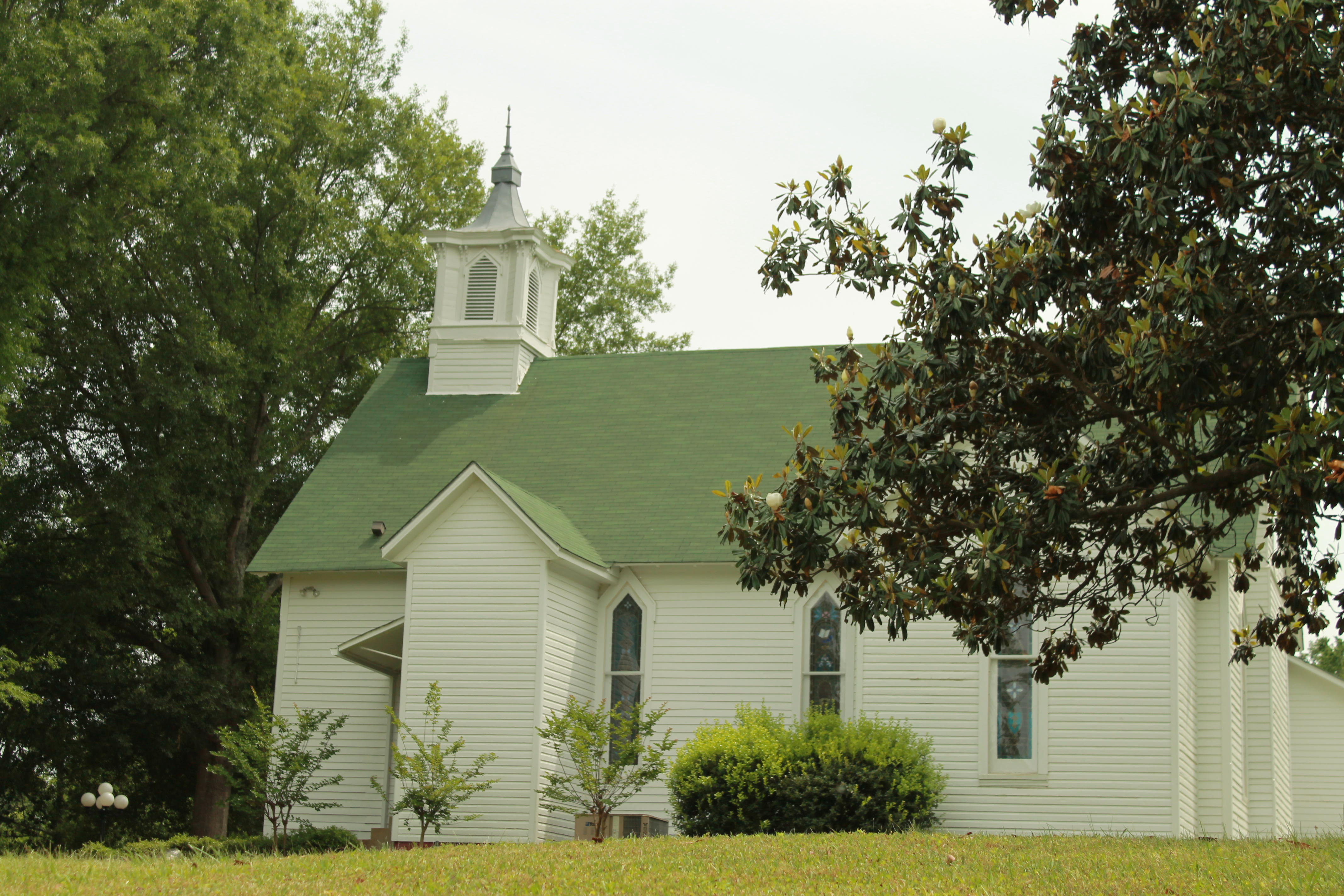
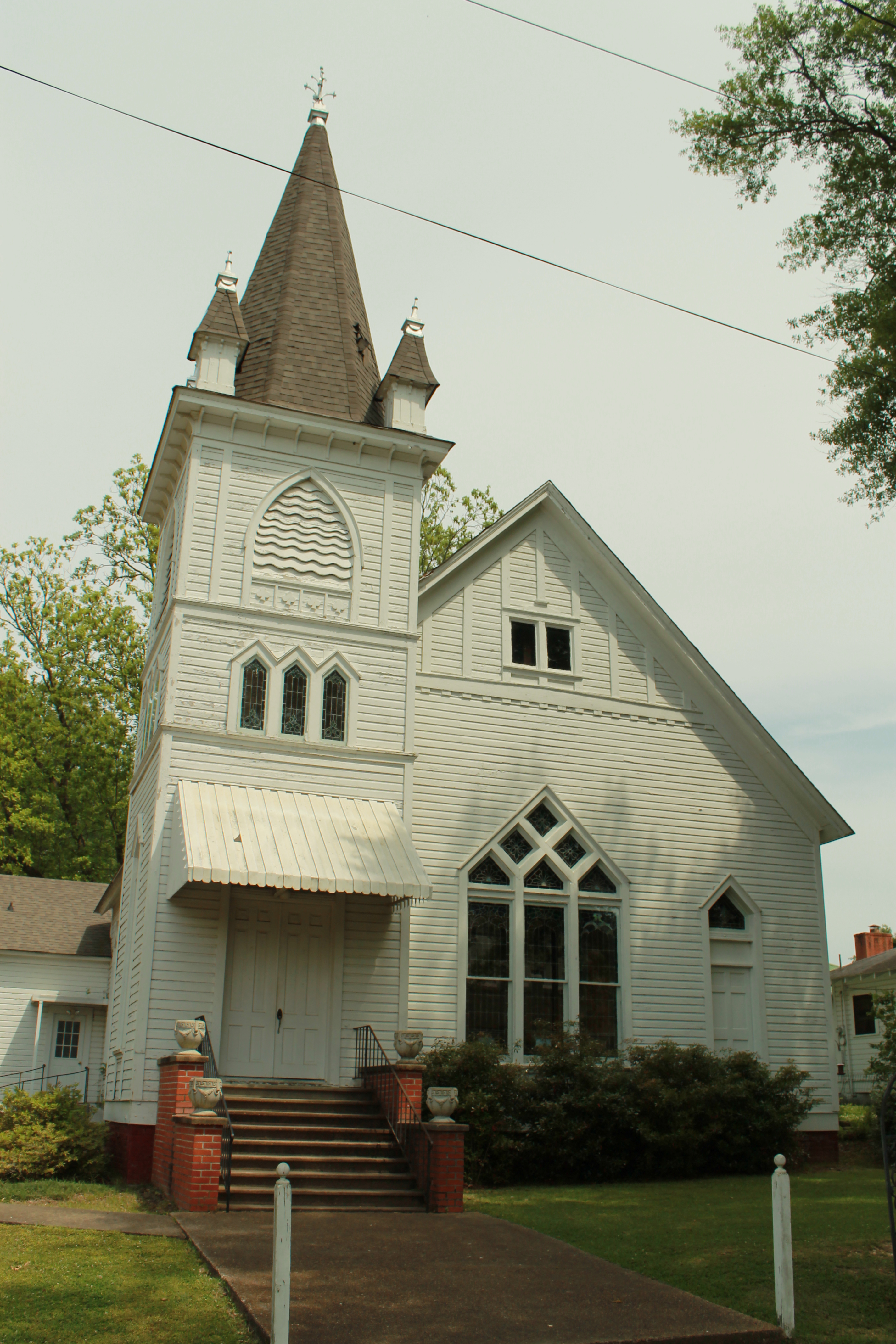
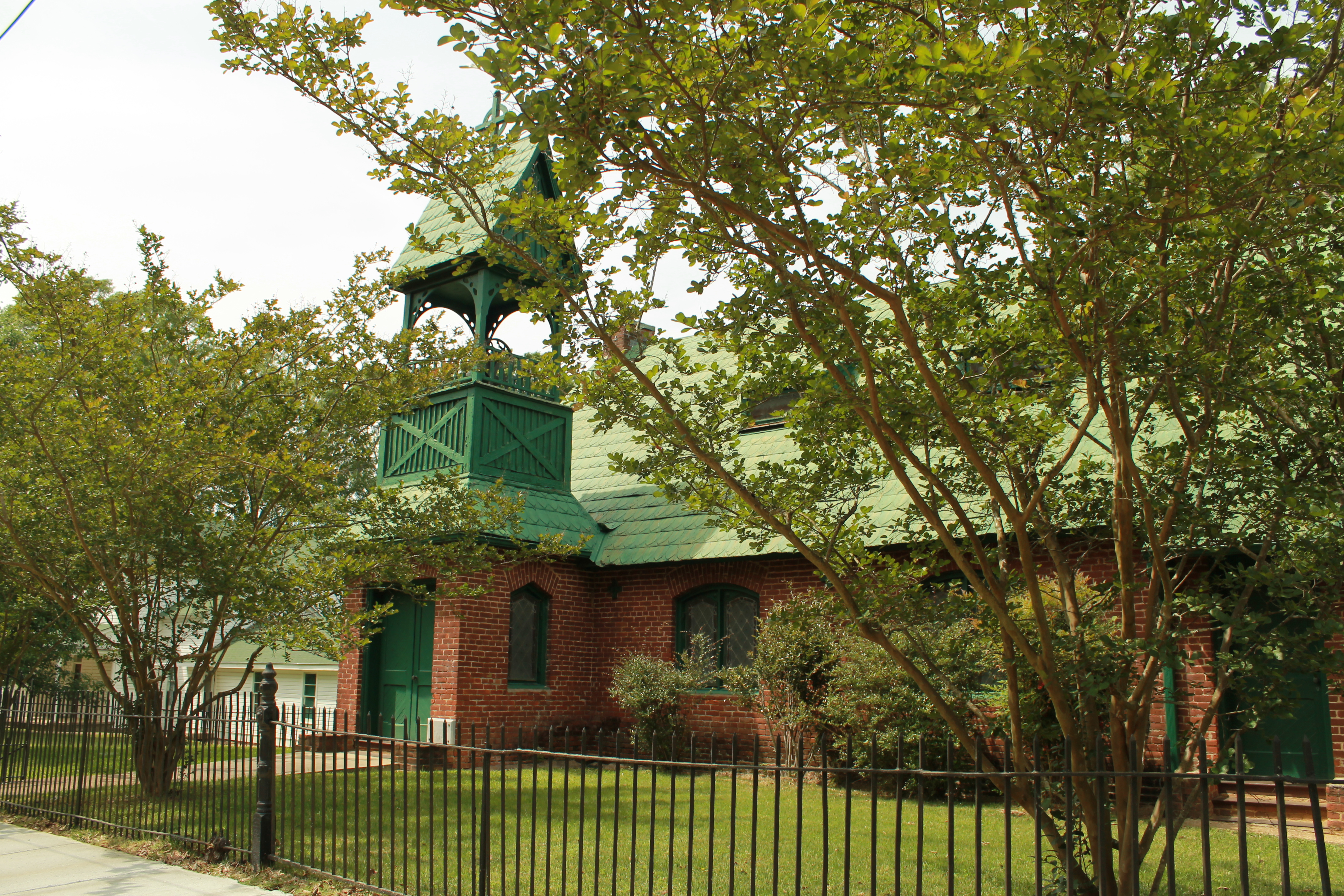
Carrolton is a sleepy town that seems to cling tightly to its past, as the photos suggest. There are old homes and old churches, the flag of a defeated cause, and a patina of faded glory.