Reprise: Making an Effective Record
August 29, 2013 § 3 Comments
Reprise replays posts from the past that you might find useful today.
BROKEN RECORD
December 12, 2011 § Leave a Comment
Do you ever stop to think about what kind of record you are making as you try a case?
When I first took the bench, I was called upon to judge a case that had been tried two years before, but had never been decided. I was asked by counsel for both parties to read a 200-page trial transcript to determine whether I could adjudicate the case based on it, or whether a trial date needed to be set, all as provided in MRCP 63(a). The attorneys were all experienced and skilled trial lawyers.
It did not take many pages to discover that the record was in woeful shape. Here are some of its problems:
- The first 22 pages consisted of banter among the lawyers about a hunting camp, a weekend cookout, and exchange of good-natured barbs. That’s 22 pages, not a page or two.
- When the first witness was called, the questioning was interrupted repeatedly by jokes among counsel.
- When objections were made, they degenerated into exchanges back and forth among the lawyers.
- Witnesses were asked questions like, “Let me show you this paper,” followed by questions without a clue as to what the paper might have been.
- Many of the questions lacked context: “Can you tell us what he was doing when you saw him there?” Who was doing what and where?
There were other flaws, but the coup de grace came in the last pages of the transcript where the then-chancellor announced that the trial would be continued to another day (it never was), so I decided they would just have to start over, given the passage of time and the state of the record. I ordered a new trial.
As a lawyer, you have to realize that putting on your case in a way to persuade your judge is only part of your job. It’s also critically important that you make an effective record for review. That means at least that you need to:
- Keep banter and comments to an absolute minimum.
- Confer with counsel opposite off the record or aside at counsel’s table with permission of the court and record any agreements or stipulations with a coherent announcement affirmed on the record by the other side.
- Before you begin announcing a stipulation, make sure you have an agreement on every point, and on the wording of every point. Even better: your stipulations should be in writing, even if it means asking for a recess to hammer out the language.
- Always make sure your questions are clear, which means either limiting the number of pronouns and indefinite descriptives or being quite precise in defining them.
- Make sure that any document, photograph or other item referred to by a witness is clearly identified for the record.
- If the witness’s response is unclear or confused, ask the witness to restate it or clarify.
- Don’t interrupt someone else who is speaking, and don’t speak over someone else. Don’t let your witnesses do it.
I try to make sure that the record is free of interruptions, clear of colloquy between attorneys, uncluttered with thinking out loud and other particles of nebulae, any and all of which can obscure the record, even to the point of being unintelligible. But I’m not always 100% successful, and it’s the duty of the attorneys to make their own record.
FYI, here are links to a few posts on trial techniques that can help you make a better record:
A few pointers for more effective chancery trials
Making sure the chancellor sees what you want him or her to see
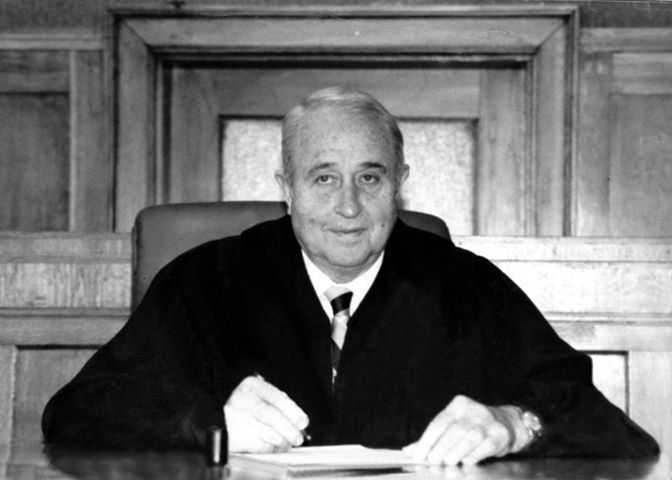
Retired Circuit Judge Lester F. Williamson, Sr., R.I.P.
August 8, 2013 § Leave a comment
Retired Circuit Judge Lester F. Williamson of Meridian died yesterday.
The funeral is scheduled for Monday at 10:30 am at Poplar Springs Methodist Church in Meridian.
The Starting Point
August 2, 2013 § 4 Comments
A pleasant young lawyer from far away in the exotic west of Mississippi dropped by my office last week on a probate matter. I signed her order and we visited briefly.
In the course of the conversation she complimented my work on this blog and said that she always finds something thought-provoking, even when she does not agree with my conclusions.
Ah. Mission accomplished.
As I have emphasized to anyone who will listen, this blog is not intended to be an authoratative reference work. It’s intended as a starting point. It’s a place where you may find a case or a concept that you might not have known about, and which will start you on your quest to put together the authority you might need to convince your sitting judge.
The posts here represent my best judgment about the law, but they are, above all, one judge’s opinion. You may disagree with my conclusions (and some commentors do). But if they provoke you to dig a little deeper, or to take what I have said and try to hammer it into a shape that will fit the predilections of your particular chancellor(s), then the blog is doing its job.
Welcome to the starting point.
MRCP 81 Under the Microscope … and a Poll
July 31, 2013 § 7 Comments
The Supreme Court’s Advisory Committee on Rules has set up a subcommittee of chancellors and a couple of appellate judges to study Rule 81 to determine whether it should be changed in any way, and, if so, how. The subcommittee will next meet August 9, 2013.
I am asking all readers of this blog to email me at lprimeaux@comcast.net with any suggestions you have about R81, no matter how minor or major, whether to keep it as is, or whether to change it in some fashion, or even to eliminate it. Or you may just want to make a comment about it. Any and all emails you send me will be shared with the subcommittee, and will be helpful in our task. Many of you do not comment here, and that’s okay, but I would urge you, please, to give me your input on this rule that has so much impact on our practice in chancery court.
WordPress has a poll feature. I’ve never used it, but I thought it might be fun to employ it as a gauge of legal opinion on R81. What say ye? I’ll make sure the subcommittee knows the results.
Reprise: The Hidden Costs of Divorce
July 25, 2013 § 1 Comment
Reprise replays some blog posts of note from the past that may be of some use to you today …
HIDDEN COSTS OF DIVORCE
June 13, 2011 § 3 Comments
John and Marsha have decided that they are tired of living in their own, personal soap opera, and they have agreed to an irreconcilable differences divorce. It looks pretty simple:
Marsha will get the former marital residence. It’s paid for and Marsha intends to stay there. The house sustained some damage in a wind storm a couple of years ago, and the parties got $10,000 for repairs from insurance, but they spent it on a Hawaiian vacation, with a few days in Vegas on the way out, in an unsuccessful attempt at refreshing their marriage. Marsha says she can get the repairs done or not because they don’t affect its habitability. The roof needs replacing, but it’s been patched and doesn’t leak. She says she’ll fix it if and when it leaks or when she sells the house, but she does not have the $6,000 it will cost right now.
The parties own two adjoining commercial lots worth about $15,000 each. Marsha has agreed to take the lot they purchased in John’s name in 1990 for $1,500 before Wal-Mart located down the street. John will get the jointly-titled lot they purchased for $12,500 several years ago. A car lot is expanding and has expressed an interest. Marsha would like to settle the divorce as soon as possible so as to cash in. Marsha owes $14,000 on her credit cards, and she’s behind in her payments, so she needs as much cash as she can get out of sale of the lot.
The parties will split the 1,000 shares of Wal-Mart stock that they accumulated through the years. Marsha really doesn’t know much about stock, so John has generously agreed to divide the shares.
Marsha has enjoyed driving the 2008 Jaguar that John bought her several years ago in an attempt to make up after she caught him in a questionable situation with a waitress from the Waffle House. The car is paid for, and Marsha loves it because she has never had a nice car before. She will get it in the divorce.
John has agreed to pay Marsha $1,000 a month in rehabilitative alimony for 36 months. Even with the alimony, it will be a tight squeeze financially for Marsha, so she doesn’t need any unpleasant financial surprises after the divorce is final.
Marsha is in a hurry. She wants you to do up the papers and she will pick them up to go over with John tomorrow, so she can get them filed right away.
It’ll be a snap to prep the PSA, and you are tempted to just hand the notes over to your secretary so they can be done while you hit the golf course.
Before you jump on this, though, ask yourself whether Marsha will really be getting what she thinks she is bargaining for. Consider:
- The divorce will be a transaction effecting a change of ownership in the former marital residence, triggering a re-rating of the homeowner’s insurance. Because the hurricane repairs have never been done and approved by the insurance company, Marsha’s homeowner’s insurance premium is likely to skyrocket. Not only that, but there are other factors that can adversely affect Marsha’s insurance premium, including her credit rating, which is questionable due to the credit cards. In order to get her homeowner’s insurance premium back with a reasonable range, she will have to spend that $6,000 on the roof and complete the other repairs. How can she find out in advance whether she will have a problem? Marsha can get a free insurance C.L.U.E. (Comprehensive Loss Underwriting Exchange) report by writing CLUE, Inc. Consumer Disclosure Center, P. O. Box 105295, Atlanta, GA, 30348-5295, or by calling 1-866-312-8076. An insurance agent can help her decipher the report. And, as you probably know, she can get a free credit report once a year.
- When the commercial lots are sold, Marsha will be paying capital gains taxes, currenty 15%, on $13,500. John will be paying capital gains on just $2,500. Marsha’s tax bite will be $2,025, leaving her $12,975. John’s taxes will be a mere $375, allowing him to pocket $14,625, or $1,650 more than Marsha.
- Also, has Marsha gotten a title opinion on the commercial lot titled in John’s name? It would be a bitter pill indeed to discover when she goes to sell it that John borrowed money against it without her knowledge.
- The stock has the same pitfall as the commercial lots. Stock purchased for $25 a share years ago will carry a much heftier capital gains burden than will the shares purchased for $65 a few years ago. Moreover, John can allocate himself the shares that have sustained losses in the recent downturn. Yet the parties are treating all the shares the same, and, to make it worse, John will call the shots.
- As for her ride, Marsha needs to look at it as a cash drain. How much is she willing to let it drain her? The insurance alone is more than $1,500 a year, and this year’s tag, which is now due, is $862. Not only that, it uses exclusively premium gas, and has never gotten the 21 miles to the gallon that the dealer promised. Yes, it is paid for, but would she do better selling it and taking the cash to buy something more economical? Can she even afford this car?
- Finally, the alimony is taxable income to Marsha unless the parties agree that it will not be taxable. John will not likely agree due to the fact that he will get to claim it as a deduction. Is Marsha aware of this? Can you negotiate an extra $300 or so a month for Marsha to use to pay her income taxes?
You can do the papers exactly as Marsha dictated, or you can sit her down and bring all these matters to her attention. It’s the difference between acting as Marsha’s clerk-typist and acting as her lawyer. You get to decide.
Adverse Possession Refresher
July 24, 2013 § 6 Comments
The COA decision in Roberts v. Young’s Creek Investments, Inc., decided July 16, 2013, is yet another decision in the field of adverse possession that you should file away for future use the next time that you find yourself litigating that issue in chancery court.
All adverse possession cases are fact-driven, and this particular case is no exception. But it’s not the facts we’re interested in here. It’s the law. Here are some excerpts from the opinion that flesh out the legal requirements:
- ¶7 “[F]or possession to be adverse it must be (1) under claim of ownership; (2) actual or hostile; (3) open, notorious, and visible; (4) continuous and uninterrupted for a period of ten years; (5) exclusive; and (6) peaceful.” Blackburn v. Wong, 904 So. 2d 134, 136 (¶15) (Miss. 2004) (citing Thornhill v. Caroline Hunt Trust Estate, 594 So. 2d 1150, 1152-53 (Miss. 1992)). “We will not disturb the findings of a chancellor unless the chancellor was manifestly wrong, clearly erroneous, or applied an erroneous legal standard.” Taylor v. Bell, 87 So. 3d 1134, 1137 (¶6) (Miss. Ct. App. 2012) (citing Buford v. Logue, 832 So. 2d 594, 600 (¶14) (Miss. Ct. App. 2002)). The chancellor must find that the plaintiffs proved each element of their claim by clear and convincing evidence. See Blackburn, 904 So. 2d at 136 (¶16).
- Claim of Ownership. ¶8. Under the claim-of-ownership element of adverse possession, the chancellor must determine whether the purported adverse possessor’s actions were sufficient to “fly a flag over the property” and put the actual owners on notice that the property was “being held under an adverse claim of ownership.” Apperson v. White, 950 So. 2d 1113, 1117 (¶7) (Miss. Ct. App. 2007) (citing Walker v. Murphree, 722 So. 2d 1277, 1281 (¶16) (Miss. Ct. App. 1998)). The Mississippi Supreme Court has stated:
When determining whether the [possessors] undertook possessory acts sufficient to support a claim of adverse possession, the chancellor must look to the quality and not the quantity of the acts indicative of possession. Possessory acts necessary to establish a claim of adverse possession may vary with the characteristics of the land, and adverse possession of wild or unimproved lands may be established by evidence of acts that would be wholly insufficient in the case of improved or developed lands.
Id. at (¶8) (internal quotations and citations omitted). In the present case, the chancellor determined that the land in dispute was wild land. Therefore, the claim of adverse possession of the 7.79 acres may be proved by a showing of possessory acts that would be insufficient to establish the claim if the 7.79 acres were improved and developed land.
- Hostile. ¶10. “Possession is defined as effective control over a definite area of land, evidenced by things visible to the eye or perceptible to the senses.” Blankinship v. Payton, 605 So. 2d 817, 819-20 (Miss. 1992). “Possession is hostile and adverse when the adverse possessor intends to claim title notwithstanding that the claim is made under a mistaken belief that the land is within the calls of the possessor’s deed.” Wicker v. Harvey, 937 So. 2d 983-94 (¶34) (Miss. Ct. App. 994 (¶34) (citing Alexander v. Hyland, 214 Miss. 348, 357, 58 So. 2d 826, 829 (1952)). The adverse possessor must also possess the property without permission, because permission defeats any claim of adverse possession. Apperson, 950 So. 2d at 1118 (¶12).
- Open, Notorious, and Visible. ¶13. In addition to the requirements that possession be under a claim of ownership and hostile, possession must also be open, notorious, and visible. To satisfy this element, the possessor “must unfurl his flag on the land, and keep it flying, so that the actual owner may see, and if he will, that an enemy has invaded his domains, and planted the standard of conquest.”Wicker, 937 So. 2d at 994 (¶35) (quoting Blankinship, 605 So. 2d at 820).
- Continuous and Uninterrupted for a Period of Ten Years. ¶14. The plaintiff in an adverse-possession action must be in possession of the property for at least ten years.See Miss. Code Ann. § 15-1-13(1) (Rev. 2012). This period of possession must be continuous and uninterrupted. Id.
- Exclusive. ¶15. Exclusive possession means that the possessor “evinces an intention to possess and hold land to the exclusion of, and in opposition to, the claims of all others, and the claimant’s conduct must afford an unequivocal indication that he is exercising [the] dominion of a sole owner.”Wicker, 937 So. 2d at 995 (¶40) (quoting Rawls v. Parker, 602 So. 2d 1164, 1169 (Miss. 1992)) (internal quotations omitted). It does not mean that no one else can use the property.Apperson, 950 So. 2d at 1119 (¶15). “Exclusivity, within the meaning of the statute, means that the adverse possessor’s use of the property was consistent with an exclusive claim to the right to use the property.”Id. (citing Moran v. Sims, 873 So. 2d 1067, 1069 (¶10) (Miss. Ct. App. 2004)).
- Peaceful. ¶16. … Our supreme court has held that expected disputes associated with the use or ownership of the property are not indicative of the possession not being peaceful. See Dieck v. Landry, 796 So. 2d 1004, 1009 (¶15) (Miss. 2001).
- Permissive Use. ¶17. There cannot be a valid claim of adverse possession when the actual owner has given the possessor permission to use the land. Massey v. Lambert, 84 So. 3d 846, 849 (¶11) (Miss. Ct. App. 2012).
- Color of Title. ¶18. … “Color of title is an instrument of conveyance or a record which appears to convey title[,] but which in fact does not have that legal effect.” Houston v. U.S. Gypsum Co., 652 F.2d 467, 473 (5th Cir. Unit A Aug. 1981). “Thus, for example, an adverse possessor may claim [the property] under the color of title of a defect or imperfect instrument, even though his grantor or a predecessor was entirely without title or interest.”Id. at 474. … The chancellor considered color of title as if it were the first element of adverse possession. However, color of title is not an element of adverse possession. Furthermore, in order to possess land under color of title, there must be a defect or imperfection in the deed that, in effect, denies title or interest to the property.
A checklist for the elements adverse possession is here.
A COA decision by Judge Carlton analyzing adverse possession elements is here.
A COA decision by Judge Roberts discussing some of the adverse possession factors is here.
I was glad to see Judge Irving, for the COA, point out that color of title is not one of the elements of adverse possession. I hear it mentioned in nearly every adverse possession case I hear, and sometimes the contortions people go through to squeeze the facts into that element can be interesting to watch. Color of title may enter into the conversation when there is a defect in the deed conveying title that gives rise to the dispute, but it’s not one of the elements that the court must consider in every adverse possession case.
I don’t know about you, but when I practiced, I could not amass enough cases to help me understand those arcane phrases about unfurling flags and keeping them flying, and that an “enemy has invaded his domains,” and the planting of a standard of conquest, to make me feel comfortable. Every time I encountered an adverse possession case I had images of cavalry charges, bloody banners falling in the clash of arms, and castles stormed by medieval knights.
July 5, 2013 § Leave a comment
Lauderdale County Courthouse closed in observance of Independence Day.
Chancellor Ed Roberts, R.I.P.
July 1, 2013 § 2 Comments
Chancery Judge Ed Roberts of Oxford died this morning after a brief illness.
The Ultimate “To Kill a Mockingbird” Quiz
June 28, 2013 § 8 Comments
You can try your hand at this Ultimate To Kill a Mockingbird Quiz.
FYI, I lucked out and scored 15/20, which, once you get a look at the questions, you might agree is a fairly handsome score.
I’ve already disclosed here that TKM is one of my all-time favorite book/movie combinations. It had much to do with my gravitation toward the legal profession.
Just for laughs, post your quiz score as a comment. I’ll bet the scores will be all over the ball park.
 The Better Chancery Practice Blog