LOSING: NOT THE NEXT BEST THING TO WINNING
December 28, 2010 § 1 Comment
This from Philip Thomas’s excellent blog Mississippi Litigation Review & Commentary. If these thoughts do not resonate with with your experience as a litigator, you might consider some tamer undertaking …
Losing Sucks
Posted on March 3, 2010 by Philip Thomas
You heard me. Losing a trial sucks. On multiple levels. Sorry if you don’t like my vocabulary.
Even worse, a win does not even out a loss. Tennis great Andre Agassi described it as well as anyone that I’ve heard even though he was talking about tennis and not trials:
Now that I’ve won a slam, I know something that very few people on earth are permitted to know. A win doesn’t feel as good as a loss feels bad, and the good feeling doesn’t last as long as the bad. Not even close.
Shortly after I started my first job as a lawyer I heard veteran trial lawyer Natie Caraway say basically the same thing. It took personal experience winning and losing trials to understand it.
For me a loss on appeal does not feel bad as a loss at a trial. And the loss of a bench trial does not feel as bad as the loss of a jury trial. The loss of a jury trial feels the worst because you hang it all on the line for twelve people who you don’t know and you are shattered when you find out that you could not convince them. And if you believe in your clients case–and most lawyers do–you think that the jury got it wrong. That makes it worse.
I have no answer for the best way to deal with a loss. But I agree with Chicago lawyer John Tucker on this point:
Courtroom lawyers and people who play sports are engaged in an endeavor where there is a winner and loser of every contest, and no matter how good they are, sometimes they lose.In fact, in both endeavors it is often true that the better they are the harder their contests and the more often they will lose. You don’t have to like it-in fact, you had better not-but you won’t last long if you don’t learn to get over it, or at least put it far enough behind you to go on to the next case.
Some lawyers lose a big trial and never recover. They are habitually afraid to re-enter the courtroom for fear of losing again. The best lawyers get over it and seek the adrenalin rush of going back in and putting it all on the line again.
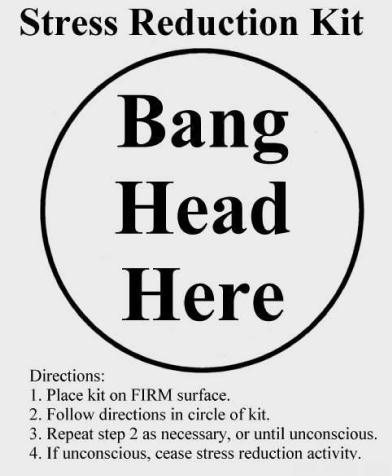
IT’S TIME FOR YOUR YEAR-END PROFESSIONALISM CHECK-UP
December 22, 2010 § 1 Comment
The Christmas lull, that blessedly quiet period in the few days before and after Christmas, is a perfect time to catch up on matters that you kept shoving to the back burner for the past few months.
Like reassessing your professionalism. Where you are in your practice and where you want to go. How you’re doing. Your strong and weak points. What can you do to do a better job?
So set aside a few minutes and ponder your own professionalism. Here are a few points to start from:
- “I do solemnly swear (or affirm) that I will demean myself, as an attorney and counselor of this court, according to the best of my learning and ability, and with all good fidelity as well to the court as to the client; that I will use no falsehood nor delay any person’s cause for lucre or malice, and that I will support the Constitution of the State of Mississippi so long as I continue a citizen thereof. So help me God.” That’s the oath you took to practice law. Ever stop to think why lawyers take an oath and folks in other lines of work do not?
- I posted the Lawyer’s Creed and Aspirational Ideals here. Re-read them and even keep a copy handy in the middle drawer of your desk. Pull them out and read over them every now and again and assess how you’re measuring up. You can find and print out or download them at the Mississippi Bar website.
- Re-Read the Rules of Professional Conduct from time to time.
- Check out the bar’s resources for professionalism.
- Take stock of where you are professionally. Are you making your clients’ lives better, or are you just doing what it takes to get by? Are you becoming the kind of lawyer you idealized when you decided to become a lawyer? Are you adding something to your profession? And are you treating your practice as a profession, or is it just another job?
- If you have been practicing five years or less, have you found a mentor who is a competent attorney to rely on that attorney’s guidance and advice through thorny areas where you have doubts about how to do what you think needs to be done?
- What are your ideals, and what are you doing to accompish them?
And here’s a thought for young lawyers: Set aside an hour or so and thoughfully write the eulogy for your funeral. Yes, the eulogy you’d like to have delivered at your funeral. Include all the accomplishments and admirable traits you’d hope to have mentioned when your gone. Stick it away in the back of a desk drawer and then set out to achieve those accomplishments and develop those admirable traits. Why should you do this? Because you are writing your own eulogy every day you live anyway, and you might as well be intentional about it. Next year around this time, pull out that scrap of paper and reassess where you are. Re-draft it if you like.
And what about the day-to-day practice of law?
Lawyers are busy these days. Too busy, maybe. Today’s financial demands, compounded by spiraling overhead and household expenses, put tremendous pressure on attorneys to take on more and more work until they feel they can only succeed by adopting an assembly-line, boilerplate approach.
What concerns me about it, though, is that it seems to me that lawyers are less and less familiar with the law and the rules, relying on forms and old information to get by. Sometimes I will call a rule to the attention of a lawyer and will find that the lawyer was not even aware of it. Or I will point out a case and the lawyer is surprised that it exists. There have been times that I am convinced that the lawyer knows nothing more about the procedure he or she is invoking than what is set out in the pleadings (that often are copied from someone else or are dredged up from the bowels of the lawyer’s own computer with little additional thought). I know I’m painting with a broad brush here, but bear with me if you think this doesn’t really apply to you. You may find a few nourishing morsels if you’ll take a few minutes out of your busy schedule to read the rest of this.
Granted, the pressures of time for today’s practitioner are great. Caseloads are far heavier, and the law has become more complex over time so that what used to be a “simple divorce” now requires much more attention. Time has become more compressed for the family law practitioner. The fourteen hour workdays and weekend work so common in my early career have given way to a more sane eight-to-ten hour day and fewer weekends that allow for time with and attention for spouses and children, but the compression of time means more concentrated demands.
Have you noticed how many times on this blog that I mention the importance of reading and keeping up with changes to the code, case law and the rules? I hammer away at it because it is not only essential to your success as an attorney, but also to the benefit of your client. Too often we think of professionalism as ethics, but I challenge you to think of professionalism not only in ethical terms, but also in terms of competence and how you present yourself and represent clients.
Given all of this, I contend that it’s time to consider a few changes to the way you do business that will make you a better lawyer and make your clients more pleased with your performance. And if you are doing one or all of these, more power to you. Here they are:
- Before you file your next probate matter, read the rules and look over the applicable statutes. You will be amazed what you will find. If nothing else, you will be shocked to see what a heavy load of responsibility you are taking on by signing and filing those pleadings.
- For that matter, look back at the code the next time you file some familiar pleadings and look for changes you might have missed or some other little twist in the law you may have always overlooked.
- Carefully read over every pleading before it’s filed. Be honest: you let your secretary do most of your pleadings, don’t you? Do you know that they’re right? Are they up to date? Remember that everything you produce is a portrait of yourself.
- Read the appellate court decisions each and every week without fail. Court of Appeals hand downs are on Tuesdays after lunch, and Supreme Court’s are on Thursdays after lunch. As you run across case law that will help you in pending cases, print out the decisions and put them in those files for use in court.
- Read the rules. Lawyers who know and follow the rules generally impress judges as better lawyers because, quite frankly, they are better lawyers, and better lawyers can get better results.
- Read the statutes. Before you file that habeas, read the law. If you’re wondering how to sell a parcel of real property in an estate, look for a statute in the code. The answer to how to record and enforce a judgment is in the code.
- Use your brain. It seems to me that too many young lawyers want to get by with a fill-in-the-blank practice. No innovative approach, no novel arguments based on sound research, no extra effort. It’s so refreshing as a judge to see lawyer come into court with a soundly-prepared approach to a legal problem that is well supported by authority.
- Advise your client. If you simply do what the client says to do, you are not a lawyer, you are merely your client’s alter ego with a license; you are a tool. Guide your client in the right way to go. Influence what your client wishes to do with your judgment and knowledge. If your client demands you to do something unethical or questionable, try to persuade him or her to take another course, and if they refuse, file a motion to withdraw. Tell your client up front what the chances of success are. Never take on the cause of a client who is seeking vendetta as opposed to legal redress; the former is malicious, and the latter is justice.
These are merely a starting point. As a lawyer you have a duty not only to your client, but also to advance the profession. It only takes a little time and devotion each day. And if you are not devoted to your profession, perhaps you need to find something else to do.
Professionalism requires not only that you zealously represent your client, but also that you do it competently.
Take advantage of this quiet time and take a look at yourself and your career. It will be a rewarding investment of your time.
REMINDER: THE LAWYERS CREED AND ASPIRATIONAL IDEALS
December 21, 2010 § 2 Comments
A LAWYER’S CREED
To my clients, I offer faithfulness, competence, diligence, and good judgment. I will strive to represent you as I would want to be represented and to be worthy of your trust.
To the opposing parties and their counsel, I offer fairness, integrity, and civility. I will seek to fairly resolve differences and, if we fail to reconcile disagreements, I will strive to make our dispute a dignified one.
To the courts, and other tribunals, and to those who assist them, I offer respect, candor, and courtesy. I will strive to do honor to the search for justice.
To my colleagues in the practice of law, I offer concern for your reputation and well being. I will extend to you the same courtesy, respect, candor and dignity that I expect to be extended to me. I will strive to make our association a professional friendship.
To the profession, I will strive to keep our business a profession and our profession a calling in the spirit of public service.
To the public and our systems of justice, I offer service. I will strive to improve the law and our legal system, to make the law and our legal system available to all, and to seek the common good through effective and ethical representation of my clients.
ASPIRATIONAL IDEALS
As a lawyer, I will aspire:
(a) To put fidelity to clients and, through clients, to the common good, before my personal interests.
(b) To model for others, and particularly for my clients, the respect due to those we call upon to resolve our disputes and the regard due to all participants in our dispute resolution processes.
(c) To pursue the goals of equality and fairness in my personal and professional activities.
(d) To preserve and improve the law, the legal system, and other dispute resolution processes as instruments for the common good.
(e) To make the law, the legal system, and other dispute resolution processes available to all.
(f) To practice with a personal commitment to the rules governing our profession and to encourage others to do the same.
(g) To preserve the dignity and the integrity of our profession by my conduct. The dignity and the integrity of our profession is an inheritance that must be maintained by each successive generation of lawyers.
(h) To achieve excellence in my work.
(i) To practice law not only as a business, but as a calling in the spirit of public service.
As to clients, I will aspire:
(a) To expeditious and economical achievement of client objectives.
(b) To fully informed client decision-making. As a professional, I will:
(1) Counsel clients about various forms of dispute resolution;
(2) Counsel clients about the value of cooperation as a means towards
the productive resolution of disputes;
(3) Maintain the sympathetic detachment that permits objective and independent
advice to clients;
(4) Communicate promptly and clearly with clients; and
(5) Reach clear agreements with clients concerning the nature of the
representation.
(c) To fair and equitable fee agreements. As a professional, I will:
(1) Consider and discuss with clients alternative fee arrangements as may be
appropriate in the circumstances;
(2) Reach fee agreements with clients as early in the relationship as possible;
and
(3) Determine the amount of fees by consideration of many factors and not just
time spent by the attorney.
(d) To comply with the obligations of confidentiality and the avoidance of conflicting loyalties in a manner designed to achieve the fidelity to clients.
(e) To achieve and maintain a high level of competence in my fields of practice.
As to opposing parties and their counsel, I will aspire:
(a) To cooperate with opposing counsel in a manner consistent with the competent representation of my client. As a professional, I will:
(1) Notify opposing counsel in a timely fashion of any canceled appearance;
(2) Grant reasonable requests for extensions or scheduling changes; and
(3) Consult with opposing counsel in the scheduling of appearances, meetings,
and depositions.
(b) To treat opposing counsel in a manner consistent with his or her professional obligations and consistent with the dignity of the search for justice. As a professional, I will:
(1) Not serve motions or pleadings in such a manner or at such a time as to
preclude opportunity for a competent response;
(2) Be courteous and civil in all communications;
(3) Respond promptly to all requests by opposing counsel;
(4) Avoid rudeness and other acts of disrespect in all meetings including
depositions and negotiations;
(5) Prepare documents that accurately reflect the agreement of all parties; and
(6) Clearly identify all changes made in documents submitted by opposing
counsel for review.
As to the courts, other tribunals, and to those who assist them, I will aspire:
(a) To represent my clients in a manner consistent with the proper functioning of a fair, efficient, and humane system of justice. As a professional, I will:
(1) Avoid non-essential litigation and non-essential pleading in litigation;
(2) Explore with clients and opposing parties the possibilities of settlement of
litigated matters;
(3) Seek non-coerced agreement between the parties on procedural and
discovery matters;
(4) Avoid all delays not dictated by a competent presentation of a client’s claims;
(5) Prevent misuses of court time by verifying the availability of key participants for
scheduled appearances before the court and by being punctual; and
(6) Advise clients about the obligations of civility, courtesy, fairness, cooperation,
and other proper behavior expected of those who use our systems of justice.
(b) To model for others the respect due to our courts. As a professional, I will:
(1) Act with complete honesty;
(2) Know court rules and procedures;
(3) Give appropriate deference to court rulings;
(4) Avoid undue familiarity and any appearance or claim of any undue influence
with members of the judiciary;
(5) Avoid unfounded, unsubstantiated, or unjustified public criticism of members of
the judiciary;
(6) Show respect with my attire and demeanor;
(7) Assist the judiciary in determining the applicable law; and
(8) Seek to understand the judiciary’s obligations of informed and impartial
decision-making.
As to my colleagues in the practice of law, I will aspire:
(a) To recognize and to develop our interdependence;
(b) To assist my colleagues to become better people in the practice of law and to accept their assistance offered to me.
(c) To defend my colleagues against unjust criticism; and
(d) To offer my colleagues appropriate assistance with your personal and professional needs.
As to our profession, I will aspire:
(a) To improve the practice of law. As a professional, I will:
(1) Support high-quality continuing legal education;
(2) Participate in organized activities of the bar and other legal organizations;
(3) Assist when requested in the education of future lawyers; and
(4) Promote understanding of professionalism and ethical standards among
members of the profession.
(b) To protect the public from incompetent or other wrongful lawyering. As a professional, I will:
(1) Support high standards in bar admissions; and
(2) Assist in the enforcement of the legal and ethical standards imposed upon all
lawyers.
(c) To support diversity in the profession, especially the practice of law by members of historically underrepresented groups.
(d) To promote the understanding of and an appreciation for our profession by the public. I will:
(1) Use appropriate opportunities, publicly and privately, to comment upon the
roles of lawyers in society and government, as well as in our system of justice;
and
(2) Conduct myself always with an awareness that my actions and demeanor
reflect upon our profession.
(e) To devote my time and skills to activities that promote the common good.
As to the public and our systems of justice, I will aspire:
(a) To counsel clients about the moral and social consequences of their conduct.
(b) To consider the effect of my conduct on the image of our systems of justice including the social effect of advertising methods.
(c) To provide the pro bono representation that is necessary to make our system of justice available to all.
(d) To support organizations that provide pro bono representation to indigent clients.
(e) To improve our laws and legal system by, for example:
(1) Serving as a public official;
(2) Assisting in the education of the public concerning our laws and legal system;
(3) Commenting publicly upon our laws; and
(4) Using other appropriate methods of effecting positive change in our laws and legal system.
The Creed and Aspirational Ideals are published by the Mississippi Bar.
TEN COMMANDMENTS FOR REDUCING STRESS
December 20, 2010 § 1 Comment
This from a judges’ meeting a couple of years ago.
I Thou shall not be perfect or even attempt to be.
II Thou shall not try to be all things to all people.
III Thou shall not leave undone things that ought to be done.
IV Thou shall not spread thyself too thin.
V Thou shall learn to say “no” without guilt.
VI Thou shall schedule time for thyself.
VII Thou shall have something to look forward to every day.
VIII Thou shall sometime be slack, idle and inelegant.
IX Thou shall keep thyself happily fit.
X Thou shall embrace the present and let go of the past.
SYMPATHY FOR THE DEVIL
December 12, 2010 § 8 Comments
 Curtis Wilkie’s THE FALL OF THE HOUSE OF ZEUS is the story of the rise and fall of powerful trial lawyer Dickie Scruggs. It is entertainingly well written, as one would expect of an author with Wilkie’s gift for the word, and microscopically researched. Wilkie’s book complements KINGS OF TORT, Alan Lange’s and Tom Dawson’s treatment of Scruggs’ downfall from the prosecution point of view. Those of you who savor Wilkie’s keen writing and incisive journalism will not be disappointed by this book. The subject matter is a must-know for all Mississippi lawyers and jurists, and citizens as well. I recommend that you buy and read this book.
Although I commend Wilkies’s book to you, I do find it troubling that it is unabashedly sympathetic to Scruggs. Wilkie finally acknowledges their friendship at page 371, the third-to-last page of the book.
As a member of the legal profession for nearly four decades and a member of the judicial branch, I can find no sympathy whatsoever for Scruggs at this stage of his life. His flirtations with unethical conduct and illegality are legion. Even his acolyte (Stewart Parrish’s excellent descriptive), Tim Balducci, said in a candid moment that his approach to corruptly influence judge Lackey was not his “first rodeo” with Scruggs, and that he knew “where all the bodies are buried.” Big talk? Perhaps. But to me it eloquently bespeaks Scruggs’ history: His involvement at the shadowy edges of Paul Minor’s illegal dealings with Judges Wes Teel and John Whitfield; his use of stolen documents in the tobacco litigation; his use of questionably acquired documents in the State Farm litigation; and the hiring of Ed Peters to influence Judge Bobby Delaughter. Are there more?
Wilkie suggests that Scruggs’ increasing dependence on pain-killer medication led him to fall carelessly into a trap laid for him and Balducci by a scheming Judge Lackey, who had it in for Scruggs because of Scruggs’ political attacks on Lackey’s friend George Dale. He posits that Lackey created the crime, and that Scruggs had set out initially “only” to improperly influence Lackey.
The pain killers may be a contributing reason, but even a first-year law student knows that is not an excuse.
What about the idea of a trap? I leave it to lawyers far better versed in criminal law and procedure to address that. To me, the issue is finally resolved in this sentence on page 337: “But Scruggs had acknowledged, ‘I joined the conspiracy later in the game.'” Case closed as far as I am concerned. Moreover, Scruggs was not an unsophisticated convenience store owner charged with food stamp fraud. He was a sophisticated, powerful lawyer skilled in manipulating the levers of legal machinery. He was not a gullible rube who did not grasp the significance of his actions or their consequences. He was a lawyer and as such was held to the highest standard of propriety vis a vis the judiciary, a standard he trod into the mud.
As for Judge Lackey, the author skillfully excerpts quotes from the judge’s testimony to support his charge that Lackey had an animus against Wilkie’s friend, in particular the judge’s use of the term “scum” to describe Scruggs. From my perspective, I can understand how someone in Lackey’s position would view the arrogant and powerful lawyer as scum when he saw how Scruggs had seduced the star-struck young Balducci, whom Lackey liked, into impropriety and, indeed, illegality. Some of Dickie’s and Curtis’ influential and powerful friends in Oxford may buy Wilkie’s and Scruggs’ attempt to tar Judge Lackey, but I do not. Judge Lackey chose to stay on the side of right and Scruggs chose the other side. The point goes to the judge.
Scruggs’ plaint that he only intended to commit an unethical act, not a crime — in other words that the consequences were unintended — is a familiar theme in history. Henry II of England griped to his knights that he was irked by that troublesome bishop, Thomas Becket. The knights, knowing from experience how far they could go before incurring the wrath of their king, promptly rode to Canterbury and rid their sovereign of that meddlesome priest, killing him at the altar. Likewise, Scruggs’ knights, Balducci, Patterson, Langston, Backstrom and the others, knew the ballpark Scruggs was accustomed to playing in, and they set out with his money and influence to promote his (and their) interests in the accustomed manner of doing business.
Henry II did penance for the rest of his life for what he saw as the unintended consequences of his actions. Will Scruggs try to redeem himself for the damage he did to the legal profession and the legal system? Time will tell. When he is released from prison, he could find ways to devote some of his hundreds of millions of dollars to improving the courts and the legal profession and restoring integrity to the profession that made him rich. In the final decades of his lfe, he could become known as a philanthropist who advanced the law and the legal profession, with his past a footnote. I hope that is what he does.
Read this book and judge it yourself. You may see it differently than I. The story, though, and its lessons, are important for Mississippians to know and understand.
DEALING WITH CRAZY CLIENTS
December 7, 2010 § 6 Comments
The issues that bring people to Chancery Court are some of the very issues that stretch ordinary people to the breaking point. And it’s the lawyer who most often becomes the shock absorber, taking calls from worried clients in the wee hours, receiving hundreds of repetitive or accustory e-mails, being accused of all manner of things, having your judgment questioned at every turn, and even being threatened. Like we have said, some clients can make you ashamed to be a human being.
Some clients can be downright dangerous.
Mark Bennett is a Texas criminal defense lawyer who has a blog named Defending People: The Tao of Criminal Defense Trial Lawyering. He came up with a practical guide to dealing with crazy clients that he titled 10 Practical Rules for Dealing with the Borderline Personality. Here are his guidelines:
10 Practical Rules for Dealing with the Borderline Personality
- If you don’t have to deal with a crazy person, don’t.
- You can’t outsmart crazy. You also can’t fix crazy. (You could outcrazy it, but that makes you crazy too.)
- When you get in a contest of wills with a crazy person, you’ve already lost.
- The crazy person doesn’t have as much to lose as you.
- Your desired outcome is to get away from the crazy person.
- You have no idea what the crazy person’s desired outcome is.
- The crazy person sees anything you have done as justification for what she’s about to do.
- Anything nice you do for the crazy person, she will use as ammunition later.
- The crazy person sees any outcome as vindication.
- When you start caring what the crazy person thinks, you’re joining her in her craziness.

Crazy Joe Davola threatens to "put the kibosh" on Jerry Seinfeld
THE WHOLE TRUTH AND NOTHING BUT
December 2, 2010 § Leave a comment
A Meridian lawyer passed this on from his LAWYERS desk calendar …
During a 1989 case in municipal court in Middletown, Ohio, a lawyer asked the judge to be excused from representing his client.
The judge scanned the courtroom, looking for a suitable replacement. But before he could find one, the defendant stood up and said, “That’s all right, Judge. I won’t be needing another lawyer. I’ve decided to tell the truth.”
TRIBUTE TO JUDGE LACKEY
November 21, 2010 § Leave a comment
It was Judge Henry Lackey of Calhoun City whose refusal to be corrupted and courageous cooperation with law enforcement brought to justice some of the most powerful trial lawyers in this country.
This tribute from the Calhoun County Journal:
Judge Lackey is truly one-of-a-kind
“There are two things you need to be a judge,” Judge Henry Lackey said. “A lot of gray hair to look distinguished and hemorrhoids to look concerned.”
Judge Lackey was speaking to a large gathering at the Oxford Convention Center that turned out to honor him upon his upcoming retirement after 17 years as circuit court judge and even longer as public servant.
Judge Lackey is less than two months away from entering retirement, but one look at this week’s Journal and you would see he’s busier than ever.
He was “roasted and toasted” at the Oxford Convention Center last week shortly after being honored by the Mississippi Supreme Court for his years of service on the bench.
Another reception is planned for Dec. 10 at First Baptist Church in Calhoun City.
This Thursday, Judge Lackey will once again be auctioning off Christmas items at the City Sidewalks Celebration at the Methodist Corner on the Calhoun City Square. Saturday night he is the featured entertainment at the Vardaman Sweet Potato Festival Banquet.
In between all of this he is still managing his day job as Circuit Court Judge for District Three. He’s spent all of this week holding court in Holly Springs.
The honors for 75-year-old Judge Lackey continue to pour in due in part to his role in one of the biggest legal crackdowns in recent history – the downfall of famed trial lawyer Dickie Scruggs and several of his colleagues.
“I’ve received praise and accolades that I don’t deserve,” Judge Lackey told me a few months back. “It’s like praising the sheriff for not stealing. It’s your job.”
Judge Lackey’s “integrity and intrepidness” in the case are well documented in Curtis Wilkie’s new book “The Fall of the House of Zeus” – a must-read according to my wife Lisa.
But as all the attention still pours in, and rightfully so, Judge Lackey still thinks of himself as the simple, “country lawyer” who still lives “within 300 yards of where he discovered America,” and that’s why he is so treasured here in Calhoun County.
A visit with him and you hear no mention of Dickie Scruggs. He talks of his “wonderful upbringing” in Calhoun City, working at his family’s business – the Ben Franklin 5 and 10 Cent store on the Calhoun City Square – and the endless list of fascinating people he grew up with such as Clarence “Dummy” Martin, Ray “Funnyman” Tolley, John Pittman, Mr. Mac, Monk and Big Dog.
I’ll never forget sitting in his office and him telling me of his experience when Robert Wardlaw, the world’s tallest man at 8’9″, visited Calhoun City.
One of the best story tellers I’ve every known, Judge Lackey is always worth the price of admission at any event he’s attending. I certainly wouldn’t let an opportunity to enjoy his tales or company pass me by.
The homespun Judge Lackey deserves our accolades. As it is with Judge Lackey, I hope it will be said of all of us at the end of our careers that we adhered to the highest ethical principles and upheld the honor and dignity of the law.
Thanks to Tom Freeland for the link to this tribute.
FAMILY LAW IN THE FAST LANE
October 29, 2010 § Leave a comment
This article is copied from the Washington Post online edition. After you read it, you may have an unsettling sense of unreality. Lawyers charging $850 an hour for a divorce? Billing for more than 7 hours a day, 365 days a year? Billing for as many as 71 hours in a day? $624,000 in fees for a divorce trial? I am not making this up.
High-priced lawyer sues former client, then agrees to pay him $102,000
By Tom Jackman
Washington Post Staff Writer
Saturday, September 25, 2010; 6:29 PM
Glenn C. Lewis is an acknowledged titan of the D.C. area divorce bar, a former president of the Virginia Bar Association who boasts that he is the most expensive lawyer in the region: $850 an hour. He has an impressive office in the District and an array of high-profile clients.
So it fascinated the Fairfax County courthouse when Lewis sued one of his former clients for an additional $500,000 in fees and interest, although he’d already been paid $378,000.
The fascinating part was that the client, a lawyer himself, fired back. He hired another former state bar president, Bernard J. DiMuro, who dug through Lewis’s billing records and hired two more divorce bar giants – including another former state bar president – as his experts. The experts said Lewis had done a poor job and didn’t deserve nearly $900,000 for his work.
In Fairfax Circuit Court on Friday, Lewis capitulated. He agreed to pay his former client more than $102,000, including $25,000 in sanctions imposed on Lewis’s lawyers for defying pretrial orders. Lewis even failed to show up for his own deposition.
Lewis, who for years hosted his own cable access television show, and who was given a lifetime achievement award from the Virginia State Bar’s family law section, remains unrepentant. His final bill for the divorce of Steve Firestone was $627,000, and he sought another $253,000 in interest for the case, which ended in 2004 without a trial less than a year from the time it was filed.
“He owed us more than that,” Lewis said in an interview last week. “We earned more than that. I feel as strongly today as I did the day we filed [suit], that Mr. Firestone owed every penny of it.”
Firestone said, “I thought that what I paid was egregiously high,” and he stopped paying shortly before his divorce was finalized. Then he received the lawsuit seeking another $500,000 five years later.
“I was shocked,” Firestone said. “If he won, we were going to be out on the street.”
Firestone hired DiMuro, who doesn’t do divorce law. But DiMuro obtained Lewis’s billing records and the records of the divorce, which he then handed over to Joseph Condo and Robert Shoun, two longtime family law practitioners.
Their conclusion: Not only were Lewis’s bills “flagrantly disproportionate to the value of the dispute,” DiMuro said, but Lewis’s settlement was a lousy deal. Firestone, through DiMuro, pursued Lewis for legal malpractice.
Firestone’s ex-wife had used Fairfax attorney David L. Duff for the divorce. Duff’s total bill: $73,000.
DiMuro noted that three lawyers from Lewis’s firm worked on Firestone’s case, and two lawyers often appeared at meetings or depositions that would normally be handled by one lawyer. In 2003, Lewis was only billing $575 an hour, while two young associates billed at rates closer to $250 an hour.
Lewis said Firestone was a difficult client, presenting numerous problems, and that comparing one side’s legal bills with the other’s is unfair. Firestone had tax problems, problems with his law practice, bookkeeping difficulties, suffered from depression and was intent on revenge against his wife, Lewis said.
But DiMuro said, “This was a garden-variety divorce with a modest estate for this area. No child custody issues. Their incomes were modest.” Besides their house in Fairfax County, the Firestones owned a small office condo and a few other assets. Firestone also had a $1.1 million inheritance from his parents, DiMuro said, which Lewis successfully kept separate from the marital estate.
Lewis said that’s a simplistic analysis. “This case presented so many more issues that were bigger than getting unmarried,” he said. “I had the high maintenance client.” He said Firestone signed a contract acknowledging that multiple lawyers might work on his case and that he had 30 days to challenge a bill, which he never did.
One of Firestone’s quirks was his heated denial that his wife had cancer, Lewis claimed. Lewis said he never really pursued the issue, and the case ended in July 2004. But several years later, in a casual conversation with Duff, he learned that Beverly Firestone had died of cancer not long after the divorce.
“My head exploded,” Lewis said. “I was sickened by that. I was horrified to think the case accelerated that. Nothing is more stressful than a divorce case. Stress kills.”
So, he sued Steve Firestone in October 2009.
Firestone said he never told Lewis his wife didn’t have cancer. “I told him I wondered if it was a ploy to increase my alimony exposure,” Firestone said.
In pretrial discovery, DiMuro obtained billing records for all of Lewis’s cases, not just the Firestone case. He found examples of days where Lewis billed for 39 hours; 31 hours; 40 hours; 71 hours.
Lewis said that was the result of “block billing,” in which he entered the time for many days all at once.
In a 16-month period in 2003 and 2004, DiMuro calculated in court records, Lewis billed his clients for 3,620 hours, or an average of 226 hours per month, or 7.4 hours per day, 365 days per year.
Lewis said he worked nights and weekends, in addition to his bar duties and television hosting.
As the suit progressed in Fairfax Circuit Court, Lewis’s lawyers angered Fairfax judges by failing to respond to basic requests and orders. The judges started slapping Lewis’s lawyers with financial sanctions. First $2,000. Then another $2,000. Then $5,000, $7,500 and finally a $10,515 hit after Lewis failed to appear for his deposition last month.
Lewis said his lawyer, Michael P. Freije, had released him from appearing, although he had been subpoenaed. Freije told Judge David S. Schell there had been a misunderstanding, but Schell was clearly upset and ordered Lewis to appear in DiMuro’s office the following week as well as pay the highly unusual fifth court-imposed sanction.
Lewis said he couldn’t be there, because of family obligations. Rather than defy the court, he said, he agreed to pay Firestone and settled the case.
 The Better Chancery Practice Blog