WHAT IS THE FUTURE FOR LAWYERS?
May 17, 2013 § 4 Comments
If you haven’t noticed, the legal profession is at a pivot-point. The big firms have been downsizing for years, finding it more and more difficult to payroll armies of lawyers as damage caps and other litigation-discouraging measures have eroded the caseloads of both defense and plaintiffs’ firms. Corporate clients in a bad economy are relying more and more on in-house counsel and alternate dispute resolution as ways to cut legal costs.
Here in Mayberry, the everyday folk simply don’t have the money to pay big fees when a divorce or custody war looms. They look for cheaper ways, and the internet beckons with the alluring promise of bright success via fill-in-the-blank forms.
Against this backdrop, law school grads are finding more and more that there simply are no jobs. Those student loan repayments loom large as unanswered resumes and rejections pile up.
Richard Susskind, a UK lawyer who has studied the British and American legal systems, has been probing these and other developments to discern the future of the law and the legal profession as society moves inexorably deeper into the technological age. In his book, The End of Lawyers?, he raised the question whether lawyers had not become an anachronism, to be replaced by legal technicians handling routine legal matters, a handful of litigation specialists doing courtroom work, and platoons of document-analysis specialists, financial advisors, legal counselors, and others performing at greatly reduced cost the components of what lawyers do now for $300-$500 an hour. His point is that delivery of legal services will yield to the forces of economics and technology until it offers cheaper, more efficient ways to serve the public.
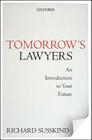 Susskind’s latest book, Tomorrow’s Lawyers: An Introduction to Your future, condenses all of the foregoing into a concise, quick read, readily accessible to any busy practitioner. The pocket-size book is only 164 pages of text, but it is crammed with provocative ideas. Susskind not only talks about the forces that are reshaping law and the practice, but also how they impact the courts and delivery of legal services.
This is a brilliant book. I commend it to all lawyers and judges, particularly those who will be involved in the legal system over the next 15-20 years. The forces of change that Susskind highlights will be either a sweeping tide of change or a sweeping tide that carries many away. We can ride it and adapt to it, or we can drown in it. We get to choose.
In my opinion, many of the ways we do business in our courts are straight from the nineteenth century. There have been some intrusions of technology, but for the most part Abe Lincoln and his contemporaries would likely find themselves right at home in our courts. We should not be afraid to examine the ways we plead, offer proof, take testimony and otherwise carry out due process in trials and hearings with a view toward streamlining the processes, making them less costly, and trimming months — if not years — off them.
I encourage you to read Mr. Susskind’s book and give this some thought. It’s your future.
NEW YEAR’S REVOLUTION
January 2, 2013 § Leave a comment
New Year’s resolutions are ‘way overrated. Almost all are ignored after a few weeks — if that much — of sporadic observance.
So this year, instead of making resolutions, why not look at your professional life and start a revolution.
Revolt against —
- Sloppy pleading and draftsmanship, indifferent trial prep and unprepared trials.
- Neglected probate matters.
- Unreturned phone calls.
- Rudeness, incivility, impatience, harshness, lack of self-control, egocentrism, meanness, trickery, slyness and sharp dealing.
Overthrow those despotic habits that have chained you down and kept you from being the best lawyer you can be.
And while you’re at it, let the revolution spread to your personal life.
Revolt against the people you associate with who suck all the joy out of life with their passive-aggression, guilt-trips, negativity and cynicism.
Revolt against the clients and others who try to make you feel worthless if you pay any attention to your family, your children and your own emotional and mental health.
Revolt against anything that keeps you from feeling the breath of God, enjoying the warmth of a sunny spring day, marveling at the coo of an infant, or savoring the creamy goodness of banana pudding.
Revolt for your birthright to be happy, loved, fulfilled, free, independent and full of joy.
2013 is a great year for a revolution. Get started!
THE COST OF DOING BUSINESS
October 31, 2012 § Leave a comment
It’s no secret that the rates of alcoholism, depression and suicide are twice as high for members of the legal profession than they are for the general population.
I don’t have to tell you that the stress, pressures and high stakes that lawyers deal with daily take their toll. And no lawyer, whether sole practitioner or big firm, whether trial practice or office practice, whether newly-minted or gray-bearded Yoda (or Yodette), is immune.
We’ve all seen lawyers who can no longer conceal the stress-cracks: neglected business; missed appointments; irrationality; substance abuse. None of it is pretty, and when a lawyer falls down in representing a client, it is not only the client who suffers, but also all of us in the profession.
What should you do if you feel that one of your colleagues is showing signs of substance abuse, or physical, emotional or mental disabilities? Or what if you recognize the need for help with some of your own behavior?
Make a confidential call to the Mississippi Bar’s Lawyers Assistance Program at 601-948-0989, or by email at cglaze@msbar.org. Chip Glaze is the director of the program, and he will talk you through it. More importantly, his program can intervene, and, on its own, or with the backing of local judges, get the individual on the right track. The process is informal and non-disciplinary.
Some lawyers think that when they are confronted by other professionals and the bench with issues about their substance abuse, or emotional problems, or mental health concerns, that their career is threated. That would be wrong. The fact is that not dealing with those issues is what threatens the lawyer’s career.
Oh, and judges are just as susceptible to these same problems as are lawyers. The program can deal with the judiciary, too.
A FEW THOUGHTS ON A LEGACY OF PROFESSIONALISM
May 15, 2012 § 3 Comments
Attorney Thomas Henry Freeland, III, of Oxford, died last Saturday. His daughter Lee’s brief, but touching, obit is posted on son Tom’s blog. You can read it here.
Mr. Freeland’s friends knew him as Hal. I did not know him, but from what I read about him he was one of those lawyers who set high standards for himself and demanded the same from those who worked with him. The respect he earned is clear in the comments on Tom’s blog.
One of those comments, by attorney Danny Lampley of Tupelo, brought me up short, and I hope he and Tom will forgive me for copying a part of it so you can read it here:
Small things I would overlook as an ignorant clerk were revealed to be important. I recall Hal crossing out incorrect phrasing in an acknowledgment and telling me the correct words to use; and he took the time to tell me why those words were better and explained how doing it one way would have an effect different from doing it the other way. I learned that just because everybody says “the law” is thus and such and “the cases say so” does not mean that is really “the law” nor is it necessarily what the cases said. I learned you gotta read ‘em and you have to understand what it is exactly that they say. I learned to always independently research an issue and to never assume that a rule is today what you thought it was yesterday. I learned how to be a lawyer; I only wish I could more often put it into actual practice.
Mr. Lampley learned how to be a lawyer from one who took professionalism seriously and who understood the care, devotion and attention that the law demands. Beyond learning the craft of lawyering, though, he learned the meaning of professionalism. And — this is important — there is a distiction between ethics and professionalism. Ethics requires that you practice in a way that conforms to both the letter and the spirit of rules of conduct. Professionalism is the style in which you approach and carry out those ethical requirements. Professionalism demands more than mere observance of the standards, Or, as Justice Mike Randoph told a gathering of chancery judges a few months ago: “The rules are the basic minimum. We expect much more than that.”
If you are a young lawyer, I encourage you to seek out a battle-scarred old warhorse who would be willing to be your mentor. If you are as fortunate as attorney Lampley, you will learn that mastery of the legal profession lies not in discovering the shortcuts, but rather in learning to love the hard work, devotion, attention to detail, study, creativity and long hours that it takes to achieve excellence.
Mr. Freeland left his family his own personal legacy, including two children who are, themselves, members of our profession. But far more than that, as those blog comments reveal, he left the legal profession richer by inculcating professionalism in those whom he mentored. I hope that someone will be able to write that about all of us when our days reach their end.
DEAN ROSENBLATT RESPONDS
May 1, 2012 § 3 Comments
I posted here on April 12, 2012, about what, to me, was the startling discovery that Evidence is no longer a required course at either MCLaw or Ole Miss Law. The post prompted quite a response. Ole Miss Dean Richard Gershon submitted a brief reply here.
On April 24, 2012, I received this response from MCLaw Dean Jim Rosenblatt …
Judge Primeaux (Your Honor)
I appreciate the opportunity to provide follow-up information regarding your blog posting regarding the teaching of Evidence courses in Mississippi’s law schools.
At Mississippi College School of Law (MC Law), we share your commitment to prepare our students for the courtroom. We take the view that if a law student is confident in the courtroom, that student confidence will carry over to non-courtroom aspects of a legal practice.
I took some time to review the records of our MC Law graduates from May 2008 through May 2012. For this most recent 5-year period, 819 of our 833 graduates took Evidence (98.3% of our graduates). We offer 4 sections of Evidence each year to afford all our students an opportunity to fit this important course into their schedule.
During this period Evidence was not generally a required course in our catalog, but was a required prerequisite course in order to take Trial Practice—one of our most popular elective courses which we offer 8-9 times a year with a class size of 12-16 students. Each student in our Trial Practice course is required to demonstrate throughout the course an understanding of the elements of a trial and the evidentiary principles involved. At the end of the course each student serves as counsel for a full trial as a capstone experience. A thorough knowledge of evidence is essential to be successful in this course. In addition to our tenured faculty members who teach Evidence, we are fortunate to have Presiding Justice Jess Dickinson from the Mississippi Supreme Court and Judge Kenny Griffis from the Mississippi Court of Appeals who teach Evidence at MC Law (Justice Dickinson was voted by our students as Adjunct Professor of the Year, so he must be doing all right with his Evidence teaching).
Many of these law students go on to compete in one of the 26 regional and national trial or appellate moot court competitions in which our law school participates. In addition we offer school-based competitions in the trial arena such as our Opening Argument Competition (1L), Closing Argument Competition (1L), and Top Gun Competition (upper level) for our future litigators. The Mississippi bench and bar are tremendously supportive of these competitions and assist as coaches, advisers, practice round judges, or competition judges. I am grateful to you and your fellow members of the bench for your involvement in legal education.
Some years ago (before my time), our Faculty made the policy decision to mandate curriculum only for the first year. The exception to this policy was requiring Appellate Advocacy (taught in the fall semester of the second year), Professional Responsibility/Ethics (a course required by the standards of the American Bar Association), and a writing requirement course or seminar. Constitutional Law was formerly a required course in the first-year curriculum and kept that status when it was moved to the upper level.
Recently, we instituted a “Guided Curriculum” for our students who have a grade point average of less than a 2.5 at the end of the first year. Evidence is one of the five courses that these students are required to take in their upper level curriculum.
There is an additional factor that motivates our students to take Evidence in such large measure–the subject is tested on the bar examination. Evidence is routinely tested on the Multistate Bar Exam (MBE) and the Multistate Essay Exam (MEE) and is potentially testable on the Mississippi Essay Exam. This fact is not lost on our students, which is another reason for the robust enrollment rate for our Evidence courses.
I am confident that our policies, curricular offerings, and programs emphasize the importance of Evidence as a subject and that our students emerge from their legal education with a theoretical and practical understanding of this subject so crucial to the practice of law. I appreciate the opportunity you have afforded me to respond and thank you for allowing discussions such as this on your blog.
Please also allow me to share with you a resource that may be of benefit to you and your blog readers. We have created the Judicial Data Project–a data base on our Law Library web site at http://judicial.mc.edu/ that is available free of charge to members of the legal community or to the public. One can watch videos of oral arguments at our appellate courts, view briefs filed in the cases, and search the statistical data base using a whole host of parameters. For example, one could type in the name of a trial judge and see how many cases of that judge went up on appeal. One can also search by type of case, party name, attorney name, date, jurisdiction, and many other data items either singularly or by using a combination of these parameters to narrow a search. I would appreciate you examining this web site and sharing with your readers information about the Judicial Data Project and how it can be used by judges and practitioners.
I hope you are finding your copies of the Mississippi Rules Annotated to be of use to you on the bench. We are pleased to furnish complimentary copies to Mississippi judges.
I am grateful for your judicial service on behalf of the citizens of Mississippi. Warm regards.
Jim Rosenblatt
Dean and Professor of Law, Mississippi College School of Law (MC Law)
“Let Justice Roll”
DEAN GERSHON RESPONDS
April 17, 2012 § 5 Comments
I posted here about the disappearance of Evidence from the subjects required to graduate from law school, and sent an email to law school deans at Ole Miss and MC, inviting any reply.
Dean Richard Gershon of the Ole Miss School of Law sent this …
Judge,
Thank you for your email, and your blog post. I will share it with our faculty.
One thing you should know is that 90% of the law students at the University of Mississippi School of Law take Evidence, even though it is not required. Also, we are adding a required skills curriculum starting with our 2012 entering class. This program will be taught by lawyers and judges. It will take place the first two weeks of spring semester all three years. The first year they will take contract drafting and negotiation. The second and third year, they will choose from a selection of courses, many of which will have elements of trail tactics and evidence.
The truth is, I didn’t learn evidence in evidence class in law school. I learned it in trial advocacy class. That is where it made sense, because I was applying it.
All best wishes,
Richard
I. Richard Gershon, Dean and Professor of Law, University of Mississippi School of Law
If I receive a response from Dean Rosenblatt of MCLaw, I will publish it.
DISMISSED FOR LACK OF EVIDENCE
April 12, 2012 § 12 Comments
Evidence is no longer a required course of study at either of the law schools in Mississippi.
That may be old news to you, but I heard of it for the first time only last week. You can click on either or both law school links over there on the right and check for yourself. You’ll have to do a lot of digging to find the info; I recommend you go straight to the school catalogs in .pdf format.
I am sure the academicians have a good reason for this development. I’m guessing – I haven’t “interviewed” any deans or anyone else – that it has something to do with the bar exam, and not law school itself, being what they consider the real certification of skills.
Still, when I think of subjects at the core of being a lawyer, evidence certainly ranks right up there in the top few. A good grasp of the law of evidence requires one to bring to bear the very analytical legal skills that distinguish the legal profession from other fields of endeavor.
Moreover, the law of evidence informs much of what a lawyer does in the everyday practice of law, regardless whether that lawyer ever personally sets foot in the court room. A lawyer’s advice about the drafting of a contract is shaped by the distinct possibility that it may have to be in evidence at trial some day. Advice to clients about how to make a proper paper trail and document activities is based on evidentiary considerations. When a client asks advice about what his or her liability might be if sued, the lawyer has to evaluate the evidence, taking into account what may or may not be admissible in evidence.
As I see it, law school has three primary functions: (1) to teach the law; (2) to teach how to find the law when one is not sure what the applicable law might be; (3) and to analyze the problem like a lawyer so as to bring (1) and (2) to bear.
Of the many areas of study that might be required, I nominate evidence as one that may be unparalleled in its ability to teach law students how to think like a lawyer. Now, I am not an academician. I am a mere trial court judge toiling away in an obscure corner of Mississippi, so my opinion, I am sure, carries little weight on this subject. But based on 33 years of practicing law and 5 years on the bench, I have to say from a purely nuts-and-bolts standpoint that a solid grasp of evidence would be in my top 3 of essential subjects to have if you expect to succeed as a lawyer (FYI, I nominate contracts, civil procedure and evidence).
And yet, by making evidence an elective, the subject has been assigned the same academic weight as other elective courses, which include Venture Capital, Law and Literature, and Legislation at MC; and Gaming Law, Bioethics, and Legal History of Slavery at OM. Not to say that any of those courses are not worthy of being included in a proper curriculum, but are they as essential to the core function of a lawyer as is Evidence?
It seems that the function of law schools has shifted from my era, when we were admitted to practice by diploma privilege after completing a rigorous, mostly required curriculum, to the current, when completion of law school is merely the gateway to admission to the bar exam, and it is up to the students to select (with a few exceptions) what he or she prefers to study.
In 1980, or thereabouts, Mississippi abolished “reading for the bar,” under which an aspiring lawyer would study the law on his or her own under the tutelage and supervision of a lawyer in good standing. After the prescribed period of study, with a certificate of the tutorial lawyer in hand, one applied to take the bar exam. Wisely, under that system, the experienced lawyer directed his tutee’s attention to the things that mattered, which included a hefty dose of Wigmore.
Now one must pay a law school – handsomely – for the same experience, sans the same dose of practicality.
I shiver at the thought of lawyers setting foot in my court room who have no grasp of the nuances of the best evidence rule, parol evidence, hearsay, or even how to get a document into evidence. I shiver for myself and for their poor clients. Some point out that the MRE is so much easier to understand and apply than the old mix of statutes and case law. True. But having a set of rules and understanding them enough to use them properly and effectively are entirely different things. Rules only take you so far. There are cases interpreting those rules that one must learn about. And the rules are neither crystal clear nor do they address everything one needs to know. Cite me a rule, for example, on what objection applies in any given situation. Or tell me how MRE 803(3) pertaining to wills applies in a will contest? Or when does past recollection recorded apply instead of refreshed recollection, and vice versa? Some elucidation is required for even the most astute student.
But, you say, prospective lawyers still have to pass evidence on the bar exam. Yes, but I would be more comfortable knowing that the student who was certified by the law school as being ready to take the bar exam had actually studied and passed evidence courses rather than merely mastered enough of an outline to pass the bar exam.
In the UK there is a two-tiered system: solicitors, who sit in their offices, advise clients, draft wills and other papers, do property work; and barristers, who are certified to have the skills to do litigation.
Maybe we could adopt a similar dichotomy here. I propose that our two-tiered system would be divided along the lines of who has not studied evidence and who has. Those who have not, we could call “shopkeepers” or “legal retailers.” And those who have studied evidence we would call “Lawyers.”
LAWYERS AND VICARIOUS TRAUMATIZATION
January 24, 2012 § 1 Comment
Lawyers who represent people see almost every conceivable form of mankind’s capacity to be inhuman. We see violence and its physical and emotional scars, financial coercion, verbal cruelty, sexual abuse, use of children and other family members as weapons, defamation, and on and on in a breathtaking, seemingly inexhaustable panorama of brutality that seems almost limitless in the scope of its imaginative cunning.
Over time the exposure takes its toll. Some lawyers develop a defensive cynicism that effectively shields them from their clients’ pain, but also prevents them from empathizing. Other lawyers experience burnout that makes them ineffective. Still others experience sleeplessness, irritability, sadness, loss of concentration, difficulty in intimacy, depression, and a panoply of other symptoms. Your clients’ problems too often intrude into your own life and can come perilously close to becoming your own problems.
All attorneys who represent people experience stress. Even extreme stress. Some deal with it in a healthy way. Too many others self-medicate with alcohol, drugs or toxic behavior.
There is research that dubs this phenomenon “Vicarious Traumatization.” It is the process by which a lawyer who comes into contact with the client’s traumatization can become traumatized himself or herself.
Here is a link to a paper published by the American Bar Association entitled Secondary Trauma and Burnout in Attorneys: Effects of Work with Clients Who are Victims of Domestic Violence and Abuse, by Andrew P. Levin, MD.
A lawyer is quoted in the article:
“It actually feels good to hear that I am not the only one who feels depressed and helpless and that these issues are worth studying. Fortunately, the stress has decreased with experience and time for me, but I still have vivid memories of quite traumatic experiences representing victims of domestic violence who were so betrayed that it was difficult to continue to have faith in humankind.”
Read the paper and see whether you recognize yourself there.
THE LAWYER BUBBLE
January 10, 2012 § 4 Comments
Philip Thomas has a thoughtful post on his blog about the shrinking legal sector and its impact on the Mississippi legal profession. His post focuses on the big firms and their purges (i.e., layoffs) of numbers of attorneys. The post is worth a read; in fact, if Mr. Thomas’s blog is not on your regular reading list, it should be as a great way to keep up with developments in the law, courts and legal profession in our state.
One of the significant points of the article is that the slumping legal profession does not offer adequate opportunities for graduates who have accumulated massive law-school-tuition debt to retire that debt.
From where I sit, I will accept that premise insofar as it describes the big-firm experience. I wonder, though, whether it accurately describes the legal profession’s situation out here in the vast hinterland, as opposed to the Jackson metropolitan area where most of the big firms are concentrated. The great preponderance of legal work is done out here by lawyers from firms of 1-5, hardly “big” by any definition. Their work involves representing people — not corporations — in mundane matters involving estates, divorces, land matters, guardianships and conservatorships, commitments, Youth Court, felonies and misdemeanors, zoning, custody, child support, wills, and so on.
How are those small-firm lawyers doing? I don’t have any scientific data, and I haven’t done any real research, but I do have some anecdotal evidence and impressions.
My sense is that the small-firm lawyers are doing quite well, with a couple of caveats, and I base that statement on these observations:
- I do not see small law firms cutting associates loose or otherwise downsizing lawyer staff.
- Ordinarily, in a downturn, we see lawyers appearing in chancery court who ordinarily do not set foot there. I have seen a small handful of that happening, but nothing like what I have seen in the past in much less inhospitable economic periods.
- Pro se filings are on the rise. We are seeing people filing pro se pleadings even in relatively complex matters, which would seem for the most part to indicate that they do not have — or believe they do not have — enough money to hire a lawyer to do it for them. I view this development as a chipping away at the edge of legal business, not a hacking attack at the core. I believe that, although most lawyers would say they wish they could get those clients into their offices, the lawyers would find that these are the clients who would be slow- or no-pay. So, although on the surface it looks like a loss of business, it appears to me to be a loss of non-lucrative business.
- I ask lawyers all the time how business is doing, and almost without exception they say they have more work than they can handle. Their frequency in court confirms the fact. I am sure that there are some lawyers who are struggling, particularly with collections, but I believe for the most part that there is enough work representing people to go around to keep lawyers in business.
- Having made the previous point, I have noticed that some small-firm lawyers have eliminated secretarial positions. Where several years ago a theoretical sole practitioner had a receptionist/file clerk and two secretaries, that lawyer is now making do with one secretary.
- I have not heard any of the younger lawyers express any concern about paying their student loans, although I concede that is not necessarily the kind of thing they might share, much less with me. Still, a lawyer being sued for default would be the kind of news around small courthouses that one would expect to hear if it happened.
- Lawyer success in this tough economy rises out of one’s willingness to take on what people are willing to hire one to do, as well as achievement of a reputation for competence, reasonableness, efficiency and integration into the community.
Last year a law school professor asked me whether I knew of any firms in our area that were hiring, and pointed out that not a single graduate for that term had a job offer. That, my friends, is the “Lawyer Bubble” to which Mr. Thomas refers.
I do believe, however, that there is work enough for new and uprooted lawyers to plant and grow their own legal businesses out here in the small towns and cities of Mississippi where there are non-predatory lawyers who will work collegially with them to help them get established. After all, the legal profession is not a zero-sum game.
My conclusion is that there is indeed a lawyer bubble in the sense that law schools are continuing to pump out graduates at a rate greater than the big-firm legal industry can absorb them, but that there is a niche for lawyers who want to find a place in the legal profession representing people in the myriad of legal problems that confront them. No, that is not likely the path to great (or even near-great) riches, but there is a comfortable living and professional satisfaction for those who take that path.
Of course, my views are based on the geography I inhabit. The experience may be entirely different in other parts of the state, but I don’t know of a place that would be markedly different from our experience here in east Mississippi and the 12th District.
Your take may be different. I’d be interested in your comments.
 The Better Chancery Practice Blog