The Noblest Profession
July 28, 2014 § 7 Comments
It’s easy for lawyers to become jaded and cynical. We often experience people at their worst, and, like workers in a hot dog plant, our access to the inner workings of justice can dull our appetite for the legal system.
So the good we do is often obscured by the muck and grime of everyday practice.
With those thoughts in mind, check out these observations I ran across …
The butt of many jokes, but to me the noblest profession to be entered.
We are the conduit between the lowest, smallest citizen and the bar of justice.
We help people in their time of deepest need.
We are their strength to lean on and their voice for defense, complaint, protection, and freedom against those who might abuse or take advantage of for money or power.
We have a great deal of responsibility.
We are the reason our cars are safe, our medical care is excellent, our consumable products are of proper quality, our right to speak is available, and our freedom is foremost.
The Law here makes this all available and lawyers are the conduit.
Obvious, however, is the fact that lawyers are mere men and women and their ability to accomplish these noble tasks are limited by their intellect, work ethic, and moral compass.
I take comfort however in remembering that when the clergy backed the inquisition and witch hunts, and teachers taught a flat world and that the world was the center of the universe, and physicians bled George Washington with leaches and conducted surgery with unwashed hands, killing more patients than their disease did, Lawyers were drafting documents such as the Magna Carta, the Declaration of Independence, and the Constitution of the United States and its Bill of Rights.
Our profession in the right hands is the noblest to be entered.
Those thoughts are from attorney Henry Palmer, of Meridian, who died week before last at age 65 after collapsing in federal court in Jackson. Henry kept a journal where he recorded random thoughts on various subjects. They were not intended for publication, I am sure, but his son, Hap, shared them at the funeral and allowed me to post them here.
Henry loved the law and the legal profession. He was a former DA and Circuit Judge, and in private practice was an accomplished advocate. He enjoyed discussing legal points and was a master at being able to view cases from different perspectives and in persuading judges to see what he saw. He was wise and down-to-earth, intelligent and humble, courtly and witty, and it was always a pleasure to be in his company.
It’s fitting that this old warrior fell in the arena he enjoyed most, arguing a motion to dismiss. And he was true to his client to the end. When he came to, before he could be rushed to a hospital, the judge asked whether there was anything she could do, and Henry responded, “You could grant my motion, Judge.”
Henry’s motion to declare the legal profession to be the noblest is well taken and should be granted. He was one of the noblest.
New CLE Requirement for New Lawyers
July 18, 2014 § 6 Comments
The MSSC yesterday published a new CLE requirement for new lawyers. The change takes effect July 1, 2015.
The change will mean that newly-admitted lawyers will be required to undergo a new-lawyer program to be created and administered by the Commision on Mandatory Legal Education. Currently, lawyers are exempt from CLE requirements in their first year of practice.
This is the new language:
Each attorney newly licensed to practice law in the State of Mississippi, from and after August 1, 2015, shall, by the conclusion of the second CLE year occurring after their date of admission to The Mississippi Bar, attend or complete a new-lawyer program approved by the Commission on Continuing Legal Education, which shall be comprised of a total of twelve (12) actual hours of CLE to include six (6) hours of basic skills training and six (6) hours of ethics/professionalism. Completion of the new-lawyer program shall satisfy the requirement of subsection (a) of this Rule for such newly licensed attorney for both the CLE year of admission and the next succeeding CLE year.
Attorneys newly licensed to practice law in the State of Mississippi, but previously admitted to the practice of law in another state, may be exempted from completing the six (6) hour basic skills training component of the new-lawyer program. To qualify for this exemption, within three (3) months of admission to The Mississippi Bar, the newly licensed attorney must submit an affidavit to the Commission on Continuing Legal Education, providing the date or dates of admission in every other state in which the attorney is admitted to practice and a declaration that the attorney has been actively engaged in the practice of law for five (5) or more years immediately prior to admission in this state. Upon submission of a timely affidavit, the newly licensed attorney shall be required to complete the six (6) hour ethics/professionalism component of the new-lawyer program within nine (9) months, after which time the attorney will be required to comply with the annual CLE requirement prescribed in Rule 3(a). Attorneys eligible for the exemption prescribed herein who fail to timely submit the required affidavit shall be required to complete the new-lawyer program in its entirety.
I give the concept an A+. Especially the ethics and professionalism component. I’ll withhold grading execution until I see the curriculum and the results.
But I hope new lawyers won’t think this few hours of classroom time will season them somehow into competence.
It takes a lot of hard work to develop a person into a lawyer. A law degree and admission to the bar are merely your permission to commence that process. And it takes help; you can only do it imperfectly on your own.
There’s a clear difference between a young lawyer who has had the benefit of mentoring and one who has not. The problem is that there are many young lawyers who never have the benefit of mentoring. Some are merely “thrown into the fire” by lawyers in their law firm because that’s how they themselves learned, or out of indifference, or in the mistaken belief that the youngster learned how to practice law in law school. Some are on their own and never seek out a mentor, and no one ever offers. Some think they know it all and do not need a guiding hand. All of those approaches are misguided and only render the young lawyer’s growth process either far more difficult or even doomed, because practicing law nowadays is far too complicated to figure out without help.
Can a few hours of lecture and a sheaf of forms substitute for wise, gray-haired advice and assistance? I insist not.
If you are a young lawyer feeling your way awkwardly along the foggy, snare-laden landscape of the law, I encourage you to seek out an experienced, ethical lawyer and make arrangements for him or her to give you advice and guidance on how to practice the law you learned about in law school. Offer to carry his or her briefcase to trial to see how it is done. Ask about what it takes to do a title opinion. Seek out that wise counselor to help you resolve ethical and practical questions that come up for which the answers are not immediately obvious to you.
Law school introduces you to how to think like a lawyer (analytical thinking), the basics of the law, and how to find the law. That’s about 10% of what is involved in the practice of law. The other 90% you will have to master through your own efforts and with help.
So I look at this new requirement as a positive step. But not a substitute for the strenuous process of becoming a lawyer.
The Electronic Client
April 2, 2014 § 6 Comments
Even though my practice has been closed more than seven years, I continue to get emails from “prospective clients” about possible representation, I guess because my email address is registered with the MSB. (Memo to self … do something about this).
I say “prospective clients” because they claim to be seeking representation, but I believe they are as bogus as [supply your own simile]. All of their emails bear a resemblance to those of the Nigerian scammers who rained get-rich-quick schemes down on American lawyers and bankers for years like some kind of perseid meteor shower of fraud.
In only the past few weeks, I have received a dozen or so emails asking my help in various legal matters.
- One lady wants me to collect a judgment from her ex-husband who is around $800,000 in arrears in child support, alimony and medical expenses. Ouch. No idea where he lives. I’ve gotten several from her.
- Another, “Mrs. H,” simply wants “legal advice.”
- Yet another, with a Latina surname, who says she is “on assignment in Hong Kong,” wants me to collect more than $800,000 (hmmm … that’s a familiar amount) from her ex “who lives in North America.” Yes, that narrows things down nicely.
- A man (supposedly a man, that is) emailed me to say that he had called my law office and was informed that I was out for several days, so he was contacting me by email. That’s interesting, because I thought I had closed my law office in November, 2006, before taking the bench. I’ll have to check into that.
Those are only from last week. Earlier in the year I had a couple of emails from an alleged architect who wanted my help collecting a big fee, a few with the usual inheritance-hung-up-in-the-UK scam, and so on. I have been tempted to respond to one of these simply to discover how these get-rich-quick schemes operate, but my better judgment persuaded me that I might get haplessly get sucked into something too big to extract myself from, so I passed.
When I practiced, clients dropped by the office and we talked until we reached a mutual decision about engagement. Habitual clients sometimes re-engaged via phone. But picking up clients by email was not done. I wonder whether that’s changed.
I can see someone making an email first contact, along the lines of “My cousin Joe Smith whom you represented in a child custody case referred me to you. Do you handle collection of child support in Jones County? If so, I would like to make an appointment.”
But until I met that emailer, and looked over her paperwork, and we could discuss a fee arrangement eye to eye, I think I would not be interested in getting involved. I would want to size up her demeanor, ask questions about the case, and get the details about how she got where she is. There may be other claims she can and should assert. I don’t know how to flesh all that out in email.
A lawyer complained to me last week that, since he enrolled in electronic filing, he has started getting emails from clients. I gathered from the tone that he did not regard it as a welcome development. He is an older lawyer, and most likely does not use email much, and probably not at all up to now in the practice of law. Email has probably passed him by.
Not so with the younger lawyers. I have heard them talk of having to respond to this or that email from clients. One recently told me of an ongoing email argument with a client over how to handle a certain matter. She said she spent most of an entire weekend engaged in a back-and-forth with the client. That’s a novelty to me. I never spent much time arguing with clients in any form or fashion. If the client thought he could do a better job than I, well then, have at it. I have other things I could be doing that are probably less stressful.
Judiciously used, email could be a great tool for communications with clients in family law matters. Notice of settings and appointments, reminders of deadlines and need for documents, questions needed to answer discovery, all are legitimate uses. But the familiar family law routine of unending what-if questions, the constant need for reassurance, the minor gripes and complaints about the other party and his scurrilous relatives, the drama, all should be reserved for the in-person meeting. You can control office times and appointments, but email is 24/7. If you don’t limit your contact, you could face a never-ending barrage of emails that demand constant attention until you burn yourself out trying to keep up. And the more you respond and reciprocate, the more you are elevating your client’s expectations about this form of communication and your willingness to participate in it.
That’s my take, admittedly out of the practice loop these past seven or so years. Do you see it differently?
Jane’s Law Blog
January 21, 2014 § 2 Comments
The observant among you will note that, a couple of weeks ago, I added a link over there on the right to a new blog, Jane’s Law Blog.
Jane Tucker of Jackson has undertaken this new blog to give us an in-depth look at cases before the COA and MSSC. She not only deals with opinions rendered, but gives a heads-up about issues percolating their way through the courts, oral arguments, and orders of the court.
Nowhere else that I know is such helpful background info available. Just this past weekend, for example, I learned from Jane that there is a circuit court appeal pending in which the MSSC is being called upon to determine the rules for authentication of Facebook posts, an issue about which there has been widespread uncertainty. I also learned, to my chagrin and sorrow, about the proposed suspension of a fellow chancellor.
I recommend that you add this blog to your regular reading. You will find material here that you won’t find anywhere else, and it could be of significant benefit to you in your practice.
Target-ed
January 14, 2014 § Leave a comment
Last week we learned in the national media that the number of customer-victims of hacked credit accounts at the Target stores was not 40 million as originally reported, but was instead around 110 million. And, to top it off, Neiman Marcus reported that they had been hacked, too. Sunday night NBC news reported that several other retailers, as yet unidentified, had also had their customers’ data stolen.
This is a timely topic for me. In early December I received a call from one of my credit card companies asking whether I was making, or attempting to make, purchases using my credit card somewhere in Florida. Since I was sitting in my den in Meridian, I answered in the negative. They cancelled my card and issued a new one, which I received in a couple of days. And that was not all.
After I made a purchase a week before Christmas using my debit card at Books-a-Million in Meridian, charges at that store in Meridian and Montgomery, Alabama, that were not made by me began appearing on my bank account. The bank had me sign affidavits, cancelled the transactions, refunded my money, and cancelled my old card. I received the replacement in a week.
Several years ago, someone tried to purchase a flat-screen tv using one of my credit card numbers at a Wal-Mart in Wisconsin. Card cancelled for fraud, and a new card issued.
I say all this to point out that credit and debit card fraud is not something that happens to all of those other mega-numbers of people reported in the news. Those kinds of things happen to everyday folk like you and I. Oh, and by the way, I have not set foot in a Target store in at least the past 5 years.
There is a plethora of information on the internet about how to protect your credit information and take corrective action, so I am not going to rehash all that here. I can only add that eternal vigilance is the price of plastic noawdays. I check my bank account online daily. I scan every credit card statement carefully.
Lawyers can be particularly vulnerable. Aside from all of the representation and commingling scams, credit and debit cards present a significant opportunity for fraud. It’s easy for lawyers to get busy and not check behind staff to see where the money — and credit — is going. It can cost you.
Scopes Trial
November 15, 2013 § 7 Comments
The husband of a nurse with whom my wife works experienced some symptoms, so he visited with a physician not long ago. He learned that he had advanced colon cancer, and the doctor estimated that he had six months to live. He died last week, only a month after the diagnosis.
That may be an extreme case, but it highlights something of which we all need to be aware — that undetected cancers can, and will, kill you, most likely at a point in your life when you feel that you should still have some more living to do.
You can chalk up this unfortunate experience to stubborness on the man’s part, if you like. I prefer to think he was dissuaded from having a colonoscopy by all the lurid tales that folks swap around the office and the courthouse about the procedure and its unpleasantness. In my own experience, the urban legends I heard had a dissuasive effect on me. When I finally did undergo it, however, I found how wildly exagerrated and inaccurate those reports really were.
So as a public service, I am going to tell you in some detail my experience with it, stripped of the drama (there wasn’t any), and in hopes that you will be reassured that this is something you can and should do. Fair warning: bodily functions will be mentioned here, but I will try to be matter-of-fact.
When you schedule your colonoscopy, the doctor will give you a detailed instruction sheet. The instructions are straightforward and easy to follow. Here is what happens, step by step:
- Before you can undergo a colonoscopy, your bowel will need to be empty and cleansed. You will get a prescription for a mixture that you will drink the day before the procedure that will do that function. Fill the prescription and pick up any laxative prescribed by the doctor.
- The day before the procedure, you will stop eating food at a time directed by the doctor. From that point on, you will drink only “clear” liquids, which includes water, cola, stocks, and the like. Prepare the prescribed mixture according to the directions, put it in the refrigerator, and go to work or wherever you’re headed for the day.
- Around 5 pm on the evening before, you will take a dose of laxative, which will begin the process. Soon after, you will consume one-third of the refrigerated mixture. The alleged taste and consistency of this emulsion is the epic source of many a dramatic tale of woe about the process. The truth is somewhat more mundane. The mixture has a slightly salty-citrusy taste and, if it is properly mixed, is smooth and fairly clear and not, as the legend has it, nuclear green, gritty, foul-tasting, or resembling eye of newt. It is admittedly not intended to be savored like a cocktail, but it’s not indigestible or repulsive, either.
- Soon after consuming your first course of the mixture, the bowel movements will begin, and will continue for the next few hours. You will keep consuming “clear” liquids along the way to keep your electrolyte balance straight, and to keep from getting dehydrated.
- After a couple of hours, you will drink another one-third of the mixture, and continue with the “clear” liquids. The colon-cleansing will continue.
- Finally, after another couple of hours, you will drink down the last one-third, and continue as before until the urge to go ends, at which point you will retire to bed, happy to be through with this phase.
On the morning of the procedure, you report to the hospital or facility, accompanied by someone who will be able to transport you home when it is over. Still nothing other than those “clear” liquids this morning. You are ushered into a room where you doff your clothes and don one of those ridiculous hospital gowns. An IV live is installed.
You are then wheeled to the procedure room. The doctor enters and explains the procedure. In a few minutes, Versid is injected into the IV line, and you are immediately in a sound sleep.
After an hour or so, you wake up to find the doctor sitting there with a report that either (a) everything is fine, or (b) something has to be sent to the lab to be checked out, or (c) there is a problem, and here’s what needs to be done about it. And then you are free to go, to be transported home by your driver so you can sleep off the Versid.
That’s it. You never feel a thing. No side-effects or after-effects, no hilarious episodes, no humiliating embarrassment, no drama, nothing other than what could be for you a life-saving experience. The doctors and nurses are professional and reassuring. They do this every day. It’s not funny or tittilating to them.
An upper GI scope is even simpler, since it does not involve all of the bowel-cleansing preparations.
Lawyers (and judges, for that matter) can be notoriously resistant to what they see as outside interference with their own self-determination. We pride ourselves on our independence, so we bridle when someone tells us that we should do this or that for our own good. But, I am telling you, this is something you really should do for your own good. If you don’t care anything about your own good, then do it for the good of your spouse or significant other, or your children, or your grandchildren.
As a person who absolutely detests putting myself in the control of doctors, I can testify that this procedure is not as bad as rumored around the water cooler.
Don’t wait until you have symptoms. Get a scope. Now.
Who was Judge Griffith?
September 18, 2013 § 8 Comments
We have been examining the Maxims of Equity in several posts, and will continue over the next few weeks. The source of much of the material has been Judge V. A. Griffith’s Mississippi Chancery Practice, first published in 1925, with a second edition in 1950.
Judge Griffith had an impact on the law, the legal profession, and the judiciary of Mississippi, and his story is worth knowing.
In his role as Mississippi Supreme Court Justice, he penned a blistering dissent in the torture-induced-confession case of Brown v. State, 173 Miss. 542, 161 So. 465 (1935), a miscarriage of justice by the court’s majority that was later reversed by the US Supreme Court. Here is his dissent, at length, but worth the read:
GRIFFITH, Justice (dissenting).
The crime with which these defendants, all ignorant negroes, are charged, was discovered about 1 o’clock p. m. on Friday, March 30, 1934. On that night one Dial, a deputy sheriff, accompanied by others, came to the home of Ellington, one of the defendants, and requested him to accompany them to the house of the deceased, and there a number of white men were gathered, who began to accuse the defendant of the crime. Upon his denial they seized him, and with the participation of the deputy they hanged him by a rope to the limb of a tree, and, having let him down, they hung him again, and when he was let down the second time, and he still protested his innocence, he was tied to a tree and whipped, and, still declining to accede to the demands that he confess, he was finally released, and he returned with some difficulty to his home, suffering intense pain and agony. The record of the testimony shows that the signs of the rope on his neck were plainly visible during the socalled trial. A day or two thereafter the said deputy, accompanied by another, returned to the home of the said defendant and arrested him, and departed with the prisoner towards the jail in an adjoining county, but went by a route which led into the state of Alabama; and while on the way, in that state, the deputy stopped and again severely whipped the defendant, declaring that he would continue the whipping until he confessed, and the defendant then agreed to confess to such a statement as the deputy would dictate, and he did so, after which he was delivered to jail.
The other two defendants, Ed Brown and Henry Shields, were also arrested and taken to the same jail. On Sunday night, April 1, 1934, the same deputy, accompanied by a number of white men, one of whom was also an officer, and by the jailer, came to the jail, and the two last named defendants were made to strip and they were laid over chairs and their backs were cut to pieces with a leather strap with buckles on it, and they were likewise made by the said deputy definitely to understand that the whipping would be continued unless and until they confessed, and not only confessed, but confessed, in every matter of detail as demanded by those present; and in this manner the defendants confessed the crime, and, as the whippings progressed and were repeated, they changed or adjusted their confession in all particulars of detail so as to conform to the demands of their torturers. When the confessions had been obtained in the exact form and contents as desired by the mob, they left with the parting admonition and warning that, if the defendants changed their story at any time in any respect from that last stated, the perpetrators of the outrage would administer the same or equally effective treatment.
Further details of the brutal treatment to which these helpless prisoners were subjected need not be pursued. It is sufficient to say that in pertinent respects the transcript reads more like pages torn from some mediaeval account than a record made within the confines of a modern civilization which aspires to an enlightened constitutional government.
All this having been accomplished, on the next day, that is, on Monday, April 2, when the defendants had been given time to recuperate somewhat from the tortures to which they had been subjected, the two sheriffs, one of the county where the crime was committed, and the other of the county of the jail in which the prisoners were confined, came to the jail, accompanied by eight other persons, some of them deputies, there to hear the free and voluntary confession of these miserable and abject defendants. The sheriff of the county of the crime admitted that he had heard of the whipping, but averred that he had no personal knowledge of it. He admitted that one of the defendants, when brought before him to confess, was limping and did not sit down, and that this particular defendant then and there stated that he had been strapped so severely that he could not sit down, and, as already stated, the signs of the rope on the neck of another of the defendants was plainly visible to all. Nevertheless the solemn farce of hearing the free and voluntary confessions was gone through with, and these two sheriffs and one other person then present were the three witnesses used in court to establish the so–called confessions, which were received by the court and admitted in evidence over the objections of the defendants duly entered of record as each of the said three witnesses delivered their alleged testimony. There was thus enough before the court when these confessions were first offered to make known to the court that they were not, beyond all reasonable doubt, free and voluntary; and the failure of the court then to exclude the confessions is sufficient to reverse the judgment, under every rule of procedure that has heretofore been prescribed, and hence it was not necessary subsequently to renew the objections by motion or otherwise.
The spurious confessions having been obtained—and the farce last mentioned having been gone through with on Monday, April 2d—the court, then in session, on the following day, Tuesday, April 3, 1934, ordered the grand jury to reassemble on the succeeding day, April 4, 1934, at 9 o’clock, and on the morning of the day last mentioned the grand jury returned an indictment against the defendants for murder. Late that afternoon the defendants were brought from the jail in the adjoining county and arraigned, when one or more of them offered to plead guilty, which the court declined to accept, and, upon inquiry whether they had or desired counsel, they stated that they had none, and did not suppose that counsel could be of any assistance to them. The court thereupon appointed counsel, and set the case for trial for the following morning at 9 o’clock, and the defendants were returned to the jail in the adjoining county about thirty miles away.
The defendants were brought to the courthouse of the county on the following morning, April 5th, and the so–called trial was opened, and was concluded on the next day, April 6, 1934, and resulted in a pretended conviction with death sentences. The evidence upon which the conviction was obtained was the so–called confessions. Without this evidence, a peremptory instruction to find for the defendants would have been inescapable. The defendants were put on the stand, and by their testimony the facts and the details thereof as to the manner by which the confessions were extorted from them was fully developed, and it is further disclosed by the record that the same deputy, Dial, under whose guiding hand and active participation the tortures to coerce the confessions were administered, was actively in the performance of the supposed duties of a court deputy in the courthouse and in the presence of the prisoners during what is denominated, in complimentary terms, the trial of these defendants. This deputy was put on the stand by the state in rebuttal, and admitted the whippings. It is interesting to note that in his testimony with reference to the whipping of the defendant Ellington, and in response to the inquiry as to how severely he was whipped, the deputy stated, “Not too much for a negro; not as much as I would have done if it were left to me.” Two others who had participated in these whippings were introduced and admitted it—not a single witness was introduced who denied it. The facts are not only undisputed, they are admitted, and admitted to have been done by officers of the state, in conjunction with other participants, and all this was definitely well known to everybody connected with the trial, and during the trial, including the state’s prosecuting attorney and the trial judge presiding.
We have already mentioned that counsel were appointed on the afternoon before the trial opened on the following morning, and that in the meantime the prisoners had been taken away to an adjoining county. Counsel were thus precipitated into the case and into the trial without opportunity of preparation either as to the facts or the law. Powell v. Alabama, 287 U. S. 45, 53 S. Ct. 55, 77 L. Ed. 158, 165, 84 A. L. R. 527. Without having had opportunity to prepare, they assumed—erroneously as the majority now say—that the objections interposed when the so–called confessions were being introduced in chief were technically sufficient, and did not later move to exclude them when, under the undisputed testimony and the admissions of the state itself, it was fully developed that the confessions had been coerced, and that they were not receivable as evidence; and now the case of Loftin v. State, 150 Miss. 228, 116 So. 435, is seized upon as a means of sanctioning the appalling violation of fundamental constitutional rights openly disclosed by this record, undisputed and admitted.
The case of Loftin v. State, when carefully examined, is not the case now before us, and ought not to be forced into service under the facts now being considered. No officer of the state had any part in the confessions in that case, the prosecuting officer of the state did not use the confession, knowing it was coerced, the weight of the testimony was that the confession was actually and in fact voluntary. The case now before us is thus separated from the Loftin Case, in vital principle, as far as the east from the west. The case which is applicable and ought to be controlling here is Fisher v. State, 145 Miss. 116, 110 So. 361, 365. There the alleged confession was obtained in the jail by torture in the presence of the sheriff. Defendant’s counsel did not object as he should have done under the rules of procedure when the confession was offered and admitted, but later and out of time moved to exclude. The conviction was sought to be maintained, as in the case now before us, on the ground that the defendant had not raised or interposed his objection to the alleged confession in the manner required by the procedural law. In reversing the sentence this court in banc said: “Coercing the supposed state’s criminals into confessions and using such confessions so coerced from them against them in trials has been the curse of all countries. It was the chief iniquity, the crowning infamy of the Star Chamber, and the Inquisition, and other similar institutions. The Constitution recognized the evils that lay behind these practices and prohibited them in this country. *** The duty of maintaining constitutional rights of a person on trial for his life rises above mere rules of procedure, and wherever the court is clearly satisfied that such violations exist, it will refuse to sanction such violations and will apply the corrective.” See, also, People v. Winchester, 352 Ill. 237, 245, 185 N. E. 580; State v. Griffin, 129 S. C. 200, 124 S. E. 81, 35 A. L. R. 1227; Williams v. U. S. (C. C. A.) 66 F.(2d) 868; Booth v. U. S. (C. C. A.) 57 F.(2d) 192, 197; Addis v. U. S. (C. C. A.) 62 F.(2d) 329; Commonwealth v. Belenski, 276 Mass. 35, 176 N. E. 501; Mack v. State, 203 Ind. 355, 180 N. E. 279, 83 A. L. R. 1349; Hagood v. Commonwealth, 157 Va. 918, 162 S. E. 10, 601; State v. Hester, 137 S. C. 145, 162, 134 S. E. 885; O’Steen v. State, 92 Fla. 1062, 1075, 111 So. 725; People v. Brott, 163 Mich. 150, 128 N. W. 236; People v. Bartley, 12 Cal. App. 773, 108 P. 868, 870; State v. Frost, 134 Wash. 48, 50, 234 P. 1021.
To my mind it would be as becoming a court to say that a lynching party has become legitimate and legal because the victim, while being hung by the mob, did not object in the proper form of words at precisely the proper stage of the proceedings. In my judgment there is no proper form of words, nor any proper stage of the proceedings in any such case as the record of the so–called trial now before us discloses; it was never a legitimate proceeding from beginning to end; it was never anything but a fictitious continuation of the mob which originally instituted and engaged in the admitted tortures. If this judgment be affirmed by the federal Supreme Court, it will be the first in the history of that court wherein there was allowed to stand a conviction based solely upon testimony coerced by the barbarities of executive officers of the state, known to the prosecuting officers of the state as having been so coerced, when the testimony was introduced, and fully shown in all its nakedness to the trial judge before he closed the case and submitted it to the jury, and when all this is not only undisputed, but is expressly and openly admitted. Cf. Mooney v. Holohan, 294 U. S. 103, 55 S. Ct. 340, 79 L. Ed. 791. The Scottsboro Cases [FN1] are models of correct constitutional procedure as compared with this now before the court. In fundamental respects, it is no better than the case reviewed in Moore v. Dempsey, 261 U. S. 86, 43 S. Ct. 265, 67 L. Ed. 543, wherein the formal court procedure was without defect, but the judgment was vitiated by the substance of what actually lay behind it.
FN1. See Patterson v. State, 224 Ala. 531, 141 So. 195; Powell v. State, 224 Ala. 540, 141 So. 201, Weems v. State, 224 Ala. 524, 141 So. 215, reversed Powell v. Alabama, 287 U. S. 45, 53 S. Ct. 55, 77 L. Ed. 158, 84 A. L. R. 527; Norris v. State (Ala. Sup.) 156 So. 556, reversed 55 S. Ct. 579, 79 L. Ed. 1074; Patterson v. State (Ala. Sup.) 156 So. 567, reversed 55 S. Ct. 575, 79 L. Ed. 1082.
It may be that in a rarely occasional case which arouses the flaming indignation of a whole community, as was the case here, we shall continue yet for a long time to have outbreaks of the mob or resorts to its methods. But, if mobs and mob methods must be, it would be better than their existence and their methods shall be kept wholly separate from the courts; that there shall be no blending of the devices of the mob and of the proceedings of the courts; that what the mob has so nearly completed let them finish; and that no court shall by adoption give legitimacy to any of the works of the mob, nor cover by the frills and furbelows of a pretended legal trial the body of that which in fact is the product of the mob, and then, by closing the eyes to actualities, complacently adjudicate that the law of the land has been observed and preserved.
[Note: the county where the crime was committed was Kemper; the adjoining county where the prisoners were jailed was Lauderdale]
Richard C. Cortner’s 2005 book, A “Scottsboro” Case in Mississippi: The Supreme Court and Brown v. Mississippi details the unfolding of the case from the arrests through two Mississippi appeals, and to the US Supreme Court.
Many credit Judge Griffith’s dissent — considered stunningly frank for 1930’s Mississippi — to have prompted the US Supreme Court to take the case and reverse it.
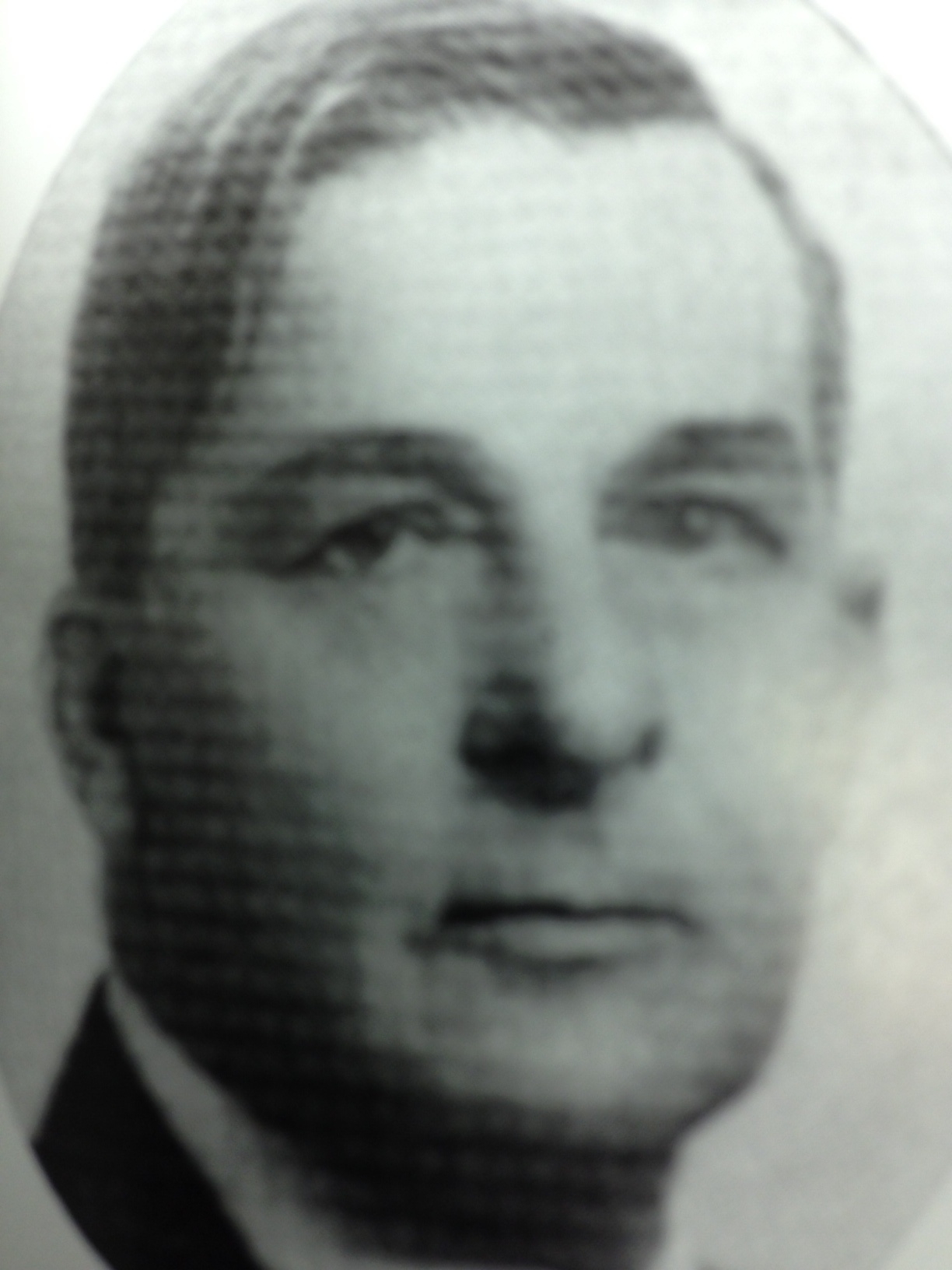 So just who was this man?
Virgil Alexis Griffith was born August 10, 1874, in Silver Creek, Lawrence County, Mississippi, in modest circumstances.
He studied law at the University of Mississippi, and graduated in 1897. He first opened a law office in Biloxi, and then moved to Gulfport, where he became a member of the firm Bowers, Neville & Griffith.
On July 17, 1903, he married Florence Neville in Scooba, Kemper County. Florence Neville was the daughter of Judge James H. Neville. V.A. and Florence had three children: James Neville Griffith; Margaret Griffith; and Susan Hart Griffith.
In 1920, he was elected Judge of the Chancery Court of the 8th District, a position in which he served until 1928.
In 1924, Judge Griffith wrote a complete revision of the chancery court procedural laws of the state. The result, adopted by the legislature, was the Chancery Practice Act of 1924, which simplified chancery court procedures and made them more flexible. The changes, with few tweaks, remained the law of practice in the chancery courts until the MRCP took effect in 1982.
The first edition of his book, Mississippi Chancery Practice, was published in 1925 to elucidate the 1924 Chancery Practice Act for practitioners. The book was so influential and useful that it was regarded as the hornbook of Mississippi chancery practice for 57 years, until the MRCP went into effect.
In 1928, he was appointed to a commission with Charles Lee Crum and Morgan Stevens to compile and annotate a new code, to succeed Hemingway ‘s Annotated Mississippi Code. The new code was adopted by the legislature and published in 1930.
Also in 1928, Judge Griffith was elected an Associate Justice of the Supreme Court of Mississippi, in which post he served until 1948. Upon taking his position with the high court, he moved his family to Jackson, but retained his home in Gulfport, which he used as a retreat.
In 1948, he became Chief Justice. He retired January 1, 1949, and the second edition of his book was published on June 1, 1950. His wife, Florence, died in 1951. Judge Griffith died in 1953.
Judge Griffith’s son in law, Robert Gill Gillespie, was appointed justice of the Mississippi Supreme Court in 1954, and served as Chief Justice from 1971-1977. Justice Gillespie is noteworthy for having been one of the FBI agents earlier in his career who participated in the ambush and death of gangster John Dillinger in July, 1934.
Advice for New Law Students
September 13, 2013 § 1 Comment
I found this remarkable piece on, of all places, Facebook. It’s a column penned by Cal-Davis Law School Associate Dean Vikram David Amar for Justia.com. It’s so on-target that I decided to post it here in hopes that many of our Mississippi law students would read it.
Oh, and there’s some food for thought here for some of you veteran practitioners, too.
Advice for the Law School Class of 2016: Ten Suggestions for Incoming Law Students
My biweekly column slot this week roughly coincides with the beginning of the new academic year at most law schools across the country. Even though it seems that fewer people will be starting law school this year than was the case just a handful of years ago, the group of entering first-year students about to embark on their lifelong journey of legal education still numbers in the tens of thousands. For whatever they may be worth, I offer below—based on my experience as a law student, a practicing lawyer, and someone who has taught at four law schools over the past two decades—ten pieces of modern advice (some intuitive and some less so) for incoming law students:
1. Develop a Strong Work Ethic: Done right, law school—and the practice of law thereafter—is hard work, and plenty of it. Discipline, persistence, and stamina are attributes of most successful law students and lawyers, and the sooner one makes peace with that reality, the better. At a charter middle school in San Francisco where I used to serve on the Board, there hangs a banner bearing a message law students would be well advised to internalize: “Don’t pray for a light load; pray for a strong back.”
2. Working Smart Is as Important as Working Hard: The raw number of hours spent in the library (or other place of scholarly work) is not the only, or even the best, measure of what constitutes a good effort in law school. Strategy is important in law school, just as it is in the real world, and what matters most is how—not just how much—time is spent.
After law school, almost every lawyer serves clients and customers. A lawyer’s clients or customers may include individuals, businesses, government agencies, judges, in-house counsel, or (quite often) other lawyers, such as partners, within a practice group. Successful attorneys develop an effective customer-service mindset; the best lawyers are the ones whose clients or customers walk away the most satisfied.
Although perhaps it is not apparent, law students also have clients and customers—most commonly, the law faculty, for whom students produce work product in the form of exams, papers and so on. In the same way that different customers or clients in the real world may be looking for slightly different things from the lawyers they hire, law professors might not all react to the same work product in the same way. The ability to quickly figure out what the client or customer is looking for, and to vary your style and approach accordingly, is a characteristic that the real world values, and thus is the kind of skill that should be developed from the beginning of law school.
3. Read the Materials in Casebooks Actively: It is often said that law school is not about learning or memorizing the content of particular legal rules (which may change over time and for that reason must be looked up anew in the future anyway), but rather about learning how to go about teasing legal rules and standards from ambiguous materials, analyzing how the legal rules can best be defended, how they interact with each other, which alternative legal rules might be suggested to courts and other decision-makers, and the like.
This (oversimplified but still useful) statement of the nature of legal education means, among other things, that it is not enough for you to read a case and understand what the judges said. You must also consider why they chose to say what they said, and in the particular way that they said it. A law school casebook assignment is thus more than an exercise in SAT-like reading comprehension; it is an invitation for you, the reader, to ask questions such as: How does what is said here compare to what is said elsewhere? If what is said here is correct, what also follows from this? Given what is said here, what are the kinds of questions that one would naturally expect other cases down the line to have to address? And so forth.
This kind of analysis requires a student not just to follow along in the case materials, but rather to attack them: to break them down, look at their component parts, reassemble them in different ways, and more. Although I certainly cannot say my own style would necessarily work for all or most law students, I can say that when I was in law school I found that I was not reading energetically and methodically enough if I was not scribbling down a lot of questions and comments to myself (to return to later) in the margins of the casebook as I provisionally evaluated each paragraph and what it added or was trying to add. For me—and perhaps for a good number of other students—active reading involves a fair amount of writing.
4. Talk to Your Classmates About What You Are Learning: It is no secret that lawyers do a lot of talking (perhaps too much!). Oral presentation skills, whether deployed in front of a judge, a jury, a fellow lawyer, an outside client, the press, or a group of interested citizens, are often essential to effective legal representation. The only way to get comfortable using a new language and a (somewhat) distinct way of thinking is to try them out on other folks. And who better as a practice audience than your classmates, who are going through the same set of experiences, and who are going to make the same or similar mistakes in learning this new culture? At most good law schools, a student can learn as much—about what it means to think and act like a lawyer—from his classmates as he can from his professors.
5. Set Aside Time For Just Thinking About the Material: When I was in full-time legal practice, a wise partner and mentor lamented that the standard time sheets that lawyers use for recording how they spend their time, so that clients can receive some detail along with their bills, contained categories for many lawyerly tasks—such as researching, drafting, editing, sending emails, and participating in conferences and telephone conversations—but did not contain a standard category for what good lawyers do that justifies their high billing rates: simply sitting and spending time thinking, carefully and systematically, about what they have read or heard.
Many a law student and junior lawyer thinks that when she has finished reading her assignment, her work is done. To the contrary, when the reading is finished, some of the hardest and most important work—trying to fit all the reading into a detailed big picture that makes sense, and that can be framed so as to benefit one side or another in a dispute—is just beginning. Most areas of law contain ambiguity, a fact that many law students resent but ought to embrace; if legal questions yielded mathematically precise answers, most anyone could be a good lawyer. Playing with and shaping ambiguity is how lawyers earn their keep. But to do that, one really has to sit and reflect on how the small pieces fit together, and at which intersections there is the most room for beneficial manipulation. Law students should, early on, get into the habit of setting aside chunks of time after they are done reading or researching on a topic simply to intellectually digest all that they have just swallowed.
6. Be Cognizant of, but Do Not Obsess Over, the New Economic Realities of the Legal Profession: We all know these are stressful times to be a law student. Debt loads are high, and job prospects three years from now uncertain. In this environment, people have to think carefully before making decisions that might affect their own financial futures. They have to appreciate how what they do in school will enhance their marketability. They’ve got to begin to network – using their classmates and faculty—even while in law school. They’ve got to periodically reevaluate whether the course they are on should be changed; one example is giving serious consideration to whether attempting to transfer to another law school after the first year would make sense. No doubt they’ve got to keep track of more things than previous generations of law students had to. But they don’t have to worry about the long term every day. People who are starting their first year this month have already made the decision—hopefully after careful cost-benefit analysis—to go to law school. So they should throw themselves into the enterprise and avoid constantly revisiting whether they’ve made the right decision. If someone is really uncertain/unhappy after one year, there is the offramp of withdrawing (and at many schools a person who withdraws after having successfully completed one term or one year has a right of return for some period of time without having to reapply.) But folks shouldn’t let their student debt and employment outlook distract them from getting the most they can out of school. And freeing oneself from distraction might enable better law school performance, which in turn is one of the best ways to increase employability.
7. Make Good, But Moderate, Use of Skills Courses, Clinicals and the Like: One complaint often heard about law schools today (and it is perhaps amplified by the new economic normal for law firms) is that they don’t do enough to produce “practice-ready” graduates. Law schools (prodded in part by the ABA) have responded to this criticism by increasing the number of courses that attempt to inculcate practical skills through clinical involvement in real-world cases, simulation exercises, and externship placements in public and private organizations. This in the main has been a healthy development. But even as you partake of the increased number of practical courses, don’t forget the basic, substantive courses in traditional classroom settings that are the foundation of your legal education, and form the single most essential part of your legal training. Learning how to learn and analyze law is more important than learning the techniques of practice. Remember, you’ll likely have an entire career to hone practical modes, but the three years of law school is likely the last time you will ever be able to immerse yourself in a truly academic environment.
8. Don’t Forget the Legal Aspect of Law School: Another development in law school curricula over the past few decades is the increasing prevalence of “law and” interdisciplinary offerings. Examples of this genre might (depending on how one defines things) include law and economics, critical race studies, law and society, law and philosophy, feminist legal theory, and law and psychology. These efforts to locate law in a larger academic context are welcome additions to the curriculum. But as with practice-oriented courses, one should make sure not to overdo things here. Law is its own discipline—a distinctive blend of textual, historical, sociological, empirical, economic and psychological analyses. It’s great to analyze legal problems from other academic and theoretical perspectives, but, to paraphrase Chief Justice John Marshall’s famous quote from the McCulloch v. Maryland case (involving the Bank of the United States), “we must never forget that it is a [law school] we are [operating].” “Law and” offerings can be great, but make sure that there is a legal connection to what is being studied. In other words, make sure that what is being talked about is truly interdisciplinary, and not simply other-disciplinary.
9. Don’t Just Play to Your Strengths: One mistake I see many law students make is that after they realize that they don’t seem to do particularly well in a particular kind of course (e.g., substantive law courses vs. practice-oriented offerings, courses that require papers rather than exams, courses involving public law vs. private law, etc.), they simply stop taking that type of class. And at most law schools, it is fairly easy to craft your second and third year schedule to avoid the kinds of courses with which you seem not to connect. But avoiding what is least comfortable is not the way to improve as a lawyer. All these different kinds of classes are important parts of the law school experience. And so if there are certain types of courses that seem especially foreign to you, that discomfort is a reason to take more, not fewer, of them, so that you may shore up your skills in areas of weakness.
10. Make the Time to Work on Writing Skills: Translating what they have read and analyzed into a written product is what many lawyers get paid for; written communication is a lawyer’s stock-in-trade. Learning to write effectively about legal topics takes time and intense engagement. Unfortunately, the other realities of law school sometimes make it challenging to devote the time that is needed to improve writing skills. To be sure, there are (often required) courses in “legal writing,” but getting (or staying) in good writing shape requires regular exercise for the rest of your career, not just for a semester or two. Writing exams (and practice exams for preparation) and seminar papers will help some, but not nearly enough. You should get in the habit of frequently writing shorter items—a paragraph at the end of your class notes distilling your thoughts about a case or a professor’s presentation of it; an email to a classmate or a professor explaining why you were confused, and posing a crisp question the answer to which should resolve the confusion; a letter to the editor or an Op Ed piece commenting on some recent legal development, etc. The more you practice your writing during law school, the better you’ll be at legal practice after you graduate.
Vikram David Amar, a Justia columnist, is the Associate Dean for Academic Affairs and Professor of Law at the University of California, Davis School of Law. He is a 1988 graduate of the Yale Law School, and a former clerk to Justice Harry Blackmun. He is a co-author, along with William Cohen and Jonathan Varat, of a major constitutional law casebook, and a co-author of several volumes of the Wright & Miller treatise on federal practice and procedure. Before teaching, Professor Amar spent a few years at the firm of Gibson, Dunn & Crutcher.
Thanks to attorney Francis Springer.
Six Legal Haikus
August 16, 2013 § 2 Comments
Six wicked verses on the practice …
Measuring Time
Remember sun, moon,
day, night, week, year? Now it’s all
six-minute increments.
Employment Rates
Well-meaning friends ask,
“What type law will you practice?”
Any type that hires
The Lawyer’s Spouse
That won’t work on me;
I’m not opposing counsel.
“Objection” my ass.
Cease and Desist
50 paragraphs,
300 commas, therefores,
Just to say: Stop it.
Conference Call
“This guy’s a dumbass,”
I said after hitting mute.
Oops. Didn’t hit mute.
Personal Injury Lawyer
Am ambulance wails.
“Shouldn’t you be chasing that?”
My friends are assholes.
From Poetic Justice: Legal Humor in Verse, by J.D. Dupuy and M.L. Philpott, 2013
Advice for a Young Lawyer
August 9, 2013 § 15 Comments
Now that they have the bar exam behind them, we will soon welcome as colleagues the latest crop of young lawyers.
Before they get swallowed up by the demands of their new profession, I thought I would offer some advice on how to be a lawyer and a happy person at the same time. One or two of you who have been in the gristmill for a while may find some of these ideas useful for yourself.
1. Focus on your own story.
You are in the legal profession because you are competitive to some degree. So when you’re struggling, it’s hard to hear that a colleague just hit a million-dollar fee, or a former law school classmate landed a high-paying job. It’s not mere envy you feel; it’s something like the same feeling a runner gets seeing a competitor break the tape 10 yards ahead.
Yes, it’s difficult not to focus on others’ gains when they are the talk of the courthouse. The danger is that, when you focus on other people’s stories, you tend to lose sight of your own.
Most of what happens in your life is a product of the choices you make. That means that you get to write your own story. You get to define the main character, and you decide the plot, the supporting cast, and the style of the story.
From time to time, stop to read back over your story. How is it going? Do you like the characters? Do you like the way the plot is developing? Should some characters be replaced? How about the tone; is it what you want? Do some parts need to be rewritten or the plot revised to move in a more satisfying direction?
Take stock of your own accomplishments. Evaluate where you are in terms of your goals. Give yourself credit for how far you’ve come. Let the achievements of others inspire you to greater heights, but focus on your own goals and how to accomplish them.
Savor what you have, whether great or meager, and foster a spirit of thankfulness. Most of us, even in modest circumstances, enjoy far more than we will ever really need.
And remember that the practice of law is not a zero-sum game. When one lawyer “wins,” that does not mean that all other lawyers “lose.”
2. Work for more than a paycheck.
No matter what you read to the contrary, it’s true that your work does define you. It can define you as a greedy, money-grubbing blood-sucker. Or it can define you as a person who makes a difference in the lives of those with whom you come into contact, in your profession, and in your community.
Early in your career you need to make shrewd choices about the work you will do that will define you. One of the advantages of the law is that you have great control over the kind of work that you will do that will define you. You get to choose work that will fulfill you.
Choose to do work that will add value to your clients and yourself. I am not talking about value in terms of dollars, although earning a living is important. I am talking about making sure that your work makes your clients’ lives better and makes you a better person. I am talking about working for more than a paycheck.
When all you work for is a paycheck, the only thing in your work that you have to look forward to is payday.
The practice of law takes up a large percentage of your waking life (and sleeping life, for that matter). Do legal work that adds something more than income to your life. Consciously try to make a difference for the good, to leave things better than when you found them. You’ll find yourself a happier, more productive and more complete person.
3. Find balance.
You may have to work 70 hours a week when you first start practicing, simply because, as you will find, law school merely introduced you to the law and taught you how to think like a lawyer. Only by actually practicing law, however, do you to learn how to be a lawyer. And that takes an investment of time.
But as you grow into lawyerhood and become more efficient, you need to pare down the hours you work to make room in your life for some living.
Balance out your law time with family, church, friends, exercise, and quiet time. Paint landscapes. Garden. Cook out. Read something trashy. Listen to music. Go fishing. Get out of town. Bake a cake. Go to a movie. Go out to eat. Hug your kids. Have a romantic evening. Sit under a shady oak tree and watch the clouds. Take a walk. Pray. Nap. Have a tall glass of sweet tea. Enjoy.
And when I say balance, I mean balance. It does no good to squeeze exercise into your life only for it to become an obsession. The same goes for any other endeavors you work into your picture.
4. Be positive; let loose your hatred and resentments.
It’s easy for lawyers to become cynical and distrustful, to question others’ motives, and to harbor hatred and resentments.
The more we let the darkness into our lives, the more the light is driven out.
Try to focus on the positive. Take note of the negatives, the hurts, the slights and outrageous conduct of others, and learn from them. And then let them go. Let them go and free yourself from them. When you harbor hatred and resentment, you are held hostage by the very person or thing you hate or resent.
5. Keep your worries and fears in perspective.
Mark Twain said, “I am an old man and have known a great many troubles, but most of them have never happened.”
Worries and fears can be paralyzing. Of course, kept in perspective they can be motivating. But too often we let them grow into specters that loom so large that they choke out our judgment and ability to act.
The fact is that most of our worries and fears never come to be. The sooner you take that to heart and live by it the sooner you will be free of their shackles. The sooner you shrink you worries and fears down to their proper size in your life the sooner you will lose the driving need to control everything and everyone in your life.
6. Difficulties are opportunities.
Losing a case, disappointing a client, making a mistake, angering a judge; all are part and parcel of practicing law. Get over them, set them aright, and move on to the next thing.
The difficulties and struggles of the practice of law are the forces that sculpt you into the kind of lawyer that you will grow to be. How you react to those forces will determine whether you become a polished work of art or a pile of dust.
Every lawyer has a bad day. Decide that you will not let it be any more than that. Adjust to it, set what is wrong aright, and move on to the next thing.
It’s called the practice of law because it’s a never-ending, ever-evolving process of daily lessons and new possibilities, no matter how long you’ve been in the profession. Every obstacle presents an opportunity to find a new way, to use your ingenuity and creativity, to offer a new solution.
7. Seek happiness that will endure.
Material goods can make us happy. The delicious aroma of leather in a new BMW, the sleek grain of mahogany in your new office table, Ben & Jerry’s Red Velvet Cake ice cream, and a new pair of Italian shoes, are all sensory pleasures that we can all appreciate.
The happiness that material goods bring us, however, is like cotton candy. Soon after the pleasurable flavor and sugar high dissipate, we are left with nothing of substance.
You will find that the happiness that will endure comes from what enriches your mind and spirit. Money will not do it. Fame and material goods will not do it. You will have to discover for yourself what truly enriches your own mind and spirit. As you do, you will find a deep happiness that will sustain you through life’s changes. The more you nurture that kind of happiness, the stronger and more substantive person you will become.
Seek happiness that will endure. Seek richness in mind and spirit. There you will find contentment.
8. Grow where you’re planted.
Many law students I have spoken with say that they have chosen the legal profession because they want to make a difference in the world. It’s a deceptively large ambition.
Most lawyers learn in a short time after law school that it’s almost impossible to change much in the world, and, in fact, most of the changing is done to the young lawyer instead. That’s okay. It’s an important lesson to learn. Most of us will have very little impact on the world at large.
That’s due in large part to the simple fact that most of us move in small circles, in small towns, in a small state. So how can one make a real difference in such microscopic circumstances?
To make a real difference, start with your immediate environment. You can influence your family, clients, fellow lawyers, judges, clerks, church, community, and everyone with whom you come into contact, through your attitude, thoughtfulness, professionalism, good judgment, values, humor, humility, character, patience, faithfulness, kindness, and joy.
You will find that the ripples you send out as you make a splash in your little world will radiate out for good or ill. So make sure they are for good.
Ambition is a professional hazard of lawyers. You will see that some lawyers are never satisfied with the small stage they are on, and the role they have to play. They are always anxious and fretful that they are missing out on the bigger show.
If you can tailor your own ambitions to fit the scope of the life that you have chosen, you will free yourself of many needless anxieties that sap your energy and enthusiasm, and drain your happiness and joy.
When you decide to grow where you are planted, you will find yourself content to make your little world a better, more fulfilling place. You will have made a difference. You will find happiness in that.
9. Avoid sharp objects.
People who juggle sharp knives usually get cut.
People who associate with negative, demanding, hurtful, self-centered, boastful, spiteful, selfish, unfaithful, vengeful, dishonest, envious, greedy, abusive, conniving, bitter, crafty, controlling, self-entitled, passive-aggressive, manipulative, lazy, bigoted, crazy, cynical, gossipy, angry, narrow-minded, or shallow individuals are like people who juggle sharp knives.
Sure, you will encounter all of those kinds of people as clients, colleagues, judges, in church, and in your daily comings and goings, but that does not mean that they have to be involved in your life. Deal with them as you must, in due course, and then move on to something, and someone, else.
Eschew those kinds of people like you would dangerous objects, because their friendship or involvement in your life is, indeed, fraught with danger. They will poison your attitude and your happiness, and they will kill your spirit if they can.
10. Appearances can be deceiving.
You will find that there are lawyers who will look down on you because you don’t wear the right suits or shoes, or don’t drive the right car, or don’t belong to the right firm, or don’t handle the right kind of cases.
Those poor people see only what is on the surface, when the real value is what is in your mind and soul.
Pay them no mind. Waste no time or effort trying to ingratiate yourself with them. You will never succeed because they need your perceived inferiority to maintain their perceived superiority.
Their values are empty. Reject them. Instead, concentrate on enriching yourself in all the things that do matter and generate enduring happiness. You will be a better person – and lawyer – for it.
 The Better Chancery Practice Blog