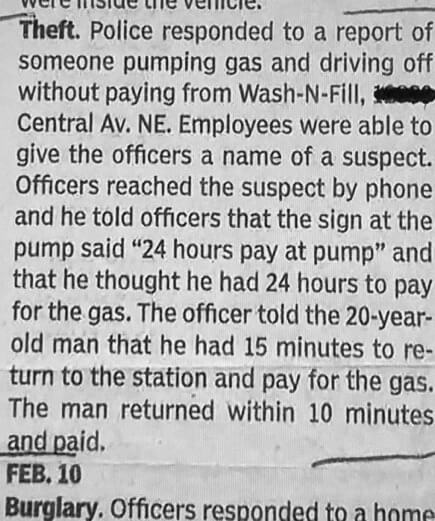


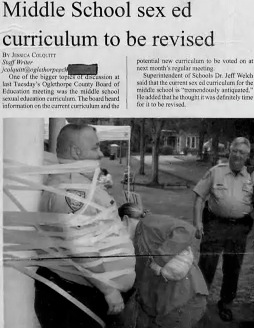
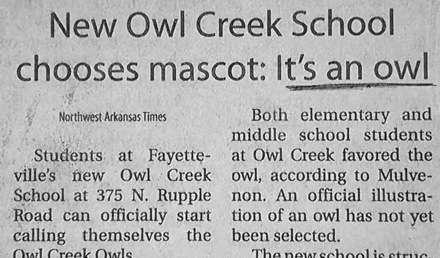




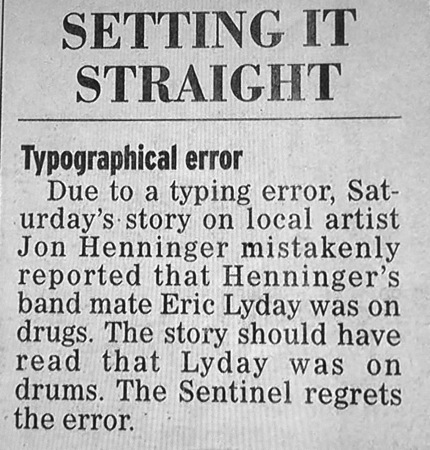
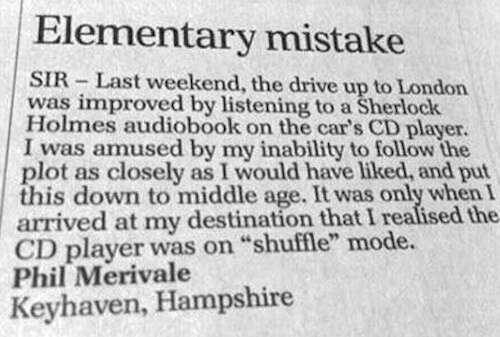









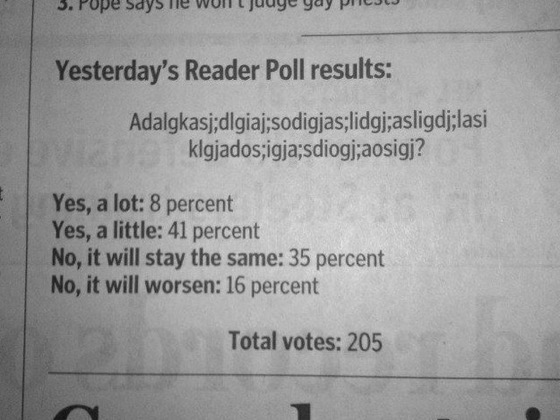
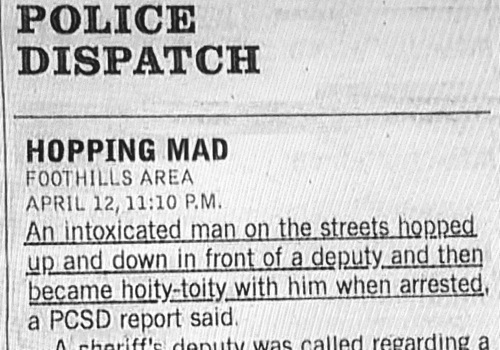

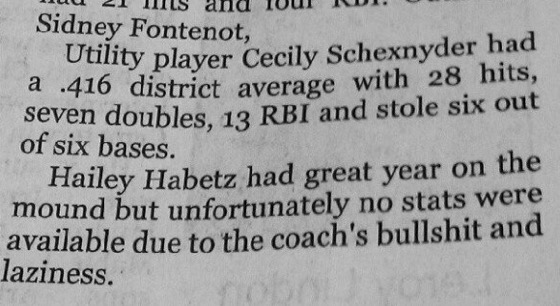


Things We Think We Heard in Court
June 30, 2017 § 1 Comment
I try to jot down droll things that people say in the course of their testimony.
Here are two from just last week:
“It was her lies. That was the icing that broke the camel’s back.”
and
“I spend every penny on my children. It takes the cake to support them.”
My all-time favorite, reported here previously:
“Of course, you realize that the flip side of that coin is a two-edged sword.”
And a note that a defendant enclosed with his temporary alimony:
“I heard that your lawyer had a heart attack. I hope the little grease spot dies.”
That note was admitted into evidence along with several alimony checks with the entry “Fat cow extortion” on the memo line.
In a case I tried, a witness testified that the force of impact in a car crash was so great that her neighbor was “almost decapacitated.”
A woman testifying in a custody case repeatedly referred to her daughter as being “bi-polo.”
Pardon me for this one, but a woman earlier this week told the chancery clerks that she needed some papers “masturbated.” A clerk asked her if she meant notarized or certified. “No,” she said, “masturbated.”
And, finally, this actual exchange in my court:
Atty 1: Objection, irrelevant.
Court: How is that relevant?
Atty 2: I don’t know. I was just throwing up a Hail Mary hoping to hit something.
Court: Well, the pass is incomplete; call another play.
More Adventures of Socrates
March 31, 2017 § Leave a comment
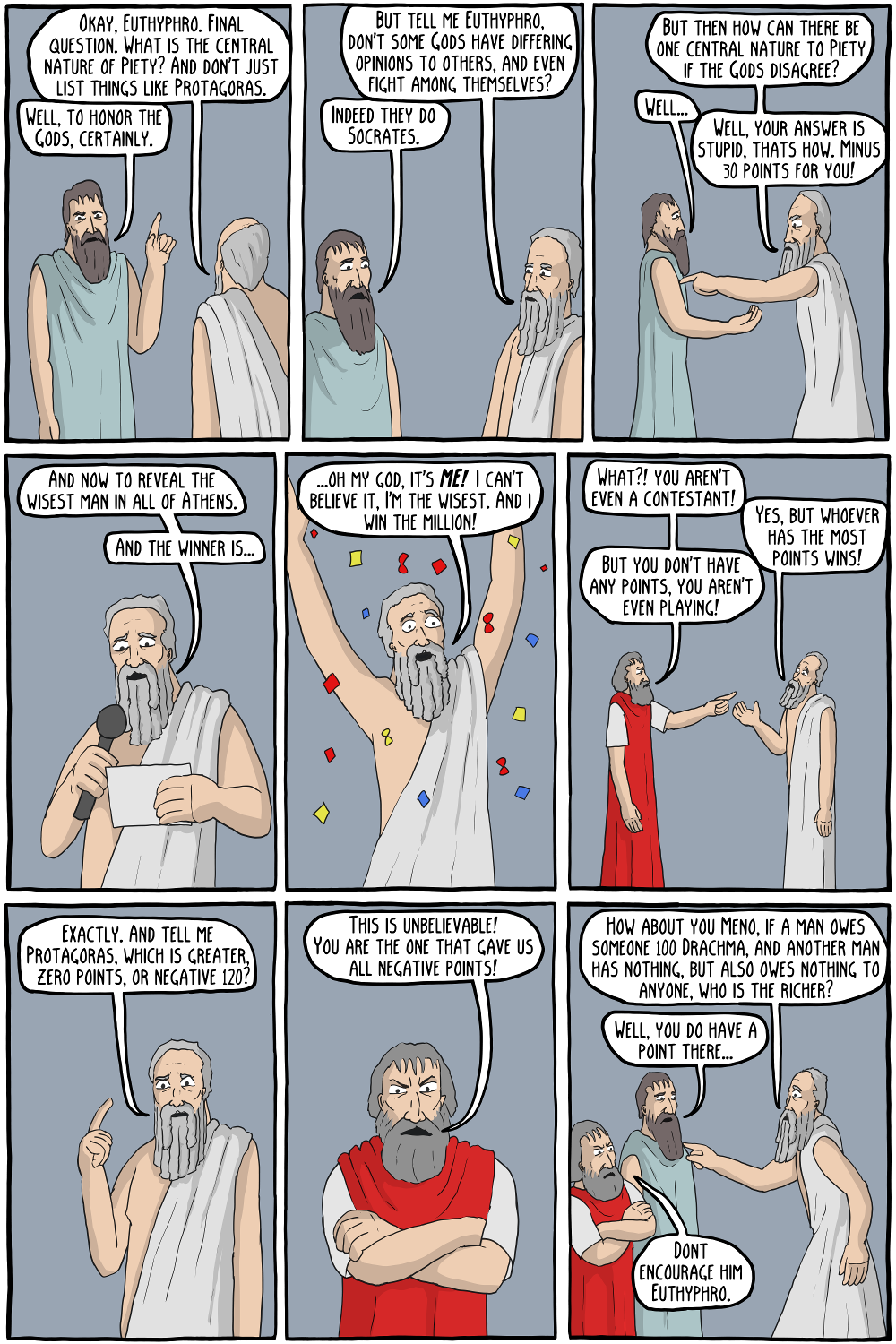
Explanation: In what is sort of the founding myth of Western Philosophy, the Oracle of Delphi told Socrates that he was the wisest man in Athens. Socrates couldn’t believe it, so he interrogated all the wise men of Athens on various subjects, such as the nature of virtue, piety, justice, etc. He found that none of them really knew what they were talking about, although they all believed that they did. He then concluded that he was indeed the wisest man in Athens, because although like them he didn’t know anything, he at least “knew that he knew not.”
Now This is the Way to Instruct a Jury
February 16, 2017 § 2 Comments
Justice can be pretty complicated today, what with mass torts, experts, voluminous discovery, digital information, and on and on. One of the banes of the judicial process is how to properly instruct the jury so as to avoid error and expensive reversal.
It wasn’t always this way. In a jury trial involving the death of a doctor’s horse in Butler County, Ohio, in 1905, Judge Squire Sprigg instructed the jury as follows:
Gentlemen of the Jury: This is a hoss case. We make quick work of hoss cases in this court. These people killed Doc’s old hoss; if Doc’s hoss was worth anything, then he is entitled to recover; if he wasn’t worth anything, then he ain’t. Some hosses are worth something and a good many more are worth nothing. So, it is for you to say, whether this hoss was worth anything or not. You are to be governed by the preponderance of testimony. Preponderance is a big word, which I must explain to you. It means this: If one side has fifty witnesses and you think they are all liars, and the other side has one witness, and you don’t think he is a liar, or at least as big a liar as the other fifty, then the testimony of the one will preponderate over that of the others, and will knock the socks off of the other fifty. Now, if by a preponderance of the testimony, as I have explained it to you, you think the Doc’s old hoss was worth anything, find what that is and give it to him; if you think he was worth nothing, why say so. Doc will think this is pretty hard on the medical profession, but he will have to take the medicine which the law prescribes. The law provides for just such cases; it calls this damnum absque injuria, which means, as I interpret it, that a man is usually hurt a damned sight less than he thinks he is.
Now, gentlemen, I believe I have covered the whole case. You have heard the evidence and the law as I have given it to you. Remember that you are under oath in this business and that the court expects quick verdicts, especially in hoss cases.
[Note: lest anyone get too bent out of shape, back then only men were allowed to serve on juries. That’s just the way it was.]
Doc won the case.
We don’t have many jury trials in chancery, but when we do, for some reason, the law has limited them to will contests, which can involve undue influence, competency, outright fraud, and other issues that can rank among the most complicated concepts in the law. So instructing the jury about those kinds of concepts can present quite a challenge.
I’m not advocating a return to a Judge Spriggs-esque form of jury instruction, but there is some charm in simplicity, isn’t there?
Thanks to Futility Closet.





My Friend Allen
January 13, 2017 § 6 Comments
A few of you are acquainted with my incomparable friend, Allen, who lives in North Mississippi, and has been regaling me with his humor almost daily for the past several years. Since all lawyers, judges, and other legal professionals are always in dire need of something to make us laugh, I thought I’d go ahead and introduce you to his wry sense of humor by sharing this sample with you …
My friend Allen got a little carried away with the holiday spirit last Saturday night and ordered a beer for everybody in the bar.
He was disappointed that a lot of people refused to drink from the same mug.
My friend Allen saw a piece on tv that cautioned people never to go grocery shopping when hungry.
He says it’s been 3 days now, there’s no food in his house, and he’s absolutely starving.
My friend Allen thinks reincarnation is making some sort of comeback.
My friend Allen says that people who stereotype other people are pretty much all alike.
My friend Allen’s neighbor made a date to meet his girlfriend at the gym, and then he didn’t show up.
It was his way of telling her that they weren’t working out.
My friend Allen says he is swearing off holiday leftovers this year.
He’s quitting cold turkey.
My friend Allen says that he’s never purchased life insurance because he wants everyone to be truly sad when he dies.
My friend Allen just found out that “Aaaaarrrrrrrgh!” is not a word.
He can’t say how frustrated he is.
My friend Allen went to the ear doctor last week because his hearing seemed to be slipping a bit. The doctor asked if Allen could describe any of the symptoms.
Allen replied, “Sure. Marge has blue hair and Homer needs to shave.”
My friend Allen’s 95-year-old mother has a hard time understanding modern times, and the other day she was shocked to find out that Allen had to pay 50 cents to pump up his tires.
“Why should you have to pay for air?” she asked.
“It’s inflation.” Allen answered.
 The Better Chancery Practice Blog