THE US CONSTITUTION AT LONG LAST ARRIVES FOR THE LEGAL PROFESSION IN MISSISSIPPI
May 17, 2011 § 3 Comments
Every lawyer sworn in on and after July 1, 2011, will have to swear to support not only the Constitution of the State of Mississippi, but also the Constitution of the United States. Which means that only 193 years and 7 months after Mississippi was admitted to statehood, the lawyers thereof will now be getting around to swearing (or affirming) to support the national constitution.
Here is the oath prescribed in MCA § 73-3-35 as it is pre-July 1:
“I do solemnly swear (or affirm) that I will demean myself, as an attorney and counselor of this court, according to the best of my learning and ability, and with all good fidelity as well to the court as to the client; that I will use no falsehood nor delay any person’s cause for lucre or malice, and that I will support the Constitution of the State of Mississippi so long as I continue a citizen thereof. So help me God.”
The code shows the first appearance of the oath among our statues in the 1848 Hutchinson’s Code. It’s impossible to tell from the currnt code whether the US Constitution ever appeared in the oath, or whether it was deleted. Legislative history is not included in the judges’ Westlaw subscription — at least mine — so I can’t follow that up.
I am not aware of any requirement that the pre-July 1 lawyers will have to take a new vow vis a vis the US Constitution. So does this set up the likelihood of warring factions among attorneys with loyalties divided between competing sources of organic law? Are we to conclude that all pre-July 1 lawyers are exempt from supporting the US Constitution? No, that would be erroneous, my dear friends. MCA § 73-7-37 lists among the seven statutory duties of attorneys the duty “To support the Constitution and laws of this state and of the United States,” thus allaying fears of a bar civil war.
In 1945, the president of the Mississippi State Bar, Bidwell Adam, said with respect to the US Constitution, “It is my firm belief and honest conviction that no progress can be made in the direction of undermining this great Constitution … so long as the lawyers of this state and Republic continue to contribute their time, talents, energy, training and experience as its defenders. Without the lawyers of this state and country, our Constitution would be lost to humanity and decadence would follow.” Even 66 years ago, the need for lawyers to support the US Constitution was apparent, at least to the bar association.
But why was that particular requirement omitted from the oath and yet enshrined in statute?
The judicial oath of office set out in Article 6, § 159 of the Mississippi Constitution does include both the state and the US Constitution:
“I, ____________, solemnly swear (or affirm) that I will administer justice without respect to persons, and do equal right to the poor and to the rich, and that I will faithfully and impartially discharge and perform all duties incumbent upon me as ____________ according to the best of my ability and understanding, agreeably as to the Constitution of the United States and the Constitution and laws of the State of Mississippi. So help me God.”
I am sure there is some history behind all of this. If anybody knows why the US Constitution was left out of the attorney’s oath, I wish you would enlighten us.
THAT CERTAIN “JE NE SAIS QUOI”
May 10, 2011 § 2 Comments
If you’ve ever tried a case with a LEP, you know just how excruciatingly difficult it can be without the right help. Excuse me? You don’t know what a LEP is? Well, a LEP is neither contagious nor a Biblical outcast. LEP is jargon for a person who has Limited English Proficiency. That is, they have trouble speaking and understanding English, which, naturally, is quite an impediment in a Mississippi court.
In my experience practicing law, I tried a number of cases in Choctaw Tribal Court where every case involved one LEP, and sometimes a full cast of LEP’s. You would ask a question and the designated interpreter would repeat the question in Choctaw to the witness. The interpreter would listen studiously as the witness droned on in reply for several minutes, whereupon the interpreter would say earnestly, “He said no.” I have always suspected that something had been lost in the translation.
I tried a memorably hilarious case once against a local attorney who later gave up the law to become rich as a stockbroker, probably in no small part due to this case. My client was a more or less LEP European-trained, ethnic Chinese physician from Indonesia, and the opposing party was a completely LEP Chinese PhD student from Beijing who was studying at the University of X___g__n__c__ao (I never got that one straight, which I guess makes me a LCP). She had come to this country to attempt a reconciliation with her husband, my client, but the attempted reconciliation unhappily failed, propelling them to court that day for a temporary hearing. Our “translator” spoke and understood one particular strain of Chinese, and neither party spoke or understood the same strain. To compound the comedy, it was the court reporter’s first, nervous day on the job — straight out of the Ole Miss court reporting school. She almost broke down in tears when my client was asked where he graduated from medical school, and in his proudest Chinese-flavored German, he responded “Heinrich Heine Universität, Universitätsklinikum, Düsseldorf, Chermany.” Who wouldn’t be proud of that? We stumbled along until the trial’s dramatic crescendo, which occurred when the opposing party futiley tried repeatedly to describe how her piece-of-junk car would not work. She finally blurted out in LEP exasperation, “Cah no vroom,” while twisting her right hand in a key-in-ignition fashion. We all pretty much understood that, LEP or no LEP. In fact, it was the most understandable thing any witness or interpreter said that day.
All of which brings me at last to my point. The Administrative Office of Courts (AOC) is seeking comments on proposed rules for use of interpreters in the courts. The goal is state-wide credentialing of certified interpreters, with a roster available for all chancery, circuit, county, youth, municipal and justice courts, as well as grand juries. You can access the announcement and links here. As for the philosophy behind it, AOC said:
“It is essential that any communication barrier be removed, as far as possible, so that these limited English proficiency (LEP) individuals are placed on equal footing with similarly situated persons for whom there is no such barrier. Interpreters are highly skilled professionals who fulfill an essential role in the administration of justice. As officers of the court, interpreters help assure that LEP individuals enjoy equal access to justice and that court proceedings and court support services function efficiently and effectively.”
Translation: “We need qualified interpreters when we have persons in court who do not speak or understand English well.”
Based on my years in chancery court, I am wondering whether we need also to have interpreters for our own fellow citizens who do not speak any recognized foreign tongue, but are LEP’ed in their ability to speak or understand plain English. But I guess that’s a project further down the road, to be tackled after we have dealt with the aliens in our midst.
WHEN THE JUDGE RESERVES RULING
March 31, 2011 § Leave a comment
So you just made the most brilliant objection of your legal career and the blankety-blank judge reserved ruling. How could this be? You begin to stew and fret, so much so that you let the witness conclude her testimony and be excused.
Guess what. Your brilliant objection went out the window as the witness left the courtroom. Why?
Uniform Chancery Court Rule 3.04 deals with objections to testimony. It specifically states, “If the Chancellor shall reserve his ruling, counsel interposing the objection shall make a note thereof and renew his objection at the conclusion of the testimony; otherwise he shall be deemed to have waived his objection.” You didn’t renew the objection, so it is waived.
It is fairly common for Chancellors to reserve ruling on an MRCP Rule 41(b) motion to dismiss at the conclusion of the plaintiff’s or petitioner’s case. If the judge reserves ruling, you must renew your motion at the conclusion of your case, or it is deemed waived.
In similar fashion, if the judge reserves ruling on a question or line of questions, be sure to renew that objection in a timely fashion, or you may be “procedurally barred” from raising the point on appeal.
APPOINTED ATTORNEYS FOR CHILD SUPPORT DEFAULTERS?
March 24, 2011 § 1 Comment
Is an indigent parent in default of child support payments entitled to appointment of counsel when he or she is faced with jail as a penalty? That is the issue that was presented to the Supreme Court of the US (SCOTUS) on March 23, 2011.
The majority of states do appoint counsel in such a situation. Mississippi does not. Nor does South Carolina, where the SCOTUS case originated. In this case, Turner v. Rodgers, et al., Michael Turner was jailed for a $6,000 arrearage in child support for 12 months or until he paid up, whichever occurred first. He could not pay, and so served the 12 months in jail. Turner had been jailed repeatedly for failure to pay child support.
Turner takes the position that his jailing was for being poor, and that the system amounts to a debtor’s prison. He argues that since his liberty was at stake in the court proceeding, the court should have appointed counsel for him.
South Carolina and the mother counter that it is not necessary to have a lawyer because such proceedings usually are decided on the simple issue of payment or non-payment, and the history thereof. They point out that Turner “had the key to the jail,” as the South Carolina Supreme Court ruled in the case. And they add that introducing lawyers into the proceedings would disadvantage mothers who can’t afford a private attorney to help them seek child support payments.
The Sixth Amendment to the Constitution guarantees the right to an attorney in a criminal case, and SCOTUS has long interpreted that guarantee to include state criminal courts, but not civil cases. The distinction here is the possibility of jail time.
The SCOTUS decision is expected by this summer.
FINAL THOUGHTS ON THE JUDICIAL PAY RAISE (UNTIL NEXT YEAR)
March 1, 2011 § 1 Comment
Please pause a minute in your busy day and think back on the legislature’s slapdown of a judicial pay raise last week and its ramifications for your practice of law. Yes, whatever affects the court system directly affects how effectively you can represent your clients and what your future in the legal profession will be. You should be as vitally interested in the judicial system as a doctor is in the viability of the local hospitals and medical support system.
The courts are where you do your work, whether you are a court room lawyer or not. You need judges to get your job done. And you need good judges. Good judges are diligent, know the law and hold you to high standards. Bad judges leave you open to complaints and worse from your clients, neglect their work, and make your job considerably more difficult.
Our courts are the place where people bring their knotty problems — ones they can’t find a way to settle on their own. In chancery court, those problems include those that are at the very heart of the family, that involve inheritance and care for those who can’t take care of themselves, that deal with people’s real property rights, and even that involve dissolution of businesses, among many others. The judicial function is a critically important service provided by the state. It gives people a civilized way to resolve conflicts without bloodshed. Our courts are crucial to commerce.
But when it comes to funding this essential service, Mississippi treats the judicial branch like an afterthought. The judicial branch receives less than one-half of one percent of the entire state budget. That means that the legislative and executive branches feed off of 99.996% of your tax dollars. If it is true that government is a burden on taxpayers, as some maintain, the judicial branch in Mississippi is a featherweight.
When we underfund the judiciary, we aren’t simply starving the judges, we are depriving our citizens of the best value they can enjoy from an independent, competent, dedicated judiciary.
Down below you can read how Mississippi’s judicial pay ranks 51st in a nation of 50 states. How can we be proud of lagging behind places like Arkansas and Alabama, of all places? How can we set our sights so low when we have so much going for us? Is that really what we aspire to — to be the last or worst; to be like an Arkansas or Alabama — or worse?
I’m proud to live in Mississippi. I got my college and law school education here, raised and educated my three children here, go to church here, pay taxes here, and work as hard as I know how to be a good judge here. There is so much to treasure in Mississippi: wonderful people; our musical heritage; hunting, fishing and the outdoors; a small-town sense of community; world-class research facilities; a literary legacy no other state can match; beaches, the Delta, the hills, the Black Belt; and so much more. I could go on and on, but you get the point. How could any true Mississippian stand to be second to anyone else?
A lawyer I know suggested that the legislators voted against the pay raise (some legislators believe it or not voted against any appropriation for the courts) because they were afraid of voter reaction in November. If that’s the case, then why don’t they just pass a bill to tie judicial pay to a percentage of federal judge pay and be done with it? That way, they could absolve themselves of all blame as the pay would set itself in relation to federal pay. And if it is a fear reaction in an election year, what was their rationale in all those non-election years when they said “now is not the time.” I hate to think that there’s really simply a control issue here. I mean, don’t we make our decisions based on what’s best for the citizens we serve? Or are there some other dynamics at work? And should there be?
While you’re taking a few minutes to ponder all of this, I recommend that you check out Philip Thomas’s take on this issue at his Mississippi Litigation Review & Commentary blog.
Another chancellor sent the following thoughts. They’re worth mulling over.
“Facts about the vote of SB 2253 and judicial pay:
11 Republicans voted to pass the bill. 40 Republicans voted against the bill. 2 Republicans were either absent or not voting.
48 Democrats voted to pass the bill. 18 Democrats voted against the bill. 2 Democrats were either absent or not voting. 1 Democrat voted Present.
22 attorneys voted to pass the bill while 3 attorneys voted against the bill.
Under Rep. Blackmon’s amendment, salary increases would have been phased in over a 4 year period. The first increase was scheduled for July 1, 2012, with subsequent increases occurring on July 1, 2013, July 1, 2014, and July 1, 2015.
The salary increases were fully funded by user fees, yet the so-called conservative opposition says “We don’t have the money.”
The last salary increase for state judges, other than justice court judges, took effect January 1, 2004.
It has now been 8 years since the last salary increase, with no relief in sight.
The salary for trial and appellate court judges in Mississippi ranks 51st in a nation with 50 states. Salaries for judges in the District of Columbia exceed those for judges in Mississippi. In addition, judges in the American Samoa, Guam, Northern Mariana Islands, Puerto Rico and the Virgin Islands are paid more than Mississippi Judges. The only judges paid less than Mississippi judges are the judges of the pie eating contest at your local county fair, if you still have one.
‘These people are the salt of the earth who have dedicated their lives to serve the people of Mississippi,’ said Rep. Bo Eaton, D-Taylorsville. 58 members of the Mississippi House of Representatives were not at all impressed.”
I want to emphasize that no tax dollars were to be used to fund this raise, and even with the proposed raise in court costs, Mississippi’s would still be the lowest court costs of all the southern states. It would have been strictly a user’s fee.
I urge you as a member of the legal profession to give this issue some serious thought. Where do we want our court system to be? Do we really want to be last, or do our citizens deserve better? What can or should you as a lawyer do to help the situation? Do we want the best government we can afford or the cheapest we can get by with?
AND THE OSCAR GOES TO …
February 25, 2011 § 8 Comments
Oscar weekend is nigh, which got me thinking about movies depicting lawyers, courts and the law. So I made a list of my own, personal favorites to share with you.
- TO KILL A MOCKINGBIRD. (1962) Small-town lawyer Atticus Finch accepts the almost impossible task of representing a black man accused of assaulting a white woman in 1930’s Alabama. The nobility, integrity and perserverance with which he carries out his duty as an officer of the court earn the mythical Finch universal admiration and respect. Gregory Peck is branded in our mind as Finch.
- INHERIT THE WIND. (1960) Remarkable rendering of the infamous Scopes “monkey trial” in Dayton, Tennessee, that pitted Clarence Darrow, (Spencer Tracy) aka Drummond in the movie, against William Jennings Bryan (Frederic March) aka Brady. Tracy and March were phenomenal in their portrayal of the two courtroom warriors. The trial was about the right to teach evolution in the public schools, but the movie was a fairly transparent criticism of and parable about McCarthyism.
- JUDGMENT AT NUREMBERG. (1961) The courtroom scenes reverberate with drama in this depiction of the post-World War II trials of Nazi officials in Germany. Perhaps the most compelling acting is that of Maximilian Schell as a German defense attorney who raises some troubling questions about individual responsibility in the milieu of a criminal state. Spencer Tracy portrays an all-too-human American presiding judge who is singlemindedly devoted to the rule of law. Burt Lancaster, James Widmark, Marlene Dietrich, Judy Garland and Montgomery Clift all deliver powerful performances.
- THE VERDICT. (1982) Paul Newman is a boozy, broken-down lawyer on the downside of a mediocre career. He takes on a medical malpractice case hoping for a big payday, but learns as the case develops that he has a chance, perhaps the last in the twilight of his career, to accomplish something really good.
- 12 ANGRY MEN. (1957) The dynamics of jury deliberation in a murder case. Henry Fonda is the holdout who will not vote to convict, and as tension builds, with some jurors only wanting to finish their job and go home, the discussion begins to change minds. Lee J. Cobb plays a juror determined to convince the others to convict.
- MY COUSIN VINNY. (1992) Hilarious depiction of a rural Alabama murder trial that is anything but routine, with Fred Gwynne as the trial judge and Joe Pesci as the improbable, inexperienced lawyer who stays on the wrong side of the judge. Marisa Tomei won an Academy Award for best supporting actress for her role as Pesci’s cute girlfriend who unexpectedly holds the key to the case.
- ANATOMY OF A MURDER. (1959) Jimmy Stewart is a trial lawyer defending a veteran charged with murder, and as the trial unfolds, so does his understanding of his client, the man’s wife, the victim and his family. The trial judge was played, somewhat woodenly, by an actual state trial judge. You may have to suspend your disbelief at some of the court room scenes, but the drama is worth it.
- THE CAINE MUTINY. (1954) It’s a case of the victim becoming the villified in the court martial trial for mutiny aboard the USS Caine. The ship’s captain, Humphrey Bogart, becomes the one on trial for all of his flaws and lapses in judgment at sea. José Ferrar is brilliant as defense lawyer Lieutenant Barney Greenwalt, who ably and zealously defends the mutineers, even though he despises them.
- PHILADELPHIA. (1993) Tom Hanks is a young and upcoming lawyer who finds his career at an end when he is diagnosed with AIDS. One of the first Hollywood films openly on the subjects of HIV and homosexuality. Hanks, as Beckett the lawyer, finds his work being sabotaged by his homophobic colleagues, and his legal career itself placed on trial when charges are brought against him.
- A MAN FOR ALL SEASONS. (1966) Sir Thomas More, Chancellor of England in the reign of Henry VIII, has come to epitomize the lawyer who is faced with having to resolve conflicts between his duty to the law and government, and his duty to faith and his conscience. Paul Scofield gives a powerful performance as the man who would not be swayed by political intrigues and conniving men.
- THE PAPER CHASE. (1973) Once you have recovered from the post-traumatic stress following your law school graduation, you may be able to relax and enjoy this now somewhat dated look at what it is like to suffer through being a student at Harvard Law School.
- A FEW GOOD MEN. (1992) Another court martial film. Prosecutors Tom Cruise and Demi Moore have to conquer a conspiracy of silence and misplaced loyalties to win the conviction of two Marines charged with murdering a fellow Marine. Jack Nicholson is diabolical in his depiction of Colonel Nathan Jessep, who defends the soldiers’ actions.
- AND JUSTICE FOR ALL. (1979) A suicidal trial judge packing a .45, a lawyer who admits — no, insists — during trial that his client is guilty, and the unforgettable line, “You’re out of order! You’re out of order! This whole trial is out of order!” Al Pacino is a trial lawyer amidst a justice system careening crazily out of control.
- A TIME TO KILL. (1996) Violence begets violence in a racially charged Mississippi murder trial. Based on the first novel by John Grisham.
- AMISTAD. (1997) Courtroom drama set in 1839 showing the trial over ownership of a slave vessel that had been commandeered by rebellious slaves. Based on a true story, in which both Martin Van Buren and John Quincy Adams participated. Retired Supreme Court Justice Henry Blackmun played the role of Justice Joseph Story.
- THE MAGNIFICENT YANKEE. (1950) Bio-pic showing the life of Oliver Wendell Holmes from his acceptance of a seat on the U.S. Supreme Court at age 61, through the next 25 years.
- INTOLERABLE CRUELTY. (2003) George Clooney and Catherin Zeta-Jones in a zany Coen Brothers movie about a cagy divorce lawyer who sets and springs traps on opposing parties, only to find himself trapped in one of his own devices. Or is he?
- ERIN BROCKOVICH. (2000) This one is for the paralegals. Julia Roberts plays the indomitable Brockovich, who takes on Pacific Gas & Electric on behalf of an indigent woman who is powerless (no pun intended) against the energy giant. The movie crackles with energy and idealism.
- THE PEOPLE VS. LARRY FLYNT. (1996) It’s hard to find anything to like about Larry Flynt (Woody Harrelson), the publisher of Hustler magazine. Yet his battle to defend his First Amendment rights, all the way to the US Supreme Court, in which he was a victim of a crippling assassination attempt, is a fascinating chapter in American law.
- A CIVIL ACTION. (1998) John Travolta is a lawyer who starts out to clean up a local water supply only to find himself engaged in an epic battle against big business that leaves his legal career and personal life in ruins. He ultimately prevails, but was the cost worth it?
- GHOSTS OF MISSISSIPPI. (1996) Hollywood’s version of the Byron de la Beckwith trial for the murder of Medgar Evers is instructive for its glimpse into Mississippi’s ascent from the abyss of violent racism, even though the film relies on stereotypes and cliches to make its points. It’s interesting to view the film 16 years after the event knowing that the protagonist who brought the assassin to justice, Bobby DeLaughter (Alec Baldwin), would later suffer his own downfall.
- ADAM’S RIB. (1949) Spencer Tracy and Katherine Hepburn in a farcical legal tangle. Tracy is a prosecutor, and Hepburn, his wife, is defending a woman that Tracy is prosecuting. The competitive couple use every ploy possible to prevail in the case, and the manic competition naturally infects their personal lives.
- KRAMER VS. KRAMER. (1979) It would not likely turn out the same way under Mississippi law, but in this story Dustin Hoffman gets custody of his son so that his ex-wife, Meryl Streep, can “find herself.” He later loses custody to her in a court fight based on a finding that she has indeed “found herself.” Great Academy Award-winning acting and a heart-tugging story.
- MICHAEL CLAYTON. (2007) George Clooney is Clayton, a lawyer whose sole job is to clean up messes made by his large firm’s clients and the lawyers themselves. When he gets too close to the truth after one of his law partners is found dead of an apparent suicide, Clayton finds himself in the crosshairs.
- YOUNG MR. LINCOLN. (1939) Lincoln the lawyer, played by Henry Fonda. The court room scenes are supposedly authentic re-enactments of the practice and procedure of the period, although the story itself is apocryphal.
There are some others that could make the list. The court room scenes in A FISH CALLED WANDA are some of the best ever, but the movie is not really about the law and courts. LEGALLY BLONDE has some great chuckles about law school, but it’s more about a young woman’s pursuit of her botfriend. And THE WAR OF THE ROSES is an outrageous tragi-comedy about the atrocities committed against each other by a divorcing husband and wife, but the lawsuit is merely the framework for the conflict.
Any other nominees?
THE LATEST ON ROBINSON V. BROWN
February 16, 2011 § 4 Comments
The COA case of Robinson v. Brown, handed down January 25, was the subject of a previous post in which I alerted chancery lawyers that the case appeared to change the law that post-trial motions were not required in chancery court to preserve error for appeal. I also pointed out that MRCP 52(b) specifically excepts non-jury trials from the post-trial motion requirement.
In the COA’s handdowns on February 15, this entry appeared:
EN BANC
2009-CA-01599-COA
Mary Elizabeth Brown Robinson v. Paul Arthur Brown
Lee Chancery Court; LC Case #: 02-0518(41)H; Ruling Date: 08/06/2009; Ruling Judge: John Hatcher; Disposition: The Court on its own motion stays the mandate and grants rehearing. Order entered.
Is the COA going to circle back to where we were pre-January 25? Stay tuned.
AN URGENT MESSAGE FROM CHIEF JUSTICE WALLER
February 15, 2011 § 1 Comment
To Fellow Judges and Members of the Bar:
Last week, the Mississippi Senate passed Senate Bill 2253, which provides a pay increase for our trial and appellate judges. This increase is essential for preserving a well qualified and independent judiciary. We need your support. Please contact your representative in the House and encourage them to support SB 2253.
According to the National Center for State Courts (NCSC), Mississippi ranks 51st in the nation in terms of judicial pay. Mississippi judges, furthermore, have not had a pay increase since 2003. Two disturbing trends have developed as a result of the low level of judicial pay. First, the salaries of other public officials have far outpaced that of judges. For example, the Chairman of the Workers’ Compensation Commission is paid more than every trial judge in the State and the Chief Judge of the Court of Appeals – despite the fact that the Commission’s decisions are reviewed by the trial and appellate judges. Second, and even more disconcerting, is the high rate of turnover we have experienced recently. Twenty-one new judges have taken office during the last two years. I know from personal conversations that the low level of pay is one of the main reasons that many judges are leaving office. The proposed salary increases in SB 2253 would make Mississippi’s judicial pay comparable to our neighboring states. The increases set forth in SB 2253 would make each judge and justice’s salary equal to seventy percent of the salary of an equivalent judge at the federal level. And significantly, no general funds are used for this increase. Funding is primarily derived from user fees. The pay increase, furthermore, is not effective until FY 2013. Admittedly, this increase is substantial, somewhere in the thirty percent range. Much of the debate has centered around the arguments that, given the dire economic climate, this is not the proper time to give anyone a raise, and that all state employees deserve a pay increase. We are aware and sensitive to both of these concerns. These pay increases, however, are funded by user fees. Moreover, Mississippi judges have been underpaid for quite some time. We need the best and the brightest of the legal profession making decisions that dramatically impact the lives of our citizens. The only way to attract and retain such individuals is to provide a competitive level of pay.
Below are a few arguments in support of SB 2253 that you may find helpful:
-
51st in the Nation. According to the National Center for State Courts (NCSC), Mississippi has the lowest paid judges in the nation.
-
High Turnover. Not counting the newly created judicial posts, twenty-one new trial judges have taken office in the past two years. This is an unprecedented rate of turnover, which impedes the efficiency of our courts.
-
Need for Realignment. The Chairman of the Workers’ Compensation Commission earns $112,436, and a Commission member earns $108,698. This is more than any trial judge or Court of Appeals judge, including the Chief Judge.
-
Funded by User Fees. Funding for this pay increase is derived primarily from user fees. The civil filing fee will increase $40. Our civil filing fees will still be the lowest in the southeast.
-
Delayed Implementation. The pay increase is not effective until FY 2013.
-
Other State Employees. Non-elected state employees have had three pay increases since 2003. And some executive personnel have had very substantial increases during this same period. For example, in May 2010, the Department of Public Safety Administrator received a $16,000 salary increase (from $122,115 to $138,115). A number of other Department of Public Safety employees received raises of 20 percent or higher between July 2008 and March 2010.
JUSTICE GRAVES TO THE FIFTH CIRCUIT
February 15, 2011 § 2 Comments
Justice James Graves of the Mississippi Supreme Court was confirmed yesterday as the first Mississippi African-American to serve on the US Fifth Circuit Court of Appeals. His nomination was approved by the US Senate late yesterday afternoon.
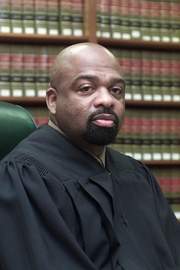 Graves’ nomination received bi-partisan support of the Mississippi US Senatorial and Congressional delegations.
Justice Graves, of Clinton, will leave an opening on the Mississippi Supreme Court that will have to be filled by appointment of Governor Hailey Barbour, until an election can be held to replace his successor. Philip Thomas, in his Mississippi Litigation Review and Commentary blog speculates about the appointment.
 The Better Chancery Practice Blog