Six Legal Haikus
August 16, 2013 § 2 Comments
Six wicked verses on the practice …
Measuring Time
Remember sun, moon,
day, night, week, year? Now it’s all
six-minute increments.
Employment Rates
Well-meaning friends ask,
“What type law will you practice?”
Any type that hires
The Lawyer’s Spouse
That won’t work on me;
I’m not opposing counsel.
“Objection” my ass.
Cease and Desist
50 paragraphs,
300 commas, therefores,
Just to say: Stop it.
Conference Call
“This guy’s a dumbass,”
I said after hitting mute.
Oops. Didn’t hit mute.
Personal Injury Lawyer
Am ambulance wails.
“Shouldn’t you be chasing that?”
My friends are assholes.
From Poetic Justice: Legal Humor in Verse, by J.D. Dupuy and M.L. Philpott, 2013
Venue in Divorce and the Accompanying Child Custody Action
August 15, 2013 § Leave a comment
Venue for fault-based divorces where both parties are residents of Mississippi is in the county where the defendant resides, or in the county where the parties lived when they separated, if the plaintiff still lives there.
Venue for irreconcilable differences divorces where both parties are residents is in the county where either party resides.
Venue for child custody actions brought under MCA 93-11-65 is in the county where the child actually resides, or in the county of residence of the custodial parent, or in the county of residence of the defendant.
The vast majority of divorce complaints include (1) claim of at least one fault-based ground for divorce, (2) claim of irreconcilable differences, and (3) claim for child custody, often pled under MCA 93-11-65. Where is venue in a case such as that? And how is venue affected if one or more of the claims is dismissed?
Those were the questions before the court in Slaughter v. Slaughter, 869 So.2d 386 (Miss. 2004).
Monica and Mitchell Slaughter married and lived together in Chickasaw County. Monica separated and moved to Coahoma County, where she filed a Complaint for Divorce alleging habitual cruel and inhuman treatment, and, the alternative, irreconcilable differences. Apparently, she also sought child custody per MCA 93-11-65. Mitchell filed a motion to dismiss on the ground that the Coahoma County Chancery Court lacked jurisdiction. He also filed his own actions for divorce and custody in Chickasaw County.
The chancellor granted the motion to dismiss as to the fault-ground. He ruled, however, that the Coahoma County court did have jurisdiction over the irreconcilable differences divorce, and over the issue of custody pursuant to MCA 93-11-65(a).
Mitchell contested the irreconcilable differences divorce and asked the court to transfer the case to Chickasaw County, which the chancellor refused.
Mitchell sought an interlocutory appeal, which the MSSC granted.
In a unanimous decision, with Diaz not participating, the court, by Justice Easley, ruled:
- Since Coahoma County was not the proper venue for the fault-ground divorce, the chancellor erred in retaining jurisdiction over the irreconcilable differences divorce only. The chancellor should have dismissed the case in toto, rather than treating it piecemeal (¶29). The irreconcilable differences venue statute may not be used to circumvent the clear requirements for venue in fault-based cases (¶ 30).
- “We find that a proper reading of all three statutes, §§ 93-5-11, 93-5-23 and 93-11-65, does not provide for a custody matter to proceed under § 93-11-65 when a divorce is pending.” (¶33).
- And finally since the chancellor lacked any jurisdiction at all, he could not transfer the case. (¶30).
That’s the pronouncement of the court, and we are bound by it. But there are a couple of points:
I don’t really have a quarrel with the outcome of the case. Both the irreconcilable differences statute and MCA 93-11-65 seem to be pretty slender reeds to support proper jurisdiction in a fault-based divorce. But what, exactly does MRCP 82(c) mean? You can read it for yourself and lay awake tonight pondering it. The Slaughter opinion did not address it.
As to number 3, the obvious question is what in the world does MRCP 82(d) mean when it says that “When an action is filed laying venue in the wrong county, the action shall not be dismissed, but the court … shall transfer the action to the court in which it might properly have been filed …”? The legislature addressed this conundrum in 2005, when it amended MCA 93-5-11 to provide that “Transfer of venue shall be governed by Rule 82(d) of the Mississippi Rules of Civil Procedure.” That would seem to cover that. Ironically, Justice Easley penned the decision in Heritage Realty, Inc. v. Estate of Boles, 947 So.2d 238 (Miss. 2006), reh. den. February 8, 2007, which ruled that an estate opened in the wrong county must be dismissed, and may not be transferred. Again, what in the world … etc.
I guess what you need to bear in mind about this case is in contested divorces that the jurisdictional sun around which all of the other planetary issues will revolve, including custody, support, equitable distribution, etc., will be the fault-based divorce. Venue in a divorce is jurisdictional. That means that it will be heard in the county where the defendant resides, or in the county where the parties lived when they separated, if the plaintiff continues to reside there.
Income Withholding Orders
August 14, 2013 § 6 Comments
Child support is generally paid directly to the recipient parent, or to DHS in cases where that agency has filed an action.
But did you know that federal law requires that child support must be collected by directing employers to withhold income, and that a certain prescribed form, referred to as an Income Withholding Order (IWO), must be entered in every child support case, except in certain circumstances that are mentioned below?
The federal Personal Responsibility and Work Opportunity Reconciliation Act of 1996 required the entry of IWO’s in all child support cases entered on or after January 1, 1994.
Every IWO must direct payments to the State Disbursement Unit (SDU). Payments may not be directed to an individual. An IWO that directs payments to an individual is required to be rejected. Mississippi does, by the way, have its own SDU.
Also, effective May 31, 2012, every IWO must be on the form prescribed by the Office of Management and Budget. You can access a fillable version of the form by clicking this link. Instructions for completing the form, with a link to a .pdf version, are at this link. Employers are directed in their instruction material to return any IWO that is not in the prescribed form.
The law mandates that the income of the paying parent shall be subject to income withholding on the effective date of the order, without regard to whether the parent is in arrears in payments. It is for collection of all child support, and not limited to collection of arrearages.
The only exception to child support withholding is set out in § 486(a)(8)(B)(i) of the Social Security Act, which allows direct payment in two cases:
- Where one of the parents demonstrates, and the court finds, that there is good cause not to require immediate income withholding; or
- The parents have a written agreement for an alternative arrangement.
The original IWO forms that went into use in the 1990’s (then referred to as “Wage Withholding Orders” or WWHO) were either effective immediately or could be made effective at a later date. That feature is eliminated, since all orders are now effective immediately on entry.
Also, if you are still using WWHO forms from the 1990’s, your forms are hopelessly antiquated. You must switch over to the IWO form referred to above.
In my experience, there are districts around the state where IWO’s are unknown. Why DHS has not made it a priority to see that the law is widely implemented is a mystery. Or maybe they have, in places where I have not been able to observe.
We have used WWHO’s in this district since the early 1990’s. Mandatory withholding, however, is rare in this district; my guess is that only two to three percent of cases employ it. I have not seen an IWO on the latest form since they went into effect in May of last year; all the withholding forms I see are old WWHO forms.
Rights of a Widow, Part II: Renunciation of the Will
August 13, 2013 § Leave a comment
In Part I, we discussed the right of the widow (which also embraces widowers) to one-year’s support from the estate when the spouse has died. In this post we deal with the right of the widow to renounce a will when it does not make adequate provision for her. The right is codified in MCA 91-5-25.
As we saw in Part I, Joe Howard Estes and Sarah (Young) Estes had been married only nine months when Joe Howard died. Sarah had moved out of Joe Howard’s home and back to her own home shortly after he had suffered from some serious health issues, including amputation of his leg and arterial surgery. She filed for divorce, which was pending at the time of Joe Howard’s death.
Joe Howard’s will, which was admitted to probate, made no provision for Sarah at all, so she filed notice of renunciation with the court, which eventually awarded her a child’s share (1/5) of the estate, less $12,000 that she had been granted as a widow’s allowance.
The co-executors appealed, and the COA reversed in Estate of Estes: Estes v. Estes, decided December 11, 2012. Judge Maxwell, writing for the majority, summed it up:
¶17. Mississippi Code Annotated section 91-5-25 (Rev. 2004) allows a widow whose deceased husband “does not make satisfactory provision” for her in his will to renounce the unsatisfactory provision and elect to take the a child’s share of the estate. See also Bolton v. Barnett, 131 Miss. 802, 827, 95 So. 721, 726 (1923) (holding second husband not provided for in his deceased wife’s will was entitled to inherit a child’s share of his wife’s real property). Under section 91-5-27, when the husband’s will makes no provision at all for his widow, no renunciation is required—it will be assumed that the widow has elected to take her share of the estate. Miss. Code Ann. § 91-5-27. Thus, the chancellor was correct in one sense that the right to inherit under 91-5-27 is “automatic” because, in contrast to the right under section 91-5-25, no act of renunciation or election of a child’s share is required.
¶18. But the chancellor was incorrect that this automatic right to inherit, as if the deceased husband died without a will, arises in every situation without exception. The record shows the chancellor believed his hands were tied regarding Young’s renunciation of Estes’s will and right to inherit one-fifth of the estate. Although acknowledging the evidence supporting Young’s abandonment of the marriage, the chancellor nonetheless awarded her a child’s portion of the estate because he was not aware “of any case law at all that would reflect . . . that [Young] somehow would not be entitled to a child’s portion[.]”
¶19. But there is Mississippi precedent of this nature. Our supreme court has previously acknowledged the operation of estoppel when a spouse trying to take a child’s share of the estate has deserted or abandoned the marriage. In re Marshall’s Will, 243 Miss. at 478, 138 So. 2d at 484 [(1962)]; Walker v. Matthews, 191 Miss. 489, 511-12, 3 So. 2d 820, 826 (1941); Williams v. Johnston, 148 Miss. 634, 636-37, 114 So. 733, 733-34 (1927). In Tillman v. Williams, 403 So. 2d 880, 881 (Miss. 1981), the supreme court clarified what was required for estoppel: “Our Legislature has not seen fit to enact any legislation on this abandonment question. It is, therefore, obvious that the statute has to be strictly construed unless there is a clear desertion and abandonment that sets up the estoppel.”
¶20. While he acknowledged evidence showing Young’s desertion or abandonment of the marriage, the chancellor did not make a finding of clear desertion or abandonment. This was because he mistakenly believed such an estoppel-type finding would have no legal effect on Young’s right to inherit. Since the award of a child’s share of the estate was based on an erroneous application of the law, we reverse the award to Young of one-fifth of the estate and remand for a determination of whether Young’s action met the clear-abandonment standard of Tillman, thus estopping her from inheriting from the Estes’s estate. [Footnotes omitted]
So it is estoppel that will preclude a spouse who has abandoned or deserted the marriage from taking a child’s share. For the estoppel to come into effect the chancellor has to make a finding that “there is a clear desertion and abandonment.”
An interesting sidelight in this appeal is that the appellants did not specifically raise Sarah’s renunciation as an issue in the appeal. How, then, could the COA address it? The COA opinion said this about it at Footnote 5 to ¶16:
While the co-executors did not raise as a separate issue Young’s renunciation of the will, they raised the issue of Young’s abandonment of the marriage and its effect upon Young’s rights, as well as challenged the amount of the award of one-fifth of the estate. Thus, we find the question of the will’s renunciation and Young’s right to inherit a child’s share is before us. But even were it not, reversal based on the chancellor’s misapplication of the law would be warranted under plain-error review. “Plain-error review is properly utilized for ‘correcting obvious instances of injustice or misapplied law.’” Smith v. State, 986 So. 2d 290, 294 (¶10) (Miss. 2008) (quoting City of Newport v. Fact Concerts, Inc., 453 U.S. 247, 256 (1981)); see also M.R.A.P. 28(a)(3) (permitting this court to “notice a plain error not identified or distinctly specified” in the appellants’ statement of issues).
A post that talks about some of the quirks of renunciation can be found at the link.
Rights of a Widow, Part I: Widow’s Allowance
August 12, 2013 § 1 Comment
Joe Howard Estes accumulated a considerable estate during his lifetime. On August 3, 2006, he married Sarah (Young) Estes. Not long after the marriage, Joe Howard suffered health complications that resulted in amputation of a leg and surgery to alleviate an arterial blockage. Later in that same year, Sarah moved out of Joe Howard’s home and back into her own home. She filed for divorce a few months after moving out.
Joe Howard died on May 17, 2007. The divorce action was still pending at the time of his death, and he and Sarah had not resumed cohabitation.
Joe Howard had a will, which his children probated, that made no provision for Sarah.
Sarah filed a petition for one year’s support (widow’s allowance) and exclusive possession of homestead property, renounced the will, and asked for appointment of appraisers.
There ensued several years of litigation between Sarah and Joe Howard’s four surviving children. In the course of the litigation, the chancellor granted Sarah a widow’s allowance of $12,000, and awarded her one-fifth of the estate — a child’s share — of some $80,000, from which he subtracted her $12,000 allowance.
The co-executors appealed.
The COA reversed the trial court in the case of Estate of Estes: Estes v. Estes, decided December 11, 2012. In this post, we’ll look at the court’s ruling on the issue of widow’s allowance.
Judge Maxwell’s opinion explains it clearly:
¶10. A widow or widower who was dependent on the surviving spouse is statutorily entitled to a year’s allowance for his or her maintenance and that of the children, if any. Section 91-7-135 imposes a duty on “the appraisers [of an estate] to set apart out of the effects of the decedent, for the spouse and children who were being supported by the decedent, or for the spouse if there be no such children, or for such children if there be no spouse, one (1) year’s provision[.]” Miss. Code Ann. § 91-7-135. This provision may take the form of money “necessary for the comfortable support of the spouse and children, or spouse or children, as the case may be, for one (1) year.” Id.
¶11. Under section 91-7-141, the chancery court has discretion to “apportion the one year’s allowance, or any part of it, according to the situation, rights, and interests of any of the children or the widow, and may direct the payment of any portion of the allowance which may be found necessary or proper to any of them.” Miss. Code. Ann. § 91-7-141; see also Bryan v. Quinn, 233 Miss. 366, 368, 102 So. 2d 124, 125 (1958) (citations omitted) (“The rule is well settled in this State that the widow’s allowance for one year’s support is within the sound discretion of the chancellor.”).
¶12. While the chancellor relied on this statutory authority to award Young a $12,000 widow’s allowance, Young was not “being supported by the decedent” and, thus, not in need of provision from Estes’s estate to make her comfortable. See Miss. Code Ann. § 91-7-135. So we find the award an abuse of discretion.
¶13. Our supreme court has clarified that the statute “relative to the widow’s allowance provides that such allowance shall be set aside to the widow and children who were supported by the decedent.” In re Marshall’s Will, 243 Miss. 472, 479, 138 So. 2d 482, 484 (1962) (emphasis added). The statute places on the widow “the burden of establishing her claim to a year’s support, [by] showing either that she was being supported by [her husband] at the time of his death or that she was away from him without fault on her part.” Id. Here, Young clearly failed to meet this burden.
¶14. It is undisputed that Young left Estes’s home by her own volition after his leg was amputated. And she was living in her own home at the time Estes died. In Byars [v. Gholson, 147 Miss. 460, 465, 112 So. 578, 578-79 (Miss. 1927)] , the Mississippi Supreme Court held that a widow who had been living apart from her husband, without his fault, and who was not supported by him, was not entitled to one year’s support from his estate. Byars, 147 Miss. at 465, 112 So. at 578. We find the same is true here.
¶15. Because we find the widow’s allowance was not supported by substantial evidence of Young’s financial dependence on Estes at the time he died, the chancellor abused his discretion in awarding Young one-year’s support. We reverse the award of a $12,000 widow’s allowance and render judgment against Young’s claim to one-year’s support. [Footnotes omitted]
I think that there is a widespread belief that the widow’s allowance (that term embraces widower’s allowance also) is automatic, and that the only issue is how much. That’s not so, as Estes tells us.
In Part II, we’ll address how the COA dealt with Sarah’s rights due to renunciation of the will.
Advice for a Young Lawyer
August 9, 2013 § 15 Comments
Now that they have the bar exam behind them, we will soon welcome as colleagues the latest crop of young lawyers.
Before they get swallowed up by the demands of their new profession, I thought I would offer some advice on how to be a lawyer and a happy person at the same time. One or two of you who have been in the gristmill for a while may find some of these ideas useful for yourself.
1. Focus on your own story.
You are in the legal profession because you are competitive to some degree. So when you’re struggling, it’s hard to hear that a colleague just hit a million-dollar fee, or a former law school classmate landed a high-paying job. It’s not mere envy you feel; it’s something like the same feeling a runner gets seeing a competitor break the tape 10 yards ahead.
Yes, it’s difficult not to focus on others’ gains when they are the talk of the courthouse. The danger is that, when you focus on other people’s stories, you tend to lose sight of your own.
Most of what happens in your life is a product of the choices you make. That means that you get to write your own story. You get to define the main character, and you decide the plot, the supporting cast, and the style of the story.
From time to time, stop to read back over your story. How is it going? Do you like the characters? Do you like the way the plot is developing? Should some characters be replaced? How about the tone; is it what you want? Do some parts need to be rewritten or the plot revised to move in a more satisfying direction?
Take stock of your own accomplishments. Evaluate where you are in terms of your goals. Give yourself credit for how far you’ve come. Let the achievements of others inspire you to greater heights, but focus on your own goals and how to accomplish them.
Savor what you have, whether great or meager, and foster a spirit of thankfulness. Most of us, even in modest circumstances, enjoy far more than we will ever really need.
And remember that the practice of law is not a zero-sum game. When one lawyer “wins,” that does not mean that all other lawyers “lose.”
2. Work for more than a paycheck.
No matter what you read to the contrary, it’s true that your work does define you. It can define you as a greedy, money-grubbing blood-sucker. Or it can define you as a person who makes a difference in the lives of those with whom you come into contact, in your profession, and in your community.
Early in your career you need to make shrewd choices about the work you will do that will define you. One of the advantages of the law is that you have great control over the kind of work that you will do that will define you. You get to choose work that will fulfill you.
Choose to do work that will add value to your clients and yourself. I am not talking about value in terms of dollars, although earning a living is important. I am talking about making sure that your work makes your clients’ lives better and makes you a better person. I am talking about working for more than a paycheck.
When all you work for is a paycheck, the only thing in your work that you have to look forward to is payday.
The practice of law takes up a large percentage of your waking life (and sleeping life, for that matter). Do legal work that adds something more than income to your life. Consciously try to make a difference for the good, to leave things better than when you found them. You’ll find yourself a happier, more productive and more complete person.
3. Find balance.
You may have to work 70 hours a week when you first start practicing, simply because, as you will find, law school merely introduced you to the law and taught you how to think like a lawyer. Only by actually practicing law, however, do you to learn how to be a lawyer. And that takes an investment of time.
But as you grow into lawyerhood and become more efficient, you need to pare down the hours you work to make room in your life for some living.
Balance out your law time with family, church, friends, exercise, and quiet time. Paint landscapes. Garden. Cook out. Read something trashy. Listen to music. Go fishing. Get out of town. Bake a cake. Go to a movie. Go out to eat. Hug your kids. Have a romantic evening. Sit under a shady oak tree and watch the clouds. Take a walk. Pray. Nap. Have a tall glass of sweet tea. Enjoy.
And when I say balance, I mean balance. It does no good to squeeze exercise into your life only for it to become an obsession. The same goes for any other endeavors you work into your picture.
4. Be positive; let loose your hatred and resentments.
It’s easy for lawyers to become cynical and distrustful, to question others’ motives, and to harbor hatred and resentments.
The more we let the darkness into our lives, the more the light is driven out.
Try to focus on the positive. Take note of the negatives, the hurts, the slights and outrageous conduct of others, and learn from them. And then let them go. Let them go and free yourself from them. When you harbor hatred and resentment, you are held hostage by the very person or thing you hate or resent.
5. Keep your worries and fears in perspective.
Mark Twain said, “I am an old man and have known a great many troubles, but most of them have never happened.”
Worries and fears can be paralyzing. Of course, kept in perspective they can be motivating. But too often we let them grow into specters that loom so large that they choke out our judgment and ability to act.
The fact is that most of our worries and fears never come to be. The sooner you take that to heart and live by it the sooner you will be free of their shackles. The sooner you shrink you worries and fears down to their proper size in your life the sooner you will lose the driving need to control everything and everyone in your life.
6. Difficulties are opportunities.
Losing a case, disappointing a client, making a mistake, angering a judge; all are part and parcel of practicing law. Get over them, set them aright, and move on to the next thing.
The difficulties and struggles of the practice of law are the forces that sculpt you into the kind of lawyer that you will grow to be. How you react to those forces will determine whether you become a polished work of art or a pile of dust.
Every lawyer has a bad day. Decide that you will not let it be any more than that. Adjust to it, set what is wrong aright, and move on to the next thing.
It’s called the practice of law because it’s a never-ending, ever-evolving process of daily lessons and new possibilities, no matter how long you’ve been in the profession. Every obstacle presents an opportunity to find a new way, to use your ingenuity and creativity, to offer a new solution.
7. Seek happiness that will endure.
Material goods can make us happy. The delicious aroma of leather in a new BMW, the sleek grain of mahogany in your new office table, Ben & Jerry’s Red Velvet Cake ice cream, and a new pair of Italian shoes, are all sensory pleasures that we can all appreciate.
The happiness that material goods bring us, however, is like cotton candy. Soon after the pleasurable flavor and sugar high dissipate, we are left with nothing of substance.
You will find that the happiness that will endure comes from what enriches your mind and spirit. Money will not do it. Fame and material goods will not do it. You will have to discover for yourself what truly enriches your own mind and spirit. As you do, you will find a deep happiness that will sustain you through life’s changes. The more you nurture that kind of happiness, the stronger and more substantive person you will become.
Seek happiness that will endure. Seek richness in mind and spirit. There you will find contentment.
8. Grow where you’re planted.
Many law students I have spoken with say that they have chosen the legal profession because they want to make a difference in the world. It’s a deceptively large ambition.
Most lawyers learn in a short time after law school that it’s almost impossible to change much in the world, and, in fact, most of the changing is done to the young lawyer instead. That’s okay. It’s an important lesson to learn. Most of us will have very little impact on the world at large.
That’s due in large part to the simple fact that most of us move in small circles, in small towns, in a small state. So how can one make a real difference in such microscopic circumstances?
To make a real difference, start with your immediate environment. You can influence your family, clients, fellow lawyers, judges, clerks, church, community, and everyone with whom you come into contact, through your attitude, thoughtfulness, professionalism, good judgment, values, humor, humility, character, patience, faithfulness, kindness, and joy.
You will find that the ripples you send out as you make a splash in your little world will radiate out for good or ill. So make sure they are for good.
Ambition is a professional hazard of lawyers. You will see that some lawyers are never satisfied with the small stage they are on, and the role they have to play. They are always anxious and fretful that they are missing out on the bigger show.
If you can tailor your own ambitions to fit the scope of the life that you have chosen, you will free yourself of many needless anxieties that sap your energy and enthusiasm, and drain your happiness and joy.
When you decide to grow where you are planted, you will find yourself content to make your little world a better, more fulfilling place. You will have made a difference. You will find happiness in that.
9. Avoid sharp objects.
People who juggle sharp knives usually get cut.
People who associate with negative, demanding, hurtful, self-centered, boastful, spiteful, selfish, unfaithful, vengeful, dishonest, envious, greedy, abusive, conniving, bitter, crafty, controlling, self-entitled, passive-aggressive, manipulative, lazy, bigoted, crazy, cynical, gossipy, angry, narrow-minded, or shallow individuals are like people who juggle sharp knives.
Sure, you will encounter all of those kinds of people as clients, colleagues, judges, in church, and in your daily comings and goings, but that does not mean that they have to be involved in your life. Deal with them as you must, in due course, and then move on to something, and someone, else.
Eschew those kinds of people like you would dangerous objects, because their friendship or involvement in your life is, indeed, fraught with danger. They will poison your attitude and your happiness, and they will kill your spirit if they can.
10. Appearances can be deceiving.
You will find that there are lawyers who will look down on you because you don’t wear the right suits or shoes, or don’t drive the right car, or don’t belong to the right firm, or don’t handle the right kind of cases.
Those poor people see only what is on the surface, when the real value is what is in your mind and soul.
Pay them no mind. Waste no time or effort trying to ingratiate yourself with them. You will never succeed because they need your perceived inferiority to maintain their perceived superiority.
Their values are empty. Reject them. Instead, concentrate on enriching yourself in all the things that do matter and generate enduring happiness. You will be a better person – and lawyer – for it.
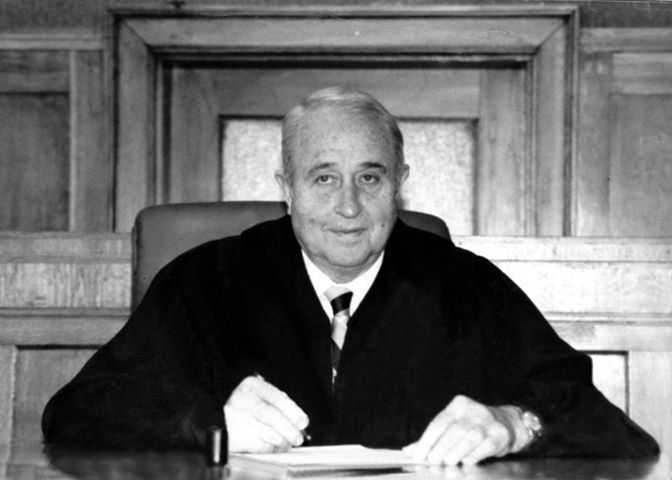
Retired Circuit Judge Lester F. Williamson, Sr., R.I.P.
August 8, 2013 § Leave a comment
Retired Circuit Judge Lester F. Williamson of Meridian died yesterday.
The funeral is scheduled for Monday at 10:30 am at Poplar Springs Methodist Church in Meridian.
Speculation About Undue Influence Will Not Win the Case
August 8, 2013 § 1 Comment
We’ve talked here before about what one needs to prove to make out a case of undue influence in a will contest. It’s not an easy case to make, and the proof must be clear and convincing
In the COA case of Estate of Strong: Johnson, et al. v. Washington, handed down July 16, 2013, contestants Johnson, Foster, Miller and Wright claimed that their father, Rev Strong, had been subjected to undue influence when he executed a will in 1986. Washington came to be appointed executrix of the contested will.
Under the terms of the will in question, Rev. Strong left $10,000 to Miller, and bequeathed some real property to Wright. All of the residuary estate went to his wife, Earnestine, who was the step-mother of the contestants. Johnson and Foster were disinherited.
The parties engaged in discovery, following which Washington filed a motion for summary judgment.
The contestants filed three affidavits in oppositiion to the motion, alleging that Earnestine had been controlling, and that Rev. Strong had stated on many occasions that he regretted marrying her. They averred that Earnestine would not even allow the contestants into the home to visit their father. The contestants admitted that their father had testamentary capacity at the time he executed the will, and that he was of sound mind, They emphasized that Rev. Strong was a private person who handled his own financial and business affairs. There was no proof that Rev. Strong was in poor health or suffered from any condition that made him dependent on Earnestine. The record also established that Earnestine was not present when Rev. Strong executed the will, and that he kept it in a safe deposit box to which Earnestine did not have access.
If the contestants made a triable issue for a jury, then, it turned on their allegations that Earnestine was overbearing and controlling. Did they make a case sufficient to get by MRCP 56?
The chancellor ruled that they did not, granted summary judgment, and the contestants appealed.
Here is how the COA addressed the issues, per Judge James:
¶12. The only evidence the Contestants have to support their assertion of undue influence is the three affidavits alleging that Earnestine was overpowering and controlling toward Rev. Strong. However, not one of the affidavits contains specific facts showing that Rev. Strong was improperly influenced by Earnestine during the execution of the disputed will. The Contestants’ blanket allegations do not pass muster to show a triable issue. “The trial court should only submit an issue to the jury when the evidence creates a question of fact over which reasonable jurors could disagree.” In re Last Will & Testament & Estate of Smith, 722 So. 2d 606, 611 (¶17) (Miss. 1998) (citing Vines v. Windham, 606 So. 2d 128, 131 (Miss. 1992)). Here, the evidence does not formulate a factual question over which reasonable jurors could disagree.
¶13. “A presumption of undue influence arises in a will contest when a beneficiary occupies a confidential relationship with the testator and there is active participation by the beneficiary in either procuring the will or in preparing the will.” [In re Last Will and Testament of] Smith, 722 So. 2d [606] at 611-12 (¶18) (citing Simm v. Adams, 529 So. 2d 611, 615 (Miss. 1988)). However, the existence of a confidential relationship, alone, does not automatically raise a presumption of undue influence. [In re Estate of] Laughter, 23 So. 3d [1055] at 1064 (¶37) (citing Wright v. Roberts, 797 So. 2d 992, 999 (¶21) (Miss. 2001)). There must be circumstances where the beneficiary in the relationship took some active part in preparing the will. Id. (citing Croft v. Alder, 237 Miss. 713, 723-24, 115 So. 2d 683, 686 (1959)). There is no evidence of undue influence here. As previously mentioned, there is nothing in the record to suggest that Rev. Strong was dependent upon Earnestine in any capacity. According to the Contestants, Rev. Strong was very independent and handled his own financial affairs. Earnestine was never granted power of attorney during their marriage. Furthermore, there is no evidence that Earnestine actively participated in the will’s preparation or was present during its execution.
The court also quoted from In re Estate of Pigg, 877 So.2d 406, 412 (Miss. App. 2003) as to what the contestants need to show to make a jury issue:
[¶10] … Those contesting a will need not present sufficient evidence to prove undue influence. The contestants, however, must at least raise sufficient question to cause jurors to conclude that the proponents failed to prove that the will was free of improper influence[.] . . . The jurors had to decide if the inferences of undue influence made the quantum of evidence in support of due execution less than a preponderance. The best evidence on the issue was the testimony of the subscribing witnesses and others who were present during the execution. From no one contemporaneously involved . . . was there any suggestion that Mrs. Pigg was unaware of what she was doing or that her personal desires had been overwhelmed by someone else. Doubts about due execution that arise solely from speculation are insufficient. That would be too light a counterweight to the evidence of proper execution. [Emphasis in original].
The counterweight sufficient to overcome evidence of proper execution is clear and convincing evidence that the the dominant person in the relationship was in a position to exercise undue influence due to the other’s weakness of mind or body, or due to trust, and it has to be proven by clear and convincing evidence. It’s not necessarily whether the dominant person did or did not exercise dominant influence; rather, the issue is whether he was in a position to do so. If the answer to the inquiry is that there is clear and convincing evidence that the dominant person was indeed in a position to exercise undue influence, the presumption arises, and the burden shifts.
In this case the contestants’ proof fell short because they could only speculate that their father acted against his true wishes, and they had no proof that Earnestine was actually in a position to exercise undue influence. The mere facts that she was domineering and even alienating were not enough.
Another Non-Family-Use Case
August 7, 2013 § 2 Comments
I’ve mentioned here before that I am no big fan of the “family-use” doctrine that morphs separately-owned property into marital merely because it was used by the family.
There are some exceptions to the rule, however, as I have posted about. Here is a post where the COA refused to apply it. Here is another post where I pointed out cases holding that neither plantation and maintenance, nor payment of taxes, nor even joint titling convert separate property into marital.
The latest case, Renfro v. Renfro, decided by the COA on July 30, 2013, is yet another where the appellate court did not agree with the chancellor’s application of the concept.
Claudia and Johnny Renfro married in 1987, and had no children. In January, 2011, they separated after Claudia discovered that Johnny was involved in an adulterous affair, and Claudia sued for divorce.
At issue in the divorce was equitable distribution. The parties had accumulated the usual marital things, including cars, retirement accounts and other financial assets, a residence. In addition to all of the other assets, there was a 140-acre tract of unimproved land that Claudia’s mother had deeded to her in 2007.
Following a trial, the chancellor adjudicated all of the assets, including the 140-acre tract, to be marital property subject to division. She allocated one-half of the assets, which totalled in value nearly $600,000, to each party. In her opinion, the chancellor found as to the 140 acres as follows:
The testimony and evidence is substantial that the management of the property, including its enrollment in government programs, planting of trees, leasing for hunting purposes, construction of gates and roads, spraying and paying of taxes was solely at the control of [Johnny]. Further, and perhaps most importantly, [Claudia] indicated that the development and management of the property as a tree farm was for the purposes of providing income for the parties’ retirement. As such, the court finds that the normally non-marital character of the property was changed by the family[-]use doctrine, Algood [v.] Algood, 63 So. 3d 443 (Miss. [Ct.] App. 2011), as well as by conversion by implied gift, Algood, supra, such that the property lost its non-marital nature and now must be considered marital property subject to equitable distribution.
Claudia appealed, complaining primarily that the 140 acres was not marital property subject to division, and that the chancellor had misinterpreted the evidence.
In its opinion, penned by Judge Carlton, the COA found that there was inadequate evidence to support the judge’s finding that the tree farm on the property had been developed as part of the parties’ retirement plan.
As for the other indicia of family use relied upon by the chancellor, the COA said:
[¶16] … We also find error in the chancellor’s determination that Johnny’s actions of enrolling the land in government programs, planting trees, leasing the land for hunting purposes, constructing gates and roads, spraying the land, and paying taxes on the property constituted sufficient evidence to convert the land into a marital asset. See Hankins [v. Hankins,] 729 So.2d [1283]at 1286-87 (¶15); Ory [v. Ory], 936 So. 2d [405] at 411 (¶15). This Court has held that property-tax payments are traceable and do not transmute separate property into marital property. Brock v. Brock, 906 So. 2d 879, 888 (¶50) (Miss. Ct. App. 2005) (quotation omitted) (“[T]he key to determining when there has been transmutation [from separate property to marital property] by commingling is whether the marital interests can be identified, i.e., can be traced.”). We also find no evidence submitted by Johnny to show how the land increased in value during his marriage to Claudia, or that an agreement existed between Claudia and Johnny that Johnny’s actions of managing the land would give him an interest in the property.
¶17. As acknowledged, nonmarital assets may lose their status as such if the party commingles the asset with marital property or uses the assets for the benefit of the family. Johnson, 650 So. 2d at 1286. However, Claudia testified that she and Johnny never used the land for any family purposes. Significant to our analysis, we recognize that in the recent and similar case of Marter v. Marter, 95 So. 3d 733, 737-38 (¶¶14-16) (Miss. Ct. App. 2012), this Court held that evidence that the husband maintained the property inherited by the wife, paid the property taxes, and planted some trees on the property did not convert the property to marital property by virtue of commingling.
¶18. Accordingly, we find the chancellor erred in classifying the 140 acres as marital property. The record fails to show that the real property at issue was converted to marital property through the family-use doctrine, since the property was not used for a family purpose. Additionally, Johnny’s testimony only showed a potential intended purpose for the property in the future. See Deborah H. Bell, Bell on Mississippi Family Law § 6.04 (2005). The record also fails to contain evidence that Claudia commingled the property or used it as collateral for family purposes. See Bell, § 6.04[2]. Also, insufficient evidence exists in the record to show that Johnny contributed anything of significance to the improvement of the property. The record shows little, if any, contribution by Johnny, and shows that Claudia owned the property for only three years while she cohabited with Johnny. For the foregoing reasons we reverse the judgment of the chancery court on the matter of equitable division of the property — specifically, the classification of the 140 acres as marital property — and remand to that court for further proceedings consistent with this opinion.
That is a template you might be able to use in extricating your client’s property from the grasping tentacles of the family-use doctrine.
It’s still beyond me that activities like infrequent use of a beach condo, or fishing in a lake, or use of an antique chair, would convert separate property to marital, while plantation and maintenance would not. But, hey, I’m not complaining. Any exception to this rule is gratefully welcomed by me!
Parties in Adoptions
August 6, 2013 § Leave a comment
It’s obvious that the natural parents and adopting parents are necessary parties in adoption cases. But when you read MCA 93-17-5, you will see that the scope of persons to be included is considerably greater.
The statute requires that the following persons be joined by process or by consent to the adoption:
- the parent or parents, even though one or both are under twenty-one; or
- if both parents are dead, then any two adult kin of the child within the third degree; or
- if both parents are dead and an adult kin of the child has “possession” of the child, then that party must be joined or must consent; or
- the guardian ad litem of an abandoned child, where it is alleged that the parents’ whereabouts are unknown after diligent search and inquiry; or
The statute goes on to say that “In addition,” the following shall be made parties:
- person(s) having physical custody of the child, except foster parents via DHS.
- any person who had been awarded custody of the child by a Mississippi court with jurisdiction;
- the “agent of the county [DHS} that has placed the child” in foster care by agreement or court order;
A consent “may also be executed” and filed by an authorized representative of a “home to whose care a child has been delivered.”
Subsection (2) includes the important requirement that: “The child shall join in the petition by its next friend.”
If the child is more than 14 years old, subsection (4) requires that the child execute a sworn or acknowledged consent, or be joined by service of process.
If the child was born to parents who were not married to each other, the father has no right to object unless he has demonstrated within 30 days after the birth of the child “a full commitment to the responsibilities of parenthood.” Note that the language of the statute only says that the unwed, irresponsible parent has no right to object; it does not say that he is not entitled to notice, although it can be argued that notice is superfluous if he has no standing to object. Determination of the father’s rights may be made in a separate proceeding, pursuant to MCA 93-17-6.
In the recent case of Little v. Norman and DHS, decided July 23, 2013, the COA noted that a grandparent with custody who is required to be joined in the adoption may, nonetheless, have no right to stop it. The sourt stated in ¶16 that: “Mississippi Code Annotated section 93-17-5(1)(ii) (Rev. 2004) provides that certain people ‘shall be made parties to [an adoption] proceeding[,]’ including ‘[a]ny person to whom custody of such child may have been awarded by a court of competent jurisdiction of the State of Mississippi.’ Even so, the Mississippi Supreme Court has held that although a grandfather who was the legal custodian of a child was a necessary party to an adoption, his status did not provide him with ‘the prerogative of consenting to the adoption and by corollary, withholding consent and thereby thwarting the adoption.’” Martin v. Putnam, 427 So. 2d 1373, 1376 (Miss. 1983). And, by way of further explanation, continued in footnote 6 on the same page: “What purpose did the legislature intend by designating parties to an adoption proceeding whose consent was not necessary to its validity? We are of the opinion the legislature’s intention was to bring into the suit those persons most likely to be familiar with the background and needs of the person sought to be adopted so they could give testimony concerning his or her best interest. . . . This of course, accords with our many decisions concerning children wherein we have stated that the best interest of the child is paramount. The designated parties thus become witnesses concerning the facts known to them to aid the trial court in its solemn determination of whether to grant or deny an adoption. We think the testimony from those who are close kin to a child is most significant because, in theory, they love the child best and would give truthful testimony as to the child’s best and enduring interest.” Id., at 1376-77.
I stress with lawyers that it’s better to have to take an extra step in an adoption to get it right than to have to face a motion to set it aside at a later date. Lack of jurisdiction over all the necessary parties is one of those flaws that can be fatal.
 The Better Chancery Practice Blog