FINAL DECISION-MAKING AUTHORITY IN JOINT LEGAL CUSTODY
January 6, 2011 § 3 Comments
MCA § 93-5-24 provides that the joint legal custodians shall “share the decison-making rights, the responsibilities and the authority relating to the health, education and welfare of a child,” and “An award of joint legal custody obligates the parties to exchange information concerning the health, education and welfare of the minor child, and to confer with each other in the exercise of the decision-making rights, responsibilities and authority.”
The problem is that the statute does not delineate exactly how final decisions will be made after the conferring is done. Common sense tells us that there can not be a committee of two. What if, for instance, the father demands that the child attend military school in Chattanooga, but the mother is just as adamant that the child attend Lamar in Meridian? Or how about if one parent believes that the child should have botox injections for cosmetic reasons and the other is opposed? Or one parent takes the position that the child should take ADHD medication, and the other is opposed to medication? Or one wants the child to have the usual childhood immunizations and the other does not out of fear of autism. The statute does not inform us how those ties or any others, some involving important decisions about the children, will be broken.
In this district, both chancellors take the position that joint legal custody is not in the best interest of the child and will not be approved unless there is some form of a tie-breaker provision.
Some lawyers try to skirt the problem by providing in a PSA that the parent with physical custody at the time will have final decision-making authority. This approach does not work, however, because the effect of life-affecting decisions like those enumerated above carry over into the other parent’s custodial time in shared physical custody arrangements.
Most PSA’s address the issue by providing that one parent or the other will have final decision-making, or tie-breaking, authority. That still means that both parents must confer, consult and participate in the decision-making process as required by the statute. Although the physical custodian is the most logical tie-breaker, I had a case once where the mother had sole physical custody and the parents shared joint legal custody of a paraplegic child. They agreed that the father would have final decision-making authority because he would continue to be responsible to transport the child to and from school, to and from all of his activities and family and church events, and to and from Birmingham for numerous and frequent medical visits.
It is okay to allocate responsibility between the parents, as, for instance, where the father is going to pay for private school, and the parties agree that he will have final decision-making authority as to the child’s education, with the mother to make final decisons as to the health and welfare. In such a case, it would be wise to define exactly what the scope of authority would be as to education, since the three realms of decison-making overlap somewhat. For instance: “Father shall have the final decision-making authority as to which school the child will attend in Lauderdale County so long as both parties reside therein; all other decisions will be finally decided by the mother.”
In cases where one parent is the sole physical custodian, the case of Clements v Young, 481 So.2d 263, 266 (Miss. 1985), offers a little help and guidance. In that case, the Mississippi Supreme Court stated:
“Our law necessarily provides that the award of custody to a parent incident to a separation or divorce vests in the custodial parent the right to make, and responsibility for making, day to day decisions regarding the care and welfare of the children. Except as otherwise agreed by the parties in writing, the custodial parent may determine the child’s upbringing, including his education and health and dental care. Such discretion is inherent in custody. It is vested in the custodial spouse though not spelled out in detail in a separation agreement or custody decree.”
Clements does not address what happens where the parties “otherwise agree in writing,” as where they agree to joint legal custody with one to have sole custody. Have they “otherwise agreed” that the sole physical custodian will no longer have final decision authority, or is it presumed that the physical custodian will have it? Clements involved other issues and so is distinguishable on its facts. In my opinion, the best practice where one parent is the physical custodian and they share joint legal custody is simply to name the final decision-maker in the PSA.
An important reminder: I posted before about the danger of relying on the term “primary physical custody.” Designation of one parent as “primary” physical or legal custodian has no legal meaning whatsoever, and will not impart decision-making authority.
LOST WILLS
January 5, 2011 § 5 Comments
Does it ever happen to you that an heir shows up in your office and says something to the effect that “Mom says you kept the original of dad’s will. All we have is this [dogeared, coffee-stained, footprinted] copy,” and hands you a bedraggled handful of papyrus? Well, if it hasn’t, it will.
Of course, you did not retain the original [for you younger attorneys: NEVER keep the original of your client’s will]. So what will you do with this forlorn sheaf?
You will probate it. Yes, probate it. But it’s only a copy, you say; and the original will is required to be produced (See, MCA § 91-7-5, -7 and -31). True. But it is possible to probate a lost or destroyed will.
In the case of Estate of Mitchell, 623 So.2d 274, 275 (Miss. 1993), the court said:
The law regarding admission into probate of a lost will is discussed at length in Warren v. Sidney’s Estate, 183 Miss. 669, 184 So. 806 (1938). Sidney’s Estate sets forth the elements necessary to probate a copy of a lost will are: (1) the proof of the existence of the will; (2) evidence of its loss or destruction; and (3) proof of its contents. Sidney’s Estate, 183 Miss. at 675-76, 184 So. at 807. A fourth element has been added: (4) that the testator did not destroy the will with the intent to revoke it. Robert A. Weems, Wills and Estates § 7-17, p. 216 (1983). This last element, which is most central to this case, arose from the theory that when a will cannot be found following the death of a testator and it can be shown that the testator was the last person in possession of the will, there arises a rebuttable presumption of revocation.
Where a will which cannot be found following the death of the testator is shown to have been in his possession when last seen, the presumption is, in the absence of other evidence, that he destroyed it animo revocandi … 57 Am.Jur., Wills, § 551. Adams v. Davis, 233 Miss. 228, 237, 102 So.2d 190, 193 (1958); Phinizee v. Alexander, 210 Miss. 196, 200, 49 So.2d 250, 252 (1950); Horner, Probate Prac. & Est. § 79 (4th ed.). This presumption extends to all duplicate copies, even executed duplicates. Adams, 233 Miss. at 237, 102 So.2d at 194; Phinizee, 210 Miss. at 199, 49 So.2d at 252; Horner § 79.
The proponent of the will must prove each of these elements by clear and convincing evidence. See Estate of Leggett v. Smith, 584 So.2d 400, 403 (Miss.1991); Estate of Willis v. Willis, 207 So.2d 348, 349 (Miss.1968); Adams, 233 Miss. at 237-38, 102 So.2d at 194. (“The intent to revoke must appear clearly and unequivocally.” Sidney’s Estate, 183 Miss. at 676, 184 So. at 807. “The policy of the law requires such contents to be established by the clearest, most convincing and satisfactory proof.” Robert A. Weems, Wills and Estates § 7-17, p. 216 (1983).
Your petition will have to recite on personal knowledge of the petitioner, or supported by affidavits on personal knowledge, all four of the required factors.
You should probate the lost or destroyed will in solemn form. To do otherwise gives an unfair advantage to the proponent of the missing document. Probate in solemn form also seals off the protests of other interested parties and, as a practical matter, takes you directly to the hearing with notice that you will likely wind up in anyway.
At hearing, you will need to prove your four elements by clear and convincing evidence.
- Proving the existence of the will is not usually much of a problem. You will have that copy, or, if no copy is available, someone with personal knowledge can testify that the will did exist. MRE 1001-1008 would appear to govern the issue. As Rule 1008 states, the issue is for the trier of fact to determine.
- Loss of the will can be proven by testimony that the decedent kept his or her papers in a particular place and that an exhaustive search has not turned it up, or that the cabinet where the will was kept was destroyed by fire, or that it was in a repository that has now vanished.
- The “Dead Man’s Statute” has been supplanted by MRE 803(3), so proof of its contents should not be a major obstacle, so long as there is a witness with personal knowledge.
- And the same hearsay exception would apply to the testator’s destruction or intended revocation.
An interesting wrinkle appears in an ancient case, Vining v. Hall, 40 Miss. 83 (Miss. Err. & App. 1866), that is still good law. In Vining, there was conflicting and inconclusive testimony about the contents of the lost or destroyed will, but no disagreement that it included a revocation clause expressly revoking all prior wills. The court held that the revocation clause was effective despite the fact that the dispositive terms of the will could not be determined. See, Weems, Wills and Administration of Estates in Mississippi, Third Ed., § 7.15.
DO I NEED TO OPEN AN ESTATE TO DO THAT?
January 4, 2011 § 4 Comments
Seated in your office are the decedent’s adult children, asking your advice about daddy’s estate, which consisted of $5,000 in a bank account, a high-mileage car, and his last paycheck from Lockheed, which they have yet to receive. They candidly tell you that they don’t have a lot of money to pay to probate an estate.
I know what you’re thinking: “Oh, well. One more low-to-no fee estate won’t kill me.”
But hold on a minute. Take time out to check out these statutes: MCA §§ 91-7-322 and 323, and 81-5-63 and 81-12-143. You’ll see that they allow you with some simple paperwork to get your clients the money and title to the car without the necessity of opening an estate.
MCA § 91-7-322 and 81-5-63 allows the bank to pay up to $12,500 to the decedent’s “successors” as defined in the statute, with the filing of a simple affidavit. The same section would authorize issuance of title to the car.
MCA § 91-7-323 allows the former employer to pay any outstanding wages directly to the successors.
MCA § 81-12 143 authorizes a savings and loan to pay a savings account to successors without an administration, provided that they execute a bond.
THE SOUND AND THE FURY OF THE UNVANQUISHED POSTMAN
January 1, 2011 § 1 Comment
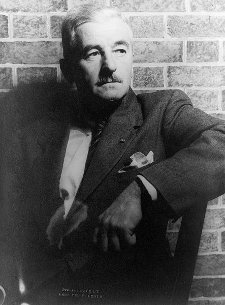 In December 1924, a postal inspector from Corinth, Miss., leveled a series of charges against the postmaster at the University of Mississippi. “You mistreat mail of all classes,” he wrote, “including registered mail; … you have thrown mail with return postage guaranteed and all other classes into the garbage can by the side entrance,” and “some patrons have gone to this garbage can to get their magazines.”
The slothful postmaster was William Faulkner. He had accepted the position in 1921 while trying to establish himself as a writer, but he spent most of his time in the back of the office, as far as possible from the service windows, in what he called the “reading room.” When he wasn’t reading or writing there he was playing bridge with friends; he would rise grumpily only when a patron rapped on the glass with a coin.
It was a brief career. Shortly after the inspector’s complaint, Faulkner wrote to the postmaster general: “As long as I live under the capitalistic system, I expect to have my life influenced by the demands of moneyed people. But I will be damned if I propose to be at the beck and call of every itinerant scoundrel who has two cents to invest in a postage stamp. This, sir, is my resignation.”
Thanks to Futility Closet.
 The Better Chancery Practice Blog