MORE WARNERISMS
December 20, 2012 § 2 Comments
In my prior post on former Chancellor George Warner, I focused on some of his more humorous rulings. But there was sagacity in his rulings, too. Here are a few excerpts his opinions that show his shrewd understanding of the law, as well as the trial court’s and lawyers’ role in enforcing its rule. These are from opinions published in Judge Warner’s book, Through the Eyes of a Judge …
From a 1987 opinion in which he distills the purpose of a court of equity …
That there is no existing case means nothing. If courts never ventured past existing law, our law would become musty, stale, out of date, and soon cease to exist.
This court believes the first great maxim of equity is certainly applicable, to-wit: Equity will not suffer a wrong without a remedy. The plaintiff has suffered a wrong, and this court will provide a remedy.
From a 1988 opinion on the maxims of equity in the grand scheme of jurisprudence …
In law school we hear talk about the great maxims of equity. Sometimes we get so wrapped up in modern practice, we neglect the fact that our Court system is the greatest in the world. Some of the great part on which we operate is embodied in the maxims of equity. These are statements or principles of how Courts should treat litigants and the rights of parties that come before the Court. A lot of our maxims, in my opinion, rise even above the Constitution because they go to the guts and heart of what is going on. The last great maxim of equity was: “No one should be condemned without a legal chance to be heard.” The maxim is so clearly founded in natural justice that even a savage would understand it, and modern government observes it as an indidpensable principle.
From a 1987 opinion on burgeoning family law …
In thirty-two and a half years as a member of the Bar and a member of the bench, the Court has found on numerous occasions why very few lawyers would accept an appointment or ever serve as a Chancery Judge. Those who do, sjhould sometimes have their sanity examined. This is a field of law and this is the Court in which himan emotions and family prroblems are generated with all the animosity God gives people the ability to produce. The more the problems, the better the lawyers, the more the law. This is why family law evolved in the last five years to a third branch of law. A decade ago, we had two branches of law, Civil and Criminal. Family law is the most prolific law in the changing and evolving of laws, rules, procedures, and concepts.
I am quite aware that this case will give the appellate court, and the judge thereon to whom it may be assigned, the opportunity to either have a field day in family law and domestic relations, or simply go bananas, depending on his or her temperament.
from a 1992 opinion on enforcing court orders …
The last time I was in Quitman, a gentleman approached me on the street and said, “Warner, I served on grand juries with you [when the judge served as 10th Circuit District Attorney] thirty years ago. I thought you were dead.” In the movie Jeremiah Johnson, a similar statement was made when a prospector said, “Some folks say you’re dead, some folks say you will never die.”
As long as this Judge is living, one of the most dangerous things people can do is disobey court orders. When I took an Oath to see that they were enforced, I meant when I said: “I will.”
And this from a 1990 decision about where the buck stops — or doesn’t …
Courts do not exist to make people happy with their decisions. We simply have to make a decision as best we can, based on what we perceive to be the facts, the evidence and the law.
* * *
If anybody desires to appeal, perhaps the Supreme Court will find this is an instance where we need divine appellate reaction. Perhaps the judges in Jackson are far more divine in their knowledge than us trial judges, and if so, I would appreciate their insight.
TOOLS OF THE TRADE
December 29, 2010 § 4 Comments
If you were a carpenter, you’d want to have the finest power tools you could afford. If you were a doctor, you’d try to invest in the best diagnostic instruments available. If you were a farmer, you’d want to have a really good tractor with all the implements. If you were a — well, you get the idea. If you’re going to do a job, you need to be sure you have the right tools AND use them.
Lawyers are no different. If you’re going to practice in Chancery Court, you need to have ready access to the information you need AND use it.
Every lawyer’s most important tool is that perfect case on all fours with the one you are presenting to the court. It is a satisfying coup, indeed, to hand the judge that gem of a case with a confident smile while your opponent stands by twiddling his thumbs. The Court of Appeals hands down decisions every Tuesday, and the Supreme Court hands down decisions every Thursday (holidays and vacation days excepted). You can read the decisions as soon as they are published online at the Mississippi Judiciary website. And all of the court rules and directories are there, too.
Finding that perfect case used to be a matter of digging through the digests and key numbers, then finding the volume with your case in it and making a photocopy. Nowadays, you can find what you’re looking for on the Mississippi Bar’s website at Casemaker, which is a free online legal research engine paid for through your bar dues. If you prefer, WestLaw and Lexis have subscription services.
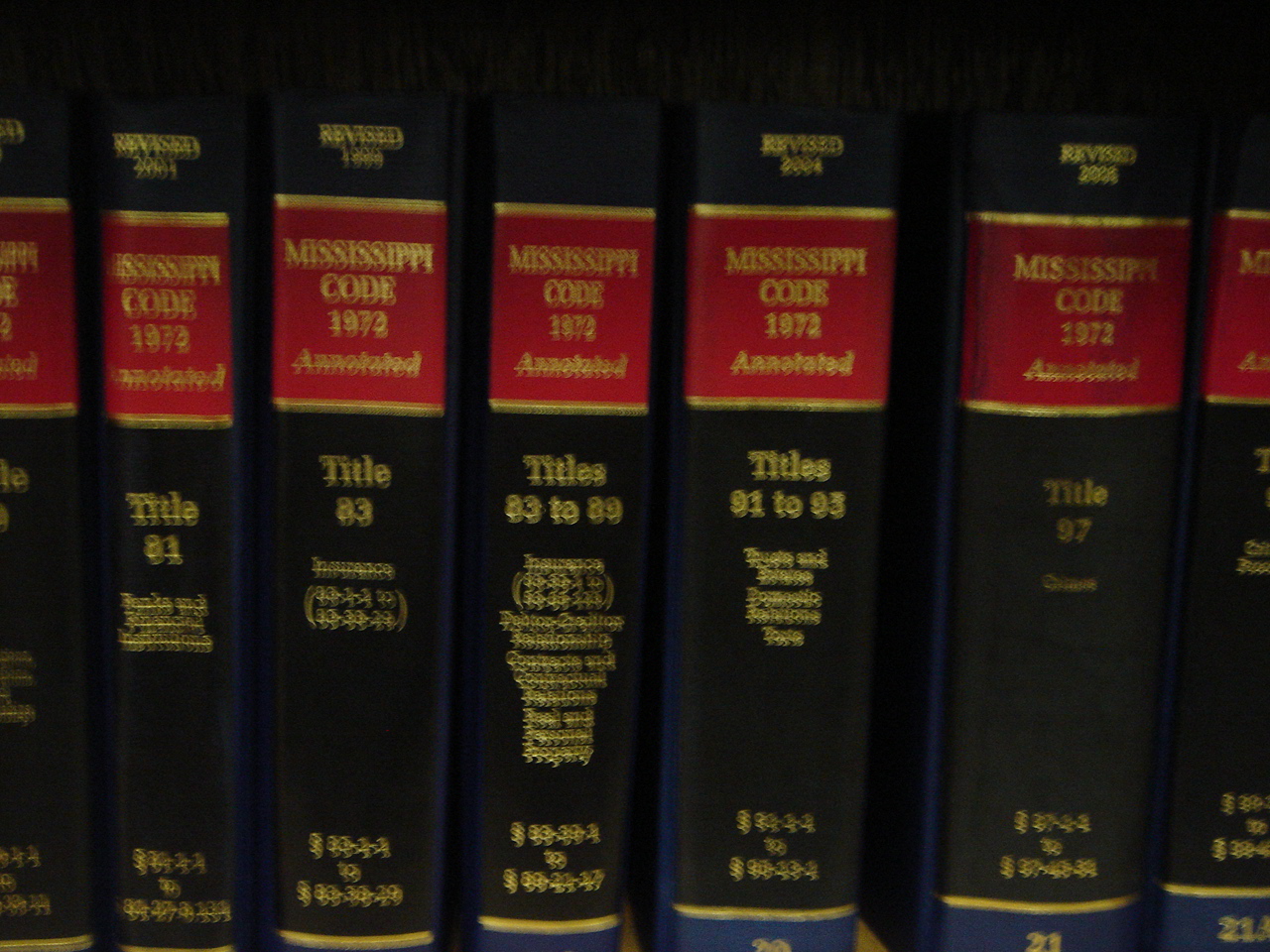 Of course, the MISSISSIPPI CODE is indispensable. If you can’t afford your own copy, you can browse and copy it online through CaseMaker or one of the subscription services, but many of us find it more productive to be able to flip through the pages of a book. The annotations in the code are a gold mine of authority and starting points for further research for any lawyer. If you do any probate work, you will experience a lot of frustration and failed efforts if you do not read the code. The answers to 99% of all questions that lawyers ask me about probate matters are right there in the statutes, in black and white.
MISSISSIPPI RULES OF COURT. Every lawyer who comes to trial should have a copy of the rules with her or him. You will need to flip to that specific hearsay exception so you can convince the court to let in that crucial evidence, or you will need to know what rule to cite to get around that objection to the timeliness of your motion. It’s all in the rules. But before you ever get to court, you need to be familiar with what’s there and where you can find it. It’s never very convincing to say, “Judge, I know it’s in there somewhere; I remember hearing aboout it back in law school.” If you only had one book in your library (and I hope you have more than just one!), it should be your rule book.
Any lawyer who will do much family law should have one or both of these books in his or her library …
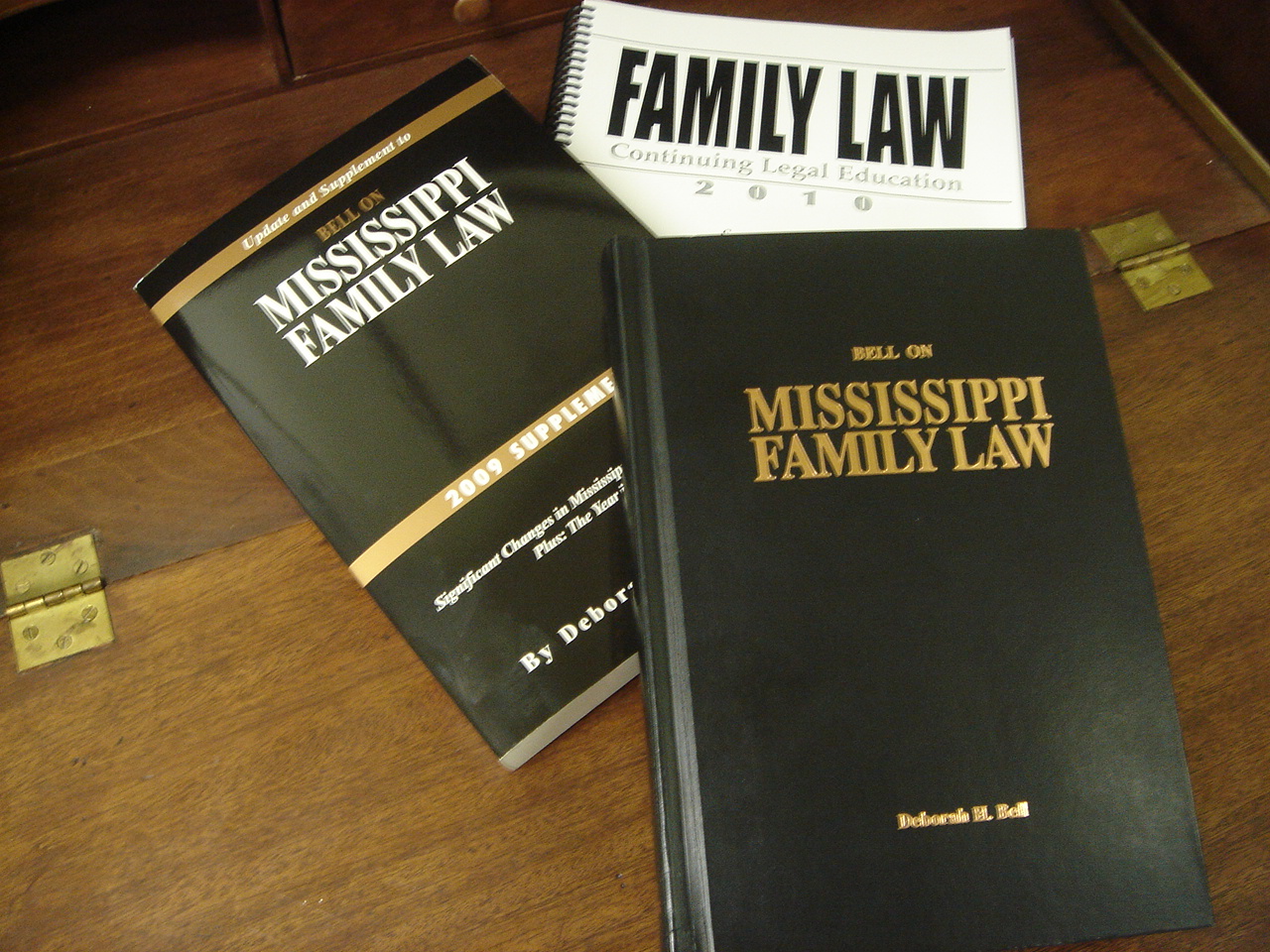 BELL ON MISSISSIPPI FAMILY LAW. Professor Deborah Bell of the Ole Miss Law School has published what many consider the definitive reference work on divorce, custody, child support, and all things family law in Mississippi. Her text, along with its annual supplement, are well organized, thorough and concise statements of the law upon which you can rely in advising your client, preparing your case, presenting your case, and even briefing an appeal. Professor Bell’s work has been cited as authority by the appellate courts and is considered authoritative in trial courts as well. If you have a significant family law practice, you should arrange to take in a Professor Bell seminar. They are held every May, one in Oxford, one in Jackson, and one on the coast, and you will not find a more complete annual overview of developments.
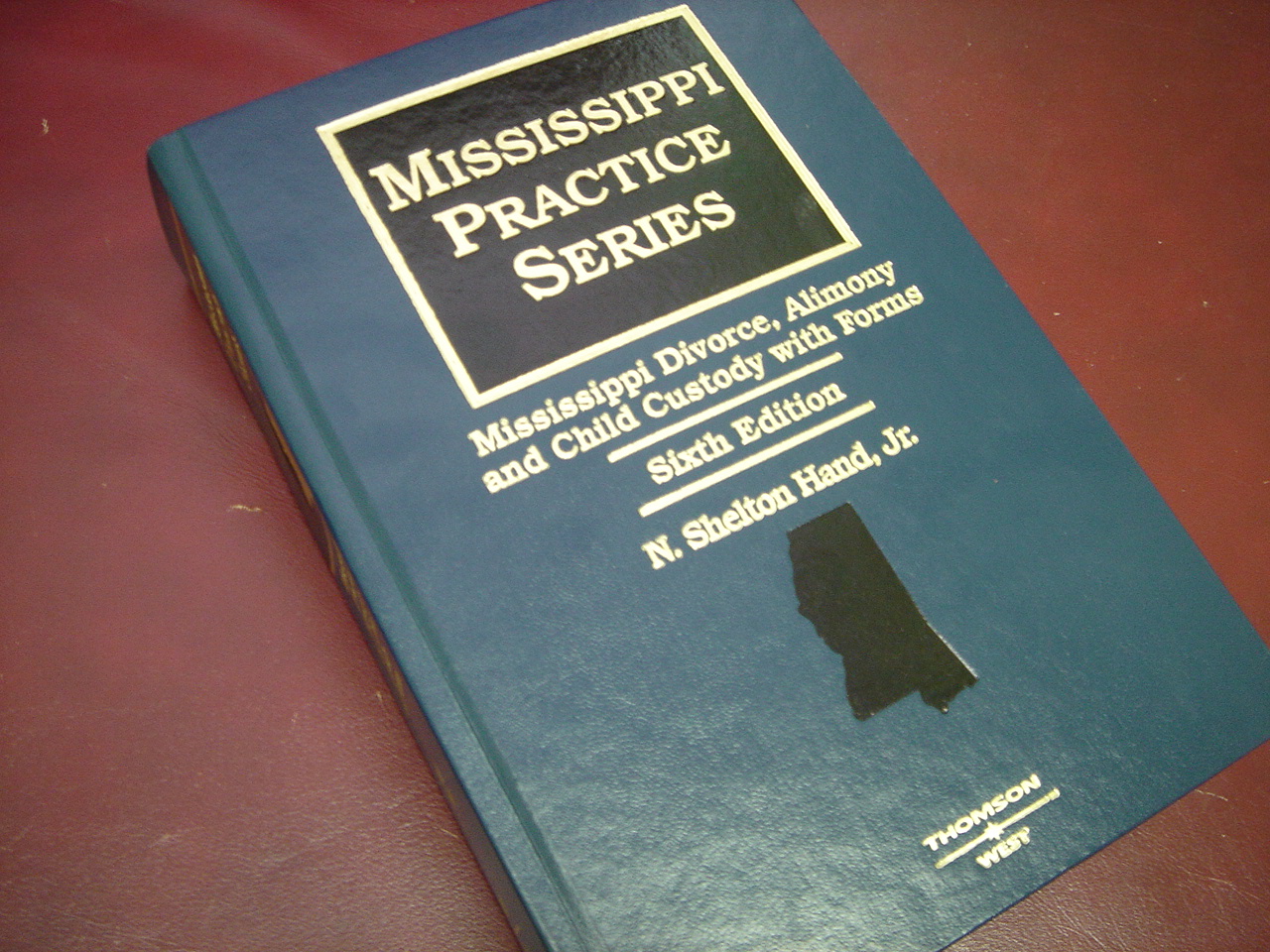 MISSISSIPPI DIVORCE, ALIMONY AND CHILD CUSTODY. Professor Shelton Hand’s treatise has been a go-to authority in Mississippi for many years, and includes suggested forms as a bonus. Another feature of Hand’s work is his discussion of pleadings and procedural matters, which, coupled with the forms, may be a benefit to young practitioners more concerned with filing a viable pleading, having it served, and setting the case for hearing.
If you do any probate work, you might find these texts helpful …
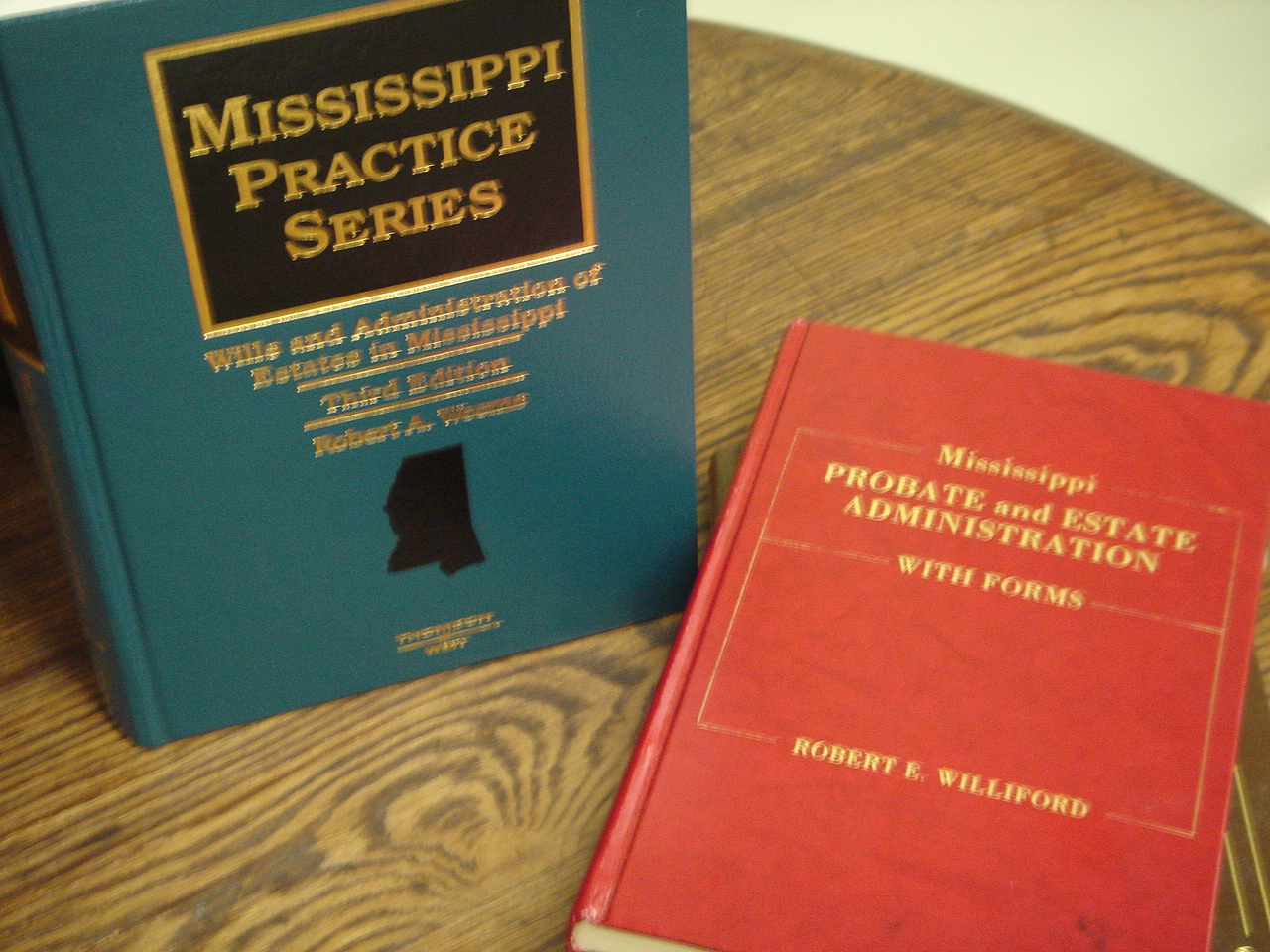 WILLS AND ADMINISTRATION OF ESTATES IN MISSISSIPPI. By Robert A. Weems.
PROBATE AND ESTATE ADMINISTRATION. By Robert E. Williford.
Yes, it’s true that everything you need to know about probate is in the code, but finding the exact answer to your specific question in the multitude of statutes can be a time-intensive task. These two books can help you sort through that haystack of statutes to find the right answer to your question. Complete with case citations and text by the authors.
Some helpful guides to chancery practice …
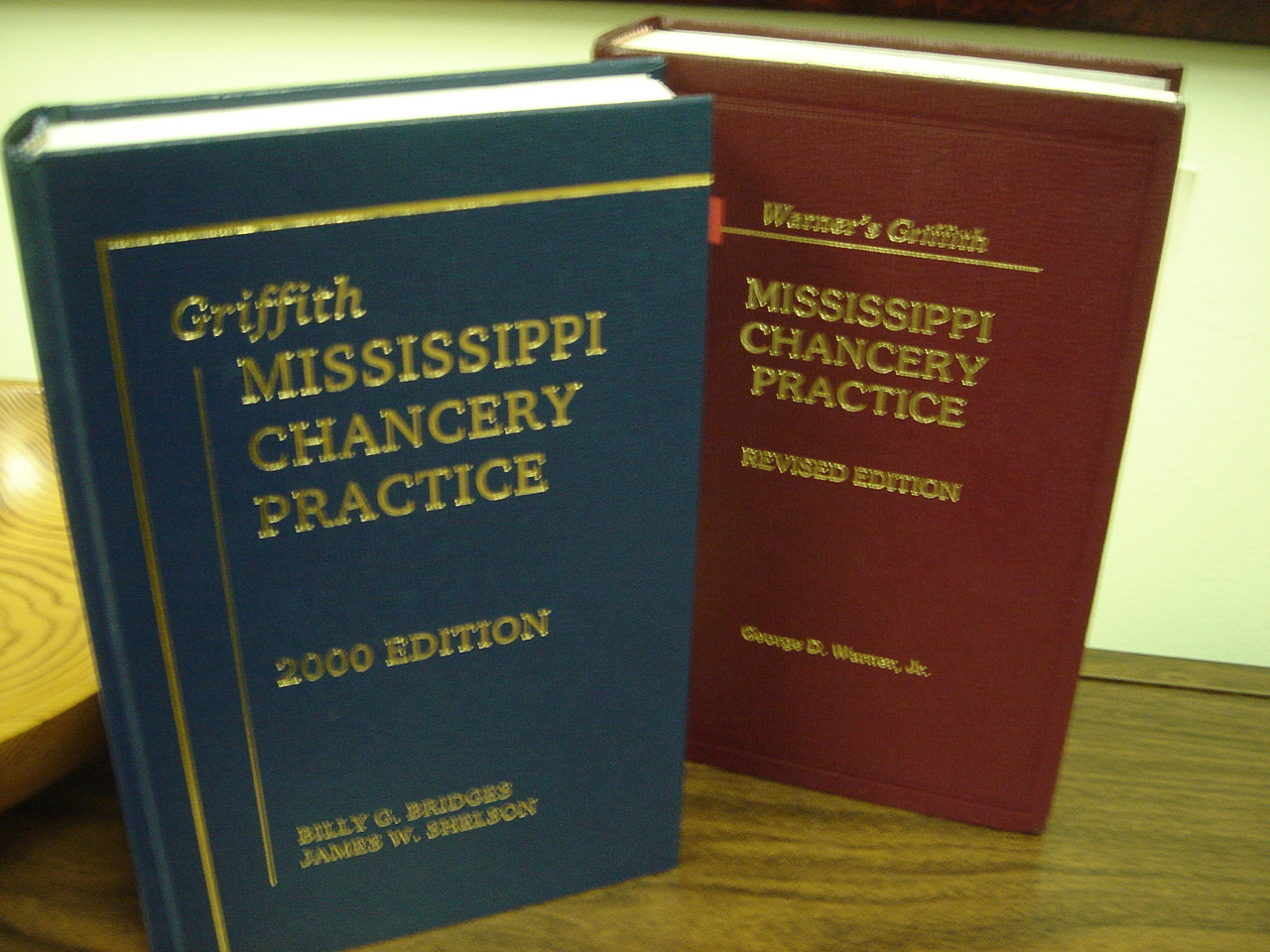 GRIFFITH MISSISSIPPI CHANCERY PRACTICE. By Billy Bridges and James Shelson. Updated Warner’s version of Griffith in 2000. Judge Bridges and Mr. Shelson again updated Griffith through the beginning of the new century.
WARNER’S GRIFFITH MISSISSIPPI CHANCERY PRACTICE. By George D. Warner, 1991. The first update to Judge Griffith’s cornerstone work in more than 40 years. Judge Warner took Griffith’s text and incorporated the Mississippi Rules of Civil Procedure, as well as important developments in the law in the intervening time.
And two old gems that were black letter authority for years …
GRIFFITH’S MISSISSIPPI CHANCERY PRACTICE. 1950 Edition. Originally published in 1925, Griffith is the seminal authority on Chancery Court in Mississippi. Almost all of the procedural provisions have been supplanted by the Mississippi Rules of Civil Procedure and the Uniform Chancery Court Rules, but there is no more authoritative text in Mississippi for understanding the philosophy, history and approach of Chancery Courts.
DIVORCE AND SEPARATION IN MISSISSIPPI. 1957. This work by professor Bunkley updated the original by Judge A.B. Amis of Meridian first published in 1934. There have been so many developments in the procedural and substantive law of the family in our state that it is tempting to regard this book as a mere historical curiosity. Some provisions bear looking at, however. The provisions about how to plead non-residency to support publication, for example, are models that modern-day attorneys should consider. The book was written in an era when careful pleading was essential to survival of one’s suit, and more careful pleading would benefit most lawyers and clients today.
And two recent additions …
PROFESSIONAL RESPONSIBILITY FOR MISSISSIPPI LAWYERS by Jeffrey Jackson and Donald Campbell and COMMENTARY ON JUDICIAL ETHICS IN MISSISSIPPI by Donald Campbell and Jeffrey Jackson arrived on the scene in 2010. These two works were published by MLI (Mississippi Law Institute), a function of the Mississippi College Law School. The unique aspect of these books is their focus on Mississippi, and I am not aware of any comparable works on these subjects of vital importance to bench and bar. Both are impressive in their depth of scholarship and thoroughness. The set is pricy for a small firm at $245, and, admittedly, they are not reference works you will turn to every day, but the odds are that they will be worth every cent you pay when you really need them. If you are practicing in the Twelfth District and would like to look over a set, feel free to drop by my office and browse through for yourself. MLI’s description and an order form can be found here.
 The Better Chancery Practice Blog