WICKED MISSISSIPPI TRIVIA REDUX
March 15, 2013 § 5 Comments
 Back again for your consternation and obsession: Wicked Mississippi Trivia.
The original Wicked Mississippi Trivia can be found here.
Answers to this quiz in a week or so.
1. McKinley Morganfield and Chester Burnett are two world-renowned Mississippians. What were they famous for, and by what names did we know them?
2. What was the name of US President James K. Polk’s plantation in what is now Grenada County?
3. What and where was the second oldest military academy (after West Point) in the US, and the first educational institution in the Mississippi Territory?
4. What now-nationwide organization was first established in 1909 in Crystal Springs?
5. The first franchised Holiday Inn was located in which Mississippi city?
6. Where does the “Southern cross the ‘Dog?” and what does that phrase mean?
7. Casey Jones, a resident of Jackson, Tennessee, met his famous death in Vaughn, Mississippi. In what Mississippi town did he reside from 1893-1896?
8. The adjoining towns of Pittsburgh and Tullahoma were consolidated on July 4, 1836, to form which Mississippi city?
9. Jesse James robbed a bank in which Mississippi city?
10. A traditional belief of the Choctaw people is that they first appeared on earth when they emerged from a cave near the “Mother Mound” in Mississippi. What is the mound called, and where is it?
11. Avalon, a defunct village in Carroll County, is the home town of which famous Mississipian?
12. When he raided CSA President Jefferson Davis’s Brierfield plantation near Vicksburg, Ulysses Grant stole – or “confiscated” – one of Davis’s horses that the Union commander used through the rest of the Civil War. What did the General name his stolen horse?
13. Name the community founded in the Mississippi Delta in 1887 by descendants of Davis Bend, a utopian slave community established by Joseph Davis, older brother of Jefferson Davis.
14. What was the original name of the site that became Jackson before it was known as LeFleur’s Bluff?
15. Which Laurel native became an internationally acclaimed soprano with the New York Metropolitan Opera?
16. Which of Mississippi’s yacht clubs has the distinction of being only the second to be established in the U.S.?
17. Who is “The Sage of Tippo?”
18. Ronald Reagan launched his 1980 campaign for President as the Republican party nominee at what Mississippi event?
19. On May 26, 1736, a combined force of 1,200 French and Choctaws, under command of Bienville, was defeated by Chickasaw defenders in the Battle of Akia, in what present-day Mississippi county?
20. The fictional Dr. Leonard “Bones” McCoy, chief medical officer of the Starship Enterprise in the original Star Trek series, had a Mississippi connection. What was it?
21. Just before the Civil War, 92.5% of this Mississippi county’s total population were slaves–the highest concentration of slaves in the United States.
22. What is the oldest newspaper published in Mississippi?
23. At 86.5%, this Mississippi county has the highest percentage of African American population of any county in the United States. Which is it?
24. What was the historic, now defunct, road that entered Mississippi from Alabama in what is now Lowndes County, crossed Noxubee, Kemper, Newton, Jasper, Jones, Marion, and Pearl River Counties before crossing into Louisiana at the Pearl River twenty miles west of Poplarville, Mississippi?
25. Name the four official sites of the state capital through its history.
Bonus Question: What was the unusual object that fell from the sky in an 1887 hailstorm in Bovina?
SHAMELESS CLE PLUG
March 14, 2013 § Leave a comment
As I have urged here many times, I encourage you to attend Professor Deborah Bell’s Family Law CLE each and every year. I push this particular seminar because it is by far the best, most complete and most insightful summary and analysis of the preceding year’s case devlopments in Mississippi domestic relations law. You will find yourself referring back to the materials from time to time, and I guarantee you will come away with more than a few nuggets that you will find useful in cases you try.
This year’s dates and locations:
- April 25, Jackson, Mississippi Sports Hall of Fame
- May 3, Oxford, Oxford Conference Center
- May 10, Biloxi, Imperial Palace
You can register online by clicking here.
While you’re at it, you should invest in Prof. Bell’s BELL ON MISSISSIPPI FAMILY LAW, 2d ED., which is the definitive reference work for Mississippi family law practtioners. If you are going up in court against colleagues who use this book and you don’t, you will be at a distinct disadvantage.
Disclaimer: I have no interest, financial or otherwise in the seminar or the book. My only interest is in a better-informed and more skilled bar.
HOW THIS WORKS
March 11, 2013 § 4 Comments
Those of you who receive updates to this blog by email got one from me last week with some Mississippi trivia questions. That was a mistake. It was meant to be published at the end of this week and I apparently hit the wrong button, prematurely publishing it. So it appeared on the web site only briefly before I took it down, but the email went out regardless.
Here’s the way WordPress works: I compose posts at my convenience, on days when trials have been settled, or between conferences with attorneys, or at other slack times, and save them as drafts, or save them with a setting to be published at a later time. For example, I am writing this on Friday, and it is set to be published Monday of next week.
Two lawyers have asked me whether I am up at 6:00, a.m., typing feverishly away in an effort to make a post to my blog. No, that’s not the case. The posts are written in advance and appear when I schedule them to do so. Otherwise there is no possible way I could take care of my trial and other business schedule and this, too.
That’s the way it works here at Chancery12.
WEBSTER COUNTY COURTHOUSE RUINS
February 8, 2013 § 1 Comment
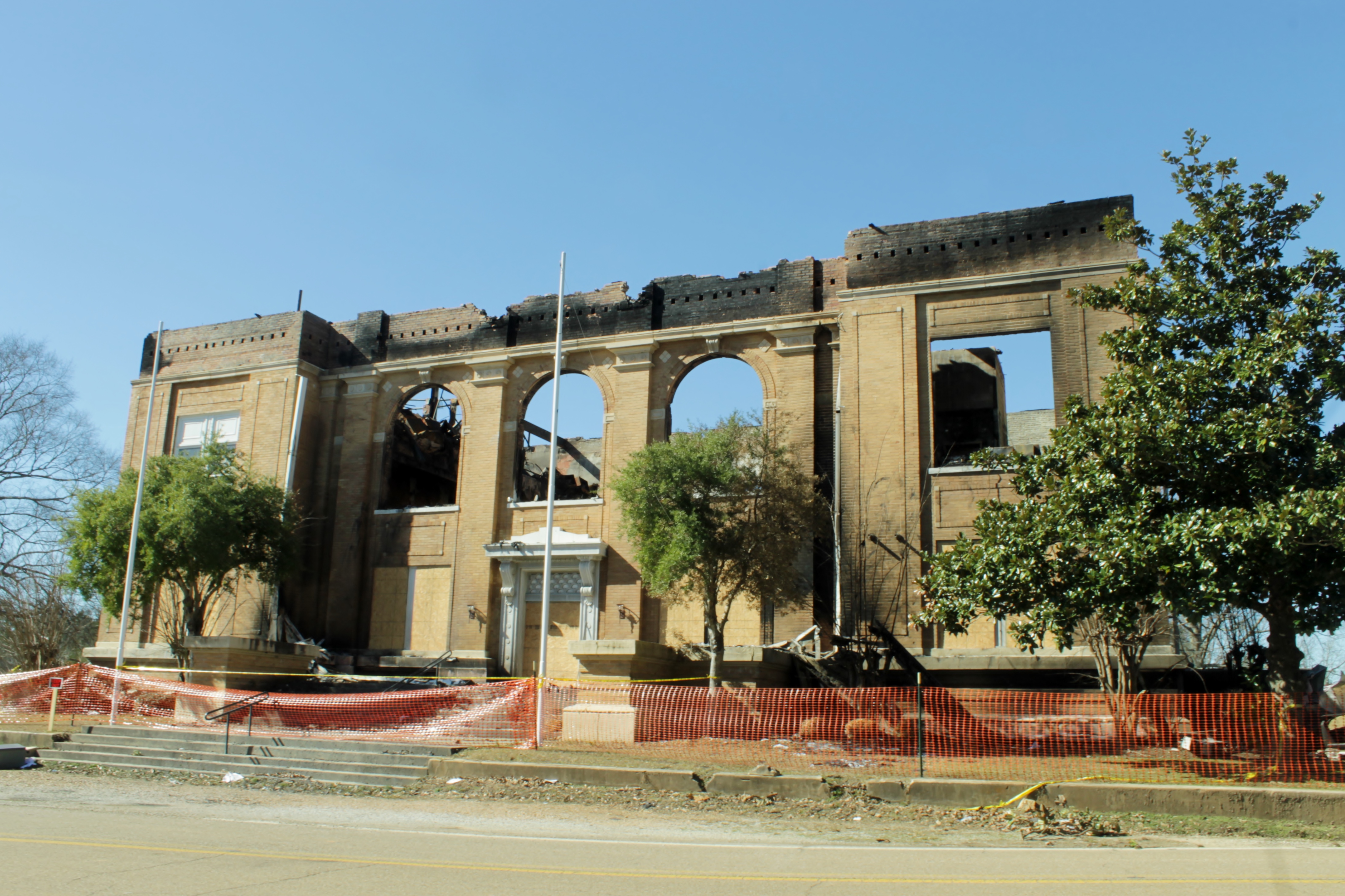
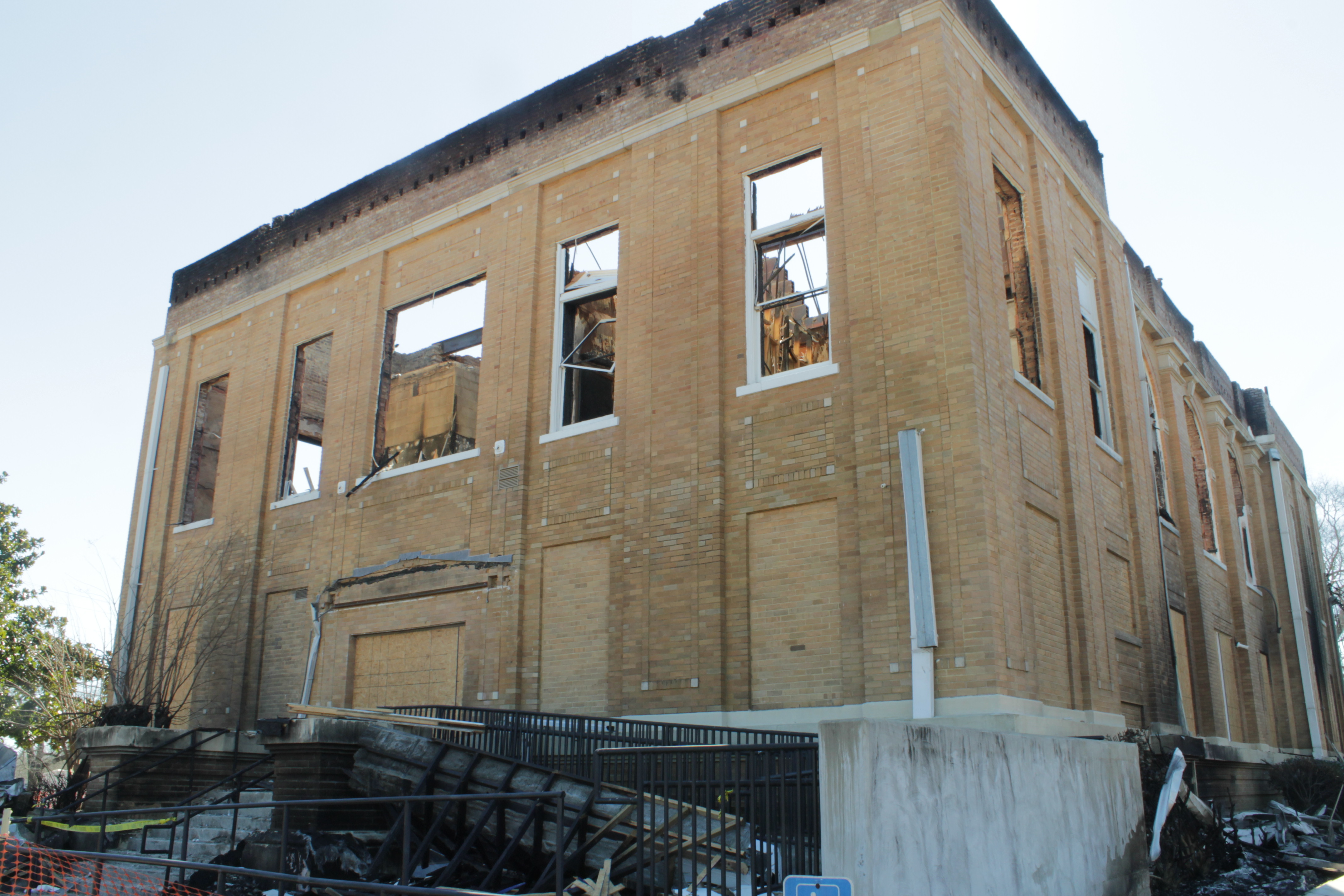
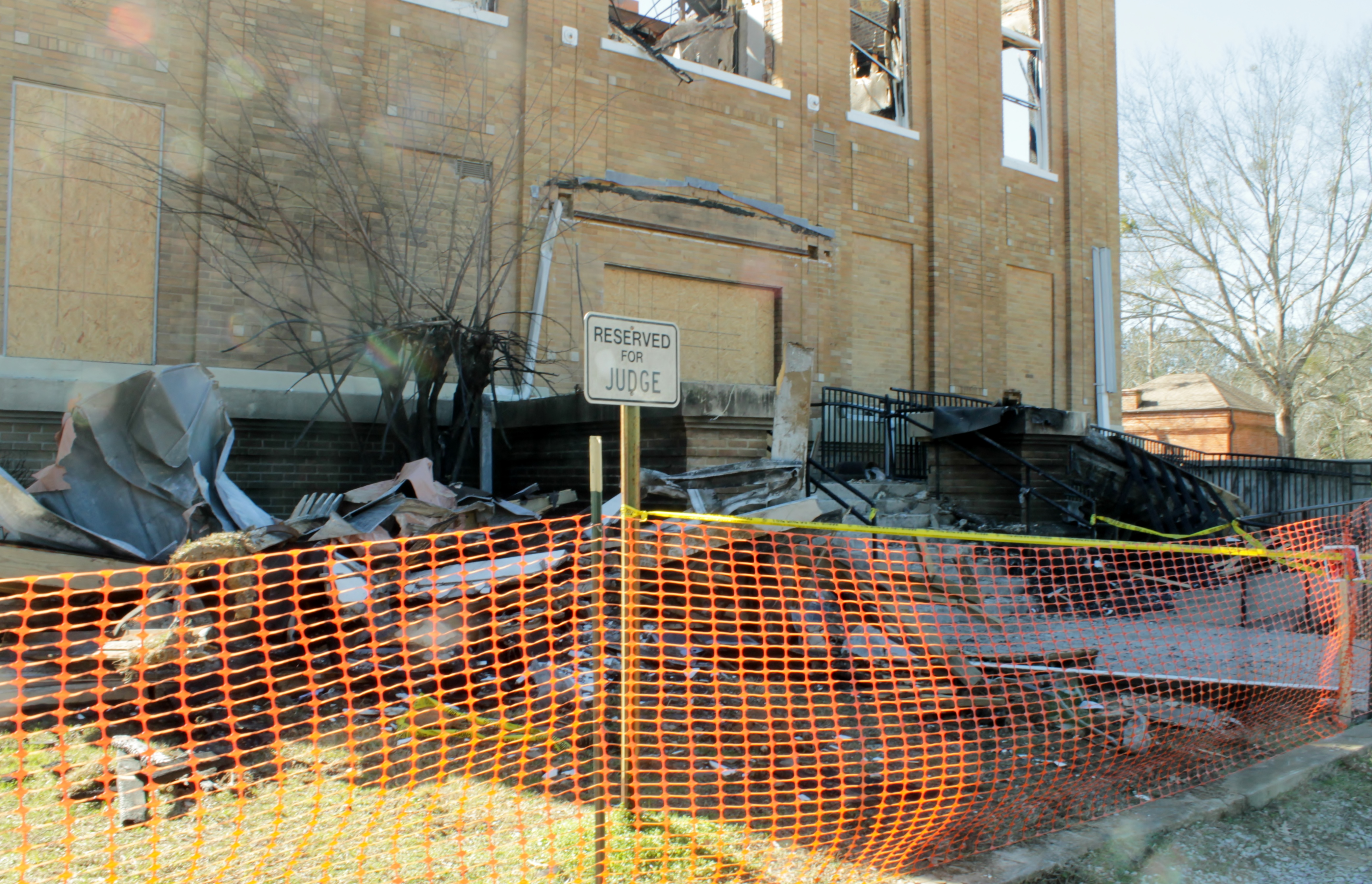
The Webster County Courthouse in the Village of Walthall, pop. 170, burned during the night of January 17, 2013. You can see some photos taken in res gestae at the Mississippi Preservation web site.
The courthouse, located in the geographic center of the county, is four miles north of the nearest town, Eupora. The village has a handful of homes, an Exxon station/convenience store, an appliance repair shop with 50-60 washers and dryers out front, a beauty salon, and a sizeable Baptist church. I stopped en route and took these pictures of the ruins.
This is the front of the courthouse, with the main entrance, facing east …
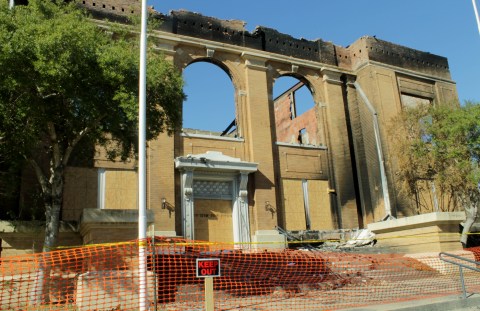
Sunlight where the courtroom was …
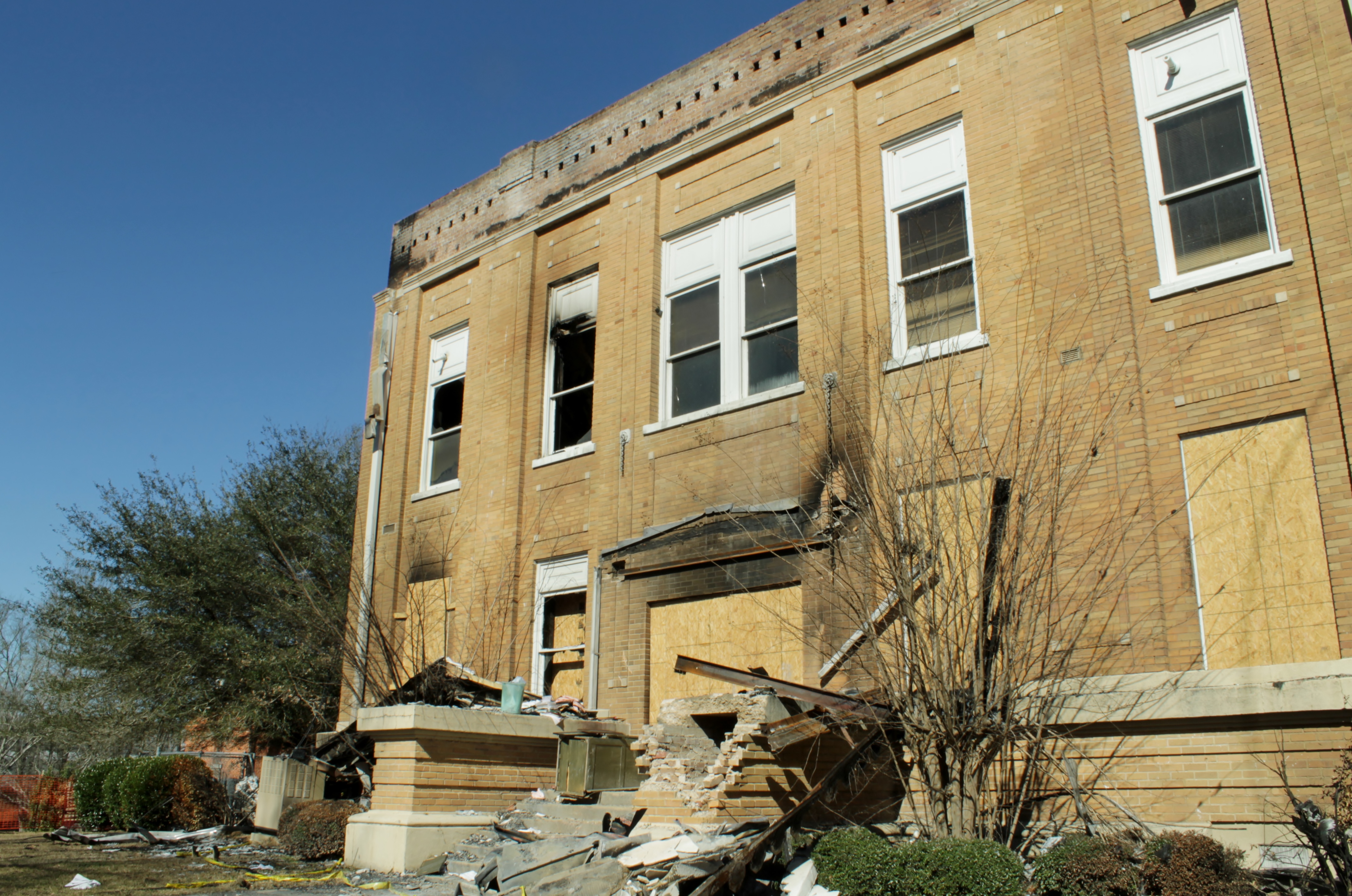
South entrance …
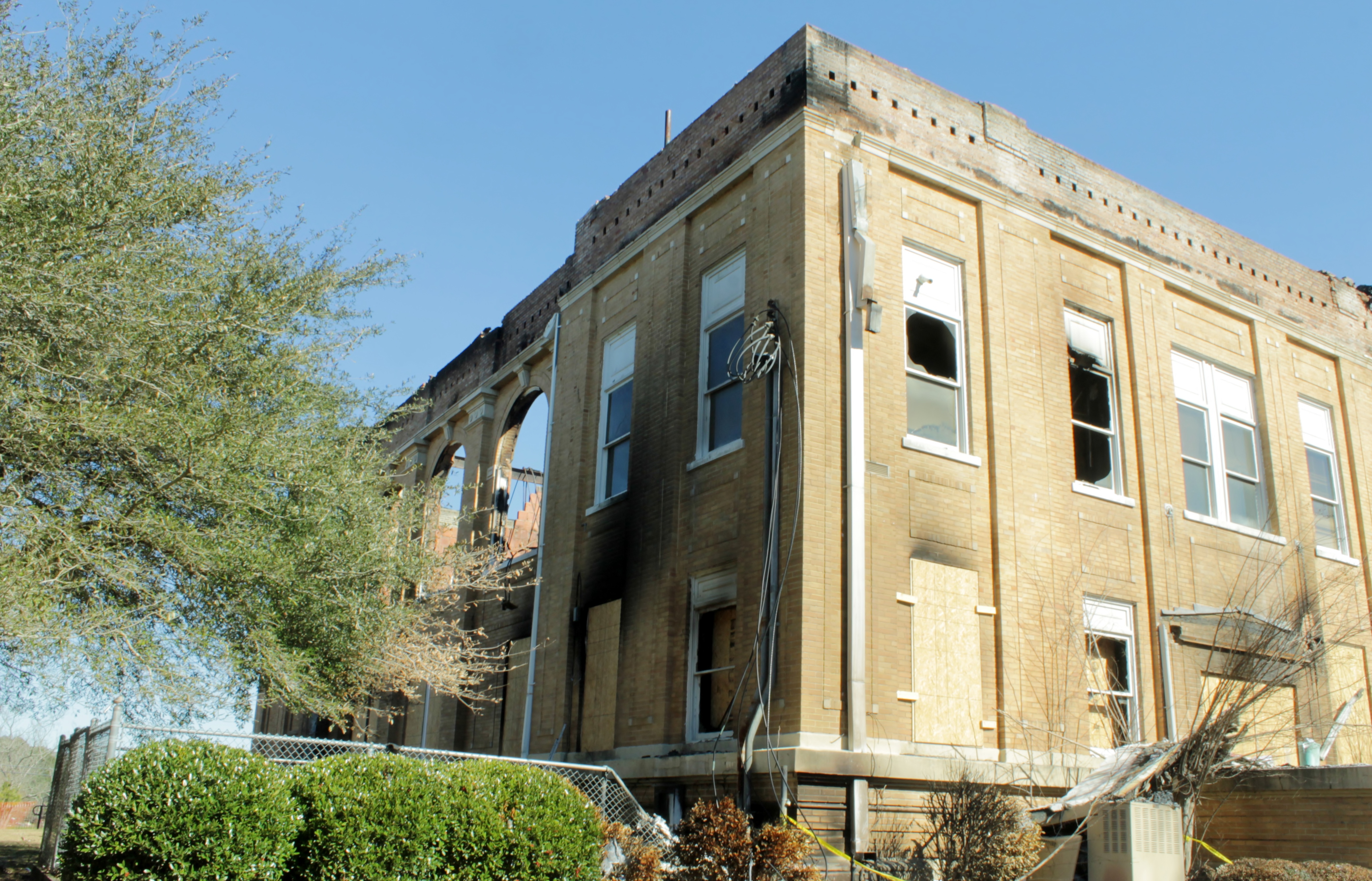
Rear, facing west …
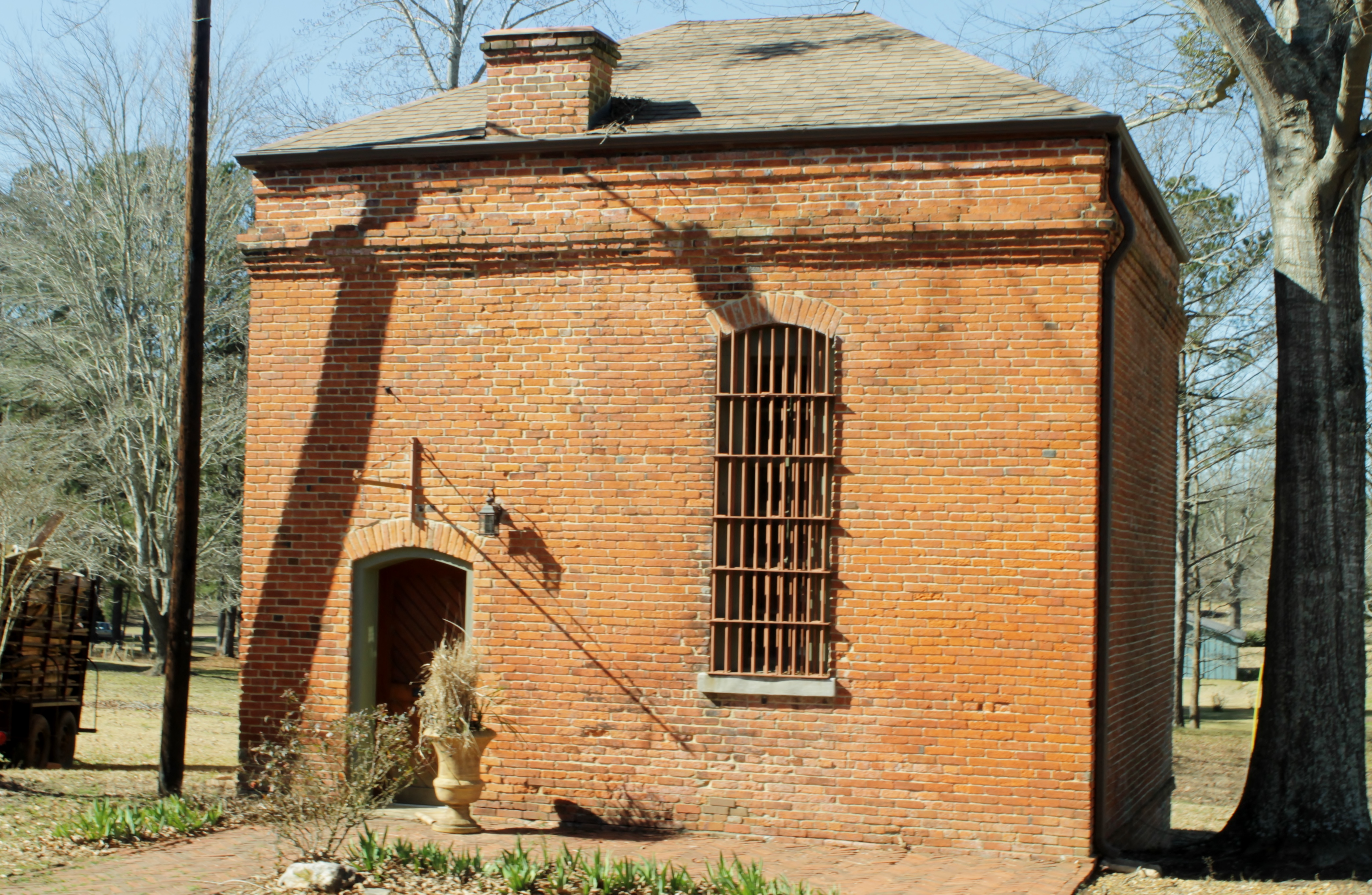
The old jail, immediately behind the courthouse, was not damaged …
North entrance …
Reserved parking …
I read somewhere that the building was constructed in 1915. It was two years short of a century old when it burned.
It’s sobering to ponder what all is lost when a courthouse burns. There are the records, the furnishings, the courtrooms, the equipment, the workplaces. But there also is all of the lore and local history. Buildings can be replaced, but not their souls.
PUTTING SLAVERY ON THE MAP
January 11, 2013 § 4 Comments
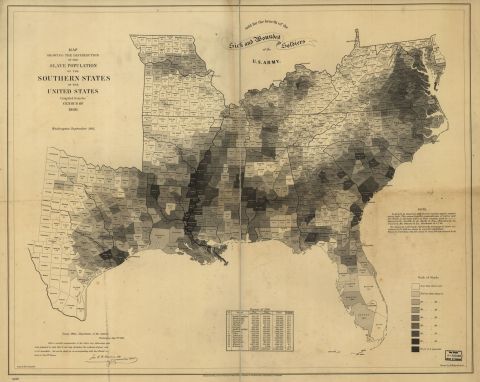
I ran across a most interesting map at the Library of Congress during the holidays. It depicts the percentage of slave population of the southern states, county by county, based on the 1860 census. You can click here or on the map to see it in zoomable form.
The picture below gives you an idea of the scope and distribution of slavery in the pre-civil-war south. The darker the color, the greater percentage of slave population in the county. Washington County in the Delta, for instance, had 92% slave population, while Jones County in the southeastern piney woods, had only 12%. Mississippi’s total population of nearly 800,000 was 55% slave, and only South Carolina, with 57%, had a greater percentage of slavery.
I hate to confess that I had no idea that slaves were as numerous as shown on the map. My ancestors in Vermilion Parish, LA, were poor, illiterate dirt farmers who could not afford slaves. Growing up we learned in school that the same was true of most folks in our area. Yet, when I look at the map, I am surprised that nearly a third of my Parish’s population at the time were slaves. It’s a sobering thought.

