PUTTING SLAVERY ON THE MAP
January 11, 2013 § 4 Comments
I ran across a most interesting map at the Library of Congress during the holidays. It depicts the percentage of slave population of the southern states, county by county, based on the 1860 census. You can click here or on the map to see it in zoomable form.
The picture below gives you an idea of the scope and distribution of slavery in the pre-civil-war south. The darker the color, the greater percentage of slave population in the county. Washington County in the Delta, for instance, had 92% slave population, while Jones County in the southeastern piney woods, had only 12%. Mississippi’s total population of nearly 800,000 was 55% slave, and only South Carolina, with 57%, had a greater percentage of slavery.
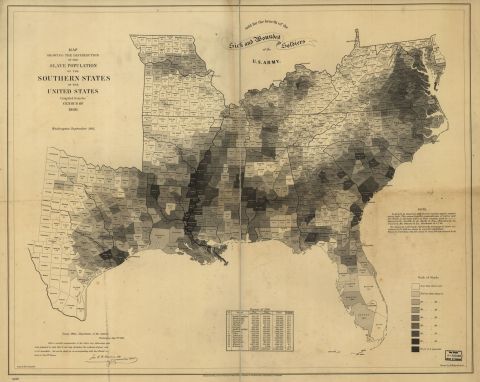
I hate to confess that I had no idea that slaves were as numerous as shown on the map. My ancestors in Vermilion Parish, LA, were poor, illiterate dirt farmers who could not afford slaves. Growing up we learned in school that the same was true of most folks in our area. Yet, when I look at the map, I am surprised that nearly a third of my Parish’s population at the time were slaves. It’s a sobering thought.
NOEL/NEWTOWN
December 21, 2012 § Leave a comment

PRAYER IN FOUR VERSES
1.
The Lord has shown me
His hands held out together,
His empty hands.
There falls only my sorrow
Upon his palms like snow.
Now, Lord, your hands are full
Like snow-laden boughs of an evergreen.
2.
I have nothing, Lord.
Fill me with the lonely emptiness
From which everything is drained,
Until I am like an empty vase
Left at random on a table.
3.
Something I feel
Of sorrow and ecstasy
Fretting to an irritation.
A moonlight edge of hill,
Ever swept by the wind,
Which I call life.
The whole universe
Glowing white with moonbeams.
4.
A thin thirst is spread in me
Like the violet twilight over a December field.
Crossing over the chilled waters of half-mockery and half-regret,
I proceed toward you, Lord.
Drench my cheeks with hot tears
And drown me in your mercy.
— Park Mok-wol (1916-1978)
 The Better Chancery Practice Blog