PROVING TAX EFFECTS OF ALIMONY
September 2, 2010 § 3 Comments
Armstrong vs. Armstrong, 618 So.2d 1278, 1280 (Miss. 1993), sets out the factors that the trial court is supposed to consider when adjudicating whether to award alimony, and if so, the form, duration and amount.
All of the Armstrong factors are important, and failure to prove even one can doom your claim. One of those factors is “The tax consequences of the spousal support order.”
There are only two ways to establish the tax consequences: (1) Have an expert testify or offer into evidence a learned treatise; or (2) Agree with opposing counsel what they are and present the agreement to the court.
It doesn’t take a legal scholar to appreciate the advantages and disadvantages of these approaches. An expert can offer clarity, but she can be asked about so many extraneous matters on cross until the court is bewildered. A learned treatise can be precise and clear, but you still need to lay a foundation for it with an expert in most cases. In either case, experts are expensive.
By contrast, it doesn’t take much to convince opposing counsel that it is to both parties’ benefit to enter into a stipulation as to the tax consequences. That way, both parties have evdence in the record for the court to consider, and if the case is appealed, the Court of Appeals is not left scratching its collective head about why there is no proof of the tax consequences.
Back when I was practicing, several of us attorneys colluded and came up with a form for a stipulation. I believe it covers every base. It was done several years ago, and may not reflect intervening changes in the tax code, but it will at least provide a template for you to adapt to the current law.
Here is the form:
| MISSISSIPPI CASE LAW | FEDERAL INCOME TAX |
| “Lump-Sum Alimony” | “Lump-Sum Alimony” |
| Represents part of the equitable distribution of the marital estate. Is a fixed sum not subject to modification. Obligation to pay continues after the death of the payee or payer. | Represents a property settlement for income tax purposes and is not taxable by the payer or taxable to the payee. Is not alimony for income tax purposes because payments would continue, by operation of law after the payee’s death. |
| “Periodic Alimony” | “Periodic Alimony” |
| Is based on the payer’s duty to support the payee in the manner to which she or he had become accustomed, is modifiable and terminates on payee’s remarriage, death, or payer’s death. | Is tax deductible by the payer and taxable to the payee; i.e., qualifies as alimony for tax purposes. The reason periodic alimony qualifies as alimony for tax purposes is because under Mississippi law there is no liability to make any payment (in cash or property) after the death of the recipient spouse. |
| “Rehabilitative Alimony” | “Rehabilitative Alimony” |
| Is for a fixed term, but is modifiable. | If the liability to make the payments stops after the death of the recipient spouse, then rehabilitative alimony would qualify as alimony for income tax purposes. |
-
The payment is in cash.
-
The instrument does not designate the payment as not alimony.
-
The spouses are not members of the same household at the time the payments are made. This requirement applies only if the spouses are legally separated under a decree of divorce or separate maintenance.
-
There is no liability to make any payment (in cash or property) after the death of the recipient spouse.
-
The payment is not treated as child support.
*********
The obvious advantage of the stipulation is that it establishes the fact without expense and both parties have the information in the record. Unfortunately, this is an element of alimony proof that is almost never addressed by the attorneys in a trial, and it could cost your client dearly.
ATTACK OF THE KILLER EARWIGS
September 1, 2010 § 1 Comment

Bedbugs
The latest fad in the anxiety/nightmare industry is bedbugs. Seems like every media outlet has close-up photos of the little beasts the size of shetland ponies roaming mattresses across the country in cornucopious profusion awaiting fleshy morsels to chomp off of unwary humans.
In Chancery Court our “bedbug” is the dreaded earwig.
Uniform Chancery Court Rule 3.10, entitled EARWIGGING THE CHANCELLOR PROHIBITED, provides in part:
“No person shall undertake to discuss with or in the presence or hearing of the Chancellor the law or the facts or alleged facts of any litigated action then pending in the Court or likely to be instituted therein, except in the orderly progress of the trial, and arguments or briefs connected therewith. No attempt in any manner, except as above stated, to influence the Chancellor’s decision shall be made. No person shall send any written communication to the Chancellor concerning a pending action in the Court without delivering or mailing a copy of that communication to the opposing party …”
The language about written communication and copy to the opposing side has given rise to a curious practice among some attorneys that can be illustrated in the following scenario:
Lawyer A sends a letter to the Chancery Judge describing the scurrilous actions of the opposing party, including pillage, wantonness and rapine. There in the lower left-hand corner of the letter is the notation “cc: counsel opposite.”
When the judge questions the propriety of the letter, Lawyer A responds innocently that he complied with the rule because he sent a copy to opposing counsel.
With all due respect, if any is due, that practice is undoubtedly in violation of the rule and is, without question, earwigging.

Potential earwigs
The provision for copy of written communication to opposing counsel includes no exception to the preceding two sentences prohibiting communications about the merits of the case. It simply means that, if communication by letter is proper, as where it is necessary to transmit a copy of an agreed order, then a copy of the proper communication must be sent to opposing counsel.
By the time that opposing counsel has received a copy of the ex parte correspondence, the damage has already been done. The bell cannot be unrung, as the adage says. The judge has heard one side alone on the matter, and the judge’s impartiality and independence is in question from then on out. If the judge rules for the side that sent the letter, was the judge unduly influenced? If the judge rules against the side that sent the letter, was the judge trying to lean the other way to prove impartiality? We can never know what might have been because the ex parte communication has called the judge’s impartiality into question.
In my court, if you have allegations to make on the merits, put them in the form of a pleading and set the matter for hearing, and I will make a judgment after hearing both sides. Don’t poison the well that both parties have to drink from.
If you introduce the dreaded earwig into Chancery Court, prepare to be fumigated.

Genuine earwig
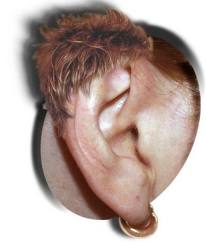
Genuine Ear Wig
TRIAL BY CHECKLIST: LUMP SUM ALIMONY
August 31, 2010 § 9 Comments
A practice tip about trial factors is here.
The factors that the trial court must consider in making an award of lump sum alimony are:
- Substantial contribution to accumulation of the marital assets by quitting work or assisting in the business;
- A long marriage;
- Financial disparity;
- Other considerations, including payor’s assets and payor’s stability or instability.
Cheatham v. Cheatham, 537 So.2d 435, 438 (Miss. 1988). NOTE: these factors predated Armstrong (periodic alimony) by five years, and the Armstrong factors essentially overlap these. It may be preferable to cover all of the Armstrong factors coupled with a specific request for lump sum alimony as well as periodic or rehabilitative.
PROBATE IN SOLEMN FORM
August 30, 2010 § Leave a comment
[This outline is based on the 15th Chancery Court District Newsletter published by Chancellor Ed Patten]
Petition filed to probate will in solemn form.
- Notice to all interested persons. § 91-7-19, MCA.
- Process is issued under Rule 81, MRCP.
- At the petition of either party, the issue of devisavit vel non — whether the will is the valid last will and testament of the decedent — may be tried.
Hearing.
- Either party may request a jury trial. § 91-7-19, MCA.
- Burden of proof is by a preponderance of the evidence.
- If the will has already been admitted to probate in common form, the prima facie burden of proof has been met, and the burden of proof shifts to the contestants to overcome thr proponent’s prima facie proof as to the will’s validity. § 91-7-27, MCA.
- Tactical advantage if the will has already been admitted to probate in common form. § 91-7-29, MCA.
Adjudication.
- Binding on those made parties to the proceeding.
TRIAL BY CHECKLIST: PERIODIC AND REHABILITATIVE ALIMONY
August 27, 2010 § 19 Comments
A practice tip about trial factors is here.
Armstrong vs. Armstrong, 618 So.2d 1278, 1280 (Miss. 1993), sets out the factors that the trial court must consider and address in making a determination about whether to award periodic and/or rehabilitative alimony. They are:
- The income and expenses of the parties.
- The health and earning capacities of the parties.
- The needs of each party.
- The obligations and assets of each party.
- The length of the marriage.
- The presence or absence of minor children in the home, which may require that one or both parties either pay, or personally provide, child care.
- The age of the parties.
- The standard of living of the parties, both during the marriage and at the time of the support determination.
- The tax consequences of the spousal support order.
- Fault or misconduct.
- Wasteful dissipation of assets by either party.
- Any other factor deemed by the Court to be “just and equitable” in connection with the setting of spousal support.
Before the court can reach the issue of alimony, the court must first adjudicate equitable distribution and determine whether any need for alimony can be alleviated by a greater share of equitable distribution. This means that the factors for equitable distribution (Ferguson factors) must be presented in alimony cases. If, after equitable distribution, the court finds that the needs of both parties are met and there is no disparity, the court does not consider alimony.
Professor Deborah Bell in her MISSISSIPPI FAMILY LAW treatise and her annual seminars has done some important research into how length of marriage and relative income affect awards of periodic, rehabilitative and lump-sum alimony. You should become very familiar with her work if you are going to take on an alimony case.
Caveat: This is an area of the law in flux, and the cases are significantly fact-driven. You should do some research for authority supporting your position pro or con before going to trial. There is plenty of case law on both sides of the issue.
WHO RETAINS THE ORIGINAL OF A PROBATED WILL?
August 26, 2010 § 13 Comments
Twice this summer, the deputy Chancery Clerks in Lauderdale County have been confronted by lawyers wanting to probate original wills and demanding to retain the original. One was from another district with large cities to our west, and the other was, I am sad to report, from closer to home. The clerks, I am glad to report, stood their ground and demanded the original for filing. Both lawyers condescendingly made it clear that our clerks are backward ignoramuses, and one went so far as to say that ours is the only district that makes the ridiculous demand for the original will. Which is where I was called in — apparently it is the Chancellor’s role to determine as between eminent lawyers and lowly clerks just who is the backward ignoramus.
Now, in all my years in the law, I had never heard of a lawyer in Mississippi retaining an original will after its admission to probate. But then again, we are more or less country peasants in this part of the state, and some things do pass us by. As is my anachronistic, unsophisticated practice, I sought for the answer in that arcane repository of gnostic mysteries of the law that remain so seemingly inaccessible to most practicing attorneys: The Mississippi Code.
It only took me a few minutes to leaf directly to Section 91-7-31, MCA, which states:
All original wills, after probate thereof, shall be recorded and remain in the office of the clerk of the court where they were proved, except during the time thay may be removed to any other court under process, from which they shall be duly returned to the proper office. Authenticated copies of such wills may be recorded in any county in this state.
So there you have it. The statute unambiguously requires that the original must be surrendered to the clerk of the court where the will is probated, and the clerk is responsible to record it and keep it.
Even though the truth revealed in the statute would seem to be clear, I realize that I do learn something new each day, and I posited to myself that there might be some angle to this issue that was known only to these superior attorneys that neither I, nor the state legislature, nor nearly 200 years of Mississippi jurisprudence had taken into account. Accordingly, I raised the question at the Chancery Judges’ study meeting last weekend whether any judges were aware of any districts where the statute was not being followed, or of any exception to the rule, and the unanimous response was no.
In our own, primitive way here in the hinterland, we try to follow the law, and when we do so, we will look first to the Mississippi Code and the Chancery Court Rules and not to the lawyer’s interpretation. We know that is a backwards and so 20th-century approach, but that is the old-fashioned way we still do it. We apologize if that offends your more cosmopolitan sensibilities that may not allow you time between workouts at the gym to look up the law. If our humble practice is too “slow lane” for you, perhaps you should pass that estate off to a local lawyer who is more accustomed to our rustic ways.
Practice Tip: (1) Read and know the law. (2) Apply Practice Tip (1) before acting like a jerk toward the Chancery Clerks. Oh, and while you’re at it, refresh yourself on the Mississippi Lawyer’s Creed, especially that part that reads: “To the courts, and other tribunals, and to those who assist them, I offer respect, candor, and courtesy. I will strive to do honor to the search for justice.”
IS THIS THE SOLUTION TO PRO SE LITIGATION?
August 25, 2010 § 7 Comments
A post about proposed changes to the pro bono rules for lawyers is here. There is a thoughtful comment to that post that highlights some dimensions of the situation.
It’s no secret that pro se litigants are appearing more and more frequently in Chancery Court. Whenever I ask a self-represented litigant why he or she did not hire an attorney, cost is always the response.
In our district, it’s not uncommon for a simple, irreconcilable differences (ID) divorce to cost upward of $1,500 to $2,500, plus court costs, although I have heard of some lawyers charging as little as $250 plus costs for an ID divorce with no children.
Self-representation, however, is not limited to routine, uncomplicated matters like ID divorces involving no children, no property, no joint debts and no other problems. I see pro se litigants in all kinds of matters. I presided over a termination of parental rights case not too long ago where the father represented himself and lost. I have seen pro se litigants in an adverse possession case, contempts, paternity, and even in a partition suit where, believe it or not, both sides were pro se. I can say unequivocally that I have never seen a party who proceeded pro se in a contested case leave the courtroom in better shape legally or equitably than he or she was when they walked in.
Although most all say that they choose to proceed pro se due to the rising cost of legal fees, I find in the course of things that others simply underestimate the complexity of the issues involved and think that legal matters are little more than filling out a few sheets of paper and filing with the court. Still others are lured by the siren-song of the internet sites that push cheap fill-in-the-blank do-it-yourself legal proceedings. The common denominator among all of these is that they are looking for a cheap, one-size-fits-all, easy solution to what may be a complicated situation.
These are the people who wind up in court pro se. In many cases, those pro se parties are getting simple ID divorces using kits they purchased on-line. Some are getting pleadings prepared by “secretarial services,” in violation of state law prohibiting practice of law without a license. The simple cases with no children do not usually give rise to later litigation. Pro se litigants with children, however, are a recurring problem.
Problems with child support provisions, joint and sole custody provisions, division of property, and allocation of debts are all common problems in these do-it-yourself cases. I have one pair of parties in Clarke County that I have sent back to the drawing board four times, and, although they are my most extreme case, they are by no means the only case that I have had to treat that way. I have just about decided that, if there are children, I will require the parties either to have an attorney or I will appoint a guardian ad litem at their expense.
The self-represented parties seldom understand why they can’t simply have their papers signed, and they are invariably frustrated when I tell them that I can not advise them how to draft an acceptable child support provision, or why that waiver filed a week before the complaint won’t cut it, or why they need a property settlement agreement when they don’t have any property.
How do we make legal services more affordable, thus reducing the pool of pro se litigants? Some claim that “limited scope representation,” also known as “unbundling” is the answer to lower legal fees. In essence, it is a representation arrangement in which the respnsibility of the lawyer is limited and the fee is resultingly lower. The attorney may, for instance, agree only to advise one of the parties about the language of the property settlement and child support agreement, or simply to prepare pleadings. The clients buy only as much legal service as they feel they need.
The Supreme Court’s Commission on Access to Justice proposed an amendment to Rule 1.2 of the Rules of Professional Conduct to allow for limited-scope representation. They met on Monday, August 23, and since the comment period has expired, I assume they will pass the rule on to the Supreme Court for adoption. I am all for it.
Although the proposed rule approves and encourages the practice, it does not address how a representation agreement would read so as to cover all of the ethical concerns that might arise. There is information available online, however, that may provide a starting point for lawyers. The LAWYERS USA website offers some information. The ABA has some info. The Civil Justice Network also has some info. A paper presenting the pros and cons of the practice is here.
Whether limited scope representation is the answer to the growing numbers of pro se litigants, I have no way of knowing. I do believe that it has the potential to help dramatically because it will decrease the amount of time judges will need to devote to scrutinizing pro se litigants’ pleadings and paperwork.
One caveat: I will not approve a limited-scope representation arrangement in any probate matter. Rule 6.1 of the Uniform Chancery Court Rules requires that every fiduciary retain an attorney, and you will be expected to continue in your role as counsel once you are in until you find substitute counsel. I will not allow the operation of the new rule (if it is enacted) to create an end-run around Rule 6.1.
An approach to the pro se phenomenon that I can not endorse is continued encouragement of laypeople to tackle more of their own legal matters. I saw a bar-produced video of smiling legal professionals encouraging people to handle their own “routine” legal matters, and making it sound as easy as folding a paper airplane. I don’t understand this approach. The American Medical Association does not promote do-it-yourself tonsillectomies, but then medical ethics includes the fundamental proscription, “Do no harm.” To me, the solution is not to encourage people to do their own legal surgery. The answer is to make it more likely that they will have a competent surgeon.
I am not a fan of pro se litigation. Even seemingly simple, routine matters may have serious implications for the parties, and I assure you that they have absolutely no clue about those ramifications. Self-represented litigants seldom have a grasp of the ramifications and complexities of equitable distribution, the various forms of child custody, or joint debt, to name but a few of the many legal snares that await the unwary. Also, the parties are under no duty to be honest and forthright with the court, leaving open the very real possibility of fraud or worse. Without legal advice and the check that an ethical attorney provides, the parties’ paperwork can create more problems than it solves, and even in the absence of lawyers it is clearly not the duty of the judge to advise them about the possible mess they may be creating. Yet, every day, inexorably, we see more and more self-represented litigants.
I am a firm believer in access to justice, but in our commendable haste to discover a way to do that, let us not lose sight of what it is we are trying to achieve: access to justice. Not access to disaster. Limited scope representation may be a good first step toward alleviating this problem.
PROPOSED CHANGES TO RULE 8.05
August 24, 2010 § Leave a comment
The Supreme Court has posted proposed revisions to Uniform Chancery Court Rule 8.05 and your comments are invited.
There is, arguably, no Uniform Chancery Court Rule that affects Chancery practitioners more strongly than 8.05. If you have a position on this proposal, you need to make it known before final action. The deadline is September 20, 2010.
WHEN IS MODIFICATION OF CHILD SUPPORT EFFECTIVE?
August 23, 2010 § Leave a comment
A judgment modifying child support upward may be effective on the date that the petition is filed, or on a later date “within the sound discretion of the trial court.” Lawrence v. Lawrence, 574 So.2d 1376, 1384 (Miss. 1991). In Frazier v. Burnett, 767 So.2d 263, 268 (Miss. App. 2000), the court stated that the “best practice” is to make the modification retroactive to the date of filing.
A judgment modifying child support downward or terminating it may not be retroactive because each child support payment vests when and as due, and may not be forgiven. Cumberland v. Cumberland, 564 So.2d 839, 847 (Miss. 1990).
§ 43-19-35 (4), MCA, effective July 1, 2010, and repealed automatically July 1, 2011, includes the following curious language:
(4) “Any order for support of minor children … shall not be subject to a downward retroactive modification. An upward retroactive mofidication may be ordered back to the date of the event justifying the upward modification.” [Emphasis added]
What exactly is the date of the event that would justify the upward change is not defined, nor have there been any cases construing the statute.
The question arises from time to time whether the court may order retroactivity without a request therefor in the pleading. Chancellors in my experience are split, some taking the position that it must be pled, some saying that it need not be since it is in the discretion of the trial judge. My own position is that it is a simple Fifth Amendment due process matter. You are trying to take someone else’s money, and because you are, you are required to put that person on notice and afford the opportunity to defend. In my opinion, the opposing party needs to be put on notice of whatever relief you are seeking, including retroactive modification, and that without that notice, the court can not grant your client that relief.
Clearly the safest position is to include a prayer for retroactive relief in every petition to modify child support. Get in your computers and add that language to your petition for modification of child support.
NEW RIGHTS OF PARENTS ON ACTIVE MILITARY DUTY
August 19, 2010 § Leave a comment
Section 93-5-34, MCA, which sets out certain custodial and visitation rights of parents who are called to active military duty, has been amended to add some new wrinkles. It is one of several new laws that affect your Chancery practice, most of which went into effect July 1, 2010, and are listed here.
The amended statute now applies also to persons related by blood or marriage to a deployed military parent, and may include, step-parents, grandparents, aunts, uncles, adult siblings and others.
It adds the requirement that any order entered affecting custody of or visitation with a parent called to active duty shall require:
- that the non-deployed parent shall make the child or children reasonably available to the deployed parent when he or she is on leave.
- that the non-deployed parent shall facilitate opportunities for telephonic, webcam and e-mail contact between the deployed parent and the child or children during deployment, and that
- the deployed parent shall provide timely information regarding his or her leave schedule to the non-deployed parent.
 The Better Chancery Practice Blog