BIRTHPLACE OF THE BLUES
November 13, 2011 § Leave a comment
To his everlasting credit, Governor Hayley Barbour exercised his executive prerogative and installed signs at the entranceways into Mississippi with the legend, “Birthplace of America’s Music.” Indeed.
It’s no secret that Mississippi — and the Mississippi Delta in particular — is where America’s quintessential music was born, took hold, and grew into an irrepressible force. It was the blues, the music of heartfelt pain, that was born out of the oppression and destitution of a people. It was the blues that made its way down the river to New Orleans, cross-bred with barrelhouse and ragtime and grew into Jazz. Jimmie Rodgers melded the blues with the music of hill whites and gave birth to country music. The blues directly spawned rock-a-billy, rock and roll, rhythm and blues, and soul, and almost every form of popular music in the past 100-plus years has a blue tinge.
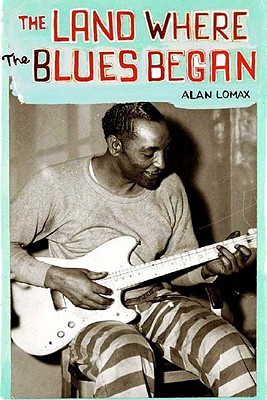 The Land Where the Blues Began is Alan Lomax’s engrossing portrait of the Mississippi Delta, its culture and history, its blues artists, its oppression and exploitation of black people, and how this region of contradictions, savage racism, plantations, and juke joints gave rise to such formidable music.
Lomax ranged across the south from the 40’s through the 70’s, recording not only the music of original blues artists, but also their stories and recollections in their own words. The author continued the work of his father, who had begun the project in the late 20’s and 30’s.
What emerges from the stories he captured is a picture of the struggles and suffering of poor blacks in the Delta, and how they found release in music. Here are the stories of the cruel levee camps, the muleskinners, plantation life, the escape to Memphis and the factories of the north, Parchman farm. It becomes plain to the reader that the civil war did not end slavery, but merely transformed it into other forms of enforced servitude and destitution for blacks in Mississippi.
The main focus of this book, though, is the music. Lomax expertly analyzes the music’s African genes and the religious and early American musical strains that influenced and deepened it.
Lomax was a Texan who died in 2002. He is renowned as one of the great field collectors of indigenous music, particularly American music, although he did field work in Europe, the Caribbean and Africa as well. He had Mississippi roots that helped his understanding of the tortured Delta folkways. At page 186 of the book is this passage: “My father’s people were ‘peckerwoods’ from Meridian, Mississippi, ‘from the upper crust of the poor white trash,’ he used to say.”
If you want to understand Mississippi, you have to understand the blues and the music’s astonishing breadth of influence. The blues is merely one manifestation of Mississippi’s disproportionate impact on American literature, music and entertainment, dramatically belying the state’s stereotypical backwardness and reactionism. Lomax’s book is an excellent starting point.
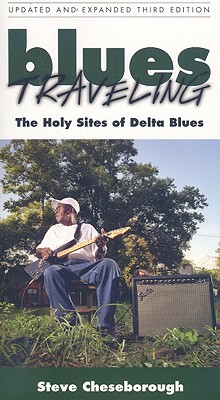 If you want to understand the blues, you have to experience the Delta. Steve Cheseborough’s Blues Travelling is a travel guide that will open doors and by-ways to the region. Here you will find the towns and villages, grave sites, joints, monuments and historic locations, restaurants, museums and venues of the blues culture. There are maps and suggestions, along with articles telling the story.
If you are a Mississippian, you can explore the Delta in several easy day trips. This book will enrich the experience for you, telling you the stories of the places and people you encounter. You will probably find yourself stopping to explore places you would have bypassed.
As a bonus, the book includes forays into Memphis, Jackson, north Mississippi, and even Meridian.
Lisa and I have found this book particularly helpful in our blues explorations. I recommend it to you.
SCRUGGS-PETERS-DELAUGHTER CONNECT-THE-DOTS GAME
October 19, 2011 § 2 Comments
Of all the sad aspects of the Scruggs saga, the one that most troubles me is the chain of events that led to the downfall of Circuit Judge Bobby DeLaughter. Up to now, what we have known of his culpability could be gleaned from his own guilty plea and from reading between the lines of other disclosures. Ed Peters’ involvement, and how he interacted with DeLaughter, has been left mostly to conjecture and street gossip.
Thanks to motions filed by Scruggs in federal court, however, Peters’ grand jury testimony, or a portion of it, has been unsealed, and you can read for yourself the sordid details. Tom Freeland has summarized it, and has another post about it. You can read Peters’ testimony for yourself here and here. Freeland followed up with another couple of posts that you can find on his blog.
Philip Thomas has a post questioning why Peters has never been prosecuted in state court.
Some had considered DeLaughter a sort of wunderkind of the bench. They expected special things of him after he stepped out of the role as prosecutor of Byron De la Beckwith into a circuit judgeship. But he was a long-time associate of Ed Peters, the Hinds County DA, and he allowed himself to be in a position to be influenced by Peters. Peters took advantage of the cozy relationship to demand hefty fees from clients who expected him to influence the circuit judge. Peters’ testimony reveals how they did it.
It still turns my stomach to read this stuff, but it’s important for us to know and understand how this unfolded so that we can take measures to ensure that it will never happen again.
MISSISSIPPI’S DIVORCE RATE AND THE CURRENT STATUTORY SCHEME
August 29, 2011 § 4 Comments
The Clarion Ledger reported on August 25, 2011, that Mississippi’s divorce rates are among the highest in the nation. You can read the article here. The findings come from the Census Bureau’s “Marital Events of Americans: 2009,” which was released this week. The article did not explain why the conclusions are based on data two years old.
Key points of the report:
- Mississippi’s divorce rates for men and women are among the highest in the nation, while its marriage rates rank in the bottom half.
- Mississippi had the sixth highest divorce rate among women and the 11th highest for men.
- Even in the South, which recorded the highest divorce rates (the Northeast had the lowest), Mississippi’s numbers exceeded at least seven other Southern states’.
- Calculating “marital events” per 1,000 men or women ages 15 and older, the rates for Mississippi were 12.5 for women, compared to 9.7 for the nation; and 11.1 for men, also above the national average of 9.2.
- The marriage rate for Mississippi women was slightly less than the national average: 17.3, compared to 17.6, for a No. 32 ranking.
- The marriage rate for Mississippi men edged out the national average: 19.3, compared to 19.1, but was only the 29th highest.
- Although the South had the second-highest marriage rates of any region, Mississippi’s numbers were some of the lowest among its neighbors.
- The study explains the variations in rates between men and women this way: Men remarry more than women do, so their marriage rates are higher.
- Women tend to live longer than men and tend to marry older men, so widowhood rates are higher for them than rates men.
No doubt the economy is exacerbating these numbers. Anyone who has done much domestic legal work can tell you that financial issues play a predominant role in marital dissolutions.
It’s not easy to get a divorce in Mississippi unless both parties agree on how to settle every issue, including the knotty issues of custody, support, division of property and alimony. Our current system gives rise to and even encourages a strategy in which one party holds the divorce hostage until the other comes to terms, a phenomenon that some lawyers refer to as “divorce blackmail” or “economic blackmail.” I have heard for years that there are legislators who have blocked reform of our archaic divorce statutes because they don’t want divorce to be “too easy.” This data is evidence that the existing statutory constraints on divorce have been singularly ineffective in accomplishing that goal.
I think it’s time for us to consider a change in our statutory scheme for divorce. Deborah Bell’s suggestion is that we amend our statutes to provide that when parties have lived separate and apart for a year or more either may obtain a divorce on the ground of irreconcilable differences, with some temporary relief. That seems sensible to me. It would avoid precipitous and impetuous actions, and would recognize that there is no sense in perpetuating dead relationships. It would also reduce, and hopefully eliminate, the economic coercion that so often intrudes into the divorce process under our current law.
MORE ON ELVIS IN THE QUEEN CITY
June 17, 2011 § 1 Comment
I posted here, here and here about Elvis Presley’s appearance in Meridian in 1955.
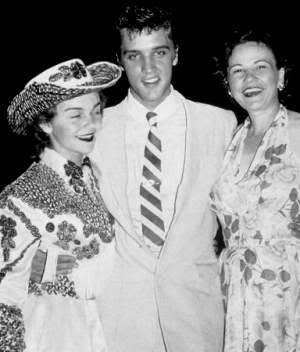
Here’s a photo provided by Jim Myrick of WMOX radio showing Elvis, Ann Ray and Mae Boren Axton at Meridian Junior College Stadium on Thursday, May 26, 1955.
And a bonus … Here’s a pic of Hank Snow, Anita Rodgers Court (daughter of Jimmie Rodgers), Ernest Tubbs, Carrie Rodgers (Mrs. Jimmie Rodgers), and Johnny Cash at the Jimmie Rodgers Memorial in Highland Park during the Jimmie Rodgers Festival in 1957.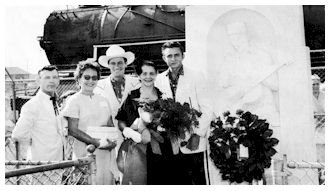
A MODEST PROPOSAL FOR A FUTURE FREEDOM SUMMER
June 8, 2011 § 13 Comments
I posted here about the events of 1964 Freedom Summer in Meridian. Mark Levy of New York, director of Meridian’s Freedom School that summer, sent a reply that I posted here.
Mississippi’s history, and by extension that of Meridian, is intertwined inextricably with issues arising out of relations between the races. The major historical forces that shaped much of the modern south, including the culture of slavery, the Civil War, Reconstruction, Populism and the Revolt of the Rednecks, Vardaman and Bilbo, sharecropping and peonage, the great emigration north, Jim Crow, the Klan and lynching, the Civil Rights Movement, the southern strategy, all had race at their root. It is essential that Mississippians of all races know and understand how these forces evolved and continue to influence us if we hope to know and understand how we can grow beyond them and explore how best to make room for each other in our common life. The only way to do this is to do it purposefully, with reflection and care, preserving the history so that we will not be doomed to relive its mistakes.
As Mark pointed out in his response, and Richelle Putnam in her comment, the voices of the civil rights era are aging. Already many of the most significant figures of the Civil Rights Movement have passed. Who will carry their story and its understanding forward to the leaders of the future?
The year 2014 will be the fiftieth anniversary of Freedom Summer. Meridian was at the epicenter of the Civil Rights Movement in those blastfurnace-hot months. What better opportunity than the fiftieth anniversary will we have to focus reflection and thoughtful attention on the epochal events of the summer of 1964 as a catalyst for further discourse?
Taking some of Mark Levy’s thoughts as a springboard, I came up with the following modest proposal for an observance of that silver anniversary. It’s merely a starting point for discussion, and I am sure that there’s much more that can be done. I propose that between now and the summer of 2014, we do the following:
- Acquire the Fielder & Brooks building on Fifth Street as the site of a Civil Rights in Meridian interpretive center and museum. Part of the building could be devoted to the history of black entrepreneurship in Meridian, and specifically in the Fifth Street area. It could include a re-creation of the old Fielder & Brooks pharmacy. Upstairs, the COFO Headquarters and Community Center would be re-created, with displays of materials and memorabilia devoted to Freedom Summer and the COFO workers. Other displays would tell the story of Meridian’s civil rights leaders and accomplishments. If that building proves to be unavailable, the project could go forward at another site, but a location in the Fifth St. area would serve beneficially as an anchor in an area where so many buildings have been lost.
- Establish a trail of sites with importance to civil rights in Meridian and make a map available in the interpretive center.
- Plan an observance of Freedom Summer in 2014, and invite all of the surviving Meridian COFO and other workers who devoted that summer to change. The event would include reminiscences, lectures, social events, and even worship and singing. If enough money were available, a noted speaker could keynote and draw attention to the event. Use the event to promote racial reconciliation and promote discussions about how to establish common ground. Enlist the schools and colleges to focus course work on these issues in the months leading up to that summer.
- Establish an organization to gather, preserve, display and promote the materials, artifacts, oral histories and other memorabilia of the Civil Rights Movement in Meridian. Perhaps one day Meridian could become the site of a Civil Rights Archive.
These are ideas that have been percolating in my head since I read Mark’s response. I am sure there are many other worthwhile approaches to this, but we have the advantage of time to work toward the goal. If you have other ideas to share, please feel free to comment. I will definitely be in touch with those of you who have expressed an interest, as well as others.
This is definitely something I am willing to work to attain. Will you work with me?

Fielder & Brooks Bldg. looking west across 25th Ave. with 5th St. on the right
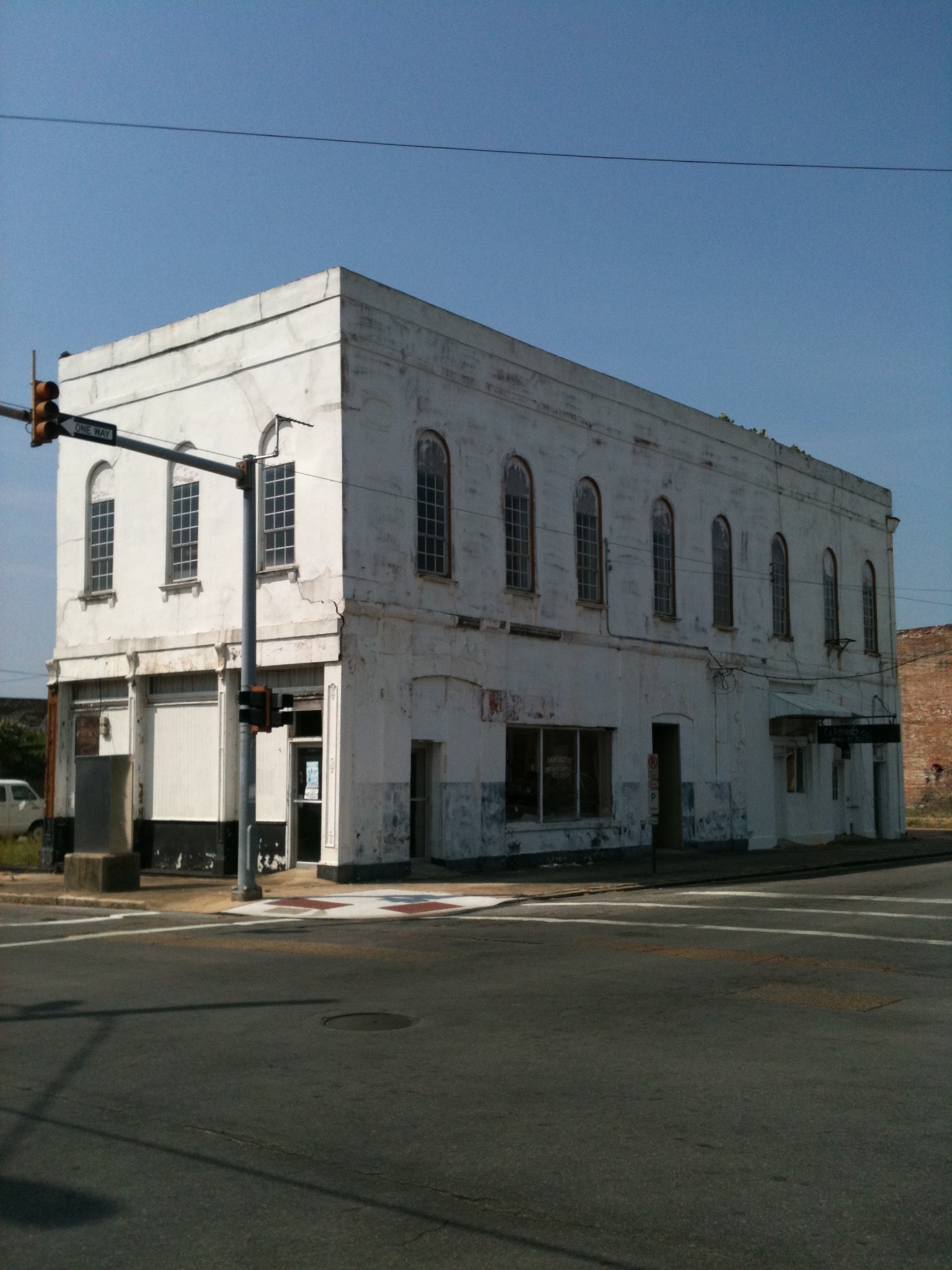
View across 25th Ave. from in front of the E.F. Young Hotel
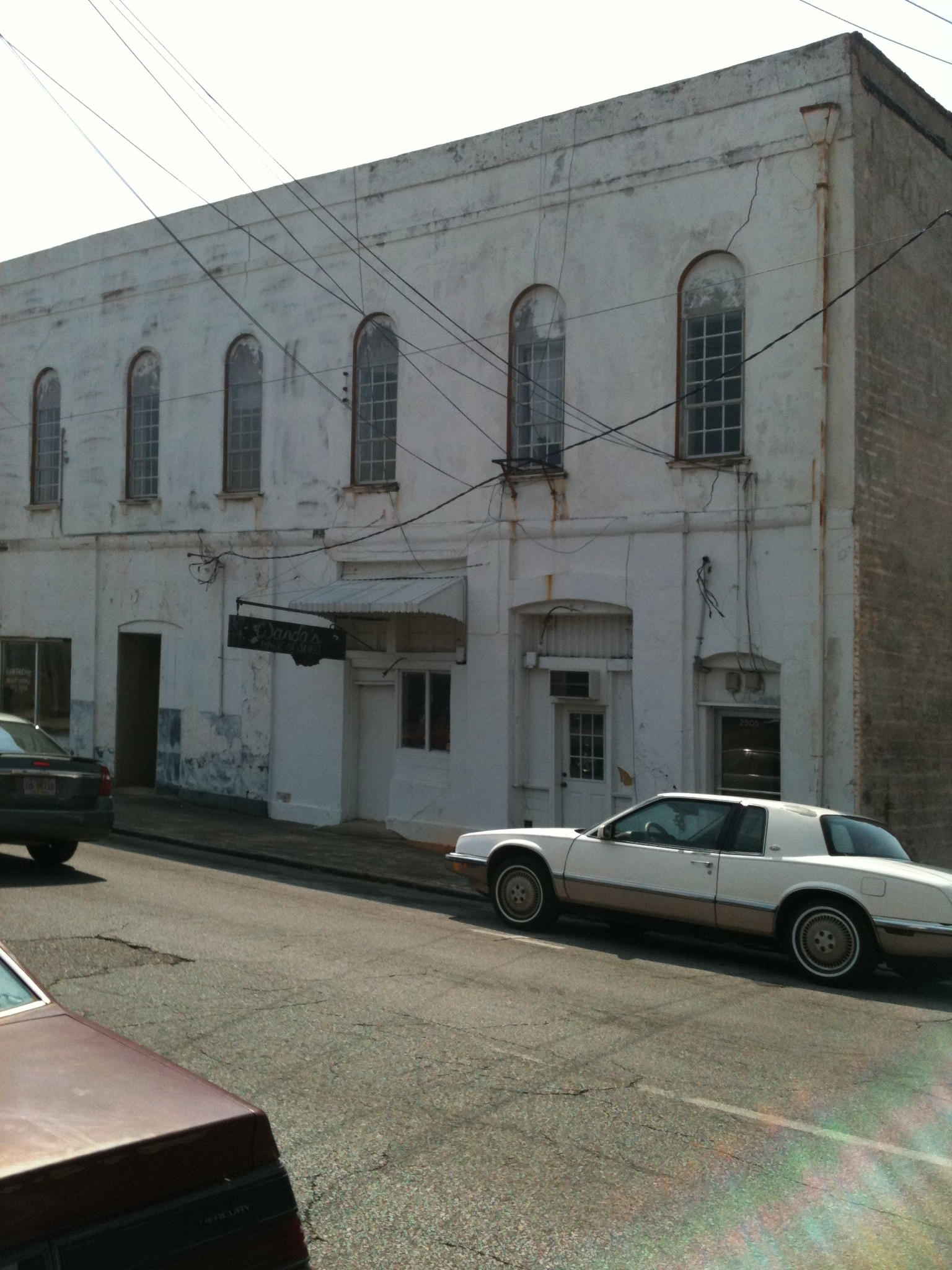
From across 5th St. looking southeast. The door on the far right is 2505 1/2
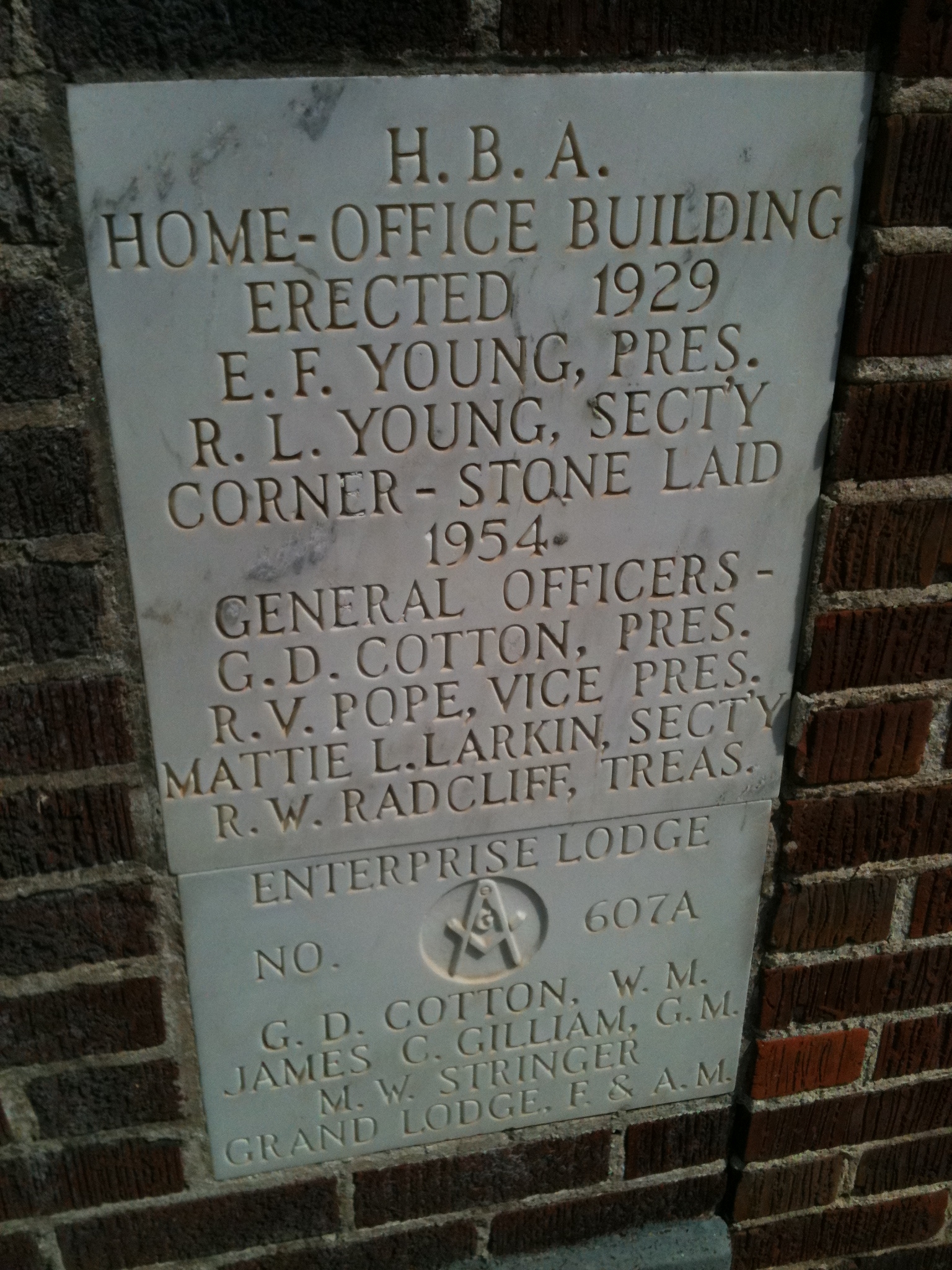
Holbrook Benevolent Association monument on 5th St., typical of sites for an historical trail
MARK LEVY ON THE LEGACY OF FREEDOM SUMMER
May 26, 2011 § 9 Comments
I posted Monday about Freedom Summer in Meridian. One of the courageous COFO workers who spent time in Meridian in that summer of 1964, and whom I mentioned in my post, was Mark Levy, who came with his wife Betty to Meridian from Queens College in New York.
Mark took the time to send me a thoughtful response to my post, and I think it is worth your time to read. He raises some intriguing points about preserving the story of how the civil rights movement touched and changed Meridian, and how it can be passed on. There is food for thought here, and a call to action.
As Mark says, there are the seeds of the beginning of a conversation here. Will you join the discussion?
__________________________________________________
“Ordinary People Doing Extraordinary Things”
Meridian Civil Rights Stories Worth Remembering and Telling
The summer of 1964 touched on people’s lives in Meridian in many different ways. Chancery Judge Primeaux’s narrative is an important and sensitive step in opening up that conversation. I’m glad that my old photos of daily life in the Freedom School are a contribution.
Similarly important was last month’s April 29th recognition by the Mississippi Heritage Trust in Jackson that the Fielder and Brooks Drug Store building and site of the 1964 COFO office at 2505 ½ 5th Street is an endangered but historically significant building in the state, well worth preserving. The Meridian civil rights story needs to be documented and shown. The 2505 ½ 5th Street site would be perfect not only as an interpretive, but also as an educational center and local attraction.
In addition to the pictures I found in my files, I also found the names of about 250 students – ages 8 to 18, at the time – who attended summer classes in the Freedom School. We, the volunteer teachers, learned as much from our students that summer as we were able to teach them. The students were brave and serious young people who took all sorts of risks to come to school. The former students are now in their late 50s and 60s. Where are they today? How did those experiences touch their lives? Who stayed, who left, and who has come back to Meridian? What contributions have those former students made to their respective communities?
The decisions for students to attend — or not attend — Freedom School were family decisions. In 1964, that meant that parents, grandparents, aunts, uncles, etc. all decided to take on some family risk in sending their kids to the Baptist Seminary. Not only should a history of Meridian tell the story of how a famous folk singer like Pete Seeger performed in Meridian, but it should also be noted that the room was packed with people who took a risk in coming to hear him. Another footnote to the Meridian civil rights story is that the Meridian Freedom School at the Baptist Seminary had the honor to play host in August to a state-wide convention of young delegates from Freedom Schools all over Mississippi. The resolutions passed by the students attending reveal a wide range of issues, concerns, and hopes – worth looking at again to see what progress, if any, has been made since those times.
Similarly, in my files, I’ve found the names of about 45 out-of-state volunteers, in addition to Mickey and Rita Schwerner, who participated – at one time or another — in COFO-sponsored community center, voter registration, freedom school, and MFDP work in Meridian during 1964-65. We stayed in the homes of some very brave local people, rented some living and office space, ate in selected establishments, cashed personal checks in some stores, asked cab drivers and others how to get around, attended some church services and used some churches for meetings. In the highly charged atmosphere of the times, those ordinary decisions could have life and death – in addition to job – consequences. We, the volunteers, took risks; but the local families and organizations who invited us to come took far more risks than us.
Several of the pictures I found in my files show a Lauderdale County meeting of the Mississippi Freedom Democratic Party where Meridian and county “precinct” and “beat” representatives elected ordinary people as local delegates to go to the national convention in Atlantic City. The MFDP was formed to show that people prevented from registering in 1964 truly wanted to participate in the electoral system. The civil rights movement in Meridian involved commitment and participation from both young and old. The pressures against taking a stand were powerful and frightening.
Does anyone know where Martin Luther King Jr. came to speak in Mississippi during the summer of 1964? I believe he spoke in just two places – and that included speaking at two churches in Meridian.
The civil rights summer of 1964 should be taken as just one moment in history – with important precedents and ongoing effects. For example: a) In Meridian, an NAACP chapter existed for a number of years prior, sometimes recruiting with quiet, hand-collection of dues. They had a growing youth membership that later became part of the local COFO movement in 1964. That NAACP chapter continues to exist today. b) The Fielder and Brooks pharmacy, itself, was just one example of black professional accomplishment that had been developing for years in Meridian. c) 1965 and the years thereafter, school, college and public facility de-segregation and voter registration brought other challenges and additional sets of heroes and heroines who stepped forward and deserve to be respected and remembered.
What does all of this mean today – especially for younger people? What can research projects in Meridian’s high school, junior college, and senior college contribute to finding, recording, and telling about local people’s hopes, fears, and contributions? What remains to be improved? What stories do old-timers – both black and white – have to tell of those times in Meridian? How would preserving the Fielder/COFO building help in both saving and using that history?
I believe that Judge Primeaux has done a great service in his blog starting a new discussion of those questions.
FREEDOM SUMMER IN MERIDIAN
May 23, 2011 § 17 Comments
This year marks the 50th anniversary of the Freedom Riders’ attempts at integration of transportation and amenities across the south. The arrival of the Freedom Riders in May, 1961 was met with mob violence and police brutality, but it did not end segregation in Mississippi. The Freedom Riders did, however, pique public awareness across the nation of the inequalities in the south and the need to address them.
In 1962, representatives of four civil rights organizations — SNCC (Student Non-violent Coordinating Committee), CORE (Congress of Racial Equality), NAACP and SCLC (Southern Christian Leadership Conference) — met at Clarksdale and formed a new organization designed to coordinate their efforts and resources in Mississippi. They called the organization COFO (Congress of Federated Organizations).
The primary concern was to register black voters in Mississippi. At the time, Mississippi at less than 7% had the lowest percentage of black voter registration in the nation. Blacks seeking to register to vote were subjected to poll taxes, examinations that they had to pass to become enfranchised, and, when that was not enough, violence and even death.
It was decided that COFO would spearhead a massive, concentrated voter registration and desegregation effort in Mississippi in the summer of 1964. Volunteers were enlisted from across the country, primarily from the northeast and midwest, many of whom were college students willing to devote a summer to the cause. The effort came to be known as “Freedom Summer.”
In January, 1964, Michael Schwerner came to Mississippi and opened a COFO office in Meridian at 2505 1/2 Fifth Street. Schwerner was a member of CORE, and was a native of New York. He and his wife, Rita, lived in a Meridian apartment, and engaged in various community organizing activities. The COFO office was the headquarters of the Freedom Summer operation in Lauderdale County.
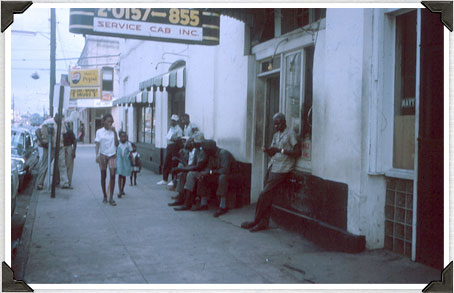
COFO HQ in Meridian
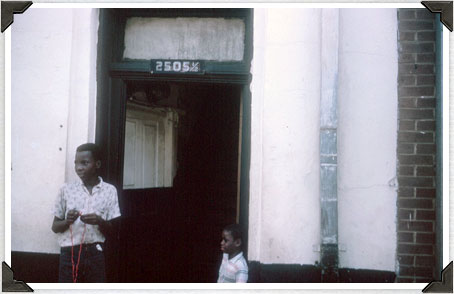
2505-1/2 Fifth Street
The headquarters occupied the second floor of the Fielder & Brooks Drug Store, an established and respected black business.
The Schwerners opened a COFO-sponsored community center where black children could gather and play games, socialize and access a lending library.
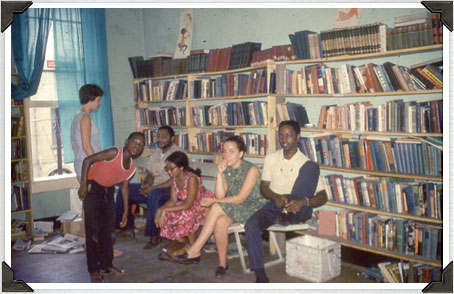
Reading Room
COFO in Meridian also operated one of the several dozen Freedom Schools that were opened across Mississippi that summer. The Freedom Schools taught citizenship, black history, constitutional rights, political processes, and basic academics. More than 3,500 students attended the Freedom Schools. Meridian’s Freedom School was at the old black Baptist Seminary.
Here is the text of a 1964 COFO memo describing the Meridian operation:
Meridian is a city of 50,000, the second largest in the state. It is the seat of Lauderdale county. It is in the eastern part of the state, near the Alabama border, and has a history of moderation on the racial issue. At the present time, the only Republican in the State Legislature is from Meridian. Registration is as easy as anywhere in the state, and there is an informal (and inactive) “biracial committee”, which, if it qualifies, is the only one in the state.
Voter registration work in Meridian began in the summer of 1963 (for COFO staff people, that is), and by autumn, when Aaron Henry ran in the Freedom Vote for Governor campaign, there was a permanent staff of two people in the city. In January, 1964, Mike and Rita Schwerner, a married couple from New York City, started a community center. In Meridian’s mild political climate, the community center there has functioned more smoothly than either of the two community centers which COFO has organized in tougher areas. The center has recreation programs for children and teenagers, a sewing class and citizenship classes. It also has a library of slightly over 10,000 volumes, and ambitious plans for expansion if more staff were available. The COFO staff in Meridian uses Meridian as a base for working six other adjoining counties.
The Freedom School planned for Meridian will have a fairly large facility, in contrast to most places in the state. The Baptist Seminary is a large, 3-story building with classroom capacity for 100 students and sleeping accommodations for staff up to about 20. Besides this, there is a ballpark available for recreation. The school has running water, blackboards and a telephone. The center has a movie projector and screen which it probably would lend. The library lends books to anyone for two-week periods. The question of rent has not been decided for the school. Even if there is no rent, however, we can count on a budget of around $1300, for food for students, utilities, telephone and supplies.
One of the COFO volunteers was Mark Levy, who came to Meridian with his wife, Betty, from Queens College in New York. He chronicled his sojourn in Meridian with his camera, and his impressive collection of photographs is in the Queens College archives, where you can view it online.
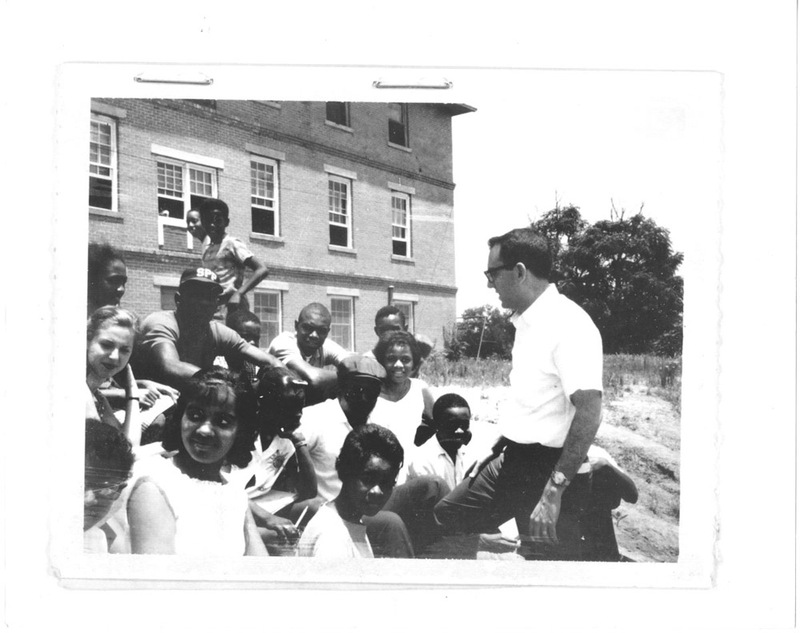
Mark and Betty Levy with students at the Freedom School
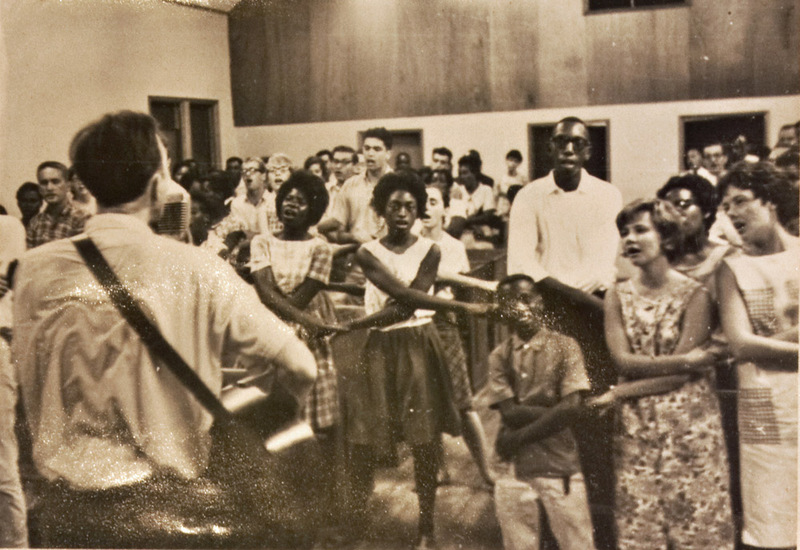
A remarkable fact documented by Levy is that the famed folk/protest singer Pete Seeger visited Meridian and played at the old Mt. Olive Baptist Church during Freedom Summer.
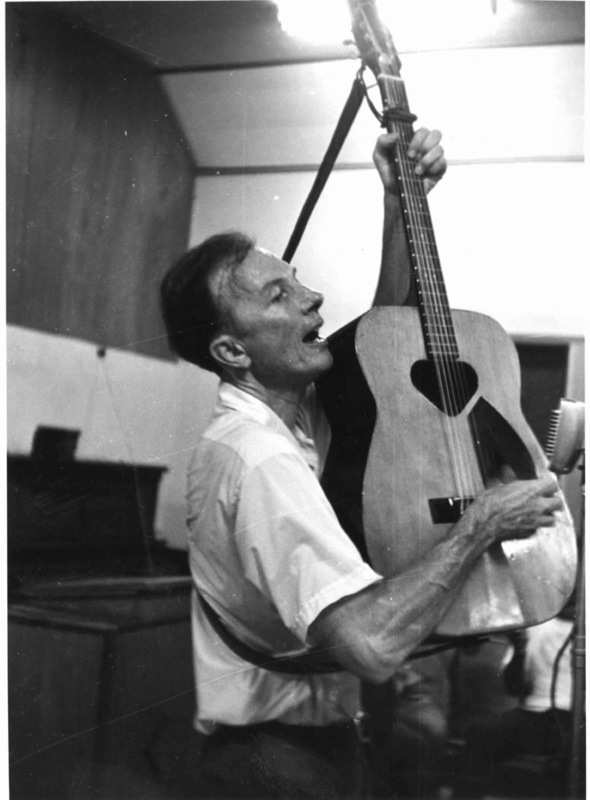
Seeger plays for the COFO workers
He performed for the COFO volunteers. The next photo shows COFO workers and others joining hands to sing along with Seeger. The young woman at the right with the flowered dress is COFO volunteer Patti Miller of Iowa, who pinpoints the date of Seeger’s performance as August 4, 1964.
Shortly after he arrived, Schwerner was joined by an eager young Meridianite volunteer named James Chaney. As the summer drew near, other volunteers began to arrive from other places, among them Andrew Goodman of New York.
Despite its moderate reputation on racial issues, there was a dark underside to Meridian and the surrounding area. The Klan was active, with members in law enforcement and in influential positions. The Klan had its eye on COFO, and on Schwerner in particular. They gave him the derisive nickname “Goatee,” for his beatnik-style beard, and spread rumors that he was having an affair with a black woman.
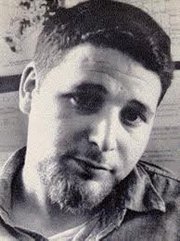
Michael "Goatee" Schwerner
Mississippi’s political leadership provoked the citizenry with accusations that the COFO workers were communists who had trained in Cuba. FBI Director J. Edgar Hoover made the statement that “We will not wet-nurse troublemakers,” insinuating that anyone who took matters into their own hands would not be bothered by the feds.
On June 21, 1964, Schwerner, Goodman and Chaney had returned from a training session in Oxford, Ohio, to learn that the Mt. Zion Methodist Church in Neshoba County had been burned by the Klan and some of its members beaten in retribution for allowing a Freedom School to operate there. The three travelled from Meridian to Neshoba and met with the leaders of the church. As they made their way back to Meridian, the three were stopped by a Neshoba County Deputy Sheriff and taken into custody on the pretext of a speeding charge. After they were released from jail in Philadelphia, they were stopped again on Highway 19 South by the Sheriff, who allowed a group of Klansmen to take them to Rock Cut Road, between House and Bethsaida, where all three were murdered by gunfire. An historical marker is set on the junction of Highway 19 and the road where they were killed.
When the trio did not return to Meridian as scheduled, their disappearance was reported and a manhunt ensued. Hundreds of naval personnel participated. President Johnson ordered Hoover to mobilize the FBI, and the agency began investigating, increasing the number of agents in the state from 15 to more than 150. Posters went up.
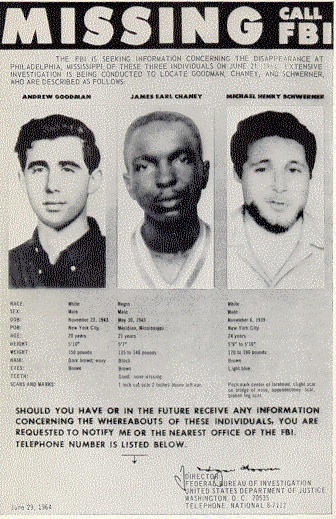
The Mississippi Sovereignty Commission investigated and its reports took the prevailing view that the disappearance was a publicity stunt designed to stir up public opinion. Governor Paul B. Johnson quipped that “Those boys are in Cuba.”
Before long, the searches turned up the CORE station wagon that the men had driven from Meridian. It had been taken to the Pearl River swamps north of Philadelphia east of Stallo off of Highway 21, where it was burned.
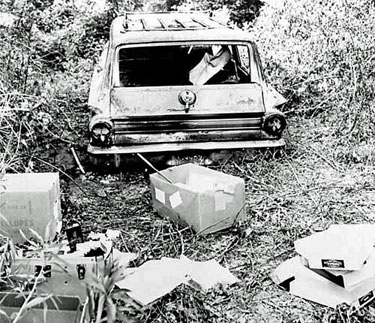
The discovery of the car did not quell the public belief that the disappearance had been staged, but the denial, speculation and ridicule abruptly ended when the three bodies were discovered by the FBI in a dam being built not far from the Neshoba County fairgrounds. It was conclusive proof of the atrocity.

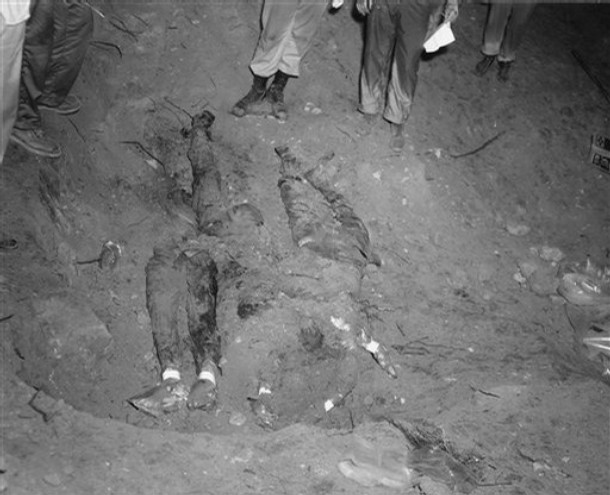
The FBI autopsy revealed that all three young men had died of gunshot wounds. The families were not convinced, however, and they demanded and got a second autopsy which revealed that Schwerner and Goodman had indeed been shot and killed. Chaney, though, had been brutally beaten before being fatally shot. The doctor who performed the autopsy said that he had never seen such extensive, catastrophic injuries, including smashed bones and damaged internal organs, not even in car or plane wreck victims.
Patti Miller remembers that that the bodies were found on August 4, 1964. She remembers that date because it was Seeger himself who announced it that night to the COFO workers during his appearance at Mt Olive.
Nineteen men, many of whom were from Meridian, were arrested and charged with the killings, but state charges were soon dropped. The federal government prosecuted them for violation of Schwerner’s, Goodman’s and Chaney’s civil rights, and seven were sentenced to varying terms up to ten years. It took until 2005 for one of the defendants, Edgar Ray Killen, to be brought to justice in a Mississippi court. He was convicted of manslaughter in Neshoba County Circuit Court.
Long before the legal proceedings, though, the families had to bury the dead as a prologue to getting on with their shattered lives. Schwerner and Goodman were taken back to their homes far away in New York.
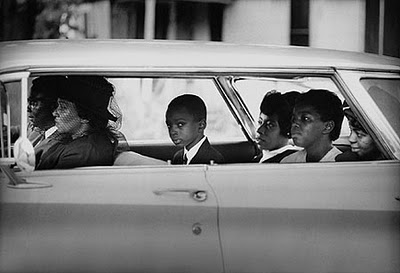
James Chaney's family on the day of the funeral
Chaney’s funeral was held in Meridian. Mourners included his collegues, the COFO workers. The funeral services took place at four different churches, culminating at First Union Baptist Church on 36th Avenue.
As for Freedom Summer, the results were mixed. Some voter registration was accomplished in the face of resistance. People were beaten and killed. Churches were burned. Violence across Mississippi escalated. By any of those measures, it was at least a borderline failure. But the deaths of Schwerner, Goodman and Chaney galvanized public opinion. The 1,000 or so COFO workers returned home from Mississippi with eyewitness testimony about the severity of the situation, many of them with scars to corroborate their stories. The nation realized that the full weight of the law and the federal government would be needed to end the systemic injustice that fostered violence and hatred and shielded murderers. The political pressure became irresistable, and the 1964 Civil Rights Act passed Congress and was promptly signed into law by President Johnson.
Freedom Summer was not the end of apartheid in Mississippi, but it did help deal it a mortal blow.
___________________________________
Thanks to Dr. Bill Scaggs for the info about Pete Seeger, Mark Levy and the Freedom School.
Patti Miller, the COFO volunteer mentioned above, has a Keeping History Alive site where I found several Freedom School photos.
FINAL THOUGHTS ON THE JUDICIAL PAY RAISE (UNTIL NEXT YEAR)
March 1, 2011 § 1 Comment
Please pause a minute in your busy day and think back on the legislature’s slapdown of a judicial pay raise last week and its ramifications for your practice of law. Yes, whatever affects the court system directly affects how effectively you can represent your clients and what your future in the legal profession will be. You should be as vitally interested in the judicial system as a doctor is in the viability of the local hospitals and medical support system.
The courts are where you do your work, whether you are a court room lawyer or not. You need judges to get your job done. And you need good judges. Good judges are diligent, know the law and hold you to high standards. Bad judges leave you open to complaints and worse from your clients, neglect their work, and make your job considerably more difficult.
Our courts are the place where people bring their knotty problems — ones they can’t find a way to settle on their own. In chancery court, those problems include those that are at the very heart of the family, that involve inheritance and care for those who can’t take care of themselves, that deal with people’s real property rights, and even that involve dissolution of businesses, among many others. The judicial function is a critically important service provided by the state. It gives people a civilized way to resolve conflicts without bloodshed. Our courts are crucial to commerce.
But when it comes to funding this essential service, Mississippi treats the judicial branch like an afterthought. The judicial branch receives less than one-half of one percent of the entire state budget. That means that the legislative and executive branches feed off of 99.996% of your tax dollars. If it is true that government is a burden on taxpayers, as some maintain, the judicial branch in Mississippi is a featherweight.
When we underfund the judiciary, we aren’t simply starving the judges, we are depriving our citizens of the best value they can enjoy from an independent, competent, dedicated judiciary.
Down below you can read how Mississippi’s judicial pay ranks 51st in a nation of 50 states. How can we be proud of lagging behind places like Arkansas and Alabama, of all places? How can we set our sights so low when we have so much going for us? Is that really what we aspire to — to be the last or worst; to be like an Arkansas or Alabama — or worse?
I’m proud to live in Mississippi. I got my college and law school education here, raised and educated my three children here, go to church here, pay taxes here, and work as hard as I know how to be a good judge here. There is so much to treasure in Mississippi: wonderful people; our musical heritage; hunting, fishing and the outdoors; a small-town sense of community; world-class research facilities; a literary legacy no other state can match; beaches, the Delta, the hills, the Black Belt; and so much more. I could go on and on, but you get the point. How could any true Mississippian stand to be second to anyone else?
A lawyer I know suggested that the legislators voted against the pay raise (some legislators believe it or not voted against any appropriation for the courts) because they were afraid of voter reaction in November. If that’s the case, then why don’t they just pass a bill to tie judicial pay to a percentage of federal judge pay and be done with it? That way, they could absolve themselves of all blame as the pay would set itself in relation to federal pay. And if it is a fear reaction in an election year, what was their rationale in all those non-election years when they said “now is not the time.” I hate to think that there’s really simply a control issue here. I mean, don’t we make our decisions based on what’s best for the citizens we serve? Or are there some other dynamics at work? And should there be?
While you’re taking a few minutes to ponder all of this, I recommend that you check out Philip Thomas’s take on this issue at his Mississippi Litigation Review & Commentary blog.
Another chancellor sent the following thoughts. They’re worth mulling over.
“Facts about the vote of SB 2253 and judicial pay:
11 Republicans voted to pass the bill. 40 Republicans voted against the bill. 2 Republicans were either absent or not voting.
48 Democrats voted to pass the bill. 18 Democrats voted against the bill. 2 Democrats were either absent or not voting. 1 Democrat voted Present.
22 attorneys voted to pass the bill while 3 attorneys voted against the bill.
Under Rep. Blackmon’s amendment, salary increases would have been phased in over a 4 year period. The first increase was scheduled for July 1, 2012, with subsequent increases occurring on July 1, 2013, July 1, 2014, and July 1, 2015.
The salary increases were fully funded by user fees, yet the so-called conservative opposition says “We don’t have the money.”
The last salary increase for state judges, other than justice court judges, took effect January 1, 2004.
It has now been 8 years since the last salary increase, with no relief in sight.
The salary for trial and appellate court judges in Mississippi ranks 51st in a nation with 50 states. Salaries for judges in the District of Columbia exceed those for judges in Mississippi. In addition, judges in the American Samoa, Guam, Northern Mariana Islands, Puerto Rico and the Virgin Islands are paid more than Mississippi Judges. The only judges paid less than Mississippi judges are the judges of the pie eating contest at your local county fair, if you still have one.
‘These people are the salt of the earth who have dedicated their lives to serve the people of Mississippi,’ said Rep. Bo Eaton, D-Taylorsville. 58 members of the Mississippi House of Representatives were not at all impressed.”
I want to emphasize that no tax dollars were to be used to fund this raise, and even with the proposed raise in court costs, Mississippi’s would still be the lowest court costs of all the southern states. It would have been strictly a user’s fee.
I urge you as a member of the legal profession to give this issue some serious thought. Where do we want our court system to be? Do we really want to be last, or do our citizens deserve better? What can or should you as a lawyer do to help the situation? Do we want the best government we can afford or the cheapest we can get by with?
MR. FAULKNER UP CLOSE AND PERSONAL
January 28, 2011 § Leave a comment
I found this remarkable material on Oxford’s William Faulkner recently. Some of the photos are priceless, like the one of Faulkner and Welty. The Q and A session offers an insight into one of America’s greatest authors — at least as he saw writing and the world in that still-unsettled era in the aftermath of World War II and at the beginning of the Cold War.
* * * * *
In spring of 1947, the English department of the University of Mississippi had William Faulkner address one class a day for a week. The teacher of each class was barred from attending the sessions.
Faulkner spent the entire time answering questions from students.

In the side yard at Rowan Oak
Q: Which of your books do you consider best?
WILLIAM FAULKNER: As I Lay Dying was easier and more interesting. The Sound and The Fury still continues to move me. Go Down, Moses – I started it as a collection of short stories. After I reworked it, it became seven different facets of one field. It is simply a collection of short stories.
Q: In what form does the initial idea of a story come to you?
WF: It depends. The Sound and The Fury began with the impression of a little girl playing in a branch and getting her panties wet. This idea was attractive to me, and from it grew the novel.
Q: How do you go about choosing your words?
WF: In the heat of putting it down you might put down some extra words. If you rework it, and the words still ring true, leave them in.
Q: What reason did you have for arranging the chapters of The Wild Palms as you did?
WF: It was merely a mechanical device to bring out the story I was telling, which was one of two types of love. I did send both stories to the publisher separately, but they were rejected because they were too short. So I alternated the chapters of them.
Q: How much do you know about how a book will turn out before you start writing it?
WF: Very little. The character develops with the book, and the book with the writing of it.
Q: Why do you present the picture you do of our area?
WF: I have seen no other. I try to tell the truth of man. I use imagination when I have to and cruelty as a last resort. The area is incidental. That’s just all I know.
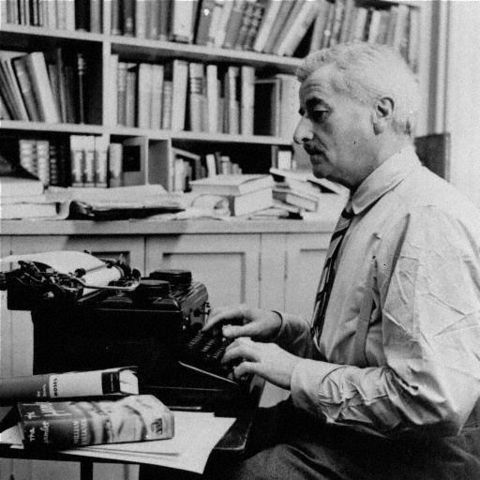
The writer at his craft
Q: Since you do represent this picture, don’t you think it gives a wrong impression?
WF: Yes, and I’m sorry. I feel I’m written out. I don’t think I’ll write much more. You only have so much steam and if you don’t use it up in writing it’ll get off by itself.
Q: Did you write Sanctuary at the boilers just to draw attention to yourself?
WF: The basic reason was that I needed money. Two or three books that had already been published were not selling and I was broke. I wrote Sanctuary to sell. After I sent it to the publisher, he informed me, “Good God, we can’t print this. We’d both be put in jail.” The blood and guts period hadn’t arrived yet. My other books began selling, so I got the galleys of Sanctuary back from the publisher for correction. I knew that I would either have to rework the whole thing or throw it away. I was obligated to the publisher financially and morally and upon continued insistence I agreed to have it published. I reworked the whole thing and had to pay for having the new galleys made. For these reasons, I didn’t like it then and I don’t like it now.
Q: Should one re-write?
WF: No. If you are going to write, write something new.
Q: How do you find time to write?
WF: You can always find time to write. Anybody who says he can’t is living under false pretenses. To that extent depend on inspiration. Don’t wait. When you have an inspiration put it down. Don’t wait until later and when you have more time and then try to recapture the mood and add flourishes. You can never recapture the mood with the vividness of its first impression.

At Rowan Oak
Q: How long does it take you to write a book?
WF: A hack writer can tell. As I Lay Dying took six weeks. The Sound and The Fury took three years.
Q: I understand you can keep two stories going at one time. If that is true, is it advisable? WF: It’s all right to keep two stories going at the samet ime. But don’t write for deadlines. Write just as long as you have something to say.
Q: What is the best training for writing? Courses in writing? Or what?
WF: Read, read, read! Read everything – trash, classics, good and bad; see how they do it. When a carpenter learns his trade, he does so by observing. Read! You’ll absorb it. Write. If it is good you’ll find out. If it’s not, throw it out the window.
Q: Is it good to copy a style?
WF: If you have something to say, use your own style: it will choose its own type of telling, its own style. What you have liked will show through in your style.
Q: Do you realize your standing in England?
WF: I know that I am better thought of abroad than here. I don’t read any reviews. The only people with time to read are women and rich people. More Europeans read than do Americans.
Q: Why do so many people prefer Sanctuary to As I Lay Dying?
WF: That’s another phase of our American nature. The former just has more commercial color.
Q: Are we degenerating?
WF: No. Reading is something that is in a way necessary like heaven or a clean collar, but not important. We want culture but don’t want to go to any trouble to get it. We prefer reading condensations.
Q: That sounds like a slam on our way of living.
WF: Our way of living needs slamming. Everybody’s aim is to help people, turn them to heaven. You write to help people. The existence of this class in creative writing is good in that you take time off to learn to write and you are in a period where time is your most valuable possession.
Q: What is the best age for writing?
WF: For fiction the best age is from 35-45. Your fire is not all used up and you know more. Fiction is slower. For poetry the best age is from 17 to 26. Poetry writing is more like a skyrocket with all your fire condensed in one rocket.

Q: How about Shakespeare?
WF: There are exceptions.
Q: Why did you quit writing poetry?
WF: When I found poetry not suited to what I had to say, I changed my medium. At 21 I thought my poetry very good. At 22 I began to change my mind. At 23 I quit. I use a poetic quality in my writing. After all, prose is poetry.
Q: Do you read a good bit?
WF: Up until 15 years ago I read everything I could get a hold of. I don’t even know fiction writers’ names much now. I have a few favorites I read over and over again.
Q: Has “The Great American Novel” been written yet?
WF: People will read Huck Finn for a long time. However, Twain has never written a novel. His work is too loose. We’ll assume that a novel has set rules. His is a mass of stuff – just a series of events.
Q: I understand you use a minimum of restrictions.
WF: I let the novel write itself – no length or style compunctions.
Q: What do you think of movie scriptwriting?
WF: A person is rehired the next year on the basis of how many times his name appeared on the screen the previous year. Much bribery ensues. In the old days they could give a producer three hundred pounds of sugar and be reasonable sure of getting their names on the screen. They really fight about it and for it.
Q: To what extent did you write the script for Slave Ship?
WF: I’m a motion picture doctor. When they find a section of a script they don’t like I rewrite it and continue to rewrite it until they are satisfied. I reworked sections in this picture. I don’t write scripts. I don’t know enough about it.

The "motion picture doctor" in Hollywood
Q: It is rumored that once you asked your boss in Hollywood if it would be permissible for you to go home to work. He gave his approval. Thinking you meant Beverly Hills, he called you at that address and found that by home you had meant Oxford, Mississippi. Is there anything to this story?
WF: That story’s better than mine. I had been doing some patching for Howard Hawks on my first job. When the job was over, Howard suggested that I stay and pick up some of that easy money. I had got $6,000 for my work. That was more money than I had ever seen, and I thought it was more than was in Mississippi. I told him I would telegraph him when I was ready to go to work again. I stayed in Oxford a year, and sure enough the money was gone. I wired him and within a week I got a letter from William B. Hawks, his brother and my agent. Enclosed was a check for a week’s work less agent’s commission. These continued for a year with them thinking I was in Hollywood. Once a friend of mine came back from England after two years stay and found 104 checks enclosed in letters that had been pushed under his door. They are showing a little more efficiency now, so those things don’t happen much anymore.
Q: How do you like Hollywood?
WF: I don’t like the climate, the people, their way of life. Nothing ever happens and then one morning you wake up and find that you are 65. I prefer Florida.
Q: On your walking trip through Europe how did you find everything?
WF: At that time the French were impoverished, the Germans naturally servile, I didn’t find too much.
Q: Did your perspective change after travel to Europe and to other places?
WF: No. When you are young you are sensitive but don’t know it. Later you seem to know it. A wider view is not caused by what you have seen but by war itself. Some can survive anything and get something good out of it, but the masses get no good from war. War is a dreadful price to pay for experience. About the only good coming from war is that it does allow men to be freer with womenfolks without being blacklisted for it.
Q: What effect did the R.C.A.F. have on you?
WF: I like to believe I was tough enough that it didn’t hurt me too much. It didn’t help much. I hope I have lived down the harm it did me.
Q: Which World War do you think was tougher?
WF: Last war we lived in constant fear of the thing catching on fire. We didn’t have to watch all those instruments and dials. All we did was pray the place didn’t burn up. We didn’t have parachutes. Not much choice. World War II must have been tougher.
Q: Is association (such as a boarding house) good or bad as a background for writing?
WF: Neither good nor bad. You might store the facts in mind for future reference in case you ever want to write about a boarding house.
Q: How much should one notice printed criticism?
WF: It is best not to pay too much attention to a printed criticism. It is a trade tool for making money. A few critics are sound and worth reading, but not many.

Faulkner and Welty
Q: Whom do you consider the five most important contemporary writers?
WF: 1. Thomas Wolfe. 2. Dos Passos. 3. Ernest Hemingway. 4. Willa Cather. 5. John Steinbeck.
Q: If you don’t think it too personal, how do you rank yourself with contemporary writers?
WF: 1. Thomas Wolfe: he had much courage and wrote as if he didn’t have long to live; 2. William Faulkner; 3. Dos Passos; 4. Ernest Hemingway: he has no courage, has never crawled out on a limb. He has never been known to use a word that might cause a reader to check with a dictionary to see if it is properly used. 5. John Steinbeck: at one time I had great hopes for him – now I don’t know.
Q: What one obstacle do you consider greatest in writing?
WF: I’m not sure I understand what you mean. What do you want to do? Write something that will sell?
Q: I mean whether the obstacle is internal conflict or external conflict.
WF: Internal conflict is the first obstacle to pass. Satisfy yourself with what you are writing. First be sure you have something to say. Then say it and say it right.
Q: Mr. Faulkner, do you mind our repeating anything we have heard outside of class?
WF: No. It was true yesterday, is true today, and will be true tomorrow. If I were reincarnated, I’d want to come back a buzzard. Nothing hates him or envies him or wants him or needs him. He is never bothered or in danger, and he can eat anything.

Faulkner's interment at St. Peter's Cemetery in Oxford, July 7, 1962
Thanks to This Recording blog.
 The Better Chancery Practice Blog
