A MODEST PROPOSAL FOR A FUTURE FREEDOM SUMMER
June 8, 2011 § 13 Comments
I posted here about the events of 1964 Freedom Summer in Meridian. Mark Levy of New York, director of Meridian’s Freedom School that summer, sent a reply that I posted here.
Mississippi’s history, and by extension that of Meridian, is intertwined inextricably with issues arising out of relations between the races. The major historical forces that shaped much of the modern south, including the culture of slavery, the Civil War, Reconstruction, Populism and the Revolt of the Rednecks, Vardaman and Bilbo, sharecropping and peonage, the great emigration north, Jim Crow, the Klan and lynching, the Civil Rights Movement, the southern strategy, all had race at their root. It is essential that Mississippians of all races know and understand how these forces evolved and continue to influence us if we hope to know and understand how we can grow beyond them and explore how best to make room for each other in our common life. The only way to do this is to do it purposefully, with reflection and care, preserving the history so that we will not be doomed to relive its mistakes.
As Mark pointed out in his response, and Richelle Putnam in her comment, the voices of the civil rights era are aging. Already many of the most significant figures of the Civil Rights Movement have passed. Who will carry their story and its understanding forward to the leaders of the future?
The year 2014 will be the fiftieth anniversary of Freedom Summer. Meridian was at the epicenter of the Civil Rights Movement in those blastfurnace-hot months. What better opportunity than the fiftieth anniversary will we have to focus reflection and thoughtful attention on the epochal events of the summer of 1964 as a catalyst for further discourse?
Taking some of Mark Levy’s thoughts as a springboard, I came up with the following modest proposal for an observance of that silver anniversary. It’s merely a starting point for discussion, and I am sure that there’s much more that can be done. I propose that between now and the summer of 2014, we do the following:
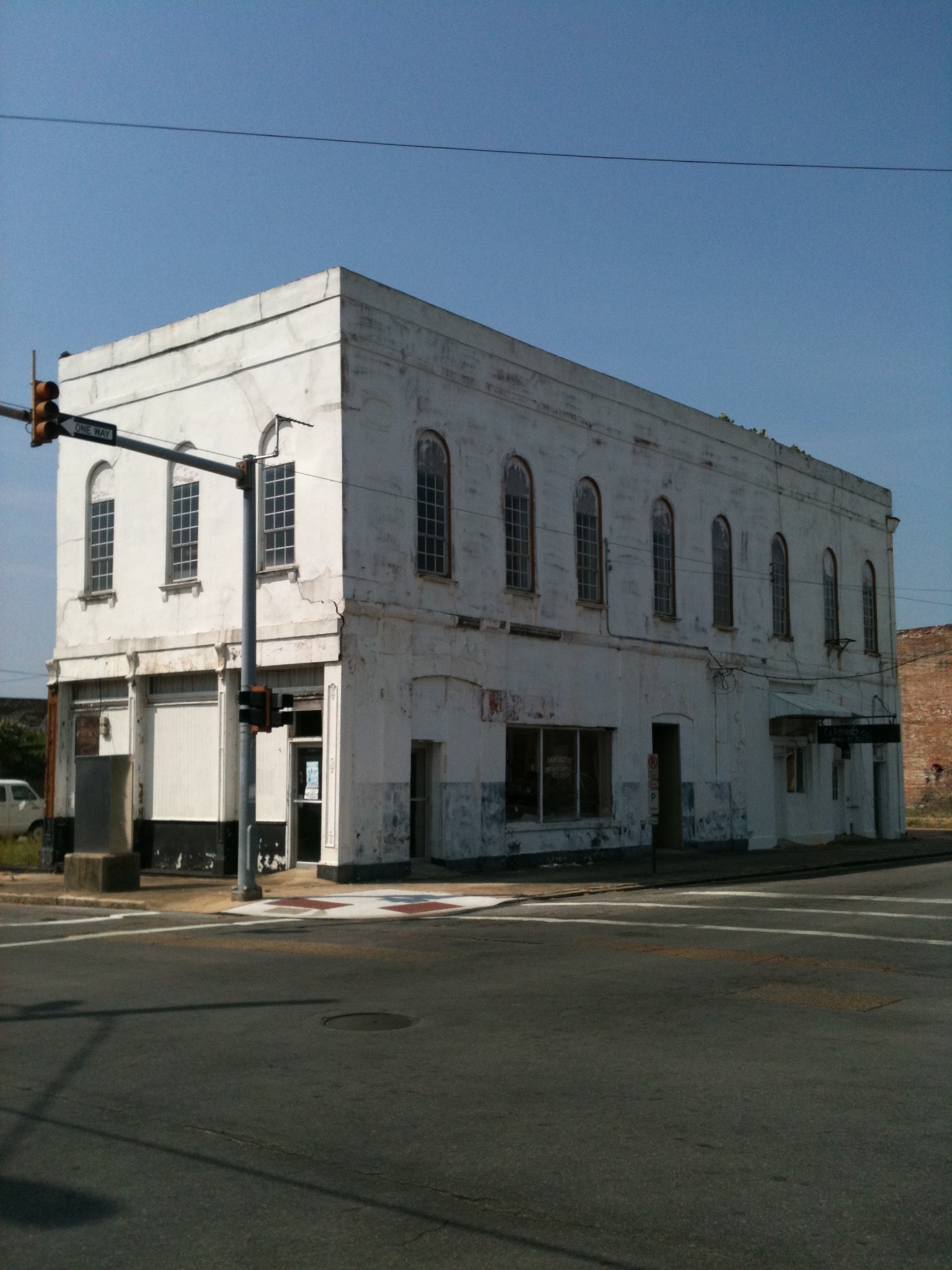
- Acquire the Fielder & Brooks building on Fifth Street as the site of a Civil Rights in Meridian interpretive center and museum. Part of the building could be devoted to the history of black entrepreneurship in Meridian, and specifically in the Fifth Street area. It could include a re-creation of the old Fielder & Brooks pharmacy. Upstairs, the COFO Headquarters and Community Center would be re-created, with displays of materials and memorabilia devoted to Freedom Summer and the COFO workers. Other displays would tell the story of Meridian’s civil rights leaders and accomplishments. If that building proves to be unavailable, the project could go forward at another site, but a location in the Fifth St. area would serve beneficially as an anchor in an area where so many buildings have been lost.
- Establish a trail of sites with importance to civil rights in Meridian and make a map available in the interpretive center.
- Plan an observance of Freedom Summer in 2014, and invite all of the surviving Meridian COFO and other workers who devoted that summer to change. The event would include reminiscences, lectures, social events, and even worship and singing. If enough money were available, a noted speaker could keynote and draw attention to the event. Use the event to promote racial reconciliation and promote discussions about how to establish common ground. Enlist the schools and colleges to focus course work on these issues in the months leading up to that summer.
- Establish an organization to gather, preserve, display and promote the materials, artifacts, oral histories and other memorabilia of the Civil Rights Movement in Meridian. Perhaps one day Meridian could become the site of a Civil Rights Archive.
These are ideas that have been percolating in my head since I read Mark’s response. I am sure there are many other worthwhile approaches to this, but we have the advantage of time to work toward the goal. If you have other ideas to share, please feel free to comment. I will definitely be in touch with those of you who have expressed an interest, as well as others.
This is definitely something I am willing to work to attain. Will you work with me?

Fielder & Brooks Bldg. looking west across 25th Ave. with 5th St. on the right
View across 25th Ave. from in front of the E.F. Young Hotel
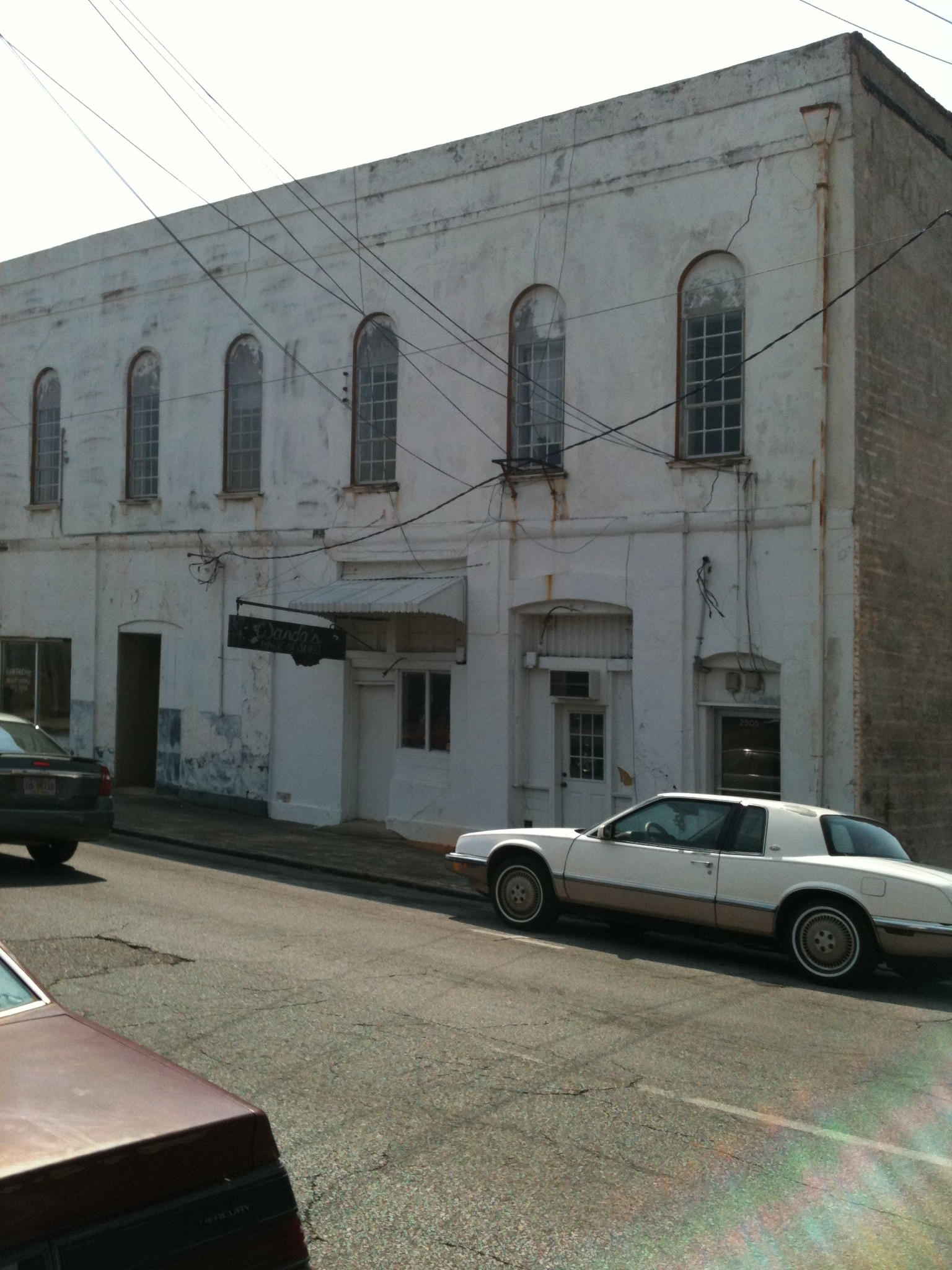
From across 5th St. looking southeast. The door on the far right is 2505 1/2
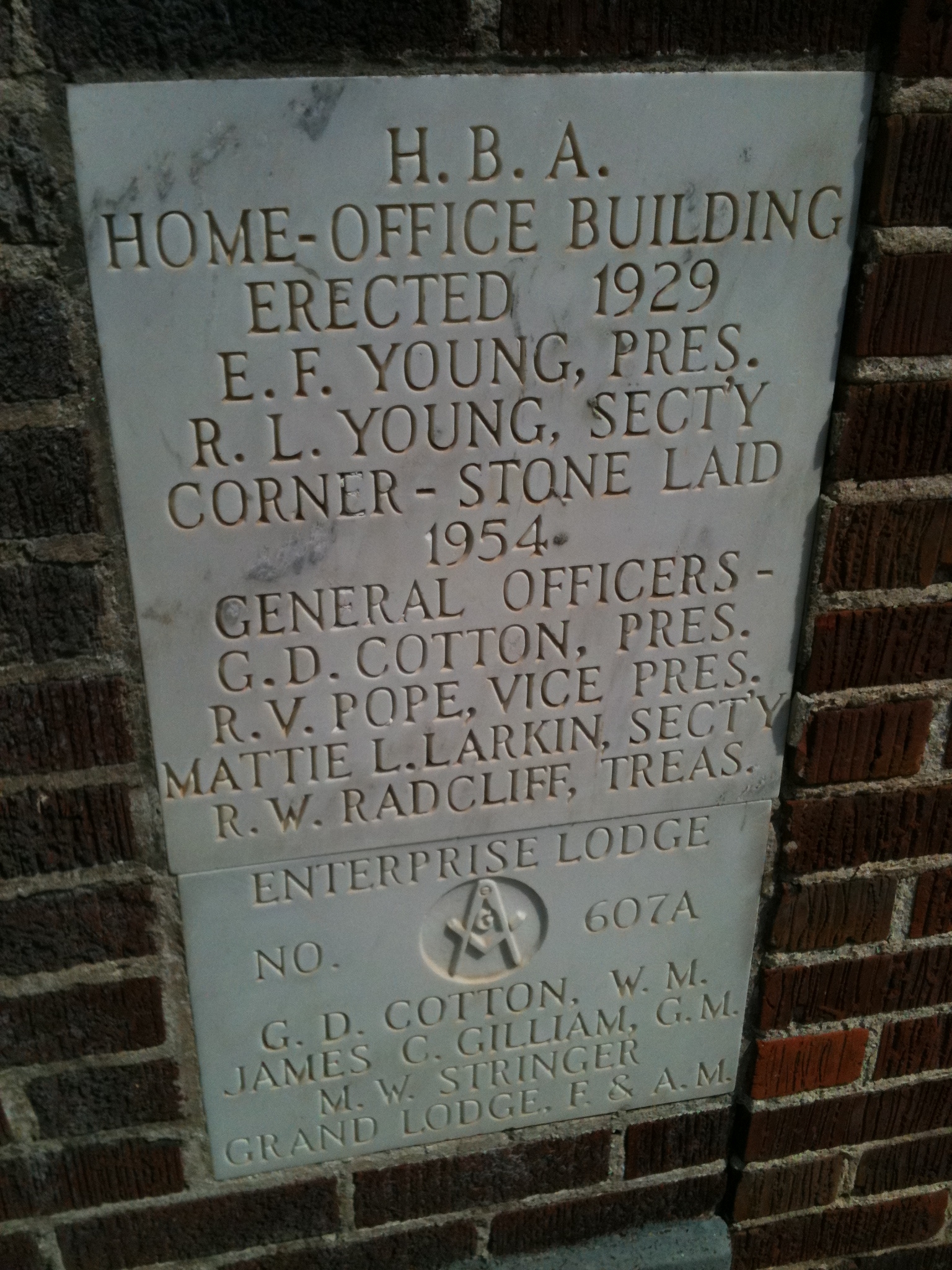
Holbrook Benevolent Association monument on 5th St., typical of sites for an historical trail
MARK LEVY ON THE LEGACY OF FREEDOM SUMMER
May 26, 2011 § 9 Comments
I posted Monday about Freedom Summer in Meridian. One of the courageous COFO workers who spent time in Meridian in that summer of 1964, and whom I mentioned in my post, was Mark Levy, who came with his wife Betty to Meridian from Queens College in New York.
Mark took the time to send me a thoughtful response to my post, and I think it is worth your time to read. He raises some intriguing points about preserving the story of how the civil rights movement touched and changed Meridian, and how it can be passed on. There is food for thought here, and a call to action.
As Mark says, there are the seeds of the beginning of a conversation here. Will you join the discussion?
__________________________________________________
“Ordinary People Doing Extraordinary Things”
Meridian Civil Rights Stories Worth Remembering and Telling
The summer of 1964 touched on people’s lives in Meridian in many different ways. Chancery Judge Primeaux’s narrative is an important and sensitive step in opening up that conversation. I’m glad that my old photos of daily life in the Freedom School are a contribution.
Similarly important was last month’s April 29th recognition by the Mississippi Heritage Trust in Jackson that the Fielder and Brooks Drug Store building and site of the 1964 COFO office at 2505 ½ 5th Street is an endangered but historically significant building in the state, well worth preserving. The Meridian civil rights story needs to be documented and shown. The 2505 ½ 5th Street site would be perfect not only as an interpretive, but also as an educational center and local attraction.
In addition to the pictures I found in my files, I also found the names of about 250 students – ages 8 to 18, at the time – who attended summer classes in the Freedom School. We, the volunteer teachers, learned as much from our students that summer as we were able to teach them. The students were brave and serious young people who took all sorts of risks to come to school. The former students are now in their late 50s and 60s. Where are they today? How did those experiences touch their lives? Who stayed, who left, and who has come back to Meridian? What contributions have those former students made to their respective communities?
The decisions for students to attend — or not attend — Freedom School were family decisions. In 1964, that meant that parents, grandparents, aunts, uncles, etc. all decided to take on some family risk in sending their kids to the Baptist Seminary. Not only should a history of Meridian tell the story of how a famous folk singer like Pete Seeger performed in Meridian, but it should also be noted that the room was packed with people who took a risk in coming to hear him. Another footnote to the Meridian civil rights story is that the Meridian Freedom School at the Baptist Seminary had the honor to play host in August to a state-wide convention of young delegates from Freedom Schools all over Mississippi. The resolutions passed by the students attending reveal a wide range of issues, concerns, and hopes – worth looking at again to see what progress, if any, has been made since those times.
Similarly, in my files, I’ve found the names of about 45 out-of-state volunteers, in addition to Mickey and Rita Schwerner, who participated – at one time or another — in COFO-sponsored community center, voter registration, freedom school, and MFDP work in Meridian during 1964-65. We stayed in the homes of some very brave local people, rented some living and office space, ate in selected establishments, cashed personal checks in some stores, asked cab drivers and others how to get around, attended some church services and used some churches for meetings. In the highly charged atmosphere of the times, those ordinary decisions could have life and death – in addition to job – consequences. We, the volunteers, took risks; but the local families and organizations who invited us to come took far more risks than us.
Several of the pictures I found in my files show a Lauderdale County meeting of the Mississippi Freedom Democratic Party where Meridian and county “precinct” and “beat” representatives elected ordinary people as local delegates to go to the national convention in Atlantic City. The MFDP was formed to show that people prevented from registering in 1964 truly wanted to participate in the electoral system. The civil rights movement in Meridian involved commitment and participation from both young and old. The pressures against taking a stand were powerful and frightening.
Does anyone know where Martin Luther King Jr. came to speak in Mississippi during the summer of 1964? I believe he spoke in just two places – and that included speaking at two churches in Meridian.
The civil rights summer of 1964 should be taken as just one moment in history – with important precedents and ongoing effects. For example: a) In Meridian, an NAACP chapter existed for a number of years prior, sometimes recruiting with quiet, hand-collection of dues. They had a growing youth membership that later became part of the local COFO movement in 1964. That NAACP chapter continues to exist today. b) The Fielder and Brooks pharmacy, itself, was just one example of black professional accomplishment that had been developing for years in Meridian. c) 1965 and the years thereafter, school, college and public facility de-segregation and voter registration brought other challenges and additional sets of heroes and heroines who stepped forward and deserve to be respected and remembered.
What does all of this mean today – especially for younger people? What can research projects in Meridian’s high school, junior college, and senior college contribute to finding, recording, and telling about local people’s hopes, fears, and contributions? What remains to be improved? What stories do old-timers – both black and white – have to tell of those times in Meridian? How would preserving the Fielder/COFO building help in both saving and using that history?
I believe that Judge Primeaux has done a great service in his blog starting a new discussion of those questions.
FREEDOM SUMMER IN MERIDIAN
May 23, 2011 § 17 Comments
This year marks the 50th anniversary of the Freedom Riders’ attempts at integration of transportation and amenities across the south. The arrival of the Freedom Riders in May, 1961 was met with mob violence and police brutality, but it did not end segregation in Mississippi. The Freedom Riders did, however, pique public awareness across the nation of the inequalities in the south and the need to address them.
In 1962, representatives of four civil rights organizations — SNCC (Student Non-violent Coordinating Committee), CORE (Congress of Racial Equality), NAACP and SCLC (Southern Christian Leadership Conference) — met at Clarksdale and formed a new organization designed to coordinate their efforts and resources in Mississippi. They called the organization COFO (Congress of Federated Organizations).
The primary concern was to register black voters in Mississippi. At the time, Mississippi at less than 7% had the lowest percentage of black voter registration in the nation. Blacks seeking to register to vote were subjected to poll taxes, examinations that they had to pass to become enfranchised, and, when that was not enough, violence and even death.
It was decided that COFO would spearhead a massive, concentrated voter registration and desegregation effort in Mississippi in the summer of 1964. Volunteers were enlisted from across the country, primarily from the northeast and midwest, many of whom were college students willing to devote a summer to the cause. The effort came to be known as “Freedom Summer.”
In January, 1964, Michael Schwerner came to Mississippi and opened a COFO office in Meridian at 2505 1/2 Fifth Street. Schwerner was a member of CORE, and was a native of New York. He and his wife, Rita, lived in a Meridian apartment, and engaged in various community organizing activities. The COFO office was the headquarters of the Freedom Summer operation in Lauderdale County.
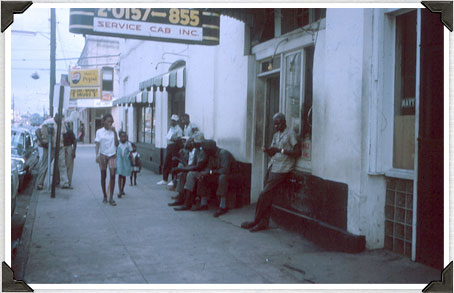
COFO HQ in Meridian
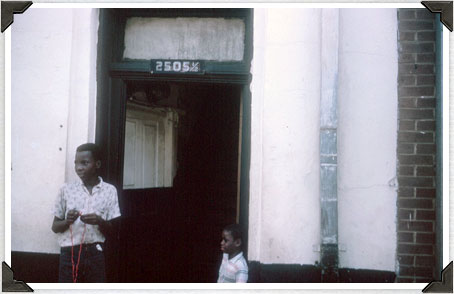
2505-1/2 Fifth Street
The headquarters occupied the second floor of the Fielder & Brooks Drug Store, an established and respected black business.
The Schwerners opened a COFO-sponsored community center where black children could gather and play games, socialize and access a lending library.
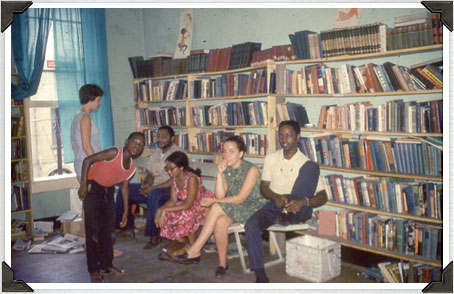
Reading Room
COFO in Meridian also operated one of the several dozen Freedom Schools that were opened across Mississippi that summer. The Freedom Schools taught citizenship, black history, constitutional rights, political processes, and basic academics. More than 3,500 students attended the Freedom Schools. Meridian’s Freedom School was at the old black Baptist Seminary.
Here is the text of a 1964 COFO memo describing the Meridian operation:
Meridian is a city of 50,000, the second largest in the state. It is the seat of Lauderdale county. It is in the eastern part of the state, near the Alabama border, and has a history of moderation on the racial issue. At the present time, the only Republican in the State Legislature is from Meridian. Registration is as easy as anywhere in the state, and there is an informal (and inactive) “biracial committee”, which, if it qualifies, is the only one in the state.
Voter registration work in Meridian began in the summer of 1963 (for COFO staff people, that is), and by autumn, when Aaron Henry ran in the Freedom Vote for Governor campaign, there was a permanent staff of two people in the city. In January, 1964, Mike and Rita Schwerner, a married couple from New York City, started a community center. In Meridian’s mild political climate, the community center there has functioned more smoothly than either of the two community centers which COFO has organized in tougher areas. The center has recreation programs for children and teenagers, a sewing class and citizenship classes. It also has a library of slightly over 10,000 volumes, and ambitious plans for expansion if more staff were available. The COFO staff in Meridian uses Meridian as a base for working six other adjoining counties.
The Freedom School planned for Meridian will have a fairly large facility, in contrast to most places in the state. The Baptist Seminary is a large, 3-story building with classroom capacity for 100 students and sleeping accommodations for staff up to about 20. Besides this, there is a ballpark available for recreation. The school has running water, blackboards and a telephone. The center has a movie projector and screen which it probably would lend. The library lends books to anyone for two-week periods. The question of rent has not been decided for the school. Even if there is no rent, however, we can count on a budget of around $1300, for food for students, utilities, telephone and supplies.
One of the COFO volunteers was Mark Levy, who came to Meridian with his wife, Betty, from Queens College in New York. He chronicled his sojourn in Meridian with his camera, and his impressive collection of photographs is in the Queens College archives, where you can view it online.
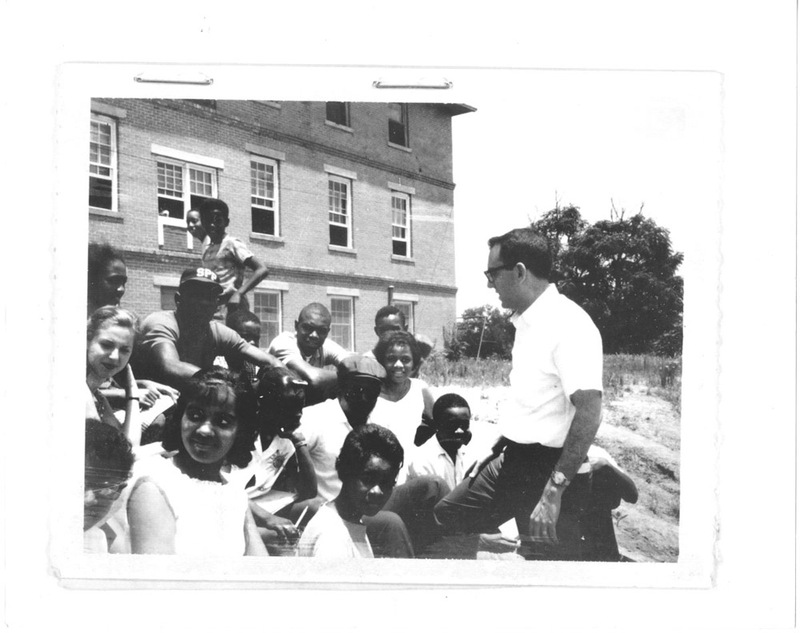
Mark and Betty Levy with students at the Freedom School
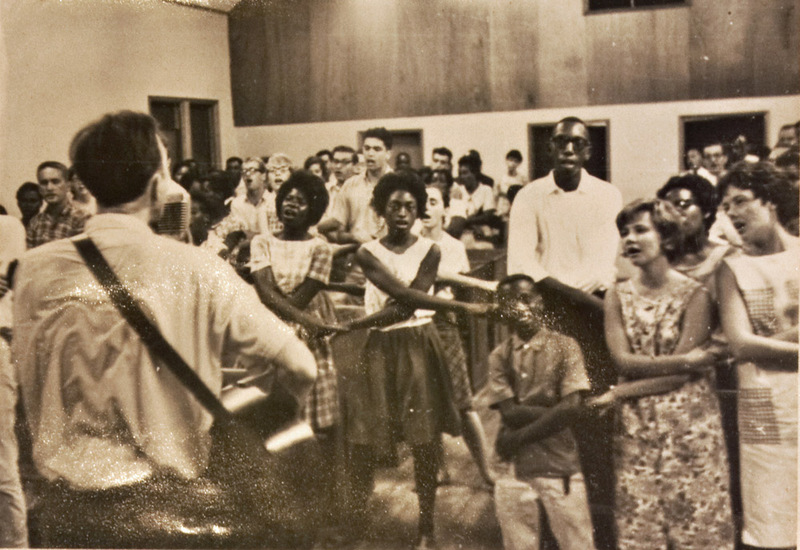
A remarkable fact documented by Levy is that the famed folk/protest singer Pete Seeger visited Meridian and played at the old Mt. Olive Baptist Church during Freedom Summer.
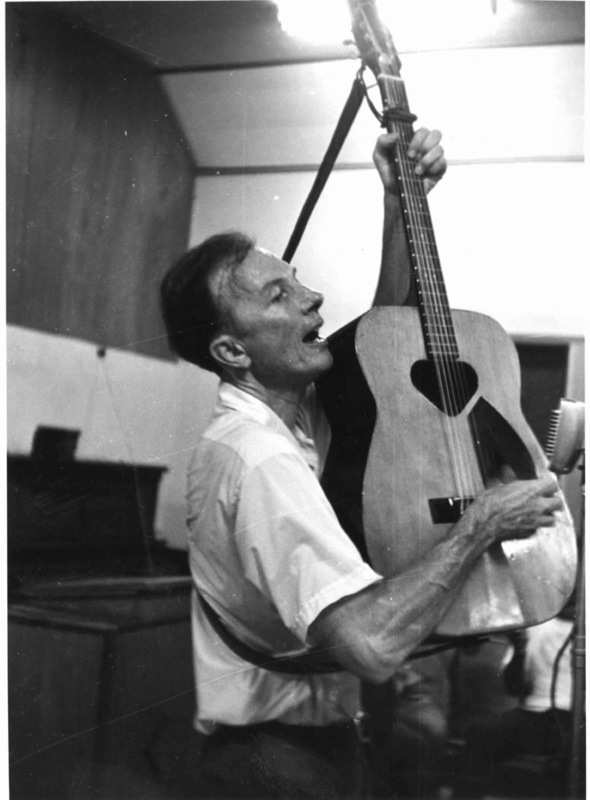
Seeger plays for the COFO workers
He performed for the COFO volunteers. The next photo shows COFO workers and others joining hands to sing along with Seeger. The young woman at the right with the flowered dress is COFO volunteer Patti Miller of Iowa, who pinpoints the date of Seeger’s performance as August 4, 1964.
Shortly after he arrived, Schwerner was joined by an eager young Meridianite volunteer named James Chaney. As the summer drew near, other volunteers began to arrive from other places, among them Andrew Goodman of New York.
Despite its moderate reputation on racial issues, there was a dark underside to Meridian and the surrounding area. The Klan was active, with members in law enforcement and in influential positions. The Klan had its eye on COFO, and on Schwerner in particular. They gave him the derisive nickname “Goatee,” for his beatnik-style beard, and spread rumors that he was having an affair with a black woman.
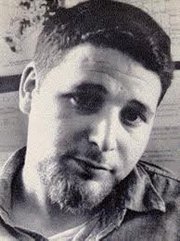
Michael "Goatee" Schwerner
Mississippi’s political leadership provoked the citizenry with accusations that the COFO workers were communists who had trained in Cuba. FBI Director J. Edgar Hoover made the statement that “We will not wet-nurse troublemakers,” insinuating that anyone who took matters into their own hands would not be bothered by the feds.
On June 21, 1964, Schwerner, Goodman and Chaney had returned from a training session in Oxford, Ohio, to learn that the Mt. Zion Methodist Church in Neshoba County had been burned by the Klan and some of its members beaten in retribution for allowing a Freedom School to operate there. The three travelled from Meridian to Neshoba and met with the leaders of the church. As they made their way back to Meridian, the three were stopped by a Neshoba County Deputy Sheriff and taken into custody on the pretext of a speeding charge. After they were released from jail in Philadelphia, they were stopped again on Highway 19 South by the Sheriff, who allowed a group of Klansmen to take them to Rock Cut Road, between House and Bethsaida, where all three were murdered by gunfire. An historical marker is set on the junction of Highway 19 and the road where they were killed.
When the trio did not return to Meridian as scheduled, their disappearance was reported and a manhunt ensued. Hundreds of naval personnel participated. President Johnson ordered Hoover to mobilize the FBI, and the agency began investigating, increasing the number of agents in the state from 15 to more than 150. Posters went up.
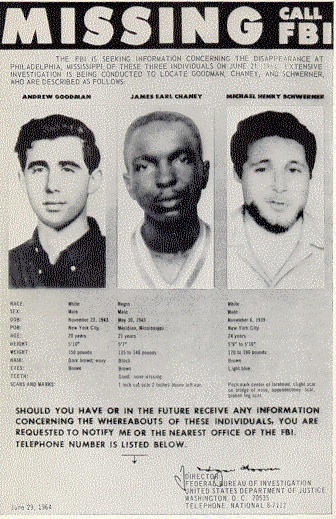
The Mississippi Sovereignty Commission investigated and its reports took the prevailing view that the disappearance was a publicity stunt designed to stir up public opinion. Governor Paul B. Johnson quipped that “Those boys are in Cuba.”
Before long, the searches turned up the CORE station wagon that the men had driven from Meridian. It had been taken to the Pearl River swamps north of Philadelphia east of Stallo off of Highway 21, where it was burned.
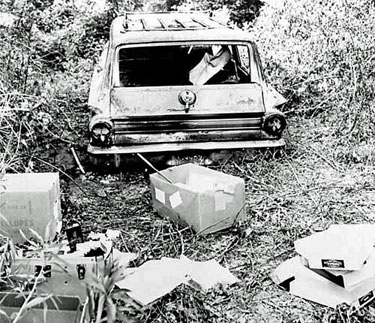
The discovery of the car did not quell the public belief that the disappearance had been staged, but the denial, speculation and ridicule abruptly ended when the three bodies were discovered by the FBI in a dam being built not far from the Neshoba County fairgrounds. It was conclusive proof of the atrocity.

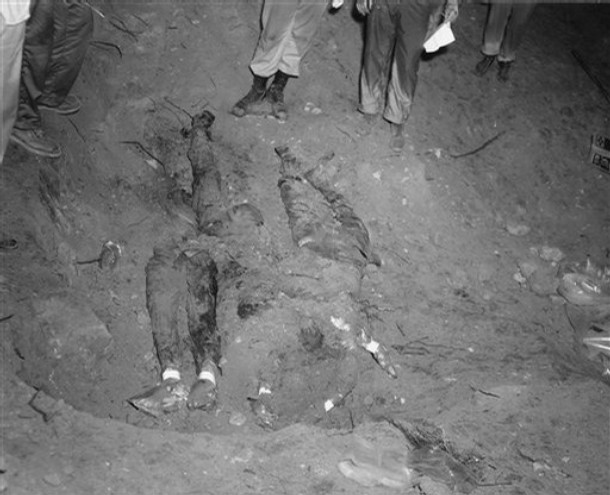
The FBI autopsy revealed that all three young men had died of gunshot wounds. The families were not convinced, however, and they demanded and got a second autopsy which revealed that Schwerner and Goodman had indeed been shot and killed. Chaney, though, had been brutally beaten before being fatally shot. The doctor who performed the autopsy said that he had never seen such extensive, catastrophic injuries, including smashed bones and damaged internal organs, not even in car or plane wreck victims.
Patti Miller remembers that that the bodies were found on August 4, 1964. She remembers that date because it was Seeger himself who announced it that night to the COFO workers during his appearance at Mt Olive.
Nineteen men, many of whom were from Meridian, were arrested and charged with the killings, but state charges were soon dropped. The federal government prosecuted them for violation of Schwerner’s, Goodman’s and Chaney’s civil rights, and seven were sentenced to varying terms up to ten years. It took until 2005 for one of the defendants, Edgar Ray Killen, to be brought to justice in a Mississippi court. He was convicted of manslaughter in Neshoba County Circuit Court.
Long before the legal proceedings, though, the families had to bury the dead as a prologue to getting on with their shattered lives. Schwerner and Goodman were taken back to their homes far away in New York.
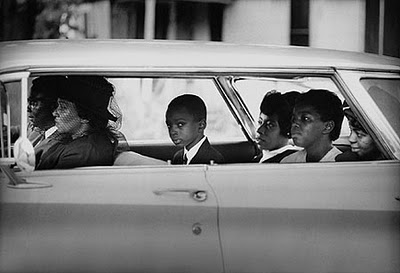
James Chaney's family on the day of the funeral
Chaney’s funeral was held in Meridian. Mourners included his collegues, the COFO workers. The funeral services took place at four different churches, culminating at First Union Baptist Church on 36th Avenue.
As for Freedom Summer, the results were mixed. Some voter registration was accomplished in the face of resistance. People were beaten and killed. Churches were burned. Violence across Mississippi escalated. By any of those measures, it was at least a borderline failure. But the deaths of Schwerner, Goodman and Chaney galvanized public opinion. The 1,000 or so COFO workers returned home from Mississippi with eyewitness testimony about the severity of the situation, many of them with scars to corroborate their stories. The nation realized that the full weight of the law and the federal government would be needed to end the systemic injustice that fostered violence and hatred and shielded murderers. The political pressure became irresistable, and the 1964 Civil Rights Act passed Congress and was promptly signed into law by President Johnson.
Freedom Summer was not the end of apartheid in Mississippi, but it did help deal it a mortal blow.
___________________________________
Thanks to Dr. Bill Scaggs for the info about Pete Seeger, Mark Levy and the Freedom School.
Patti Miller, the COFO volunteer mentioned above, has a Keeping History Alive site where I found several Freedom School photos.
LINCOLN’S NOTES ON THE PRACTICE OF LAW
February 18, 2011 § 4 Comments
 Among the many facets of his notable life, often overlooked, is Abraham Lincoln’s career as a lawyer. It’s not hard to imagine the rough-hewn Lincoln in country courthouses questioning witnesses, holding forth to the court, and regaling juries. Even though he achieved respect of his peers and some wealth in his practice in his representation of a railroad, he retained his homespun country lawyer patina.
These notes are some he roughed out for a speech on the practice of law that he never delivered. Despite the fact that they were never refined to the point of oratory, they reflect the philosophy of an everyday lawyer that we can appreciate nearly 150 years later.
I am not an accomplished lawyer. I find quite as much material for a lecture in those points wherein I have failed, as in those wherein I have been moderately successful. The leading rule for the lawyer, as for the man of every other calling, is diligence. Leave nothing for to-morrow which can be done to-day. Never let your correspondence fall behind. Whatever piece of business you have in hand, before stopping, do all the labor pertaining to it which can then be done. When you bring a common-law suit, if you have the facts for doing so, write the declaration at once. If a law point be involved, examine the books, and note the authority you rely on upon the declaration itself, where you are sure to find it when wanted. The same of defenses and pleas. In business not likely to be litigated, — ordinary collection cases, foreclosures, partitions, and the like, — make all examinations of titles, and note them, and even draft orders and decrees in advance. This course has a triple advantage; it avoids omissions and neglect, saves your labor when once done, performs the labor out of court when you have leisure, rather than in court when you have not.
Extemporaneous speaking should be practised and cultivated. It is the lawyer’s avenue to the public. However able and faithful he may be in other respects, people are slow to bring him business if he cannot make a speech. And yet there is not a more fatal error to young lawyers than relying too much on speech-making. If any one, upon his rare powers of speaking, shall claim an exemption from the drudgery of the law, his case is a failure in advance.
There is a vague popular belief that lawyers are necessarily dishonest. I say vague, because when we consider to what extent confidence and honors are reposed in and conferred upon lawyers by the people, it appears improbable that their impression of dishonesty is very distinct and vivid. Yet the impression is common, almost universal. Let no young man choosing the law for a calling for a moment yield to the popular belief — resolve to be honest at all events; and if in your own judgment you cannot be an honest lawyer, resolve to be honest without being a lawyer. Choose some other occupation, rather than one in the choosing of which you do, in advance, consent to be a knave.
Discourage litigation. Persuade your neighbors to compromise whenever you can. Point out to them how the nominal winner is often a real loser — in fees, expenses, and waste of time. As a peacemaker the lawyer has a superior opportunity of being a good man. There will still be business enough.
Never stir up litigation. A worse man can scarcely be found than one who does this. Who can be more nearly a fiend than he who habitually overhauls the register of deeds in search of defects in titles, whereon to stir up strife, and put money in his pocket? A moral tone ought to be infused into the profession which should drive such men out of it.
The matter of fees is important, far beyond the mere question of bread and butter involved. Properly attended to, fuller justice is done to both lawyer and client. An exorbitant fee should never be claimed. As a general rule never take your whole fee in advance, nor any more than a small retainer. When fully paid beforehand, you are more than a common mortal if you can feel the same interest in the case, as if something was still in prospect for you, as well as for your client. And when you lack interest in the case the job will very likely lack skill and diligence in the performance. Settle the amount of fee and take a note in advance. Then you will feel that you are working for something, and you are sure to do your work faithfully and well. Never sell a fee note — at least not before the consideration service is performed. It leads to negligence and dishonesty — negligence by losing interest in the case, and dishonesty in refusing to refund when you have allowed the consideration to fail.
Thanks to Legal Ethics Blog.
THE SOUND AND THE FURY OF THE UNVANQUISHED POSTMAN
January 1, 2011 § 1 Comment
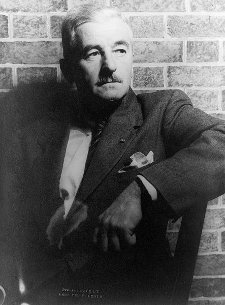 In December 1924, a postal inspector from Corinth, Miss., leveled a series of charges against the postmaster at the University of Mississippi. “You mistreat mail of all classes,” he wrote, “including registered mail; … you have thrown mail with return postage guaranteed and all other classes into the garbage can by the side entrance,” and “some patrons have gone to this garbage can to get their magazines.”
The slothful postmaster was William Faulkner. He had accepted the position in 1921 while trying to establish himself as a writer, but he spent most of his time in the back of the office, as far as possible from the service windows, in what he called the “reading room.” When he wasn’t reading or writing there he was playing bridge with friends; he would rise grumpily only when a patron rapped on the glass with a coin.
It was a brief career. Shortly after the inspector’s complaint, Faulkner wrote to the postmaster general: “As long as I live under the capitalistic system, I expect to have my life influenced by the demands of moneyed people. But I will be damned if I propose to be at the beck and call of every itinerant scoundrel who has two cents to invest in a postage stamp. This, sir, is my resignation.”
Thanks to Futility Closet.
ELVIS IN MERIDIAN: THE PINK CADILLAC
November 5, 2010 § 1 Comment
I posted about Elvis Presley’s appearance in Meridian in 1955 here.
Several people who saw the Meridian parade with Elvis in person told me they remembered that the car was pink. Turns out their memories were on target.
According to this Elvis fan’s website, Elvis had purchased the car, a 1954 pink and white model, in March, 1955, only 2 months before the Meridian parade photos that I posted. He used it to transport himself and his back-up musicians, Scotty Moore, D. J. Fontana and Bill Black, who were billed as the Blue Moon Boys, to various gigs around the south. Elvis had made it known to all of his friends and fellow performers that it was his dream to own a pink Cadillac. The one he rode in Meridian was his first.
On June 5, 1955, Elvis and his band had completed a show at Hope, Arkansas. The next show was in Texarkana, and Elvis invited a local girl to ride with him in the Cadillac, while Moore, Black and Fontana rode in another car with some friends. Near Fulton, Arkansas, about half-way to Texarkana, a brake lining on the Cadillac caught fire, and the car burned up.
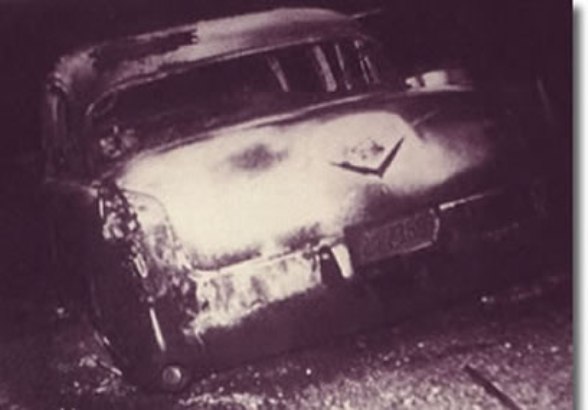
Elvis's dream car goes up in smoke
Neither Elvis nor his passenger were hurt, but Elvis was probably sad to see his dream car, the one he rode on in the Meridian parade, in flames.
On July 7, 1955, Elvis bought his second pink Cadillac. Actually, it was a blue 1955 Fleetwood Series 60 with a black top. He had a neighbor formulate a pink color for it that the neighbor named “Elvis Rose,” and the neighbor painted the car for him. This second Cadillac is the famous Pink Cadillac that Elvis gifted to his mother and became her proudest possession. It is still on display in the auto museum at Graceland.

Gladys Presley's "Elvis Rose" Cadillac in the driveway at Graceland
MYSTERY SOLVED: THE BUILDING WITH THE THREE ARCHES
October 30, 2010 § 1 Comment
In the post below about Elvis in Meridian I posed the question about the building with the three arches. Turns out it was the YMCA located on the corner of 23rd Avenue and Ninth Street, which is now the location of WTOK-TV. The television station renovated the building and removed the arches and porch roofs. Tom Williams, the President of Meridian Regional Airport, sent me an aerial photo of the building in its pre-WTOK state. Here is the pic that Tom sent …
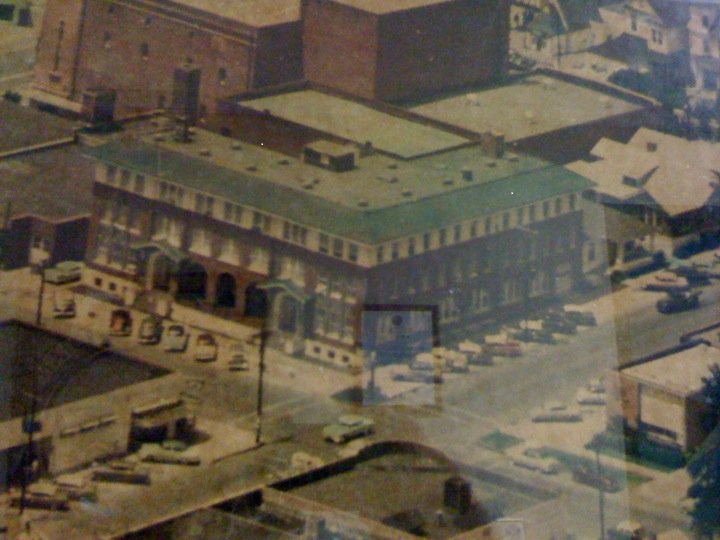
Recognize the three arches and the porch roof from the Elvis parade photo? That’s the Temple Theater directly behind the YMCA Building.
Tom pointed out that he had an interest in the building because his father, Marvin Williams, Esq., at one time had an office in the building.
Thanks to Tom for unlocking this mystery for us. That building would most certainly have been on any downtown parade route.
THE KING OF SOWASHEE
October 30, 2010 § 2 Comments
I have to confess to my second tour this weekend of that mystical shrine of tackiness, Graceland in Memphis, home of Elvis Presley and spiritual Mecca for his adherents. We took some Louisiana relatives who had never been there.
It got me thinking about what I had heard for years — that Elvis had performed in Meridian.
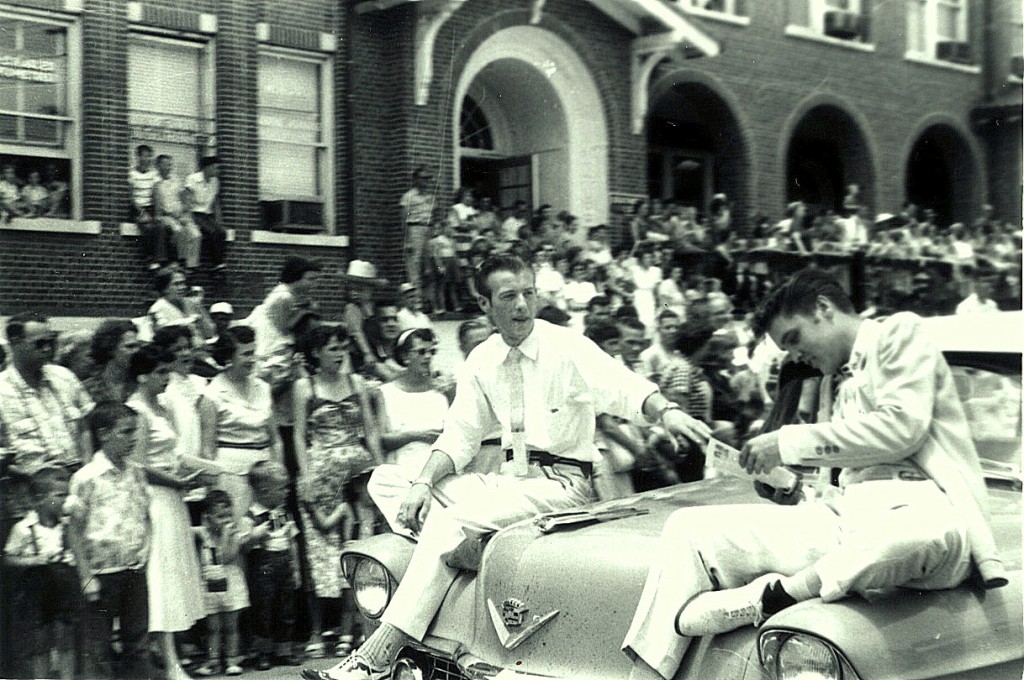
What I had been told was that the King had been in Meridian years ago to perform at the fair and calf scramble before he became famous. I even heard that there were photos. So I dug around on the internet, and actually found a couple of photos. The photos are both dated May 26, 1955, which would predate Elvis’s 1956 appearances on the Milton Berle and Ed Sullivan shows, the gigs that propelled him into national attention. The pictures show him in his more princely days, before he was anointed king.
The photo below shows Elvis and Jimmy Snow riding on a Cadillac in the parade for the 1955 Fair in Meridian. Anybody recognize that building? It’s interesting to me that the crowd appears more interested in whomever is coming up behind Presley and Snow; of course, Elvis back then was merely a musical act from Memphis who was mostly known for his performances on the Louisiana Hayride. Those folks on the parade route had no clue then that they were seeing a future international superstar. Jimmy Snow, incidentally, was the son of country music legend Hank Snow, and deveoped his own career eventually performing on the Grand Ole Opry before becoming a minister in Tennessee.
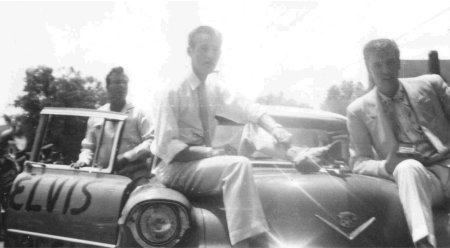
The other photo, below, shows Elvis with Bill Black and Jimmy Snow on the same Cadillac.
Nobody I know in Meridian has developed any oral history about this or any clearcut description of the event.
Here’s an interesting wrinkle: a Wikipedia article on Elvis gives a different time frame …
“The audience response at Presley’s live shows became increasingly fevered. Moore recalled, “He’d start out, ‘You ain’t nothin’ but a Hound Dog,’ and they’d just go to pieces. They’d always react the same way. There’d be a riot every time.” At the two concerts he performed in September at the Mississippi-Alabama Fair and Dairy Show, 50 National Guardsmen were added to the police security to prevent crowd trouble.”
According to the article, this was in 1956, after Presley had appeared on both Milton Berle’s and Ed Sullivan’s tv shows and created a national sensation. Of course, the reference to the Mississippi-Alabama State Fair and Dairy Show is Meridian’s own and was back then. Not enough info for me to resolve the discrepancy in dates beyond doubt. My best guess is that the source for the Wikipedia info, who was part of Elvis’s entourage back then, may be a little confused as to the timing. I would go with the dates of the photos for two reasons: first, that the dates of the pictures are part of their provenance; and second, after the national tv appearances, the crowd in the parade picture would have been far more focused on Elvis.
Steve Labiche did a little more research and found that the Cadillac had been purchased by Presley in Florida, and he had the dealer paint “ELVIS” on the door.
NOTE: the mystery of the building above with the three arches is solved here.
It’s an interesting little tidbit of Meridian history.
VOICES FROM THE ABYSS
October 11, 2010 § Leave a comment
It was for only a dozen years that Adolf Hitler held power by political means in Germany and by conquest over much of Europe. Yet, in that relatively brief span of time, the Nazi regime that he masterminded managed to plunge the entire world into an abyss of degradation, terror, inhumanity and conflict so barbarous that we can scarcely imagine its scope and depth 65 years after its end.
I recently read or re-read three books dealing with life in Nazi Germany during the Hitler years.
 The first is WHAT WE KNEW: TERROR, MASS MURDER AND EVERYDAY LIFE IN NAZI GERMANY by Eric A. Johnson and Karl-Heinz Reuband. If you click on the picture to the left, it will take you to Amazon.com where you can read excerpts.
What makes this book a fascinating read is the first 250 or so pages, consisting of oral histories related by people who lived through the Nazi terror. Interviewees include: Jews who left Nazi Germany before Kristallnacht and those who left after; Jews who were deported; Jews who went into hiding; Germans who knew little about mass murder; Germans who had heard about mass murder; and Germans who knew about, witnessed or participated in mass murder.
What emerges from the testimony of these survivors is an engrossing picture of what everyday life was like in Nazi Germany from around 1932 to the end of World War II.
There are the stories of Jews who managed to flee ahead of the Nazi terror, as well as that of those who were transported to the death camps, and what they did to survive there. There is the testimony of Jews who somehow managed to hide out in Germany or its subjugated states, escaping extermination. They tell persecution by the government, and of the verbal and physical abuse they suffered at the hands of ordinary Germans who had once been their friends and neighbors, as well as of the rare kind and courageous Germans who helped them, often surreptitously so as to avoid repercussions from the Nazis.
Also here is the testimony of the Germans. There are the stories of those who adored and idolized Hitler and of those who despised and resisted him to their detriment and even destruction. There are the stories, too, of those who claim they knew nothing of the systematic extermination of the Jews and of those who knew and even participated in it.
One of the enduring questions arising out of Nazi Germany is what did ordinary people know about the atrocities of the Nazis? The authors devote the remainder of the book to analyzing the data they accumulated to address that question and others such as how anti-semitism took hold under the Nazis, the extent of spying and denunciation by ordinary citizens, the scope of police persecution, and the various forms of persecution of the Jews and others selected for torment and even annihilation. Their conclusions? You will have to read the book.
It is important for Americans to know and understand how the Nazis rose to power and came so close to dominating the entire world but for the determined resistance of England and the industrial might of the United States. After all, the Nazi phenomenon did not arise out of some ignorant peasant backwater. It occurred in the country long known as the “Land of Poets and Thinkers,” the nation that gave birth to Goethe, Schiller, Kant, Beethoven, Leibniz, Einstein, Bach, Holbein, and so many other luminaries of western civilization. It was grinding depression, political instability and desperate economic straits in the lingering aftermath of World War I that opened the way for the Nazis to capture the allegiance of the German voters, who made a devil’s bargain by surrendering their freedom in exchange for stability and economic improvement.
If the Germans could cast aside their considerable legacy of civilization and embrace the barbarity and totalitarianism of the Nazis for comfort and security, who is to say that we could not fall on the same sword?
_____________________________________
I also re-read NIGHT by Elie Wiesel.
If you have never read this powerful little book (only 120 pages) written by the Nobel-prize-winning author who as a teenager wsa transported with his family to Auschwitz and then to Buchenwald, you need to put down whatever you are reading and pause to read this. This latest edition is a new translation of the original French by his wife, Marion, and purports to be closest of all editions to Wiesel’s own voice.
Other than the substance itself, what makes this book so powerful is its spare, minimalist style, pared down ruthlessly from the original Yiddish into French by the French writer François Mauriac.
The book opens in Wiesel’s hometown of Sighet, in Transylvania, where the Jewish community was warned but refused to heed an eccentric who had been briefly imprisoned by the Nazis. It goes on to recount the establishment of a Jewish ghetto in the town and the ultimate transportation to the death camps or work camps. Wiesel saw his mother and sister taken off to the gas chamber. He and his father were put to slave labor in the camp at Buna. As the war wound down and the Russians closed in on western Poland where their camp was situated, Wiesel, his father and the other inmates were forced to march in a bitter winter blizzard from Auschwitz-Buna to Gleiwitz, a march in which thousands died. Wiesel and his father survived the march, but his father contracted dysentery soon after being savagely beaten by an SS guard, and the elder Wiesel was taken off to the gas chamber. The author poignantly tells of his last conversation with his father, a passage of the book you will not soon forget.
Wiesel’s haunting retelling of the inhumanity he endured and how he survived it will live vividly in your mind long after you have read this book.
_____________________________________
The final book is MAN’S SEARCH FOR MEANING by Viktor Frankl, which I re-read. This little book was listed by the Library of Congress in 1991 among the 10 most influential books in the United States.
 Like Wiesel’s, Frankl’s book includes his eyewitness account of the brutality and suffering that he survived as a Jewish slave/prisoner in various Nazi concentration camps. Unlike Wiesel, Frankl approaches the experience from a psychological and psychoanalytical perspective, from which he developed the theory of Logotherapy. His theory is that life has meaning in even the most apocalyptic circumstances and finding that meaning is the main motivation in life, and that we have the freedom to find our own meaning in our suffering and the unchangeable obstacles we face. The first part of the book is Frankl’s account of his experiences, and the second is his analysis of those experiences and his conclusions about their meaning.
This is an inspirational book that rejects the notions of victimhood and determinism. It will challenge some of your own notions about how one addresses and rises successfully above the vicissitudes and misfortunes of life.
_____________________________________
Some years ago I visited Dachau concentration camp only a few miles from Munich. The entrance gate bore the cynical epigram “Arbeit macht frei” — “Work makes you free” — the words that were copied from there and placed over the gate to Wiesel’s Auschwitz.
Dachau was not established as an extermination camp for Jews, although many Jews were imprisoned and died there. Dachau’s original and primary function was as an internment camp for political opponents of the Nazis, homosexuals and the mentally ill or erratic. Later in the war, Russian prisoners of war were transported there by the thousands, and were put to death by the bullet, some being used for target practice by the guards.
Dachau was also the site of scientific experimentation on the prisoners, which was intended to be of some military benefit. Some prisoners were put into chambers and subjected to increasing pressure until their brains literally burst out of their ears and mouths, in order to see how much pressure a human could stand. Some had organs removed and were sewn back up to see how long one could live without, say, a liver. Some had objects implanted inside of them so the effects could be observed. Some were guinea pigs for drug testing, and others were administered lethal substances to determine just how much dosage was lethal.
It was chilling to stand in the barracks where so many suffered and perished, to walk across the appelplatz where the roll call of walking dead took place every day, to see the guard towers, to stare into the crematorium where the bodies of the executed were disposed of. Gazing across the huge expanse of the camp, one could see through the barbed-wire fence the homes where German citizens of Dachau village lived their mundane lives, oblivious — they claimed — to the profound suffering and obscene atrocities taking place literally across the street.

The main gate and grounds of Dachau Concentration Camp today
DEDICATION DAY
September 26, 2010 § 1 Comment
The renovated “old courtroom” upstairs in the Clarke County Courthouse was dedicated today in a program attended by Clarke Countians and elected officials.
This is what the official program said about the renovation:
“Clarke County’s present Court House was constructed in the heart of the county seat in 1912. Nearly 60 years later, in 1969, the courtroom was remodeled, closing in the full-length windows on the east and west walls, and covering the balcony by the addition of a suspended Celotex ceiling. This provided a location for the large boiler system to heat and cool the building, since the third floor offices were no longer in use, except for use as storage space.
“By the year 2000, county officials discovered the availability of federal and state grants to be used for improvements to government buildings. Through grants provided by the Mississippi Department of Archives and History and the Historic Preservation Division of the “Save America’s Treasures” Act, work was begun to restore our historic 1912-era courtroom to its original grandeur.
“In 2008, Supervisor Tony Fleming organized the demolition process, using county employees and inmates from the Clarke County jail, to gut the area so that accurate blueprints could be produced. By January of 2009, local architect David Henderson of AEDD Plus and contractor BP Roofing and Construction of Laurel, Mississippi, had begin work.
“Since all historic structures are required to adhere as closely as practicable to the original design, every effort was made to replicate the original handiwork. Most of the flooring is original to the building, as are the large ceiling beams. The metal ceiling panels are exact duplicates of those used in the original construction.
“Today we proudly present our newly-restored courtroom to the people of Clarke County. Let us remember to be grateful for the foresight of our county officials in providing a stately and securebuilding in which to conduct our county’s business.”
My previous post about the renovation is here.
Photos from the program:
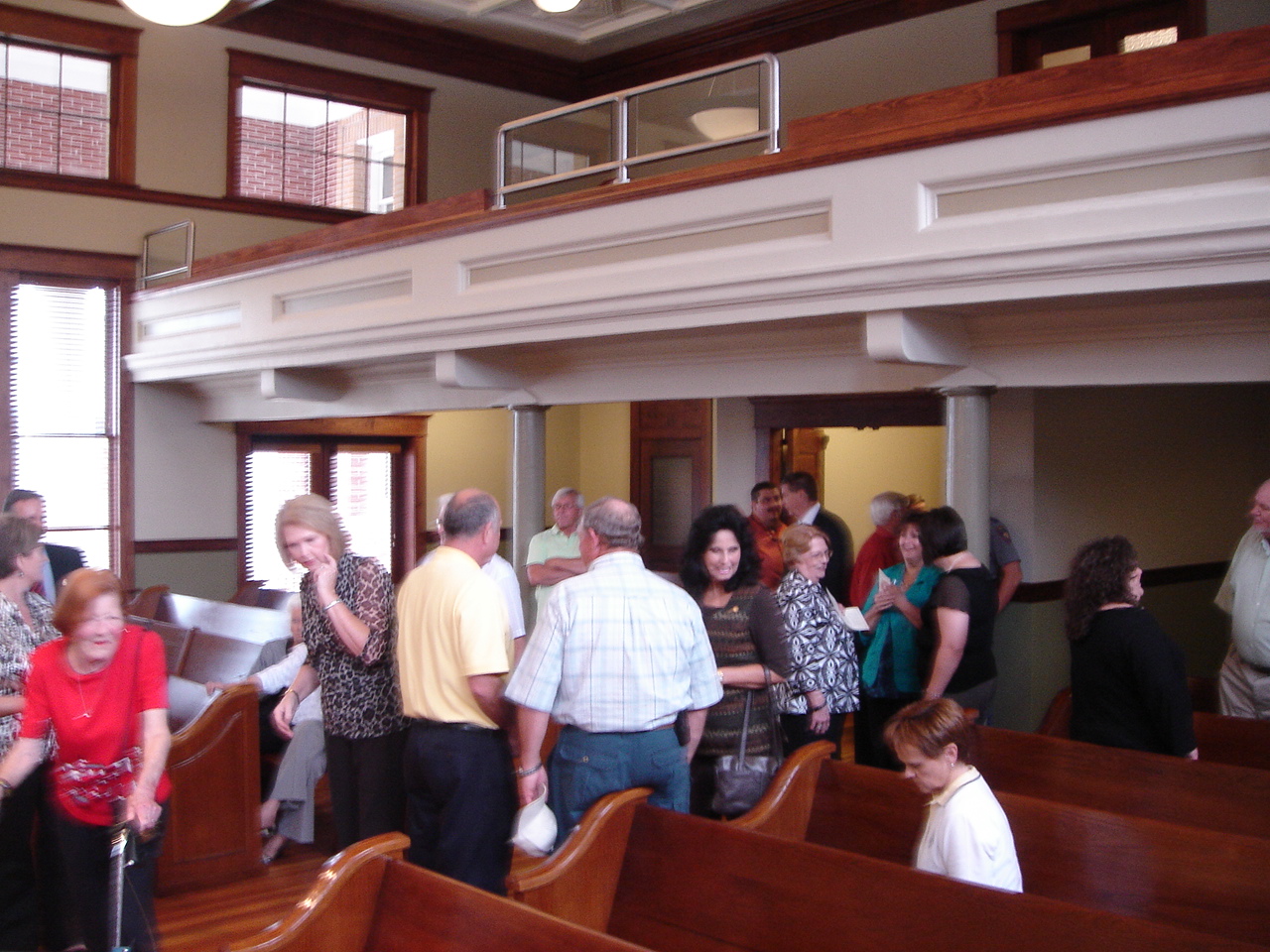
The crowd gathers for the program
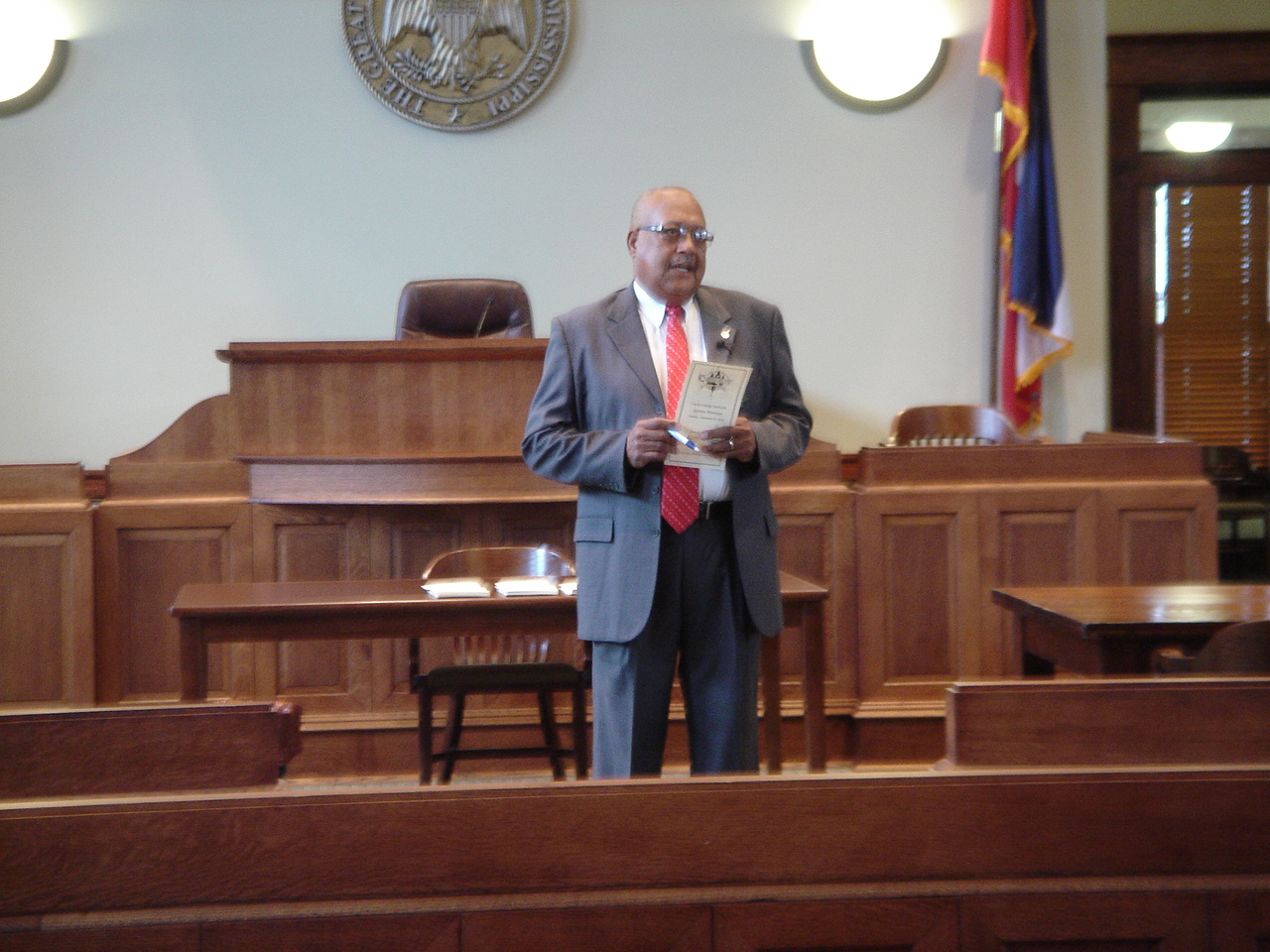
Board of Supervisors President Arthur Nelson chairs the program
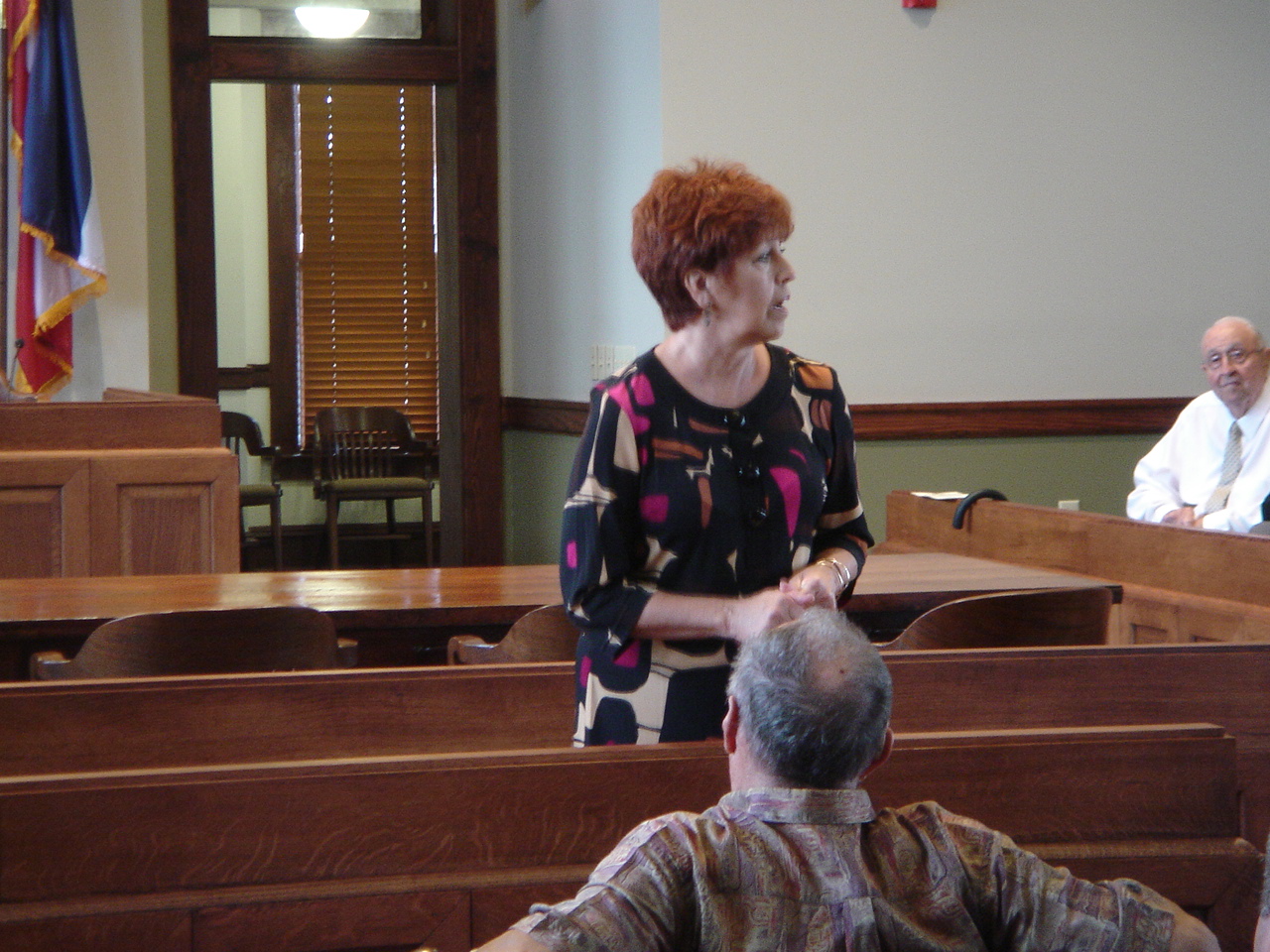
Circuit Clerk Beth Doggett recognizes the judges and elected officials
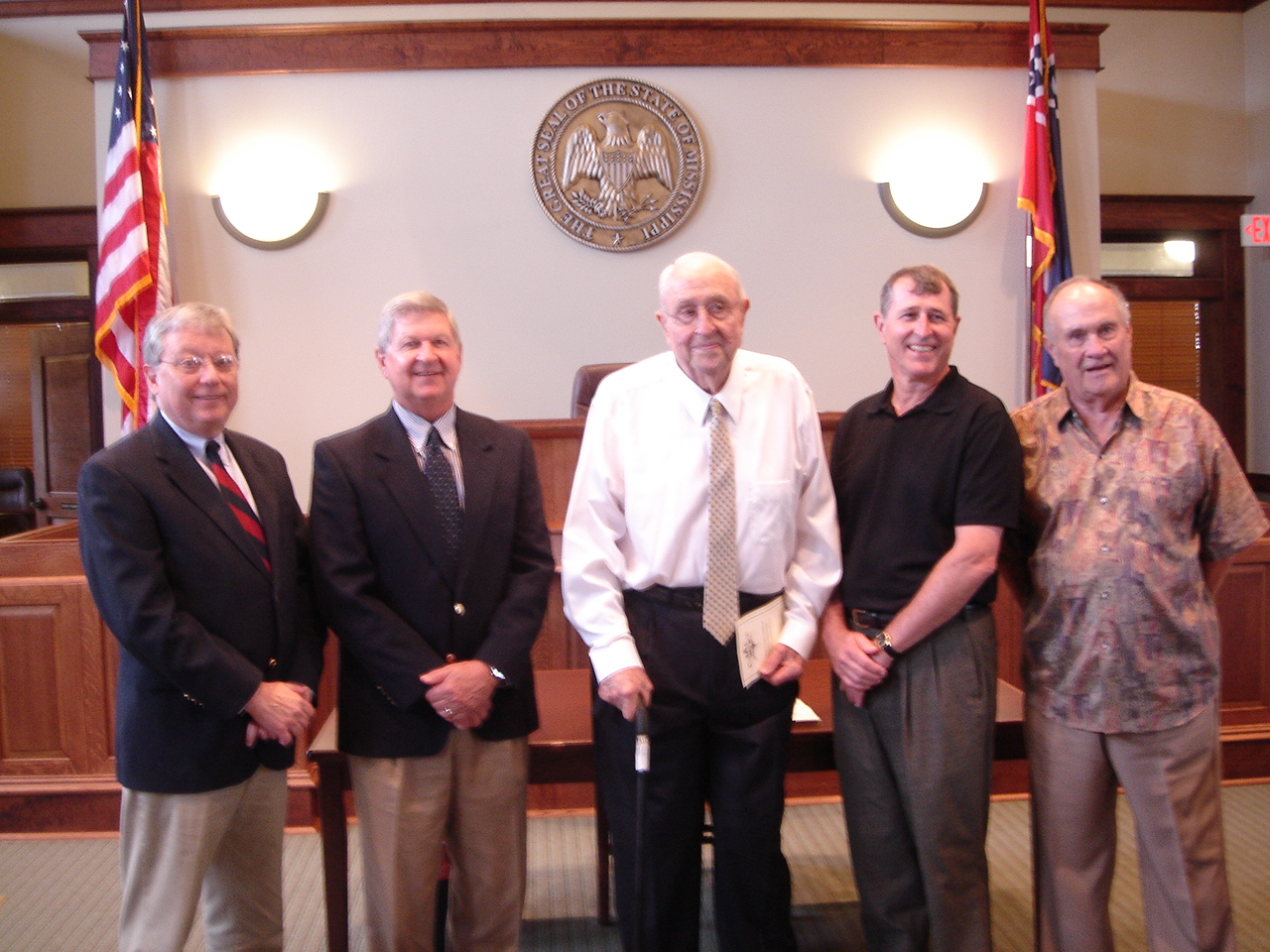
L to R, Chancellor Primeaux, Circuit Judge Bailey, retired Ciruit Judge Williamson, Circuit Judge Williamson, retired Chancellor Warner
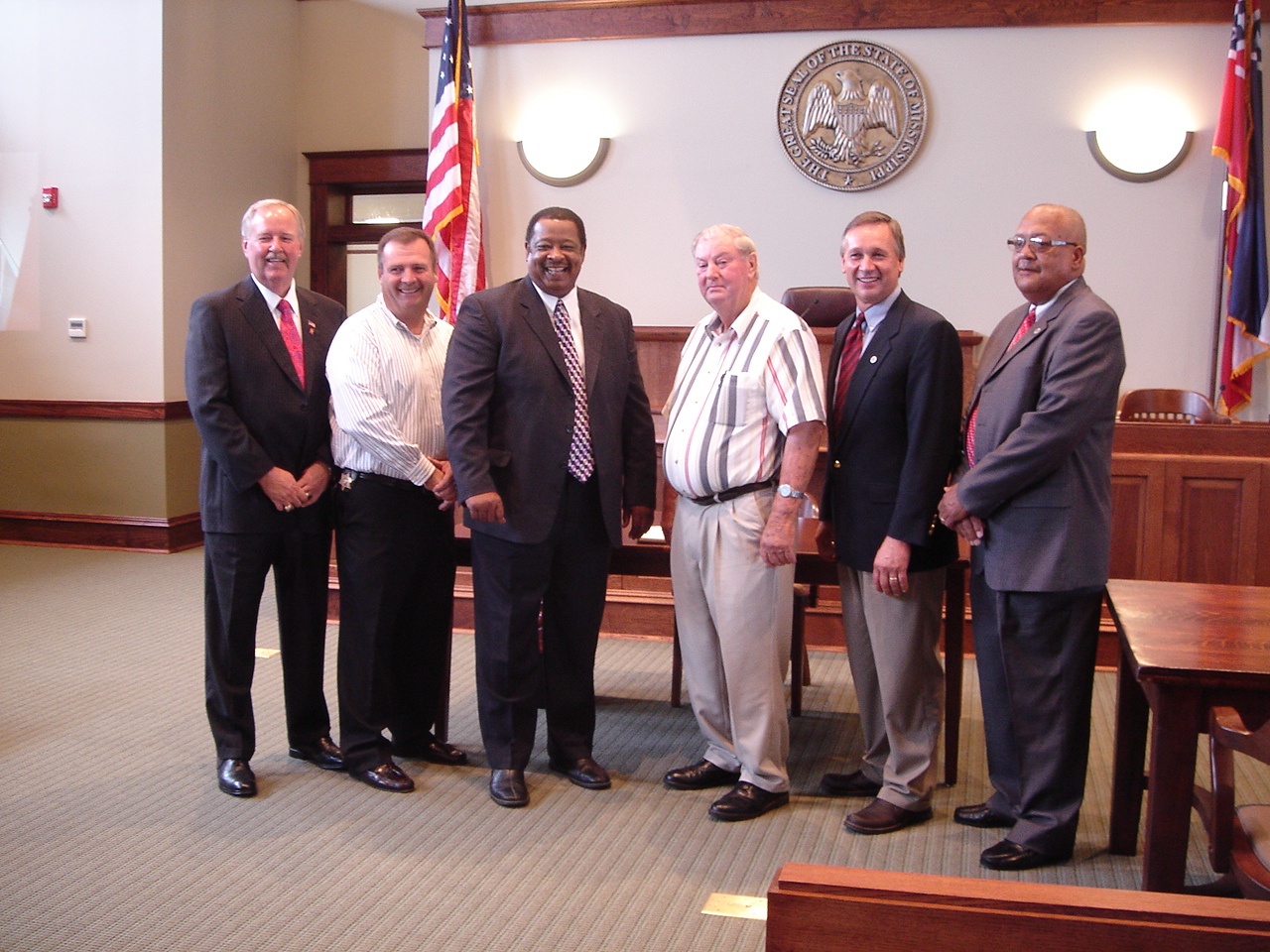
L to R, Dist. 4 Supervisor Paul Mosley, Sheriff Todd Kemp, Dist. 2 Supervisor Cleveland Peebles, Dist. 3 Supervisor Willie Roberson, Dist 5 Supervisor Tony Fleming, and Dist 1 Supervisor and Board President Arthur Nelson

Chancery Clerk Angie Chisholm hosts the reception refreshments downstairs
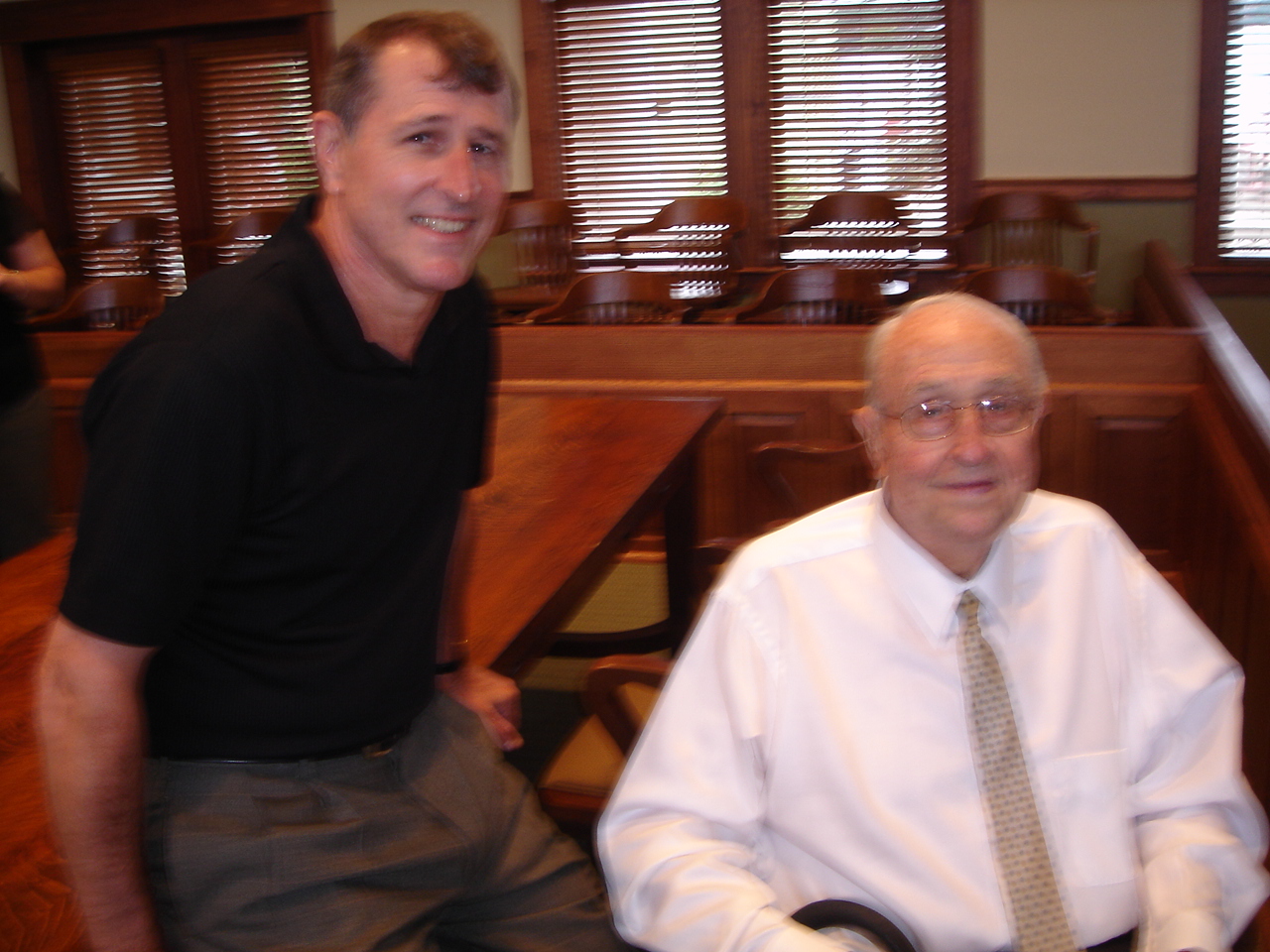
Father and son: Circuit Judge Lester F. WIlliamson, Jr. on the left and retired Circuit Judge Lester F. Williamson, Sr. on the right
 The Better Chancery Practice Blog
