BOOK LIFE
March 11, 2012 § Leave a comment
What I’ve read in the past 5 months.
 How Fiction Works, by James Wood. Using excerpts from the likes of of Faulkner, Flaubert, James and other great writers, Wood analyzes the writers’ tools and approaches that set great literature apart from less accomplished writing. You will find the author’s keen insights entertaining, witty and revealing. This is a must read for anyone who loves well-written fiction.
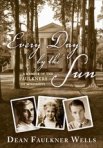 Every Day by the Sun, by Dean Faulkner Wells. Poignant reminiscence of the Faulkner family, and in particular the author’s uncle and guardian, William Faulkner. From her unique vantage point, Wells tells intimate details of the family and its history, some of which are familiar, some personal and telling. What emerges is a portrait of the world-renowned author not only as the eccentric and sometimes aloof intellectual who some in his community viewed as a poseur, but also as a caring, tender and generous provider for the many family members who relied on him. We also come to know the family, with its stress-cracks, peculiarities and tensions.
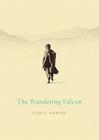 The Wandering Falcon, by Jamil Ahmad. This is the story of Tor Baz, a young boy who grows into manhood in the tribal areas of Waziristan, in the borderlands of Pakistan and Afghanistan, and becomes known as “The Wandering Falcon.” Ahmad, who penned this book at age 80, is a master story-teller and skillful writer who worked for years as a civil servant in the region and is intimately familiar with the folkways of the tribes. What sets this book apart is its stark style that evokes the mountains and deserts inhabited by the people of the story, and their ways that put tribal loyalty and survival before everything else. Told in the fashion of a tale told in the desert cross-legged on a Persian carpet across a campfire, you will be entranced as it unfolds, folds back on itself, and unfolds again, revealing unexpected nuances again and again.
 My Reading Life, by Pat Conroy. Reading Conroy is like enjoying a homemade lasagna. It’s not fine cuisine, but it’s filling, satisfying, delicious and something you could come back to time after time. His writing is not fine literature, but it’s satisfying, fun to read, and something you could come back to time after time. This little book is a sketch of the people and events who influenced his writing. With his customary skill at manipulating the reader, you will find yourself laughing, near tears and smiling to yourself, often all on the same page.
 Mississippi: the Closed Society, by James W. Silver. The seminal 1963 book by then-Ole Miss history professor Silver, who braved threats to his life and career to castigate Mississippi’s leadership and silent majority for the atmosphere and crises that led up to the climactic riots at the admission of James Meredith to the University of Mississippi in 1962. Silver, who was an eye-witness and befriended Meredith, tells the story from a perspective that few other southerners in that dangerous, conflict-ridden period dared to share.
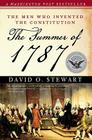 The Summer of 1787, by David O. Stewart. It took only 10 weeks during the sweltering summer of 1787 to craft the United States Constitution, but after reading this book, you will marvel that it ever got done at all. The Constitution was a masterpiece of compromise, the making of which should be a lesson that all legislators, particularly the most dogmatic of our federal lawmakers, should be required to know by heart. There are some fascinating personalities here, some familiar like Washington, Franklin and Madison, and some not so much, like George Mason, Gouverneur Morris, Edmond Randolph, Charles Pinkney and James Rutledge.
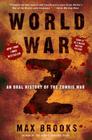 World War Z, by Max Brooks. An oral history of the Great Zombie War that raged out of China and came perilously near extinguishing all of civilization. Okay, it never really happened, but you will be entertained by Brooks’s ingenuity and style, and you will end up knowing lots more about zombies and their savagery than, perhaps, you thought you needed to. Zombies are an obsession of my old friend Carol, who gifted me this book.
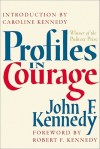 Profiles in Courage, by John F. Kennedy. Eight vignettes depicting acts of extraordinary political courage by US Senators, including Mississippi’s own LQC Lamar of Oxford. Although the future US president (with substantial ghosting help from his friend Theodore Sorenson) wrote this book in 1955 while he was a senator, it should be required reading 56 years later for our politicians who seem unequipped for statesmanship and compromise. Many of the figures in this book sacrificed their political careers to do what they believed was(and in many cases proved to be) best for the nation. That’s a startlingly quaint concept in the 21st century, but one that bears study and emulation now more than ever. This is a re-read of a book I read for the first time around 1964.
 What it is Like to Go to War, by Karl Marlantes. The emotional, moral, psychological, spiritual and physical cost that the experience of war exacts from the warrior and society. Marlantes served as a Marine in Viet Nam, where he won the Navy Cross, Bronze Star and two Purple Hearts, among his commendations. He is a Yale and Oxford graduate and Rhodes scholar. This book is articulate and insightful, offering a philosophical view that draws heavily on the author’s own combat service.
 The Bible Salesman, by Clyde Edgerton. What starts out as the beguilingly interesting story of Henry, the rustic bible salesman who peddles donated books, morphs into a thinly-plotted crime caper with a love story intertwined, punctuated by flashbacks involving a tippling stepfather, talking cats and a retarded neighbor. Maybe it’s just me, but this seems to me like the ideas for three good books crammed into one almost-good book. There are some humorous scenes here, in particular the cat funeral, and the author is skilled at depicting rural southerners of the last century. Edgerton’s writing will keep you reading. At the end, though, you wish you knew more about the characters, and you wish the action were better thought through.
 The Portable Faulkner, ed. by Malcolm Cowley. Brilliant anthology of Faulkner’s best stories extracted from his novels. Here are the well-known The Bear, Old Man, A Rose for Emily, and An Odor of Verbena, as well as some not-so-well-known, such as The Raid and The Courthouse. Familiar or not, you will admire Faulkner’s astonishing use of description, his metaphors and similes, and his unequaled skill at deciphering and depicting the innermost operations of the human heart. This collection is an approachable introduction to Mississippi’s most revered writer of fiction for those who have not read him and for those who have found his writing impenetrable. If you know Faulkner’s writing, you will find this collection an enjoyable entertainment. A re-read of a book I read around 1973.
 Saving Jesus from the Church, by Robin R. Meyers. Avowedly liberal Congregational pastor Meyers challenges orthodoxy and urges a return to first principles espoused by Jesus himself, rather than the accretions of belief added by the churches through the centuries. He emphasizes that faith is a relationship and a way of acting, not a set of beliefs. This book will make you question your religion, but will deepen your faith.
 The Better Chancery Practice Blog
Leave a comment