LAY OPINION TESTIMONY SOMETIMES LAYS AN EGG
September 7, 2010 § 3 Comments
Some lawyers argue that lay opinion testimony should be strictly proscribed as not helpful to the court and an invasion of the court’s fact-finding province. Others attorneys respond that those concerns are overblown and that the court can filter out any ill effects. Here is a rough transcript of an exchange that happened in my courtroom recently. Judge for yourself:
Q: Now, you said a moment ago that you plan to file for bankruptcy. Do you know what effect bankruptcy will have on your income?
Opposing counsel: Objection. He can’t possibly know what effect bankruptcy would have on his income. He is not an expert.
Counsel: But, judge, he can state his understanding based on what he trying to accomplish by filing bankruptcy.
Court: I believe that any ordinary person with walking-around sense would know what effect bankruptcy would have on their income. I will overrule the objection. Repeat the question for the witness, please.
Q: Do you know what effect bankruptcy will have on your income?
A: No.
A GRAVE DISCOURTESY
September 3, 2010 § 2 Comments
You get 10 points if you can answer this question:
In our law and rules there are transgressions that can be treated as contempt, and there are some that can be sanctioned by removal or disqualification of the attorney.
What action or or omission of an attorney ” … will be considered a grave discourtesy?”
GOLF AND ANATOMY
September 3, 2010 § Leave a comment
“The uglier a man’s legs are, the better he plays golf. It’s almost a law.” — H.G. Wells
Not a golfer myself, so I can’t really say for sure, but I am glad for Wells’ sake that he didn’t mention female golfers.
Thanks to Futility Closet for this insightful quote.
PROVING TAX EFFECTS OF ALIMONY
September 2, 2010 § 3 Comments
Armstrong vs. Armstrong, 618 So.2d 1278, 1280 (Miss. 1993), sets out the factors that the trial court is supposed to consider when adjudicating whether to award alimony, and if so, the form, duration and amount.
All of the Armstrong factors are important, and failure to prove even one can doom your claim. One of those factors is “The tax consequences of the spousal support order.”
There are only two ways to establish the tax consequences: (1) Have an expert testify or offer into evidence a learned treatise; or (2) Agree with opposing counsel what they are and present the agreement to the court.
It doesn’t take a legal scholar to appreciate the advantages and disadvantages of these approaches. An expert can offer clarity, but she can be asked about so many extraneous matters on cross until the court is bewildered. A learned treatise can be precise and clear, but you still need to lay a foundation for it with an expert in most cases. In either case, experts are expensive.
By contrast, it doesn’t take much to convince opposing counsel that it is to both parties’ benefit to enter into a stipulation as to the tax consequences. That way, both parties have evdence in the record for the court to consider, and if the case is appealed, the Court of Appeals is not left scratching its collective head about why there is no proof of the tax consequences.
Back when I was practicing, several of us attorneys colluded and came up with a form for a stipulation. I believe it covers every base. It was done several years ago, and may not reflect intervening changes in the tax code, but it will at least provide a template for you to adapt to the current law.
Here is the form:
| MISSISSIPPI CASE LAW | FEDERAL INCOME TAX |
| “Lump-Sum Alimony” | “Lump-Sum Alimony” |
| Represents part of the equitable distribution of the marital estate. Is a fixed sum not subject to modification. Obligation to pay continues after the death of the payee or payer. | Represents a property settlement for income tax purposes and is not taxable by the payer or taxable to the payee. Is not alimony for income tax purposes because payments would continue, by operation of law after the payee’s death. |
| “Periodic Alimony” | “Periodic Alimony” |
| Is based on the payer’s duty to support the payee in the manner to which she or he had become accustomed, is modifiable and terminates on payee’s remarriage, death, or payer’s death. | Is tax deductible by the payer and taxable to the payee; i.e., qualifies as alimony for tax purposes. The reason periodic alimony qualifies as alimony for tax purposes is because under Mississippi law there is no liability to make any payment (in cash or property) after the death of the recipient spouse. |
| “Rehabilitative Alimony” | “Rehabilitative Alimony” |
| Is for a fixed term, but is modifiable. | If the liability to make the payments stops after the death of the recipient spouse, then rehabilitative alimony would qualify as alimony for income tax purposes. |
-
The payment is in cash.
-
The instrument does not designate the payment as not alimony.
-
The spouses are not members of the same household at the time the payments are made. This requirement applies only if the spouses are legally separated under a decree of divorce or separate maintenance.
-
There is no liability to make any payment (in cash or property) after the death of the recipient spouse.
-
The payment is not treated as child support.
*********
The obvious advantage of the stipulation is that it establishes the fact without expense and both parties have the information in the record. Unfortunately, this is an element of alimony proof that is almost never addressed by the attorneys in a trial, and it could cost your client dearly.
SAVE THE DATE: CLARKE COUNTY DEDICATES ITS NEW “OLD” COURTROOM
September 1, 2010 § 2 Comments
A dedication, open house and reception will be held in the newly renovated “old” courtroom upstairs in the Clarke County Courthouse on Sunday, September 26, 2010, from 2-4 pm. Lawyers, judges and the public are invited to participate in the dedication and to view the restoration of the upstairs courtroom to its former glory in advance of its being put into operation.
I would hope that there would be a good turnout of Lauderdale County lawyers for the event, considering the numbers who practice in our neighboring county to the south.
An earlier post about the renovation work is here.
ATTACK OF THE KILLER EARWIGS
September 1, 2010 § 1 Comment

Bedbugs
The latest fad in the anxiety/nightmare industry is bedbugs. Seems like every media outlet has close-up photos of the little beasts the size of shetland ponies roaming mattresses across the country in cornucopious profusion awaiting fleshy morsels to chomp off of unwary humans.
In Chancery Court our “bedbug” is the dreaded earwig.
Uniform Chancery Court Rule 3.10, entitled EARWIGGING THE CHANCELLOR PROHIBITED, provides in part:
“No person shall undertake to discuss with or in the presence or hearing of the Chancellor the law or the facts or alleged facts of any litigated action then pending in the Court or likely to be instituted therein, except in the orderly progress of the trial, and arguments or briefs connected therewith. No attempt in any manner, except as above stated, to influence the Chancellor’s decision shall be made. No person shall send any written communication to the Chancellor concerning a pending action in the Court without delivering or mailing a copy of that communication to the opposing party …”
The language about written communication and copy to the opposing side has given rise to a curious practice among some attorneys that can be illustrated in the following scenario:
Lawyer A sends a letter to the Chancery Judge describing the scurrilous actions of the opposing party, including pillage, wantonness and rapine. There in the lower left-hand corner of the letter is the notation “cc: counsel opposite.”
When the judge questions the propriety of the letter, Lawyer A responds innocently that he complied with the rule because he sent a copy to opposing counsel.
With all due respect, if any is due, that practice is undoubtedly in violation of the rule and is, without question, earwigging.

Potential earwigs
The provision for copy of written communication to opposing counsel includes no exception to the preceding two sentences prohibiting communications about the merits of the case. It simply means that, if communication by letter is proper, as where it is necessary to transmit a copy of an agreed order, then a copy of the proper communication must be sent to opposing counsel.
By the time that opposing counsel has received a copy of the ex parte correspondence, the damage has already been done. The bell cannot be unrung, as the adage says. The judge has heard one side alone on the matter, and the judge’s impartiality and independence is in question from then on out. If the judge rules for the side that sent the letter, was the judge unduly influenced? If the judge rules against the side that sent the letter, was the judge trying to lean the other way to prove impartiality? We can never know what might have been because the ex parte communication has called the judge’s impartiality into question.
In my court, if you have allegations to make on the merits, put them in the form of a pleading and set the matter for hearing, and I will make a judgment after hearing both sides. Don’t poison the well that both parties have to drink from.
If you introduce the dreaded earwig into Chancery Court, prepare to be fumigated.

Genuine earwig
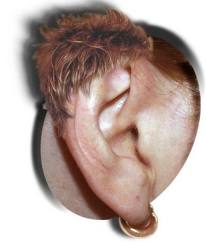
Genuine Ear Wig
 The Better Chancery Practice Blog